Our solar system has hundreds of moons, from tumbling rocks a few kilometers across to worlds bigger than the planet Mercury. Some hide oceans beneath their ice, one has a thicker atmosphere than Earth and another is covered in erupting volcanoes.
These are the ten largest moons, ranked by diameter.
1. Ganymede (5,268 km)
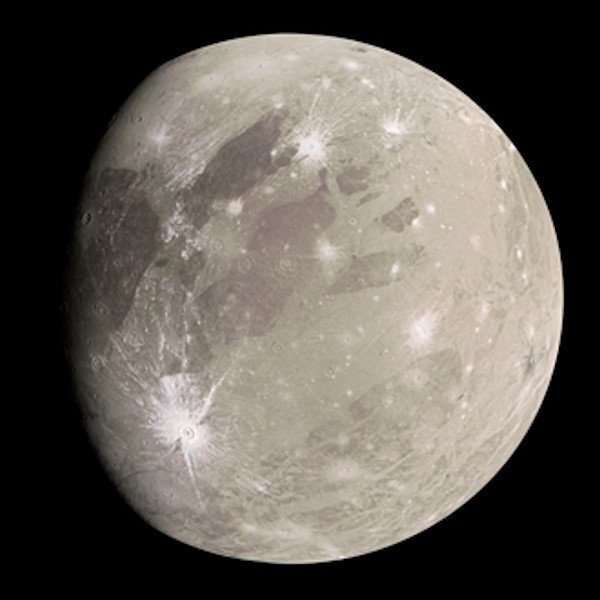
Jupiter’s Ganymede is the largest moon in the solar system and even bigger than the planet Mercury, although it has less than half its mass. It is the only moon known to have its own magnetic field.
Beneath its icy crust, scientists believe there is a salty ocean that may contain more water than all of Earth’s oceans combined. Europe’s JUICE spacecraft is on its way to study it and is due to enter orbit around Ganymede in the 2030s.
2. Titan (5,150 km)
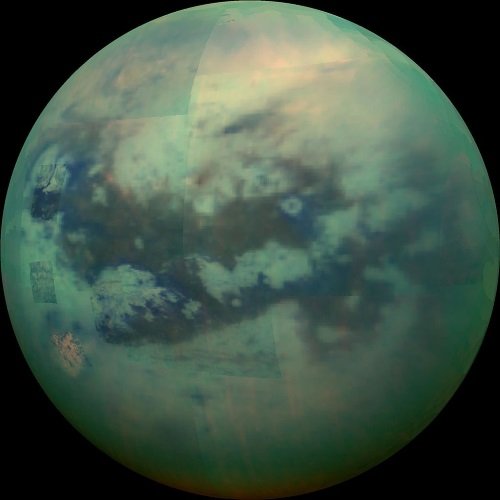
Saturn’s largest moon is the only moon in the solar system with a thick atmosphere, made mostly of nitrogen. The air pressure at the surface is about 50 percent higher than on Earth.
It is also the only place besides Earth known to have liquid on its surface: lakes and seas of liquid methane and ethane, fed by methane rain. NASA’s Dragonfly drone is scheduled to arrive there in the 2030s.
3. Callisto (4,821 km)
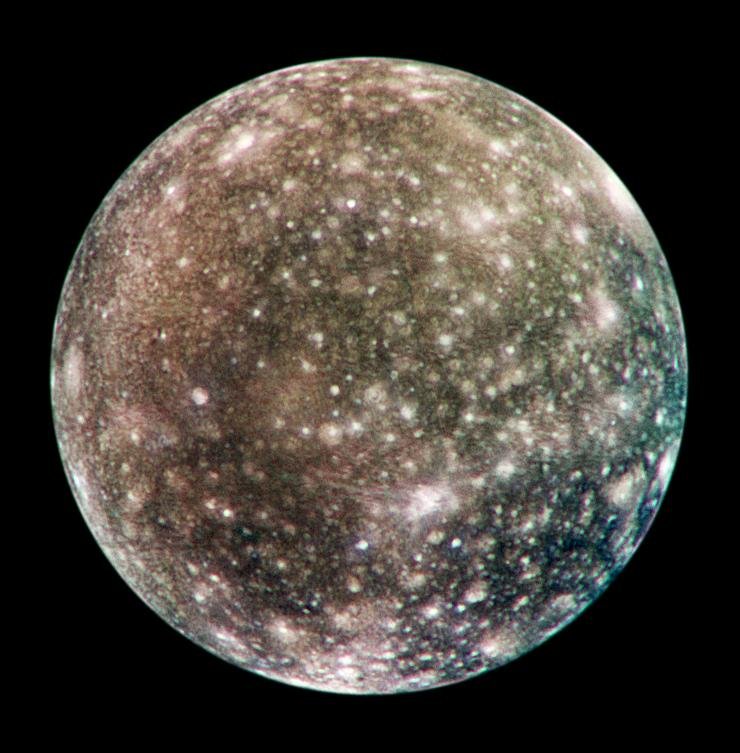
Callisto, another of Jupiter’s large moons, has one of the most heavily cratered surfaces in the solar system. With no volcanoes or plate tectonics to renew it, its face has been collecting impact scars for about four billion years.
It orbits outside Jupiter’s most intense radiation belts, so it is often mentioned as a possible base for future human exploration of the Jupiter system.
4. Io (3,643 km)
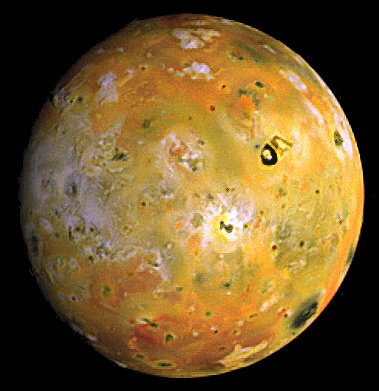
Io is the most volcanically active place in the solar system, with hundreds of active volcanoes. Some blast plumes of sulfur and gas hundreds of kilometers above the surface.
The heat comes from Jupiter’s enormous gravity. As Io orbits, it is squeezed and stretched by Jupiter and its neighboring moons, and the friction melts rock inside it.
5. The Moon (3,474 km)
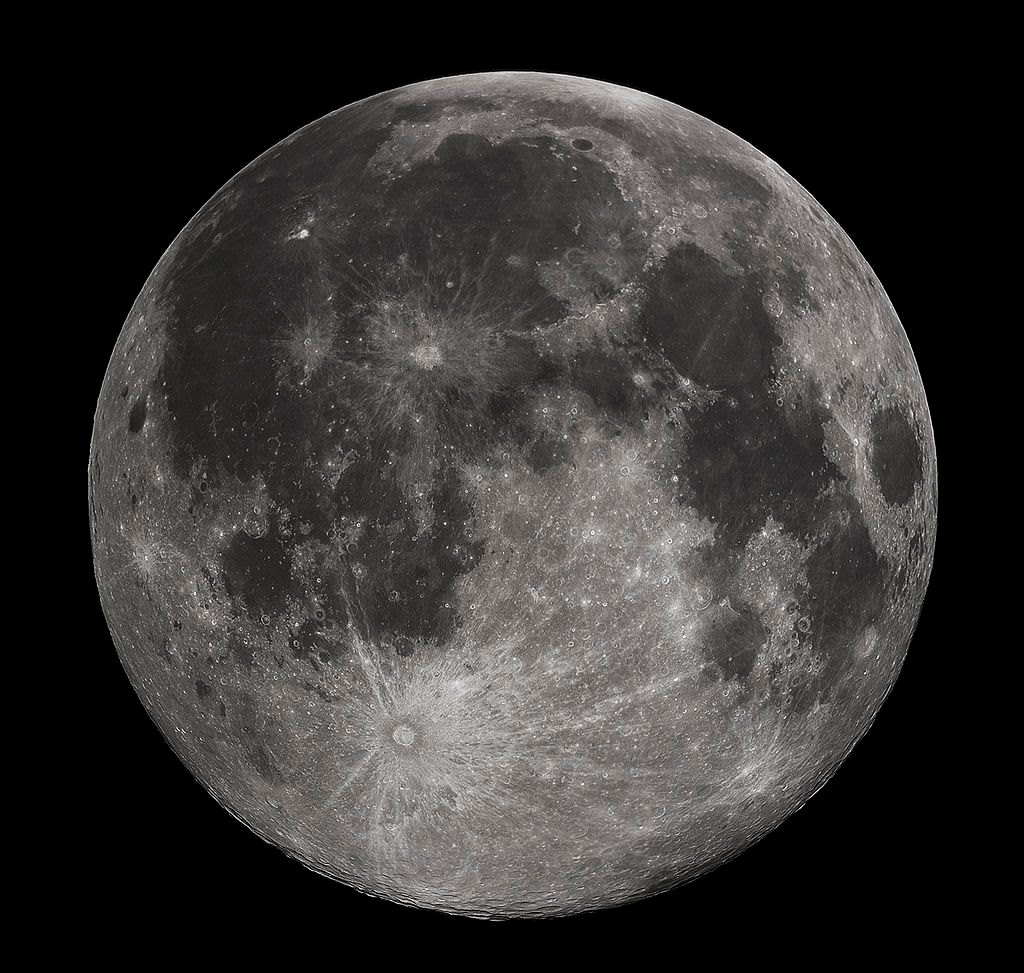
Our own Moon is the fifth-largest in the solar system, and by far the largest compared to its planet. It is about a quarter the width of Earth.
It is also the only other world humans have walked on. Twelve astronauts explored its surface between 1969 and 1972, and NASA’s Artemis program aims to send people back.
6. Europa (3,122 km)
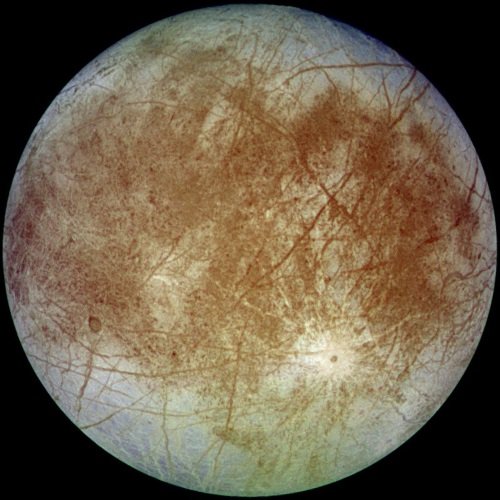
Europa is the smallest of Jupiter’s four big moons, but possibly the most important. Beneath its smooth, cracked ice shell lies a global ocean of salty water, perhaps twice the volume of all Earth’s oceans.
That makes it one of the best places in the solar system to look for life. NASA’s Europa Clipper, launched in 2024, is set to reach Jupiter in 2030 to investigate.
7. Triton (2,707 km)
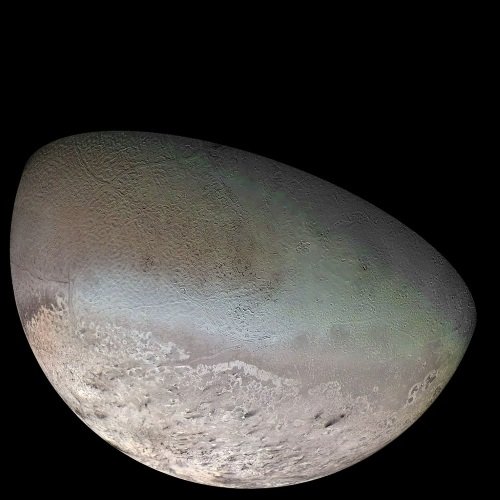
Neptune’s largest moon is the only large moon that orbits its planet backward, against the direction of the planet’s spin. That strongly suggests it was captured from the Kuiper Belt rather than formed around Neptune.
Triton is one of the coldest objects ever measured, at around minus 235 degrees Celsius, yet Voyager 2 saw geysers blasting dark material from its frozen surface in 1989.
8. Titania (1,578 km)
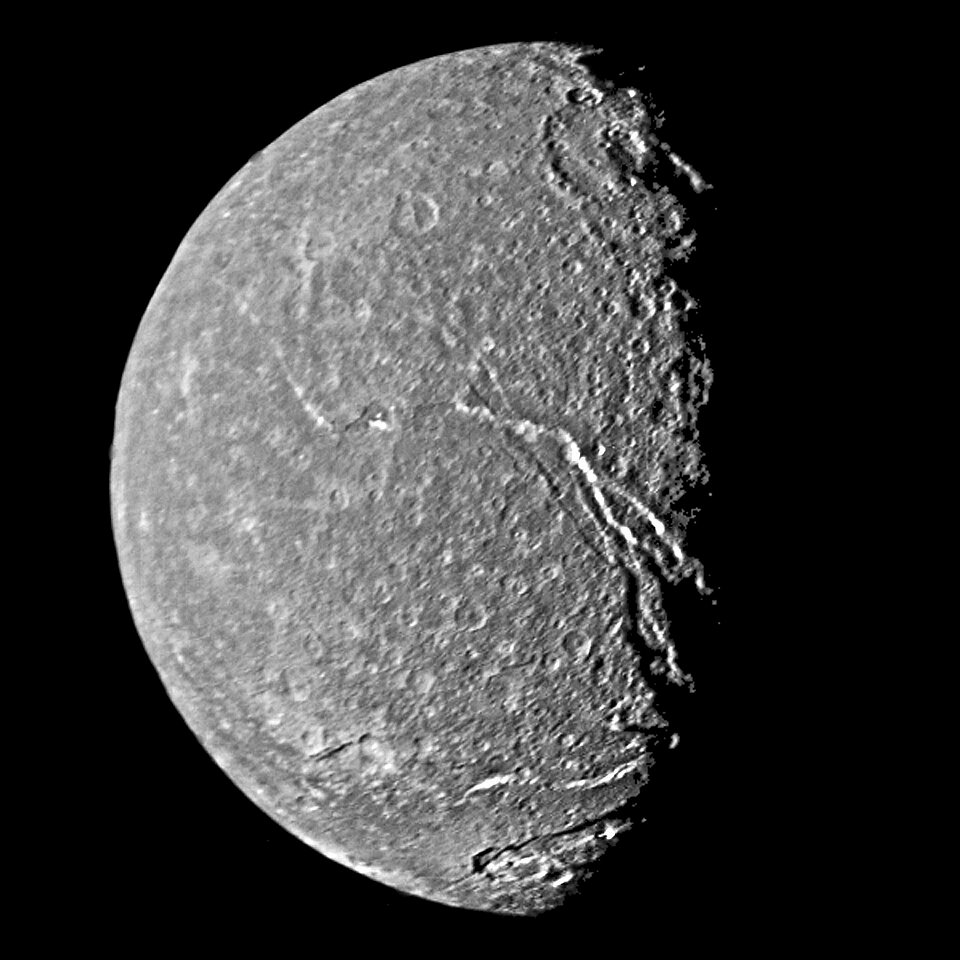
Titania is the largest moon of Uranus. Its surface is crossed by huge canyons and fault lines, signs that its crust was once pulled apart as its interior expanded.
It was discovered by William Herschel in 1787 and named after the fairy queen in Shakespeare’s A Midsummer Night’s Dream.
9. Rhea (1,528 km)
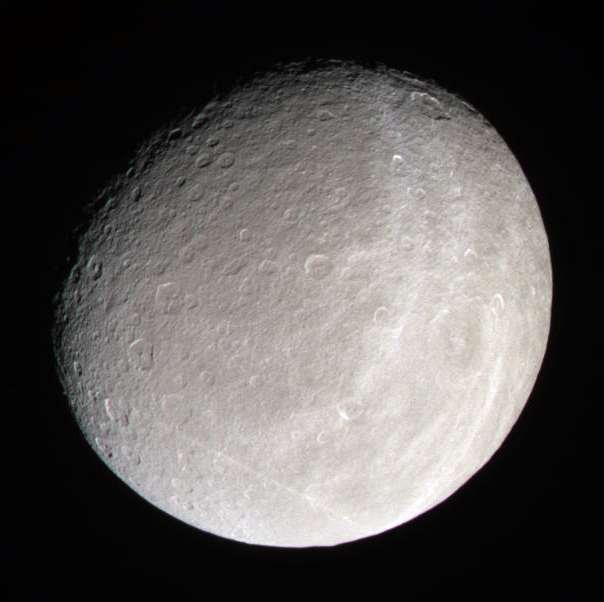
Saturn’s second-largest moon is essentially a giant dirty snowball, made of roughly three quarters water ice and one quarter rock.
Its ancient, heavily cratered surface shows that little has happened there for billions of years. The Cassini spacecraft also found hints of an extremely thin atmosphere of oxygen and carbon dioxide.
10. Oberon (1,523 km)
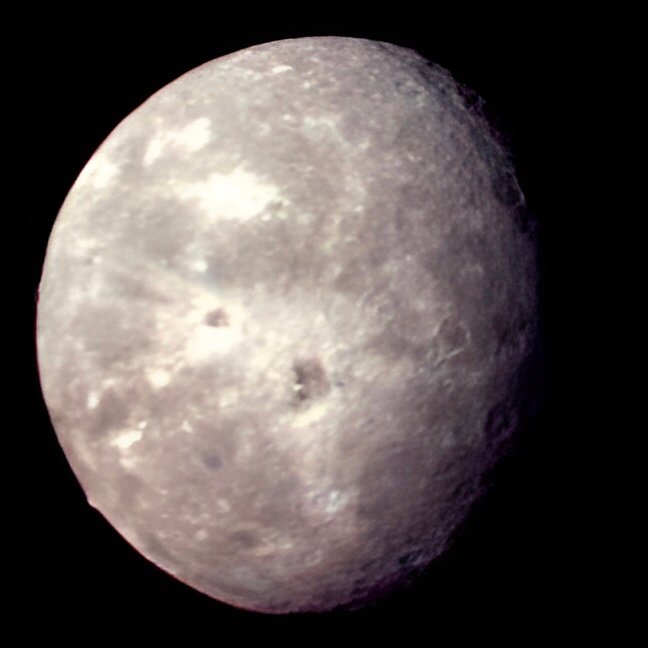
Oberon is the outermost of Uranus’s large moons and only a few kilometers smaller than Rhea. Herschel discovered it in 1787, along with Titania.
Its surface is old and covered in craters, some with dark material on their floors. Voyager 2 also spotted a mountain about 11 kilometers high on its edge. Everything we know about it comes from that single flyby in 1986.