Uranus is the odd one out among the planets. It spins on its side, has the coldest atmosphere in the solar system and was the first planet discovered with a telescope. Almost everything we have seen of it up close comes from a single spacecraft flyby in 1986.
Here are ten facts about this distant and wonderfully strange world.
1. It was the first planet discovered with a telescope
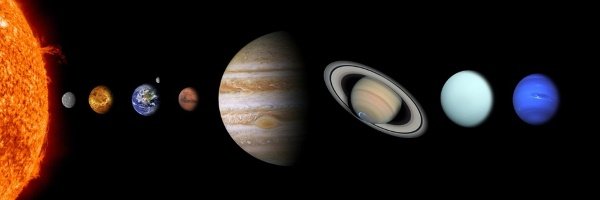
Mercury, Venus, Mars, Jupiter and Saturn are easy to see and have been known since ancient times. Uranus is different. It is technically visible to the naked eye under perfectly dark skies, but it is so faint that nobody recognized it as a planet.
The English astronomer John Flamsteed recorded it as early as 1690, mistaking it for a star. In 1781, William Herschel noticed that this “star” was moving. He first thought it was a comet, but it soon became clear he had found a new planet, the first discovered in recorded history.
2. It was almost named after a king
Herschel wanted to name his discovery Georgium Sidus, “George’s Star”, after King George III of Britain. Astronomers outside Britain were not keen on a planet named after an English king.
The German astronomer Johann Bode suggested Uranus instead, after the Greek god of the sky and father of Saturn. It took decades, but by the mid-19th century the name had been adopted everywhere.
3. It has the coldest atmosphere in the solar system
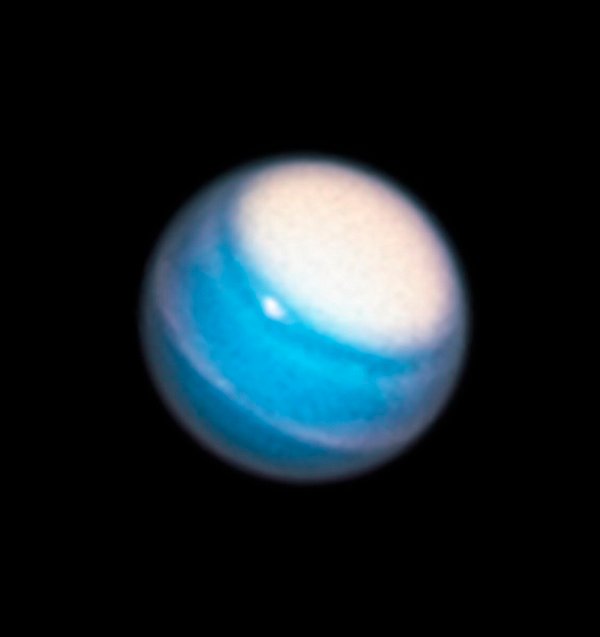
Uranus orbits about 2.9 billion kilometers from the Sun, around 19 times farther than Earth. Unsurprisingly, it is extremely cold.
Surprisingly, it is even colder than Neptune, which is much farther out. Temperatures in Uranus’s upper atmosphere have been measured as low as minus 224 degrees Celsius. The likely reason: unlike the other giant planets, Uranus gives off almost no heat of its own.
4. It rolls around the Sun on its side
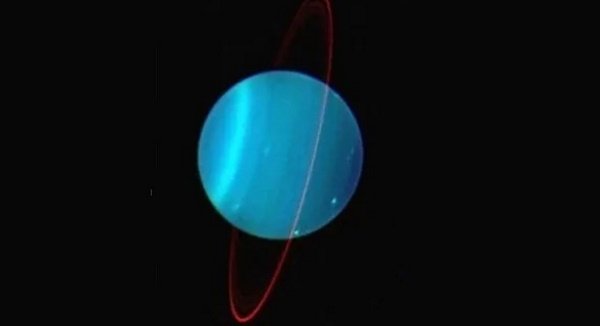
Most planets spin more or less upright, like tops. Uranus is tilted by about 98 degrees, so it essentially lies on its side and rolls along its orbit like a ball.
Scientists think something huge, perhaps a collision with an Earth-sized object early in its history, knocked it over. Because the tilt is slightly more than 90 degrees, Uranus technically spins backward, like Venus.
5. Its seasons last more than 20 years
A day on Uranus lasts about 17 hours, but a year lasts 84 Earth years. Combined with its extreme tilt, that creates the strangest seasons in the solar system.
Each pole gets about 42 years of continuous sunlight, followed by 42 years of darkness. If you lived near one of the poles, you might see the Sun rise only once or twice in your lifetime.
6. It has a set of dark rings
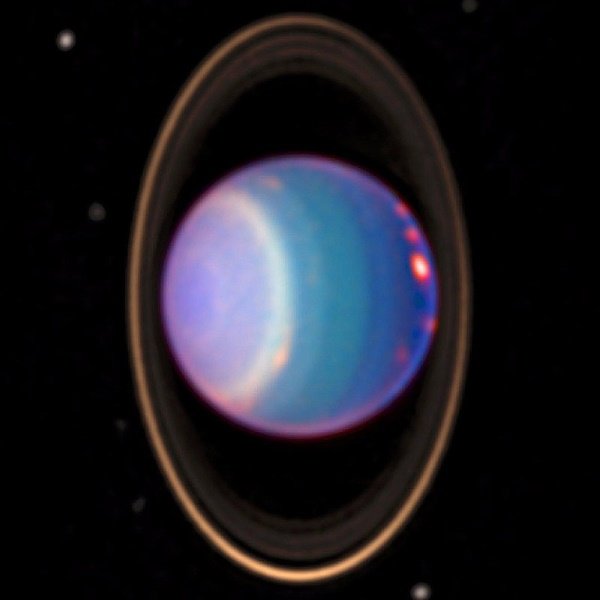
Astronomers were surprised in 1977 when Uranus turned out to have rings. They were discovered when the planet passed in front of a star, and the star flickered several times before and after Uranus itself blocked it.
We now know of 13 rings. Unlike Saturn’s bright icy rings, most of them are narrow and very dark, possibly made of ice darkened by radiation.
7. It is an ice giant, not a gas giant
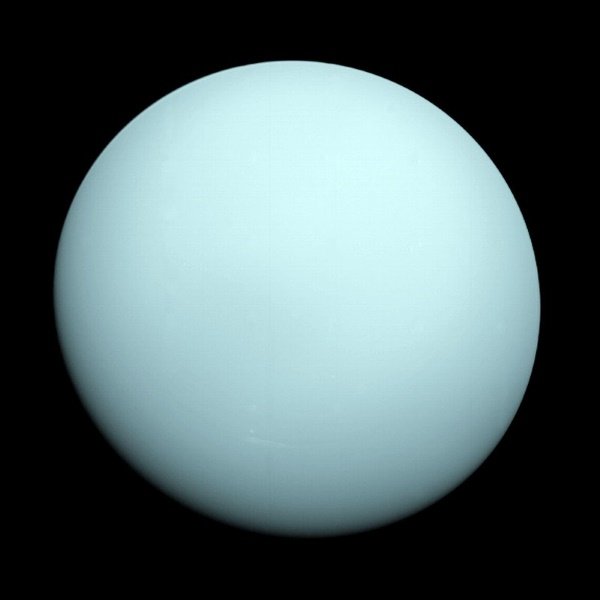
Uranus has no solid surface. Beneath its atmosphere of hydrogen and helium lies a deep, hot, slushy layer of water, ammonia and methane, surrounding a small rocky core. That is why astronomers call Uranus and Neptune ice giants rather than gas giants.
Its soft blue-green color comes from methane in the upper atmosphere, which absorbs red light and reflects blue and green.
8. Its moons are named after characters from literature
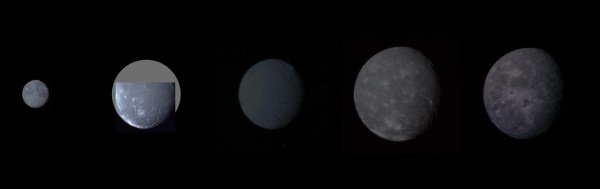
Uranus has 28 known moons, the latest found by the James Webb Space Telescope in 2025. Unlike most moons, which are named after figures from mythology, these are named after characters from the works of William Shakespeare and Alexander Pope.
The two largest, Titania and Oberon, were discovered by Herschel himself in 1787 and take their names from the fairy queen and king in A Midsummer Night’s Dream. Other moons include Miranda, Ariel, Puck, Juliet and Ophelia.
9. One moon has the tallest cliff in the solar system
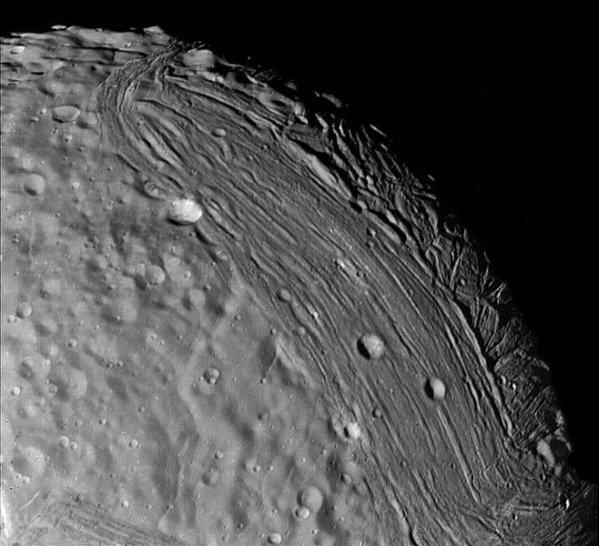
Miranda is one of the strangest-looking moons we know. Its surface is a patchwork of grooves, ridges and terrain that looks as if it was smashed apart and stuck back together.
It is also home to Verona Rupes, a cliff estimated at around 20 kilometers high, more than twice the height of Mount Everest and the tallest known cliff in the solar system. Thanks to Miranda’s weak gravity, a fall from the top would last several minutes.
10. Only one spacecraft has ever visited
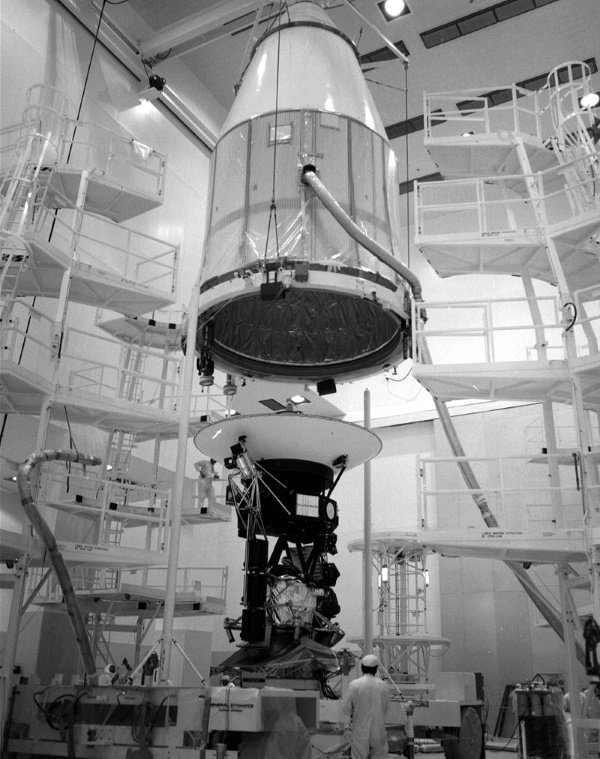
Voyager 2 flew past Uranus in January 1986, the only visit any spacecraft has made. In just a few hours, it discovered ten new moons and two new rings.
Scientists have been pushing for a return ever since. In 2022, a major report from the US National Academies named a Uranus orbiter and probe as NASA’s top priority for its next big planetary mission, but no launch date has been set yet.