
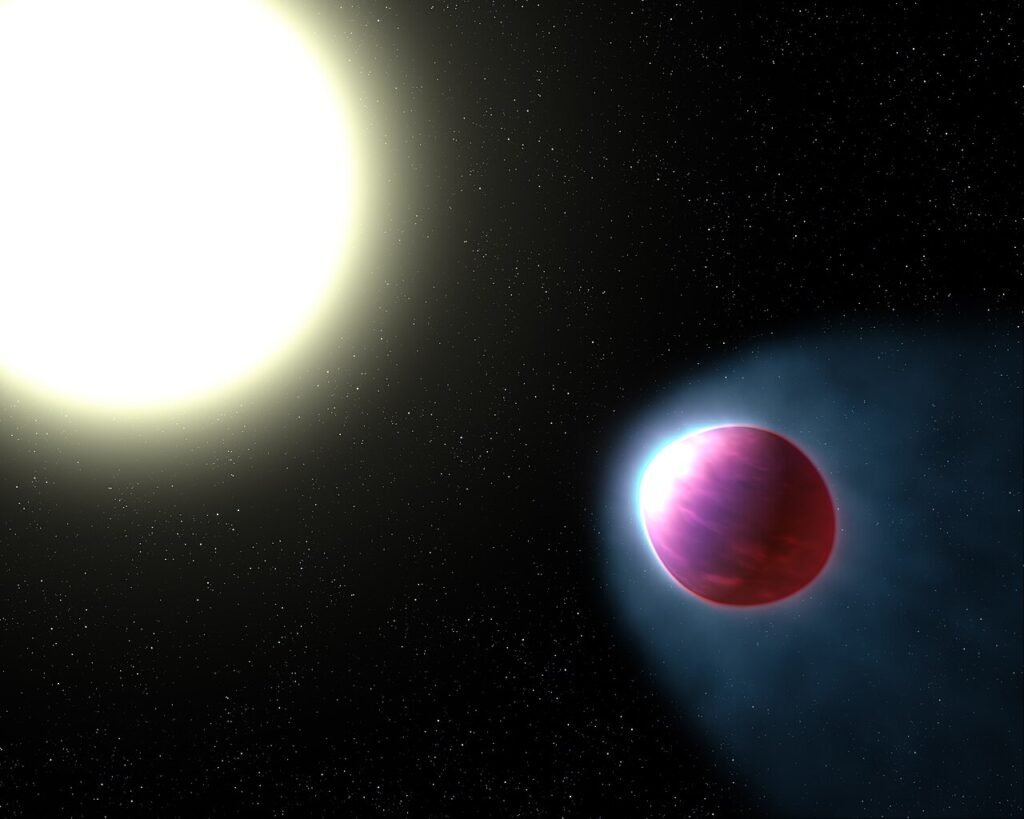
The hottest planet ever discovered is KELT-9b. On this gas giant, temperatures rise to a staggering 4,300 degrees Celsius. That is so extremely hot that the planet is warmer than many stars in the universe. Molecules cannot exist here; the heat immediately tears them apart.
When we think of space, we think of a cold, dark void. But there are places in the universe that resemble a literal hell. In recent years, astronomers have found planets that orbit so close to their parent star that they are slowly evaporating, or where it rains molten iron.
Compared to these alien ovens, our own Earth is just a lukewarm little ball. We have also included our 'own' hottest neighbor in this list for comparison, but you will see that it is actually tiny next to the violence of the rest.
Cast your vote - the ranking shifts live based on the votes.
KELT-9b (4,327 °C)
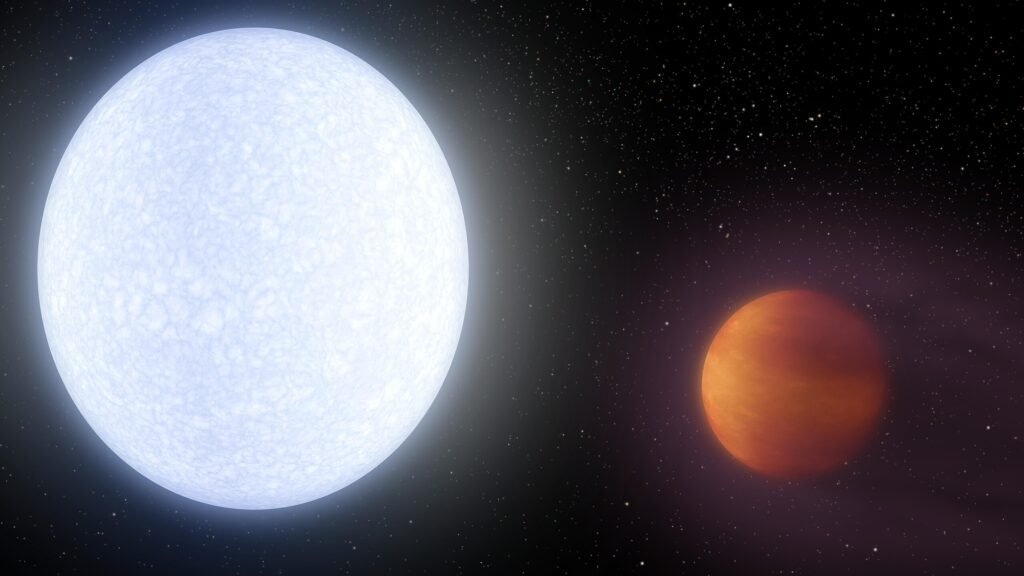
This is the absolute king of heat. KELT-9b orbits so close to its blue parent star that a 'year' (one lap around the star) lasts only 1.5 days. The heat is so intense that the planet's atmosphere literally boils off into space. NASA scientists explain that this planet stretches the definition of what is possible: it is hotter than 80% of all known stars.
Kepler-70b (About 6,800 °C - Disputed)
There is a lot of debate about this planet. If it still exists, it is hotter than the sun. Scientists think it is the leftover core of a larger planet that was swallowed by its dying star. It now races through the hot outer layer of that star. Because the status of this object is not 100% certain (is it even still a planet?), it is often given a shared spot or placed just below KELT-9b, but the temperatures are mind-boggling.
Log in to post a comment.
WASP-189b (3,200 °C)
This planet is a so-called “Ultra-Hot Jupiter”. It orbits a bright blue star that is much hotter than our sun. The planet is so close that it is 'tidally locked': one side always faces the star (eternal day) and the other side is dark. The day side is so hot that even metals like iron instantly turn into gas.
Log in to post a comment.
WASP-33b (3,200 °C)
WASP-33b held the record for years before KELT-9b was found. This planet acts as a kind of sunscreen for itself: astronomers found titanium oxide in its atmosphere. This substance absorbs ultraviolet radiation and makes the atmosphere heat up extremely quickly. The planet orbits its star in a bizarre, retrograde orbit.
Log in to post a comment.
WASP-121b (2,500 °C)
On this planet, the star's gravity is so strong that the planet isn't round but shaped like a rugby ball. The heat on the day side is so intense that metals like magnesium and iron evaporate and leak into space as gas. It is a planet that is slowly but surely being torn apart by its own sun.
Log in to post a comment.
WASP-76b (2,400 °C)
This might be the most “metal” planet on the list. On the day side it is hot enough to vaporize iron. Strong winds then blow that iron vapor to the cooler night side (where it is 'only' 1,500 degrees). There the vapor cools and condenses, and according to the European Southern Observatory it literally rains liquid iron from the sky.
Log in to post a comment.
55 Cancri e (2,300 °C)
This planet is nicknamed “The Diamond Planet”. It is twice the size of Earth but much heavier. Researchers think its core consists largely of carbon, compressed into diamond by the enormous pressure and heat. Its surface is probably covered by an ocean of liquid lava.
Log in to post a comment.
Kepler-10b (1,500 °C)
Kepler-10b was the first rocky planet found outside our solar system. While the other planets on this list are often gas giants (like Jupiter), this is a scorched rocky world. You still couldn't walk on it though: the surface probably consists of molten rock, liquefied by the radiation of the star it orbits so closely.
Log in to post a comment.
TrES-2b (1,000 °C)
This planet isn't the very hottest, but it is the darkest. TrES-2b reflects less than 1% of the light that hits it. It is blacker than coal or black acrylic paint. Because it absorbs all that light instead of reflecting it, the planet gets incredibly hot. National Geographic described the red glow coming off the planet as that of a glowing coil on an electric stove.
Log in to post a comment.
The Hottest of 'Our' Planets - Venus (462 °C)
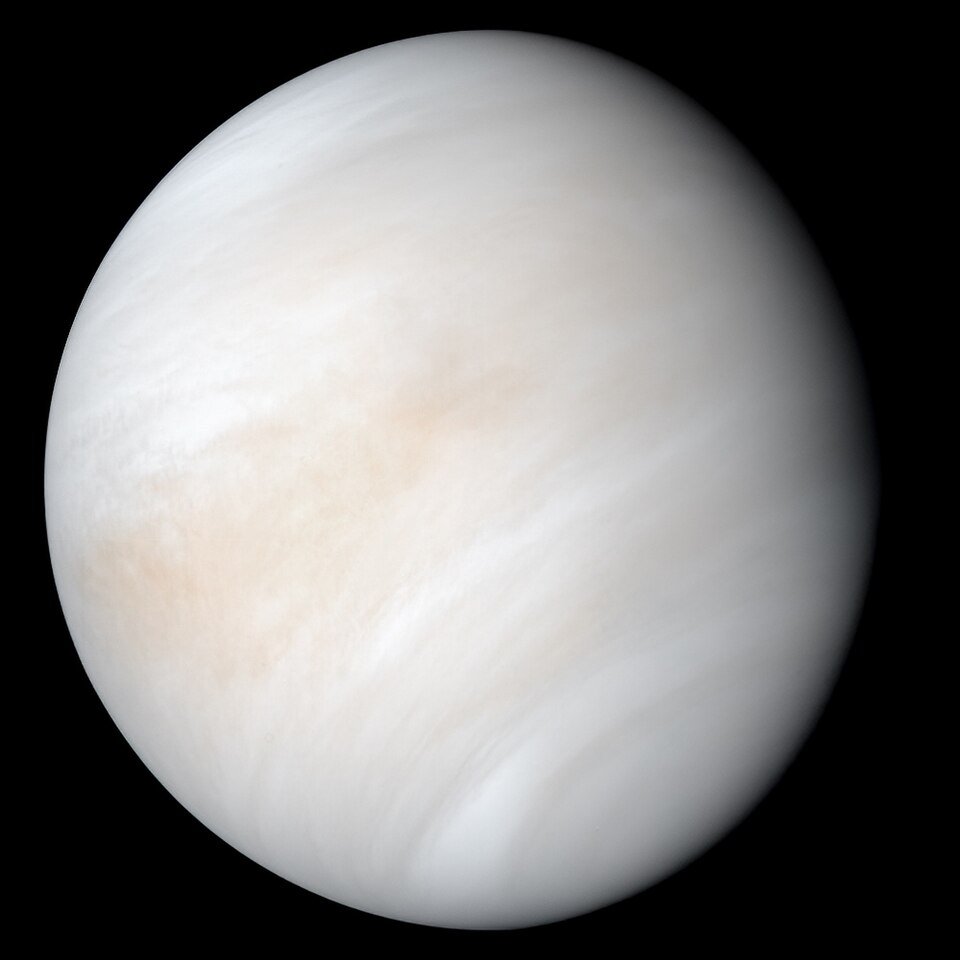
Compared to the rest, Venus is ice cold, but it deserves a spot because it is the hottest planet in our solar system (yes, hotter than Mercury, which is closer to the sun!). Venus has a suffocating CO2 atmosphere that acts as an extreme greenhouse. NASA data shows that the temperature here is high enough to melt lead, and it stays that way day and night.
Log in to post a comment.
Missing an item in this list?
Log in or create a free account to add an item yourself.
Log in / create account
Log in to post a comment.