Far out in the South Pacific Ocean lies a spot where human civilization is further away than anywhere else on the planet. Point Nemo is not an island or a lonely rock, but a set of coordinates in open water that marks the most remote place on Earth.
From sunken space stations to mysterious underwater sounds, here are 13 fascinating facts about Point Nemo.
1. It lies 2,688 kilometers from the nearest land
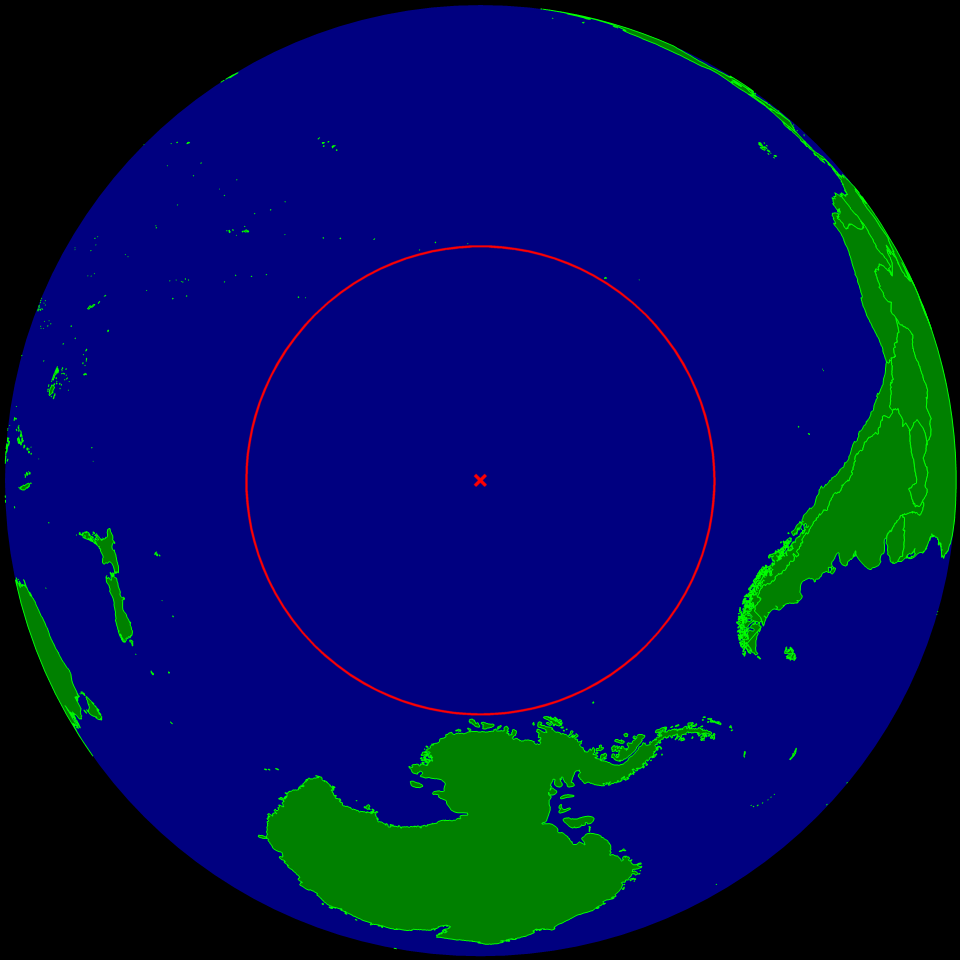
Officially known as the oceanic pole of inaccessibility, Point Nemo sits at 48°52.6′S 123°23.6′W. Those coordinates place it at an exact distance of 2,688 kilometers (1,670 miles) from the three closest pieces of land.
To the north lies tiny Ducie Island (part of the Pitcairn Islands), to the northeast sits Motu Nui near Easter Island, and to the south lies snow-covered Maher Island off the coast of Antarctica.
2. Nobody lives there and ships almost never pass through
Because Point Nemo sits well outside commercial shipping lanes and international flight paths, vessels almost never cross this stretch of water. You will not find cargo ships, fishing fleets, or cruise liners anywhere near it.
On rare occasions, racing yachts competing in round-the-world events like The Ocean Race sail past this remote corner of the globe.
3. Space agencies use it as an official spacecraft cemetery
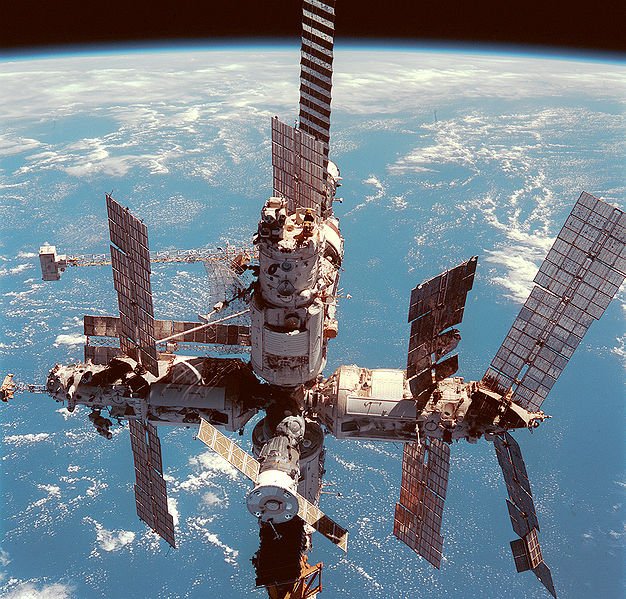
Since 1971, space agencies including NASA, ESA, and Roscosmos have used this uninhabited region as a controlled deorbit zone for retired spacecraft. With no people or shipping traffic in the area, it is the safest place on Earth to bring down large orbital hardware.
More than 260 satellites, cargo vessels, and space stations rest on the seabed here, including the 143-ton Soviet space station Mir, which splashed down in 2001. The International Space Station (ISS) is also scheduled to retire here around 2030.
4. It is named after Jules Verne’s Captain Nemo
The spot takes its name from Captain Nemo, the submarine commander in Jules Verne’s classic 1870 novel Twenty Thousand Leagues Under the Sea.
In Latin, the word nemo translates to “no one”, a fitting name for a place where no human being is ever around.
5. The closest people are often astronauts in space
Because the nearest inhabited islands are nearly 2,700 kilometers away, the closest humans to Point Nemo are frequently not on Earth at all.
Whenever the International Space Station passes overhead at an altitude of roughly 400 kilometers (250 miles), the astronauts on board are more than six times closer to Point Nemo than anyone on solid ground.
6. A giant ocean current traps it in a biological desert
Point Nemo sits right inside the South Pacific Gyre, a rotating system of ocean currents that blocks cold, nutrient-rich water from entering the area. Because the spot is so far from land, winds carry almost no mineral dust out to the water either.
Without nutrients, phytoplankton can barely grow. As a result, the crystal-clear water supports very little marine life, apart from extremophile bacteria and small crabs living near deep-sea hydrothermal vents.
7. Its exact location was only calculated in 1992
Although sailors had crossed the Pacific for centuries, nobody knew the exact coordinates of the ocean’s most isolated point until 1992. Finding it required accounting for the three-dimensional ellipsoid shape of the Earth rather than a flat map.
Croatian-Canadian survey engineer Hrvoje Lukatela wrote a specialized geospatial computer program that pinpointed the exact spot equidistant from the three surrounding coastlines.
8. The mysterious ‘Bloop’ sound was recorded nearby
In the summer of 1997, underwater microphones operated by the U.S. National Oceanic and Atmospheric Administration (NOAA) picked up an ultra-low-frequency sound near Point Nemo. Dubbed “The Bloop”, the noise was loud enough to be detected by sensors 5,000 kilometers apart.
For years, the sound fueled speculation about giant deep-sea creatures. NOAA researchers later confirmed that The Bloop was actually caused by a massive icequake: a giant Antarctic iceberg cracking and breaking apart.
9. Fierce winds and towering waves batter the surface
Point Nemo lies in the path of the “Roaring Forties” and “Furious Fifties”, latitude belts famous among sailors for relentless gales. Because there are no landmasses at these latitudes to slow the wind down, storms build up unchecked across the Southern Ocean.
Heavy swells and waves topping ten meters (33 feet) are routine in these waters.
10. Internet rumors about alien bases are pure fiction
Extreme isolation tends to attract wild conspiracy theories. Over the years, online forums have claimed that Point Nemo hides everything from underwater alien bases to secret government facilities.
Oceanographers point out that the reality is much simpler: it is just four kilometers of pitch-black water over a quiet, muddy ocean floor.
11. The seabed below remains largely unexplored
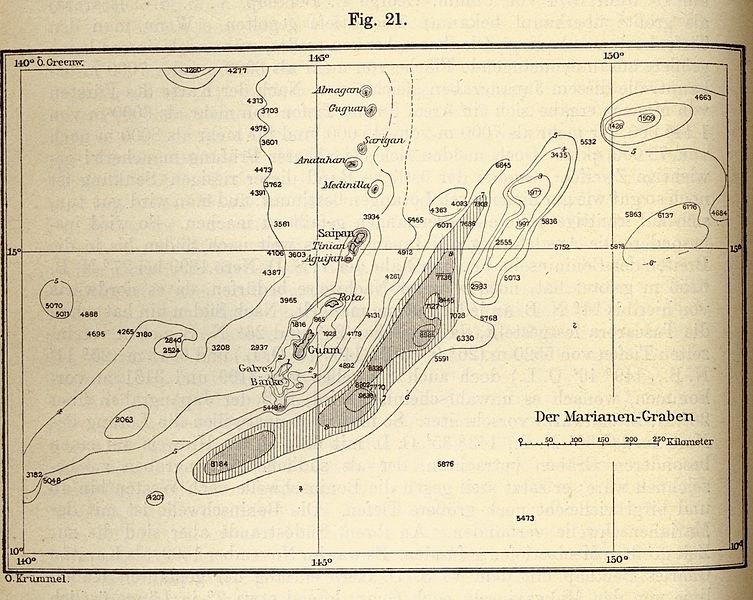
While humans have sent manned submersibles to the bottom of the Mariana Trench multiple times, the ocean floor beneath Point Nemo has barely been sampled. At roughly 4,000 meters deep, it is not even the deepest part of the Pacific.
The sheer distance from any port, high fuel costs, and rough seas make scientific expeditions to the area slow and expensive.
12. H.P. Lovecraft placed his monster city remarkably close to it
In his 1928 short story The Call of Cthulhu, horror writer H.P. Lovecraft placed the sunken fictional city of R’lyeh at 47°9′S 126°43′W in the South Pacific.
By sheer coincidence, Lovecraft chose a spot just a few hundred kilometers away from the coordinates that Lukatela would calculate as Point Nemo 64 years later.
13. It sits at the center of 22 million square kilometers of empty water
If you draw a circle from Point Nemo to the nearest specks of land, it encloses more than 22.4 million square kilometers of open water. That area is larger than the entire former Soviet Union, without a single piece of dry land inside it.
Have you ever wondered what it would feel like to sail across the most isolated spot on Earth? Let us know your thoughts in the comments below.