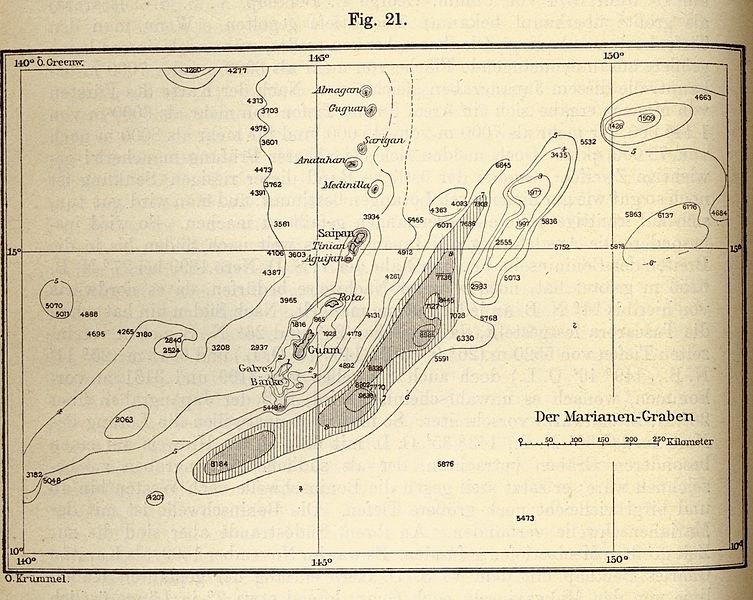
The deepest place on Earth is not hidden in a remote canyon or under the polar ice, but at the bottom of the western Pacific Ocean. The Mariana Trench is so deep that if you dropped Mount Everest into it, its peak would still be more than two kilometers below the surface.
Crushing pressure, total darkness and boiling hot springs make it one of the most hostile environments on our planet. Here are ten facts about the Mariana Trench.
1. It is a giant crescent-shaped scar in the ocean floor
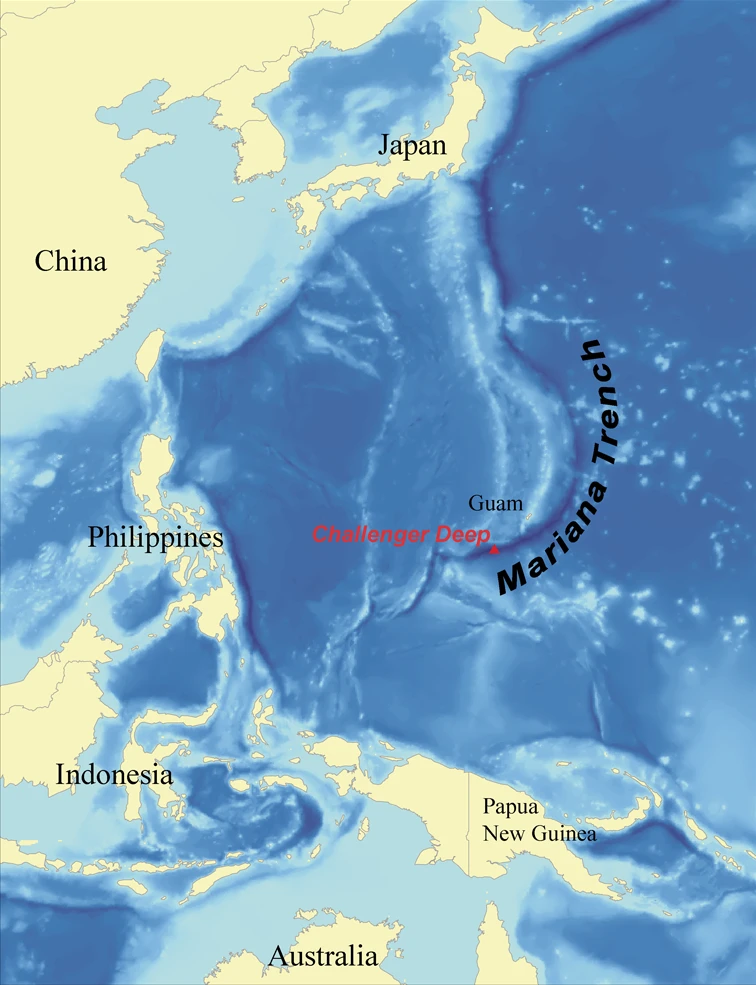
The Mariana Trench is about 2,550 kilometers long and on average about 69 kilometers wide. It lies east of the Philippines and south of Japan, next to the Mariana Islands, which are the tops of underwater volcanoes.
It was formed where the Pacific Plate slides beneath the smaller Mariana Plate. This process, called subduction, drags the ocean floor down and creates the deepest trench in the world.
2. Its deepest point is almost 11 kilometers down
The deepest point, the Challenger Deep, lies at the southern end of the trench. Recent measurements put it at about 10,935 meters deep, give or take a few meters. Mount Everest, by comparison, is 8,849 meters high.
It is named after the British ship HMS Challenger, whose crew first measured the trench’s depth in 1875. In 1951, its successor, HMS Challenger II, used echo sounding to find the true depth of almost 11 kilometers.
3. The pressure is more than 1,000 times higher than at the surface
At the bottom of the trench, the water pressure is more than 1,000 times higher than at sea level, about one tonne on every square centimeter. That is like having the weight of a car pressing down on your fingertip.
Any submarine going down there has to be built incredibly strong, with walls of thick titanium or steel and small, very thick windows.
4. It is freezing cold, with boiling hot vents
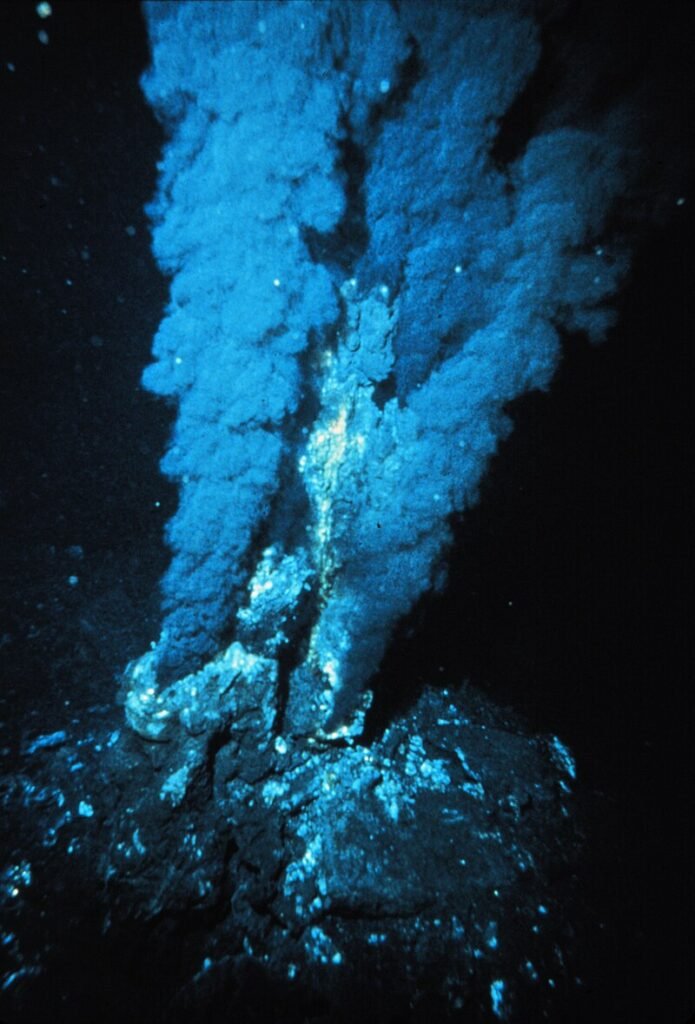
Without sunlight, the water at the bottom of the trench is a constant 1 to 4 degrees Celsius. But in some places there are hydrothermal vents, also called black smokers.
These volcanic chimneys release mineral-rich water that can reach hundreds of degrees Celsius. It does not boil, because the enormous pressure raises the boiling point of water far above normal.
5. Strange creatures live there
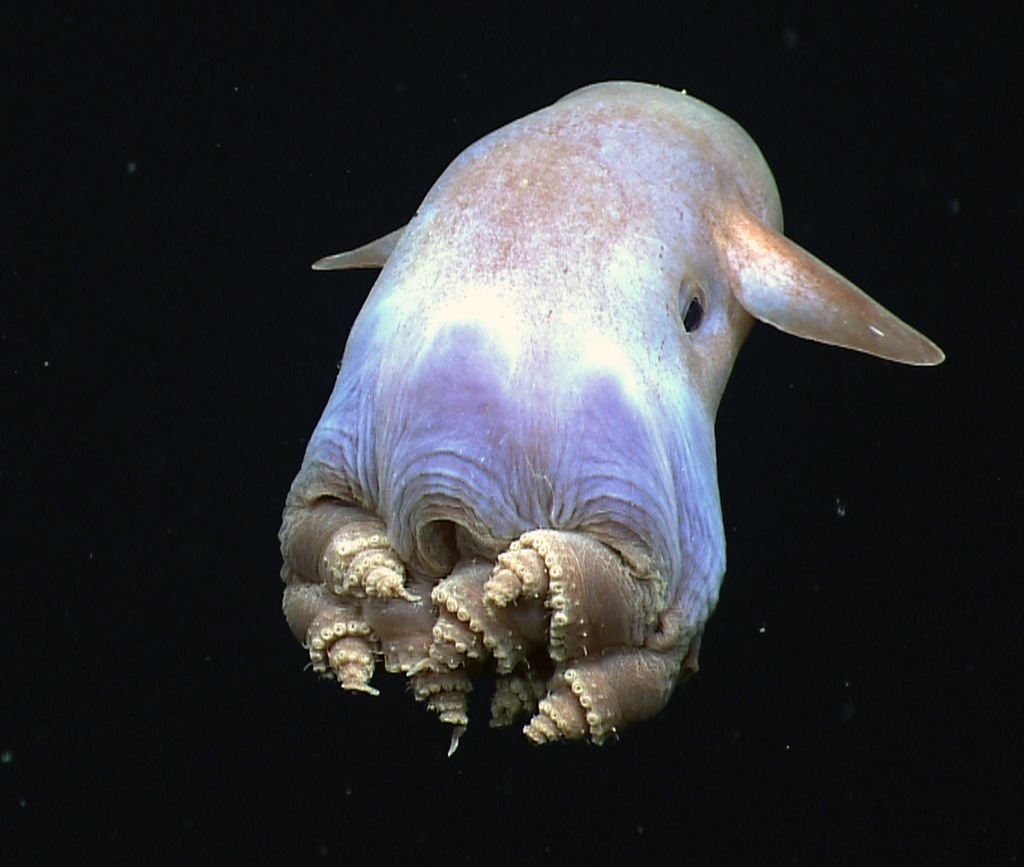
Despite the extreme conditions, the trench is full of life. In the upper layers swims the Dumbo octopus, with fins that look like ears. The Mariana snailfish has been filmed at more than 8,000 meters, among the deepest fish ever seen. Fish probably cannot survive much deeper, because pressure disrupts their cells.
At the very bottom, you mainly find sea cucumbers, bacterial mats and amphipods, small shrimp-like animals that feed on organic material drifting down from above.
6. Only a few dozen people have been to the bottom
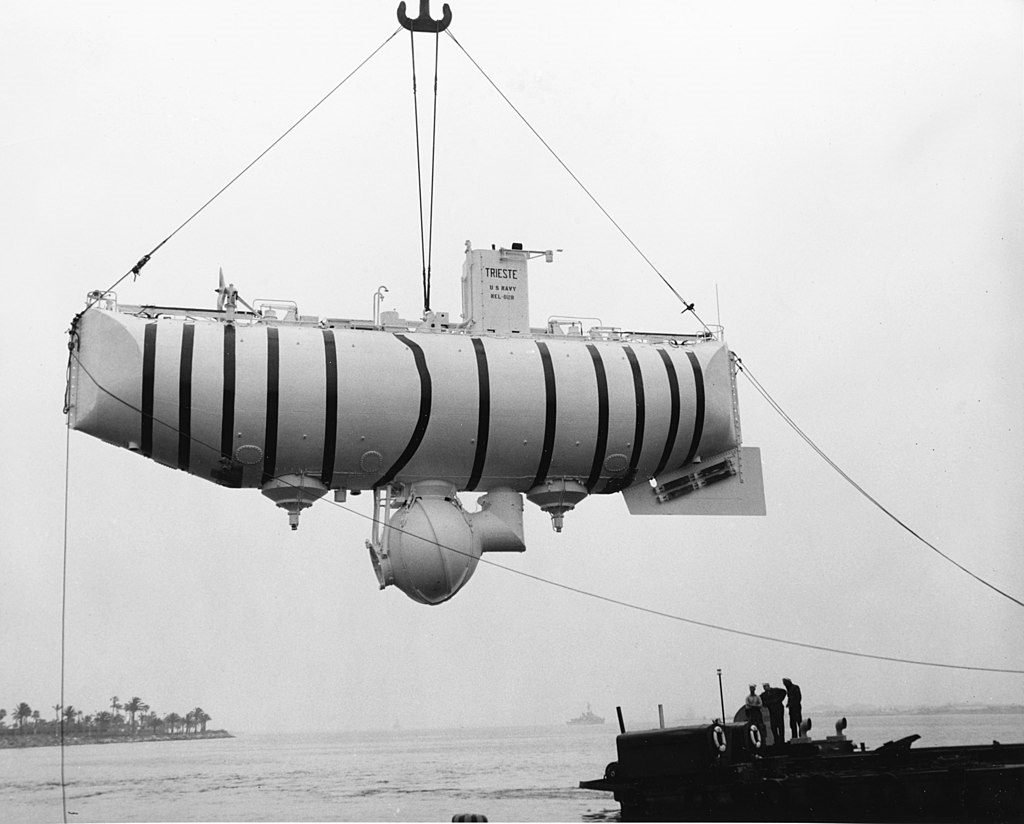
More than 600 people have been to space, but only a few dozen have visited the Challenger Deep. The first were Jacques Piccard and Don Walsh, who reached the bottom in the bathyscaphe Trieste in January 1960. The second visit came only in 2012, when film director James Cameron made a solo dive in his Deepsea Challenger.
Since 2019, American explorer Victor Vescovo has made many dives with his submarine Limiting Factor, taking scientists and other passengers with him. As a result, the number of people who have seen the deepest seafloor with their own eyes has grown to a few dozen.
7. A mysterious sound was finally explained
In 2016, underwater microphones near the trench recorded a strange sound: a deep groan followed by a high-pitched metallic twang, almost like something from a science fiction film. It was nicknamed the “Western Pacific Biotwang”.
For years, nobody knew what made it. In 2024, researchers using machine learning and years of recordings showed that it comes from Bryde’s whales, which probably use it to communicate over long distances.
8. Even here, there is plastic
Not even the deepest place on Earth is safe from human pollution. During one of his dives in 2019, Victor Vescovo found what appeared to be a plastic bag and candy wrappers on the bottom.
Scientists have also found microplastics and banned industrial chemicals in the guts of amphipods living almost 11 kilometers deep.
9. It is a hotspot for earthquakes
The Mariana Trench is part of the Pacific Ring of Fire. Because the tectonic plates do not slide smoothly but get stuck and then suddenly slip, huge tension builds up in the Earth’s crust.
When that tension is released, it can cause powerful earthquakes, which in turn can generate tsunamis that travel thousands of kilometers across the ocean.
10. No, the Megalodon is not hiding there
In the film The Meg, a prehistoric Megalodon shark survives in a hidden warm layer at the bottom of the Mariana Trench. It makes for a fun movie, but it is complete fiction.
Megalodon hunted whales in relatively shallow seas and needed huge amounts of food. The trench is ice cold and has no large prey. And sharks, like other cartilaginous fish, cannot live deeper than about 3,000 to 4,000 meters, because of the pressure.