From boiling undersea vents and eleven-kilometer ocean trenches to mountain peaks that grow taller every year, Earth is packed with geological extremes. Even in the age of satellites, researchers continue to uncover strange natural wonders across our planet.
Here are 50 fascinating facts about the world and its most remarkable landscapes.
1. The Amazon is the largest tropical rainforest on Earth
Covering roughly 5.5 million square kilometers across nine South American countries (most of it in Brazil), the Amazon rainforest holds more than half of the planet’s remaining tropical forest. Although often nicknamed the “lungs of the Earth”, microorganisms and plants in the forest consume almost all the oxygen the trees produce.
2. Mount Everest grows a few millimeters taller every year
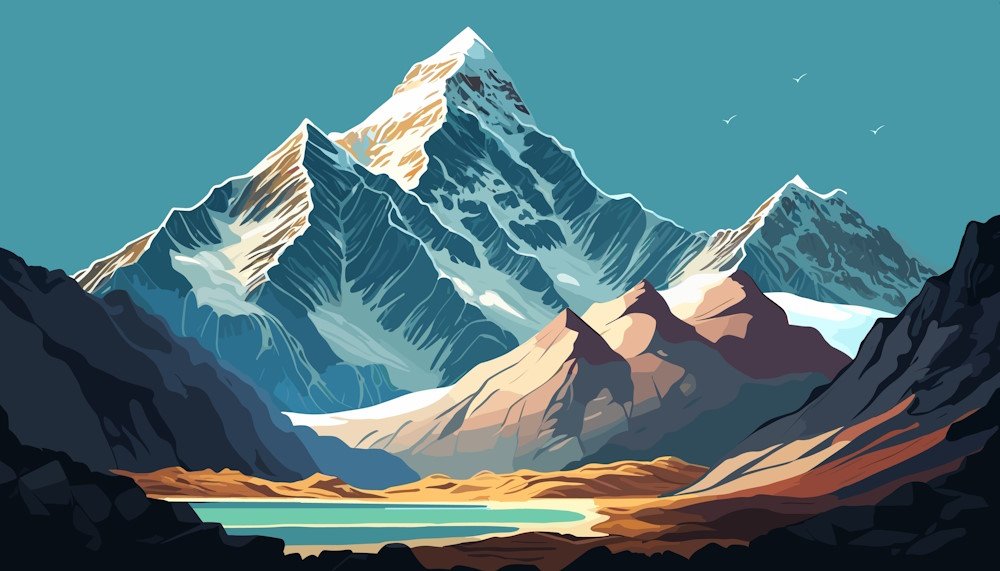
Officially measured at 8,848.86 meters (29,031.7 feet) above sea level, Mount Everest is the highest peak on Earth. Because the Indian tectonic plate continues to push northward beneath the Eurasian plate, the Himalayas are still rising by about 4 millimeters a year.
3. The Mariana Trench plunges nearly 11 kilometers below the waves
The deepest known spot in Earth’s oceans is the Challenger Deep inside the western Pacific’s Mariana Trench, nearly 11,000 meters below sea level. If you dropped Mount Everest into the trench, its peak would still sit more than two kilometers underwater.
4. Bolivia’s Salar de Uyuni turns into the world’s largest mirror
High in the Bolivian Andes at 3,656 meters elevation lies Salar de Uyuni, a salt flat spanning over 10,500 square kilometers. When a thin sheet of rainwater covers the crust during the wet season, the flat surface becomes a giant mirror so smooth that satellites use it to calibrate their altimeters.
5. The Great Barrier Reef is the largest living structure on the planet
Stretching more than 2,300 kilometers along the coast of Queensland, Australia, the Great Barrier Reef is made up of nearly 3,000 individual reefs built by billions of tiny coral polyps, making it clearly visible from orbit.
6. Antarctica holds 90 percent of the world’s ice
The Antarctic ice sheet averages more than two kilometers thick and reaches nearly five kilometers deep in places. It locks up about 90 percent of all ice on Earth and roughly 70 percent of the world’s fresh water; if it all melted, global sea levels would rise by almost 60 meters.
7. The Northern Lights are caused by solar particles hitting Earth’s atmosphere
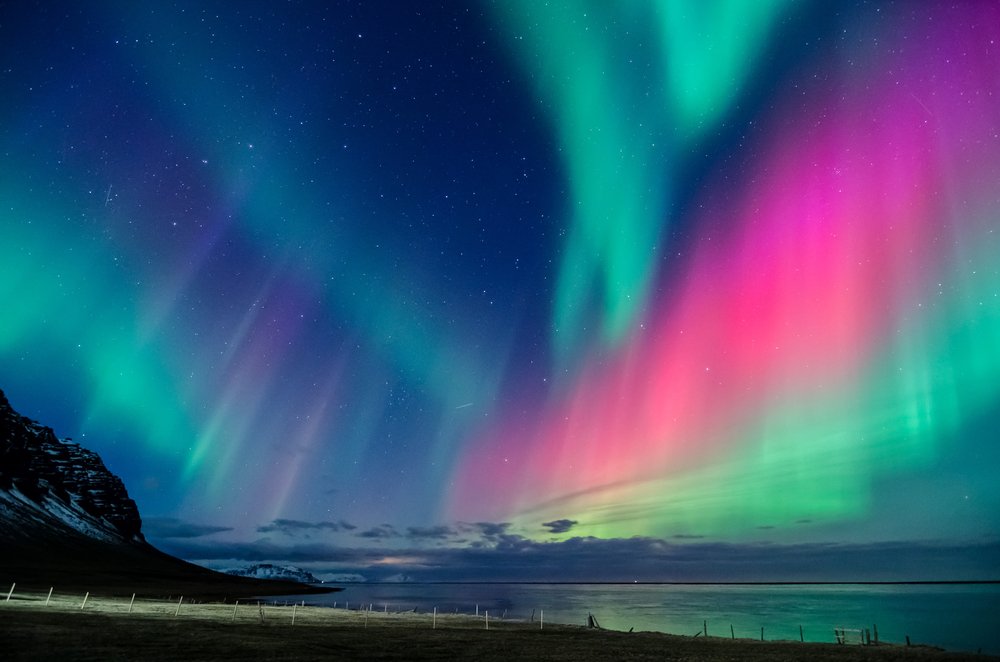
The aurora borealis (in the north) and aurora australis (in the south) light up when electrically charged particles streaming from the Sun are funneled by Earth’s magnetic field toward the poles, colliding with oxygen and nitrogen gases high in the upper atmosphere.
8. Most of the Sahara Desert is rock and gravel, not sand dunes
Spanning 9.2 million square kilometers across North Africa, the Sahara is the world’s largest hot desert, roughly the size of the United States. Despite movie clichés, towering sand dunes (ergs) cover only about 25 percent of the Sahara; the rest is barren stone plateaus and gravel plains.
9. Half of all active geysers on Earth sit inside Yellowstone
Heated by a giant underground magma chamber, Yellowstone National Park in the United States contains more than 10,000 hydrothermal features and roughly 500 active geysers, more than half the world’s total, including Old Faithful.
10. The Galápagos Islands are home to the world’s only sea-going lizards
Because the volcanic Galápagos archipelago formed in isolation 1,000 kilometers off the coast of Ecuador, its wildlife evolved along unique paths. The Galápagos marine iguana is the only lizard on Earth that dives into the ocean to forage for cold-water algae.
11. Angel Falls drops so far that much of its water turns to mist
Plunging 979 meters (3,212 feet) off the flat-topped Auyán-tepui mountain in Venezuela, Angel Falls is the world’s highest uninterrupted waterfall. The drop is so long that strong winds blow much of the falling water into fine mist before it hits the river below.
12. Parts of Chile’s Atacama Desert have never recorded rain
Wedged between the Pacific coastal mountains and the high Andes, the Atacama Desert sits in a double rain shadow. Some weather stations in its arid core have gone decades without recording a single millimeter of rain, making its bone-dry night skies ideal for giant astronomical telescopes.
13. The Grand Canyon exposes nearly two billion years of Earth’s history
Over the past five to six million years, the Colorado River carved a gorge 446 kilometers long and up to 1,800 meters deep through the Arizona plateau, exposing horizontal rock layers down to the two-billion-year-old Vishnu Basement Rocks at the bottom.
14. Siberia’s Lake Baikal holds 20 percent of the world’s unfrozen fresh water
At 1,642 meters deep and roughly 25 million years old, Russia’s Lake Baikal is both the deepest and the oldest lake on Earth. It holds more water than all five North American Great Lakes combined and is home to the nerpa, the world’s only purely freshwater seal.
15. Around three-quarters of all volcanic activity happens underwater
While land volcanoes grab the headlines, geologists estimate that 75 to 80 percent of Earth’s magma erupts unseen along mid-ocean ridges deep on the sea floor, steadily building new oceanic crust.
16. Mount Kilimanjaro is the tallest freestanding mountain in the world
Unlike Himalayan peaks that rise from high mountain ranges, Tanzania’s Mount Kilimanjaro is a dormant stratovolcano that rises nearly five kilometers straight up from the surrounding East African plains to a height of 5,895 meters.
17. Scientists discover hundreds of new species in the Amazon every year
Biologists surveying the Amazon basin identify a newly described plant or animal species every few days on average, including new frogs, electric fish, orchids, and insects unknown to science.
18. Belize’s Great Blue Hole is a drowned Ice Age cave
The circular 318-meter-wide, 124-meter-deep marine sinkhole off the coast of Belize formed during past ice ages when sea levels were much lower. Once a dry limestone cavern filled with giant stalactites, its roof collapsed and the sea flooded in when the ice caps melted.
19. Rogue ocean waves over 30 meters tall are real
For centuries, oceanographers dismissed sailors’ tales of 30-meter walls of water appearing out of nowhere as tall tales. On January 1, 1995, laser instruments on the Draupner oil platform in the North Sea measured a 25.6-meter rogue wave, proving that converging wave trains can stack into giant freak waves.
20. Not a single bridge crosses the Amazon River
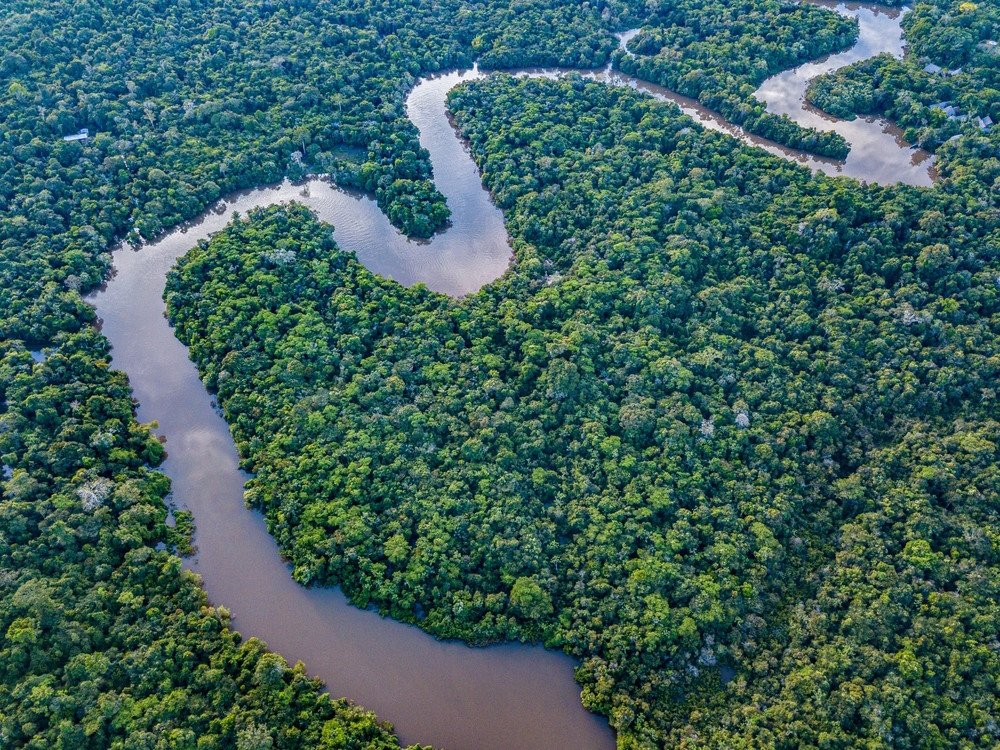
Along its entire 6,400-kilometer course, there is not one bridge spanning the main stem of the Amazon River. For most of its length, the river winds through dense rainforest with few roads, and during the rainy season its banks flood across widths of 30 to 50 kilometers, making bridge foundations impractical.
21. The Galápagos sit over a volcanic hotspot that is still building islands
As the Nazca tectonic plate slides eastward over a stationary mantle plume, volcanic eruptions create a chain of islands from west to east. The westernmost islands, Fernandina and Isabela, are the youngest and remain among the most active volcanoes in the world.
22. Ice caves beneath Iceland’s glaciers reshape themselves every year
During the summer, meltwater carves winding tunnels beneath Iceland’s Vatnajökull glacier. When winter freezes the tunnels solid, crystal-blue ice caves form, only to shift, collapse, and reform in new locations the following spring.
23. The Congo is the deepest river on Earth
While the Nile and Amazon are longer, the Lower Congo River in central Africa is by far the deepest, plunging into underwater canyons more than 220 meters (720 feet) deep with currents so turbulent that light never reaches the bottom.
24. The shores of the Dead Sea are the lowest dry land on Earth
Bordering Jordan, Israel, and the West Bank, the surface and shores of the Dead Sea sit roughly 430 meters (1,410 feet) below sea level. With a salt concentration of around 34 percent, nearly ten times saltier than the ocean, swimmers float effortlessly on the surface.
25. Victoria Falls forms the world’s widest curtain of falling water
On the border between Zambia and Zimbabwe, the Zambezi River plunges 108 meters into a narrow basalt gorge across a continuous width of 1,708 meters. The local Kololo name, Mosi-oa-Tunya, means “The Smoke That Thunders”.
26. There is no land at the North Pole
Unlike the South Pole, which sits atop the rocky continent of Antarctica, the geographic North Pole is located in the middle of the Arctic Ocean, where a shifting cap of sea ice two to three meters thick floats over 4,000 meters of dark water.
27. New Zealand’s Blue Lake has the clearest natural fresh water ever measured
Tests by New Zealand’s National Institute of Water and Atmospheric Research found that Rotomairewhenua (Blue Lake) in Nelson Lakes National Park has underwater visibility of up to 80 meters, nearly matching distilled water in a laboratory.
28. China is planting a 4,500-kilometer ‘Great Green Wall’ to hold back the Gobi Desert
As winds blow sand southward from the expanding Gobi Desert, China launched the Three-North Shelter Forest Program in 1978, planting billions of trees along a 4,500-kilometer belt aimed at slowing desertification by 2050.
29. Yellowstone’s caldera measures 55 by 72 kilometers across
Three super-eruptions over the past 2.1 million years emptied enough magma to collapse the ground above into a giant volcanic depression (caldera) so wide that visitors standing inside it often do not realize they are inside a volcano at all.
30. Southern Florida is the only place where alligators and crocodiles live side by side
In the brackish mangroves and marshes of the Florida Everglades, the range of the freshwater American alligator overlaps with the range of the saltwater-tolerant American crocodile, the only spot on Earth where both species share a habitat.
31. Ethiopia’s Danakil Depression is one of the hottest places on Earth
Sitting 125 meters below sea level in a tectonic rift zone in northeastern Ethiopia, the Danakil Depression has a year-round average temperature of 34.4 degrees Celsius, dotted with neon-yellow sulfur springs, salt flats, and boiling acid pools.
32. Iceland’s Strokkur geyser erupts like clockwork every 6 to 10 minutes
Located in the Haukadalur geothermal valley alongside the famous Great Geysir (which gave all geysers their English name), Strokkur blasts a column of boiling water 15 to 30 meters into the air every few minutes.
33. Australia’s Lake Hillier stays bright bubble-gum pink in a glass
On Middle Island off the coast of Western Australia, hypersaline Lake Hillier owes its vivid pink color to carotenoid pigments produced by Dunaliella salina microalgae and halophilic bacteria, keeping its pink hue even when scooped into a bottle.
34. Peru’s Alpamayo is famous for its near-perfect ice pyramid
Rising 5,947 meters in the Cordillera Blanca of the Peruvian Andes, Alpamayo features a steep, fluted southwest face of pure ice that forms a sharp, symmetrical pyramid.
35. Antarctica’s ‘Blood Falls’ runs red with ancient iron
At the tongue of the Taylor Glacier in East Antarctica, a five-story waterfall stains the white ice crimson. Scientists found that the water comes from a salty subglacial lake trapped without sunlight or oxygen for millions of years; as the iron-rich brine hits the air, it rusts on contact.
36. The Great Victoria Desert is Australia’s largest desert
Stretching across 348,750 square kilometers of Western and South Australia, the Great Victoria Desert is a vast expanse of red sandhills and salt lakes inhabited by specialized reptiles like the thorny devil, which drinks morning dew through tiny channels between its scales.
37. The Maldives is the flattest and lowest-lying country on Earth
With an average ground level of just 1.5 meters (4 feet 11 inches) above sea level across its 1,192 coral islands in the Indian Ocean, the Maldives has the lowest high point of any country in the world.
38. Iguazu Falls consists of 275 separate cascades
Straddling the border of Argentina and Brazil, the Iguazu River tumbles over a 2.7-kilometer crescent cliff broken into 275 individual waterfalls, half of which pour into a narrow U-shaped chasm called the Devil’s Throat.
39. Chile’s Valley of the Moon is used to test Mars rovers
Sculpted by wind out of salt, gypsum, and clay in the Atacama Desert, the Valle de la Luna has soil chemistry and dry, rocky terrain so similar to Mars that space agencies use the region to field-test rover instruments.
40. A slow-moving groundwater zone flows four kilometers beneath the Amazon
In 2011, Brazilian geophysicists analyzing thermal data from deep oil wells identified the Hamza, a vast, slow seepage of groundwater moving eastward through porous rock four kilometers beneath the Amazon basin.
41. Botswana’s Okavango Delta empties into a desert instead of the sea
Rather than flowing into an ocean, the Okavango River pours out of the Angolan highlands and spreads across the sands of Botswana’s Kalahari basin, creating a 15,000-square-kilometer inland wetland that attracts huge herds of elephants, hippos, and lions during the dry season.
42. Austria’s Krimml Waterfalls are the highest tiered falls in Central Europe
Inside Hohe Tauern National Park, glacial meltwater drops 380 meters over three dramatic stages, sending up a fine spray rich in negative ions that researchers have studied for its soothing effect on asthma sufferers.
43. Death Valley’s ‘sailing stones’ are pushed by paper-thin windowpane ice
For decades, nobody knew how heavy boulders slid across the flat mud of Racetrack Playa in California’s Death Valley, leaving long tracks behind them. In 2014, time-lapse cameras caught the culprit: after winter rain freezes into thin floating sheets of ice, light winds push the ice panels against the rocks, nudging them across the slick mud.
44. Sumatra’s Lake Toba fills the crater of a prehistoric super-eruption
Roughly 74,000 years ago, the Toba volcano in Indonesia erupted in the largest volcanic explosion of the past two million years, ejecting around 2,800 cubic kilometers of ash and leaving behind a 100-kilometer-long caldera lake.
45. Chile’s El Tatio geyser field steams at 4,320 meters above sea level
Set high in the Andes Mountains, El Tatio is the highest major geyser field in the world, where over 80 active vents send plumes of steam into the freezing mountain air at dawn.
46. Alaska’s Valley of Ten Thousand Smokes was born in a single 1912 eruption
In June 1912, the Novarupta volcano in Alaska erupted for 60 hours, burying a 100-square-kilometer valley under up to 200 meters of glowing ash that steamed from thousands of fumaroles for decades.
47. Norway’s Røst Reef is the world’s largest deep-water coral reef
Corals do not only grow in warm, sunlit tropics. Off Norway’s Lofoten islands, at depths of 300 to 400 meters in dark, icy water, Lophelia pertusa corals have built a reef 35 kilometers long.
48. Hawaii’s Kīlauea is one of the most active volcanoes on the planet
Located on the Big Island of Hawaii, Kīlauea erupted almost continuously from 1983 to 2018 and has erupted repeatedly inside its summit crater since 2020, pouring fluid basalt lava that steadily adds new black rock to the island.
49. Tibet’s Yarlung Tsangpo Grand Canyon is over three times deeper than the Grand Canyon
Cutting through the eastern end of the Himalayas around Namcha Barwa peak, the Yarlung Tsangpo River drops through a gorge that reaches an astonishing maximum depth of 6,009 meters (nearly 20,000 feet).
50. Boreal forests in the far north hold the highest density of trees on Earth
Of the world’s roughly 3.04 trillion trees, nearly a third grow not in tropical jungles, but in the vast subarctic boreal forests (taiga) of Russia, Canada, and Scandinavia. Which of these 50 natural wonders would you most like to see in person? Let us know in the comments below.