Almost everything that makes modern life easier was once invented by someone. Light at the flick of a switch, a voice from a little device, a plane that takes you to the other side of the world in a day.
Behind those inventions are people with remarkable lives, and often with stories that have been polished over the years. These are ten inventors who changed the world, with the facts, counting down to the one whose invention you are using right now.
10. Thomas Edison
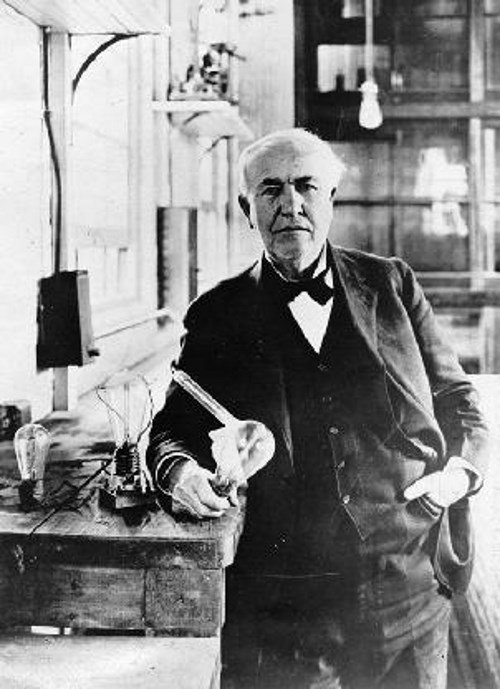
Thomas Edison (1847 to 1931) went to school for only a few months and was then taught by his mother. As a teenager, he sold newspapers on trains, where he set up a chemistry lab in a baggage car until he set it on fire.
He did not invent the light bulb. Others, including the British inventor Joseph Swan, had working bulbs before him. What Edison did was build a complete system around it, with power stations, cables and meters. His lab at Menlo Park produced the phonograph and, in total, 1,093 US patents, a record for decades.
9. The Wright brothers
Wilbur and Orville Wright ran a bicycle shop in Dayton, Ohio. That turned out to be crucial: bicycles taught them that an unstable vehicle can be perfectly controllable if the rider has the right controls.
While others built more powerful engines, the Wrights solved control, warping the wings to roll and adding a rudder. They even built their own wind tunnel to test more than 200 wing shapes. On December 17, 1903, at Kitty Hawk, their Flyer stayed in the air for 12 seconds and 37 meters, the first controlled, powered flight in history.
8. Benjamin Franklin
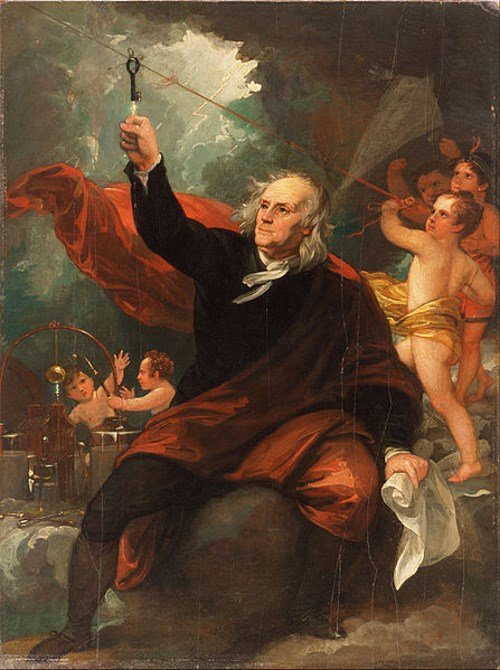
Benjamin Franklin (1706 to 1790) was the fifteenth of seventeen children. His famous kite experiment of 1752 is often misunderstood: lightning never struck the kite, or he would almost certainly have been killed. The kite picked up electrical charge from a storm cloud, which he drew as sparks from a key.
From that came his most useful invention, the lightning rod. He also invented bifocal glasses, the Franklin stove and the glass armonica, an instrument Mozart and Beethoven composed for. He never patented any of it, believing inventions should be shared freely.
7. Nikola Tesla
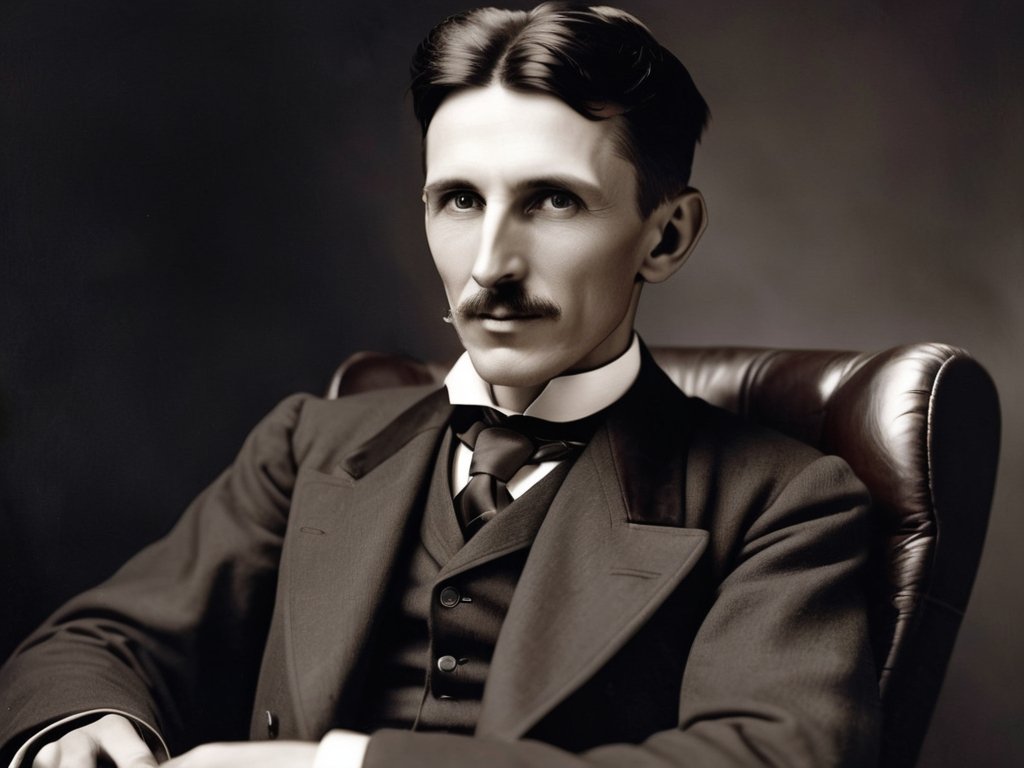
Nikola Tesla (1856 to 1943) was born in what is now Croatia and came to New York in 1884 to work for Edison. According to Tesla, he was promised 50,000 dollars for improving Edison’s dynamos. When he asked for it, he was told he did not understand American humor. He quit.
In the “war of the currents” that followed, Edison backed direct current and Tesla alternating current, which loses much less energy over long distances. With George Westinghouse, Tesla won, and that is why AC comes out of your wall socket today. Tesla died in 1943, alone and broke, in a New York hotel room.
6. Charles Babbage
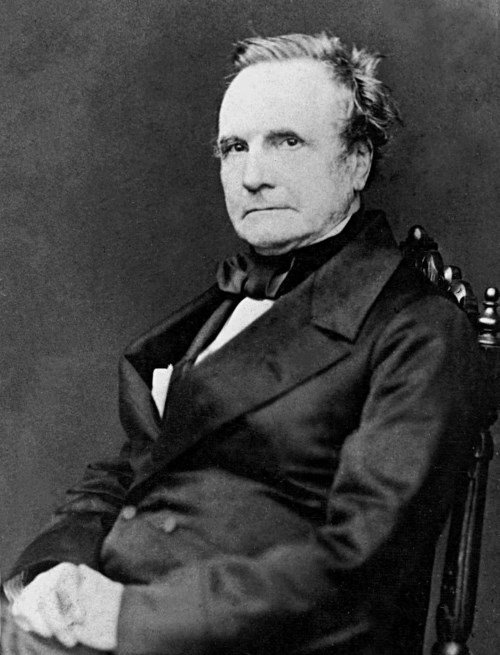
Charles Babbage (1791 to 1871) was frustrated by errors in the handwritten mathematical tables used by sailors and engineers. His solution was radical: let a machine do the calculating. He designed the Difference Engine, and later the Analytical Engine, with a memory, a processing unit and instructions on punched cards, the basic design of every computer today.
Ada Lovelace, who translated a paper about his work, added notes that included a method for the machine to calculate numbers, often called the first computer program. Babbage never completed his machines, but in 1991 London’s Science Museum built his Difference Engine No. 2 from his original drawings. It worked perfectly.
5. James Watt
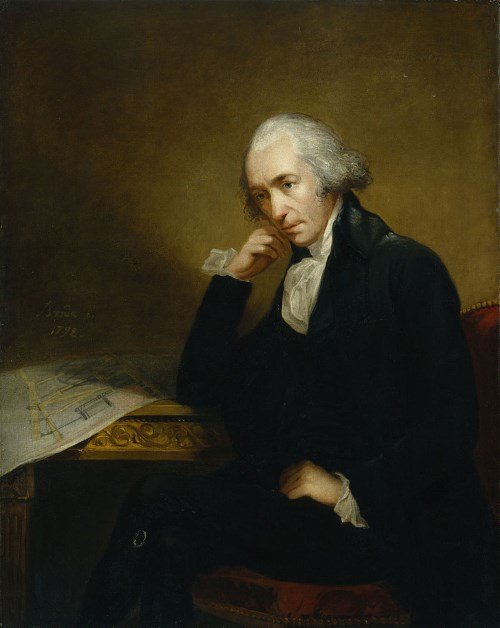
James Watt (1736 to 1819) did not invent the steam engine. But while repairing a model of a Newcomen engine in Glasgow in 1763, he noticed how wasteful it was: the cylinder was heated and cooled with every stroke.
His solution, a separate condenser, made steam engines far more efficient and helped power the Industrial Revolution. He also coined the term “horsepower” to compare his engines with the horses they replaced, and the unit of power, the watt, is named after him.
4. Alexander Graham Bell
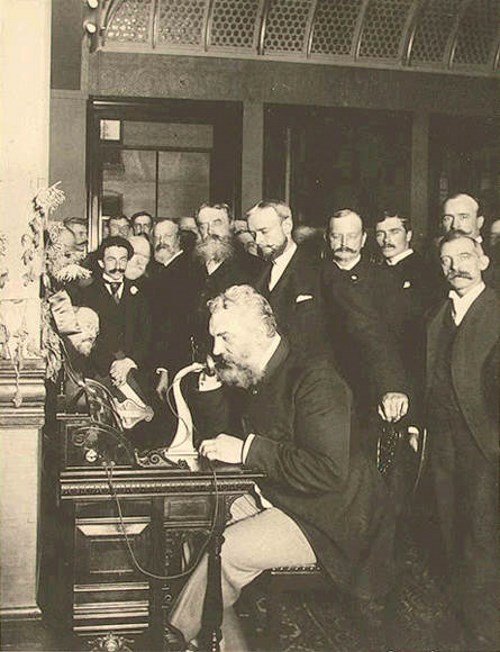
Alexander Graham Bell (1847 to 1922) grew up surrounded by sound: his father studied speech, and his mother was hard of hearing. He married a deaf woman and taught deaf children throughout his life, which he considered his true calling.
He received his telephone patent on March 7, 1876, only hours before a rival, Elisha Gray, filed a similar idea. Bell himself found the phone a nuisance and refused to have one in his study. When he died in 1922, telephone service across North America was silenced for a minute in his honor.
3. Leonardo da Vinci
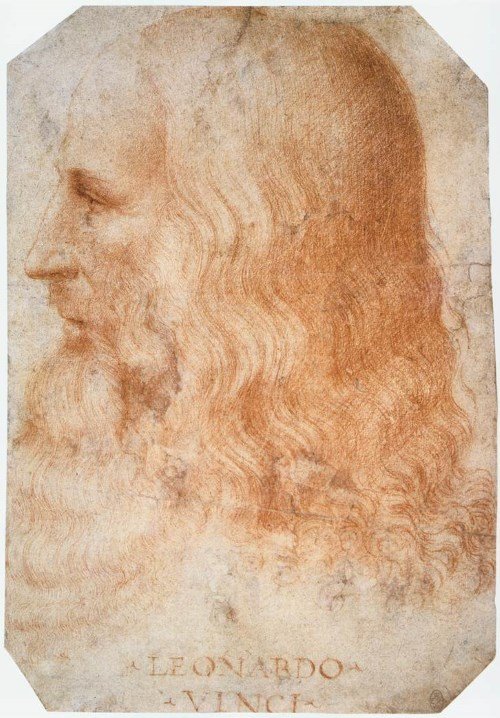
Leonardo da Vinci (1452 to 1519) was born out of wedlock, which meant he never got a formal university education. He had to figure everything out himself, by observing and measuring, and that is what made his work so original.
He designed parachutes, armored vehicles and flying machines, and his anatomical drawings were centuries ahead of their time. His biggest limitation: almost none of his work was published, so many of his inventions had little influence on history.
2. Galileo Galilei
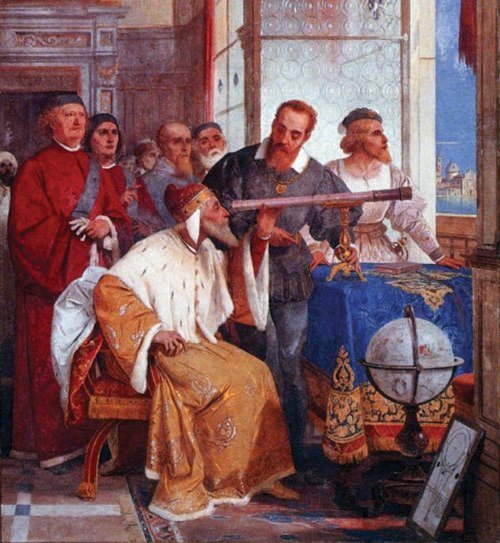
Galileo (1564 to 1642) did not invent the telescope. That honor goes to the Netherlands, where Hans Lipperhey applied for a patent in 1608. But Galileo heard about it, built a much better version in 1609 and was the first to systematically point one at the sky.
What he saw changed our view of the universe: mountains on the Moon, four moons around Jupiter and the phases of Venus, which proved that Venus orbits the Sun. In 1633, he was convicted of heresy and spent the rest of his life under house arrest. The famous line that he muttered “and yet it moves” first appeared more than a century after his death.
1. Tim Berners-Lee
Of all the names on this list, Tim Berners-Lee is the least famous, yet you are using his invention right now. In 1989, while working at CERN, the European physics laboratory near Geneva, he proposed a system to help scientists share information. His boss scribbled on it: “Vague but exciting”.
By the end of 1990, the first website was online. The internet already existed, but Berners-Lee created the World Wide Web: web pages, links and web addresses. Crucially, in 1993 CERN made the technology free for everyone. At the opening of the London 2012 Olympics, he sent a tweet that lit up the stadium: “This is for everyone”.