Jupiter is the fifth planet from the Sun and by far the largest. Fittingly, it is named after the king of the Roman gods. Astronomers like Galileo and Cassini studied it centuries ago, but most of what we know today comes from the spacecraft that have flown past or orbited it since the 1970s.
And it keeps surprising us. Here are ten facts about the giant of our solar system.
1. It is heavier than all the other planets combined
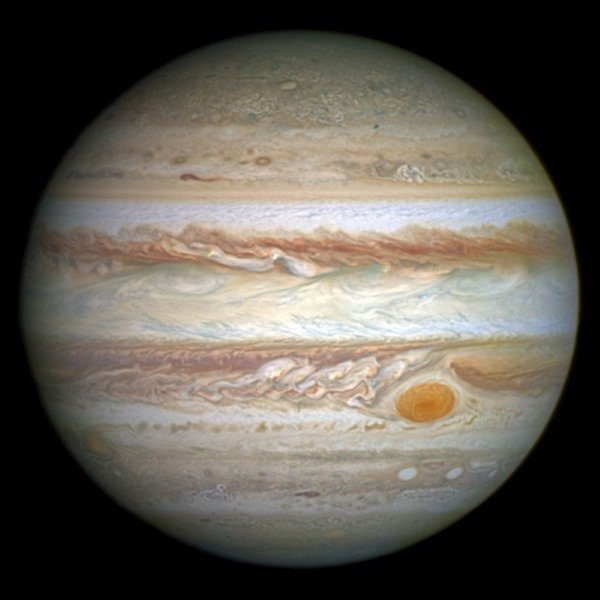
Jupiter is so big that more than 1,300 Earths would fit inside it. Its mass is 318 times that of Earth, and about two and a half times the mass of all the other planets put together.
Oddly, adding more mass would not make it much bigger. Its gravity would simply squeeze the extra material more tightly. Jupiter is close to the maximum size a planet of its type can reach.
2. It is not a failed star
Jupiter is made mostly of hydrogen and helium, just like the Sun, which is why it is sometimes called a “failed star”. The label is a bit unfair.
To ignite nuclear fusion in its core, Jupiter would need to be roughly 80 times more massive. Even the smallest objects that come close, brown dwarfs, are at least 13 times heavier than Jupiter. It is a planet through and through.
3. It has the shortest day of any planet
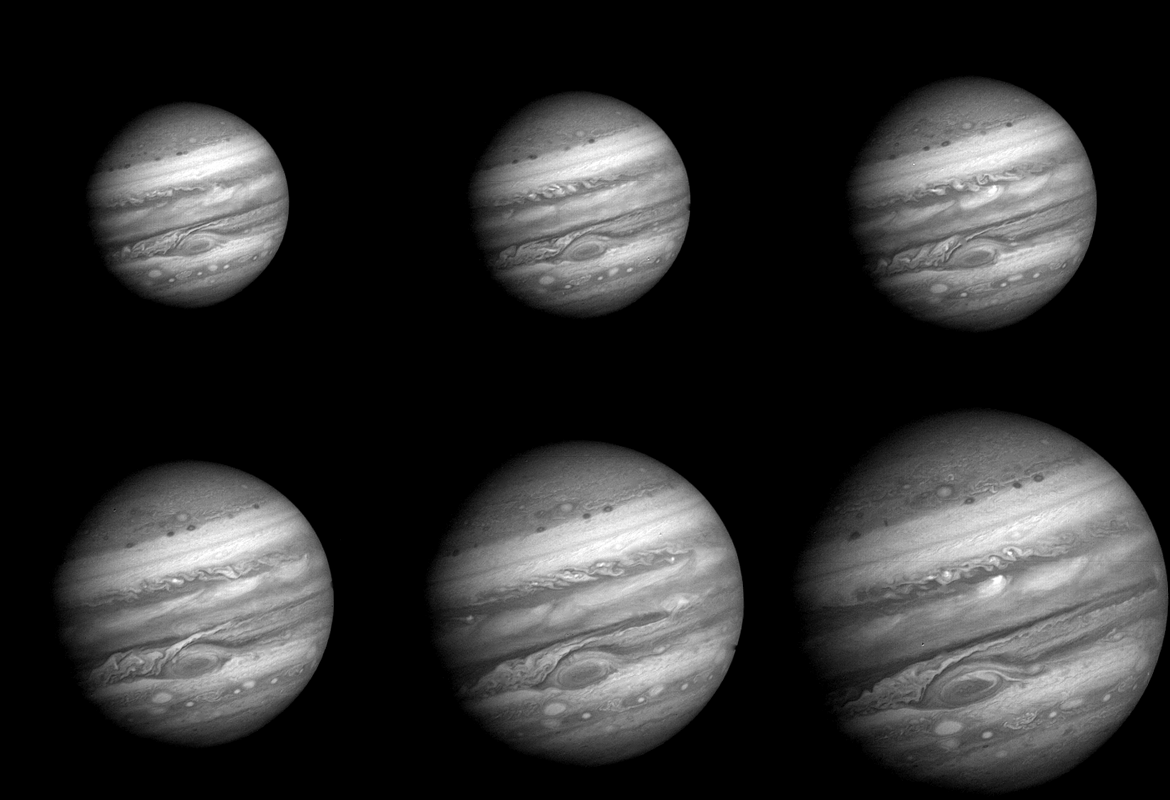
For a giant, Jupiter is remarkably quick. It spins once every 9 hours and 56 minutes, the fastest of all the planets. At the equator, the cloud tops race around at more than 12 kilometers per second.
That spin makes Jupiter visibly squashed. It bulges at the equator, where it is about 9,000 kilometers wider than from pole to pole.
4. There is no surface to stand on
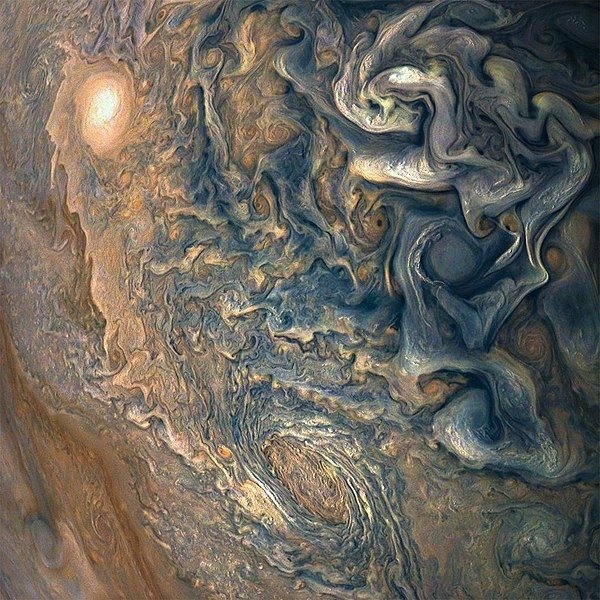
The colorful stripes we see are only the top layer of the clouds, made largely of ammonia ice. Below them, the atmosphere gets thicker and hotter until the gas gradually turns into liquid. There is no solid ground at any point.
Deeper still, the pressure is so immense that hydrogen behaves like a liquid metal. Data from NASA’s Juno spacecraft suggests the core is not a neat ball of rock but a large, fuzzy mix of heavy elements and hydrogen.
5. The Great Red Spot is shrinking
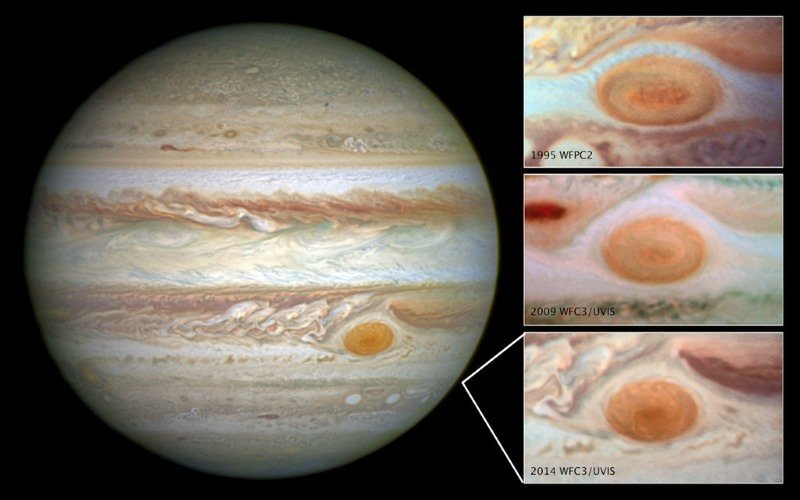
Jupiter’s most famous feature is a giant storm south of the equator. The Great Red Spot has been observed continuously since at least the 1830s, and possibly since the 17th century.
In the late 1800s it was about 40,000 kilometers wide, room for three Earths. Today it is less than half that, about the width of one Earth and a bit. Nobody knows for sure whether it will eventually disappear.
6. Jupiter has rings too
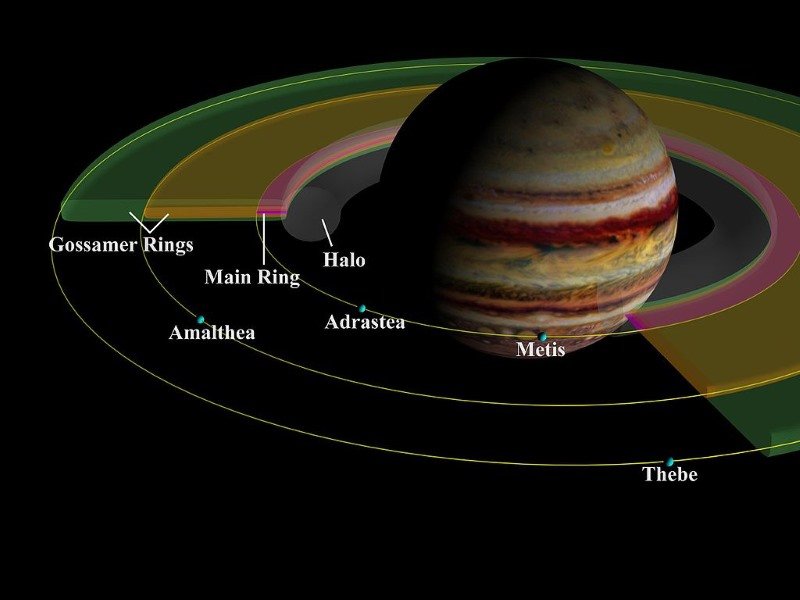
Rings make most people think of Saturn, but Jupiter has them as well. They were discovered by Voyager 1 in 1979.
Unlike Saturn’s bright ice rings, Jupiter’s are faint and made of fine dust, probably knocked off its small inner moons by meteorite impacts. You need a spacecraft or a very powerful telescope to see them.
7. Its magnetic field is a monster
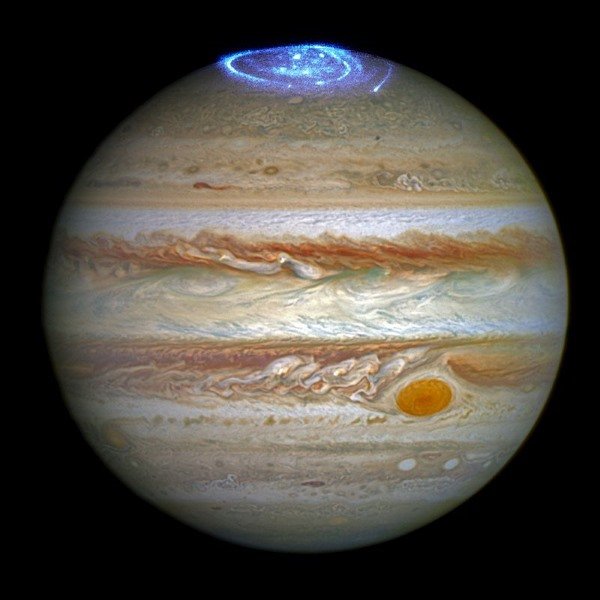
Jupiter has the strongest magnetic field of any planet, generated by the churning metallic hydrogen inside it. At the cloud tops it is more than ten times stronger than Earth’s.
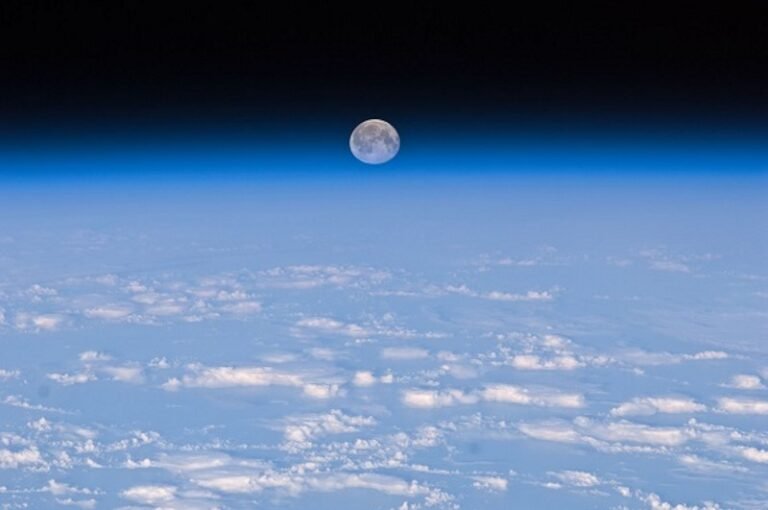
The bubble it creates in space, the magnetosphere, is enormous. If you could see it from Earth, it would look bigger than the full Moon. It also traps intense radiation that is lethal to unprotected electronics, which is why Jupiter probes are built like armored vaults.
8. It has close to a hundred moons
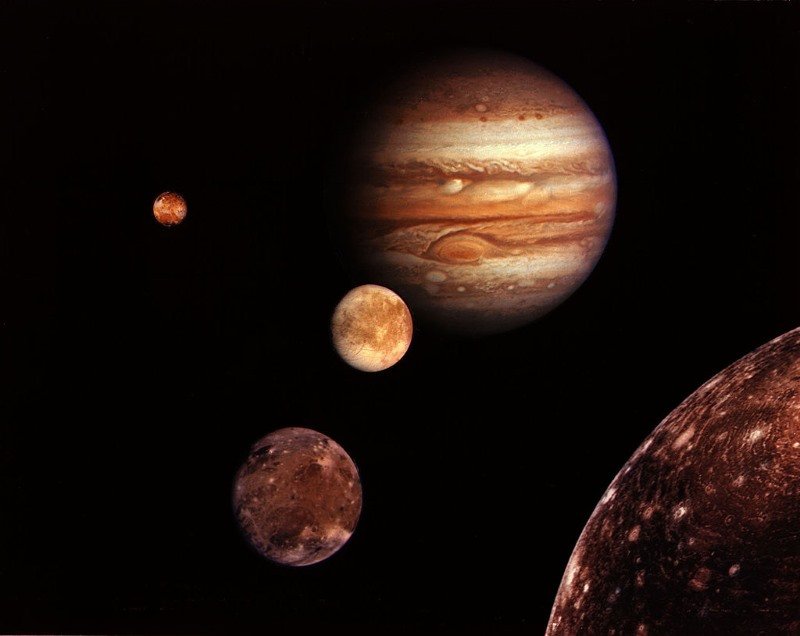
Jupiter has around 95 officially recognized moons, and the count keeps creeping up as telescopes find more small ones. Most are only a few kilometers across.
The four largest were discovered by Galileo in 1610 and are called the Galilean moons. Ganymede is the largest moon in the solar system, bigger than Mercury. Io is the most volcanic place we know. Europa and Ganymede are thought to hide oceans of liquid water beneath their icy crusts.
9. Spacecraft keep coming back
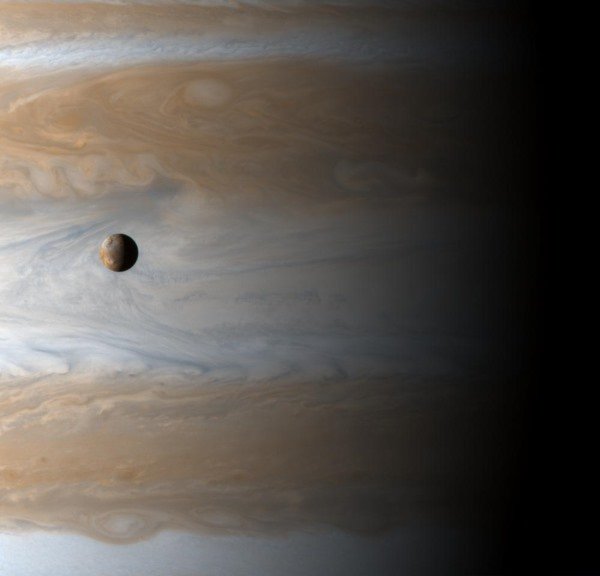
Pioneer 10 was the first spacecraft to fly past Jupiter, in 1973. Voyager 1 and 2, Galileo, Cassini and New Horizons followed, and NASA’s Juno has been orbiting the planet since 2016.
Two new missions are on their way. Europe’s JUICE will study Ganymede and its neighbors, and NASA’s Europa Clipper will investigate whether Europa’s hidden ocean could support life. Both are due to arrive in the early 2030s.
10. You can see it with your own eyes
You do not need a telescope to see Jupiter. It is usually the brightest object in the night sky after the Moon and Venus, shining with a steady, creamy light that does not twinkle like the stars.
Point a decent pair of binoculars at it, and you can see up to four tiny dots lined up beside it: the moons Galileo discovered more than 400 years ago.