As soon as a statement starts with the words “science has proven that”, we quickly take it at face value. Yet countless persistent ‘facts’ that we learned at school or repeat in the café are completely wrong in our collective memory.
Sometimes the misunderstanding is based on an incorrect translation of a historical study, sometimes on a hasty conclusion from a military experiment, and sometimes a theory simply sounds too good to doubt. These are ten popular statements. For more exciting lists, explore our guide to widespread popular misconceptions.
1. Lightning never strikes the same place twice
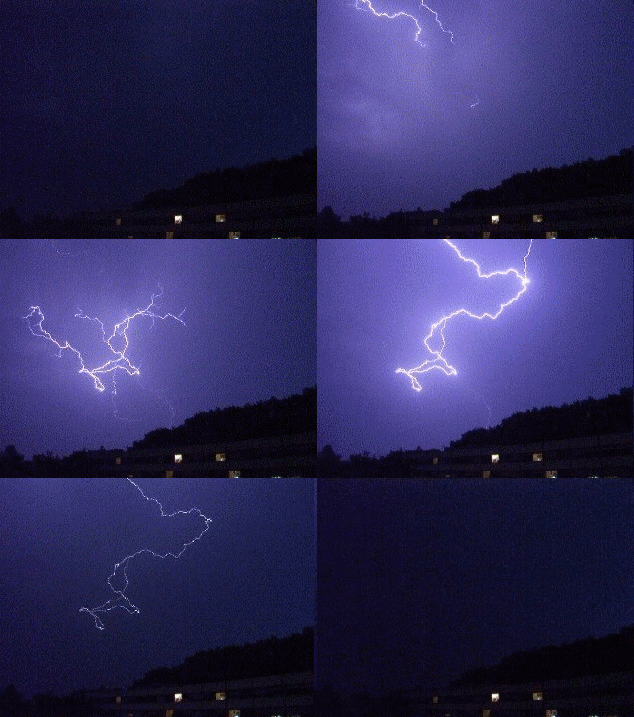
The saying “lightning never strikes the same place twice” is often used to indicate that a rare disaster will not strike a person twice. However, from a physics point of view it is complete nonsense. Lightning has no memory and simply finds the path of least electrical resistance between the charged storm cloud and the earth.
2. Brain cells can never renew themselves
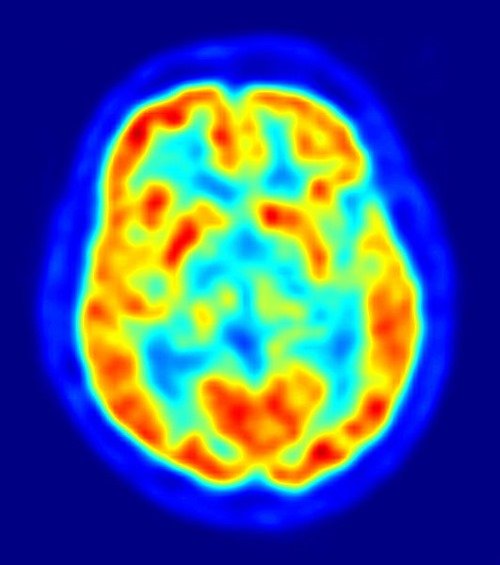
For decades, there was an iron dogma within neurology: a person is born with a fixed supply of brain cells, and from early adulthood they slowly die without a single new cell ever being created. Anyone who suffered brain damage was definitely unlucky.
In 1998, Swedish neurologist Peter Eriksson and American professor Fred Gage unleashed a revolution in brain science. They showed conclusively that the adult human brain is indeed capable of producing new neurons, a process known as adult neurogenesis. Particularly in the hippocampus, the brain region that is crucial for…
3. The taste map of the tongue

Generations of students have had to do the practical: dripping sugar water on the tip of the tongue and lemon juice on the sides to check the ‘taste zones’. However, the idea that your tongue is rigidly divided into zones (sweet at the front, salty and sour on the sides and bitter at the back) is complete fiction.
This myth arose in 1942 through a sloppy interpretation by the American psychologist Edwin Boring. He translated a German thesis by researcher David Hänig from 1901.
Hänig had discovered that sensitivity to certain basic tastes could vary very slightly per zone, but Boring drew this in a graph without scale. Its lasting influence remains an essential benchmark in the field.
4. The Great Wall of China is visible from the moon

It is one of the most repeated claims in space travel: the Great Wall of China is said to be the only man-made structure visible to the naked eye from the moon. This myth dates back to the 1930s, decades before the first rocket was even launched.
From the moon, 384,000 kilometers away, the Earth is a small blue-white sphere on which continents and cloud fields are barely visible. Trying to see a stone wall about six meters wide from the moon is equivalent to spotting a human hair from a distance of five kilometers. Even Apollo astronauts confirmed this
5. You lose most of your body heat through your head

Parents and grandparents always insist on this in the winter: put on a hat, because forty to fifty percent of all your body heat escapes through your head. Anyone who looks at the physical proportions of the human body will immediately see that this figure cannot possibly be correct. The human head only covers about seven to nine percent of the total body surface area.
6. Man has only five senses
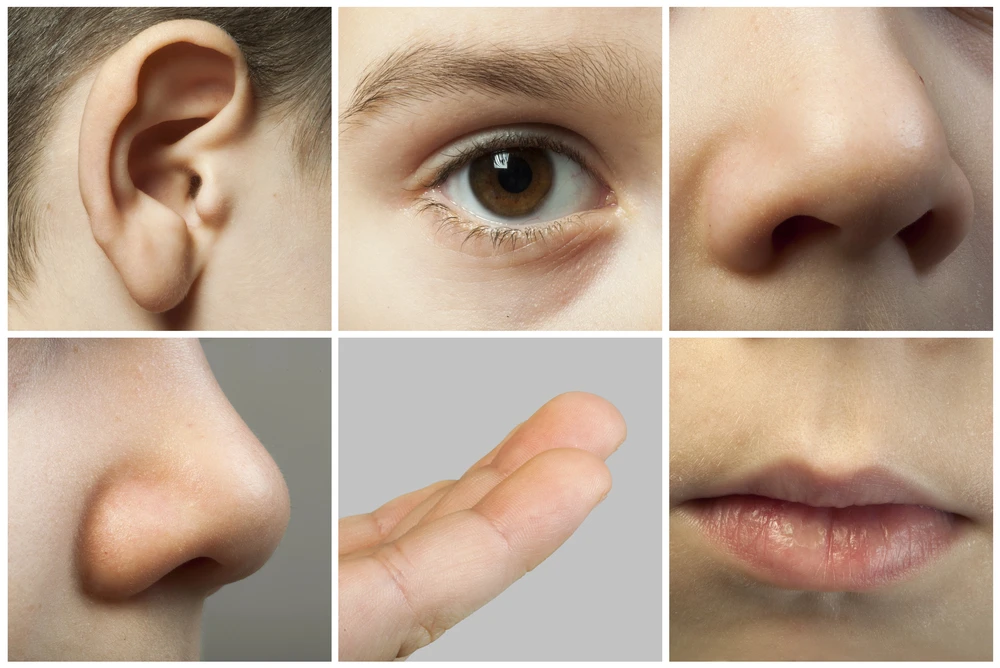
Ever since the Greek philosopher Aristotle, we have learned at school that humans have five senses: seeing, hearing, smelling, tasting and feeling. For biologists and neurologists, that list is hopelessly outdated.
Depending on the definition used, modern science counts between nine and more than twenty senses. Classical ‘feeling’ is in reality divided into completely different systems with their own receptors.
Thermoception senses heat and cold, nociception senses tissue damage and translates that into pain, and mechanoreception senses physical pressure and vibration. In addition, we have senses that work completely internally without da
7. Alcohol kills your brain cells

After a night of heavy sagging, it is often joked that another few thousand brain cells have died. Although excessive drinking is undoubtedly one of the most damaging addictions to the body, neurons do not die en masse during a night out.
Researchers at the Bartholin Institute in Denmark compared the brains of deceased heavy drinkers with those of teetotalers and found that the total number of nerve cells in the neocortex was virtually identical. Alcohol does not break down complete cells, but it does damage the dendrites: the branching extensions through which neurons transmit chemical signals to each other.
8. Bats are blind as nails
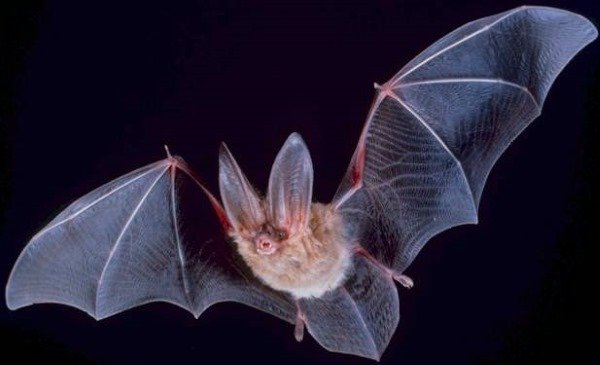
In England, “blind as a bat” is one of the most famous sayings from the animal kingdom, but in fact it is not true. None of the more than 1,400 known bat species on Earth are blind.
In fact, many bats have excellent eyesight. The misunderstanding arises because smaller bats (Microchiroptera) hunt in pitch darkness and rely on echolocation: they emit ultrasonic cries and pick up the echo with their large ears to locate insects with millimeter accuracy. Yet these night hunters also use their eyes during the day to spot predators and orient themselves at great distances.
9. People are left- or right-brained
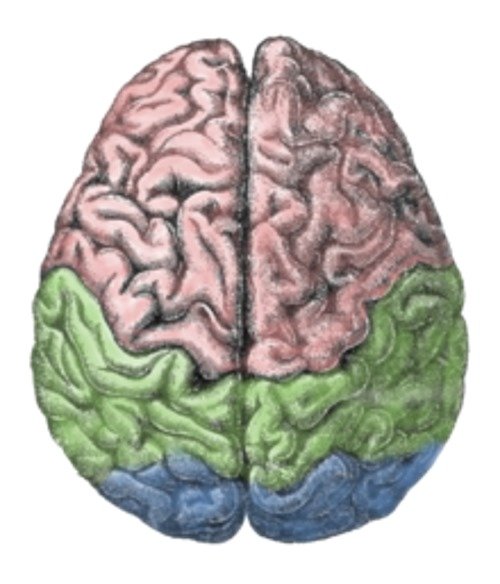
The idea appears in countless management training and self-help books: logical, analytical and orderly people think mainly with their left brain, while creative, intuitive and emotional types are dominated by their right brain. It sounds appealing, but neurologists have completely debunked this theory. The misunderstanding arose in the 1960s after pioneering research by Roger Sperry on patients whose brain beam (the corpus callosum) had been severed to treat severe epilepsy.
10. Bananas grow on trees

Almost everyone has seen a photo of a ‘banana tree’ full of bunches of fruit. Botanically speaking, however, there is no banana tree at all.
The banana (genus Musa) grows on a giant, monocotyledonous herbaceous plant, meaning the banana plant is technically the largest herb in the world. The difference is in the wood formation.
A real tree has a woody trunk that is thickened by annual rings and covered with bark. A banana plant does not have a speck of wood in its trunk: what looks like a tree trunk is a so-called false trunk (pseudostem), a compactly rolled tube of tightly overlapping leaf stems.
Every selection highlighted here represents an exceptional example of talent, dedication, or historical significance. Which of these standout entries do you consider the most impressive?