Saturn, named after the Roman god of agriculture, is the jewel of the solar system. Its rings are so striking that even a small backyard telescope shows them clearly, and the first view through the eyepiece has turned many people into lifelong stargazers.
Jupiter, Uranus and Neptune have rings as well, but none come close to Saturn’s. Thanks to decades of spacecraft missions, we now know this giant better than ever. Here are ten things worth knowing about it.
1. Saturn would float in water

Like Jupiter, Saturn is a gas giant made mostly of hydrogen and helium. It is huge, about nine times as wide as Earth, but surprisingly light for its size.
Its average density is about 0.69 grams per cubic centimeter, lower than that of water. In theory, if you could find a bathtub big enough, Saturn would float.
2. It is noticeably squashed
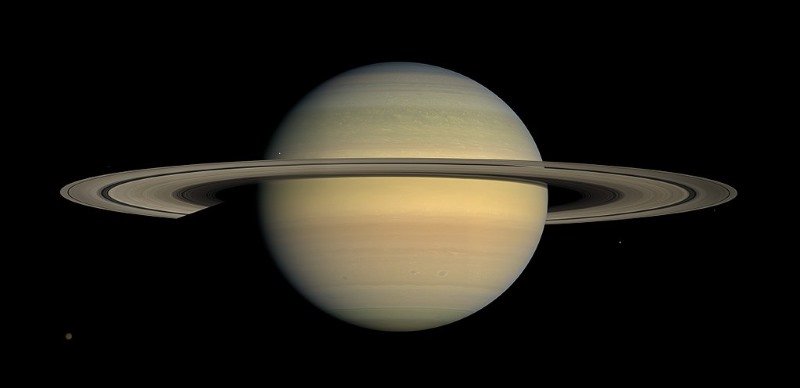
Look closely at a photo of Saturn and you will see that it is not quite round. Because it spins so fast and is made of gas, it bulges out at the equator.
Saturn is the most flattened planet in the solar system. Its diameter at the equator is about 10 percent larger than from pole to pole.
3. Galileo thought the rings were moons
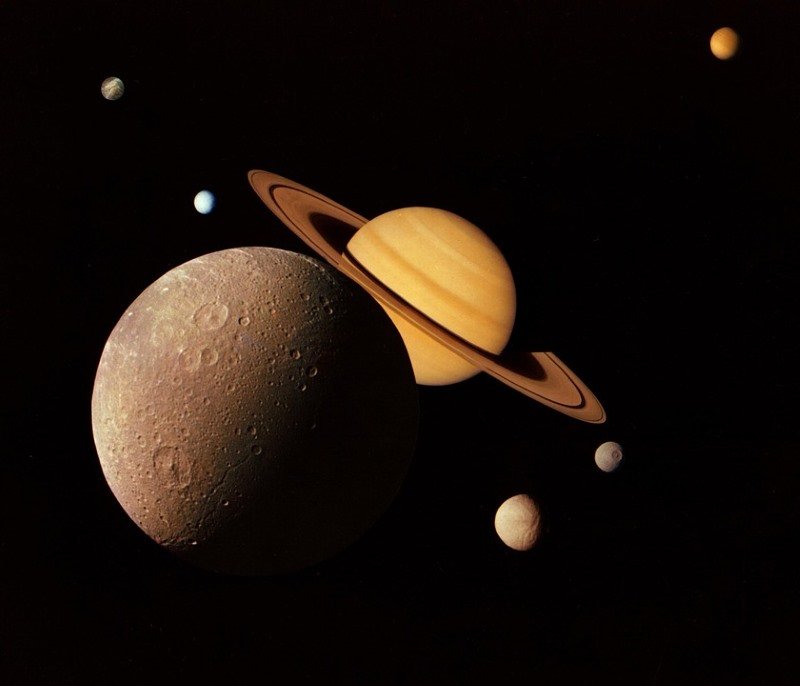
When Galileo looked at Saturn through his simple telescope in 1610, he was puzzled. He thought he was seeing a planet with two large companions stuck to its sides, and described it as having “ears”.
It took until 1655 for the Dutch astronomer Christiaan Huygens, using a better telescope, to work out that Saturn was surrounded by a thin, flat ring that does not touch the planet. In the same year he also discovered Titan, Saturn’s largest moon.
4. Four spacecraft have visited
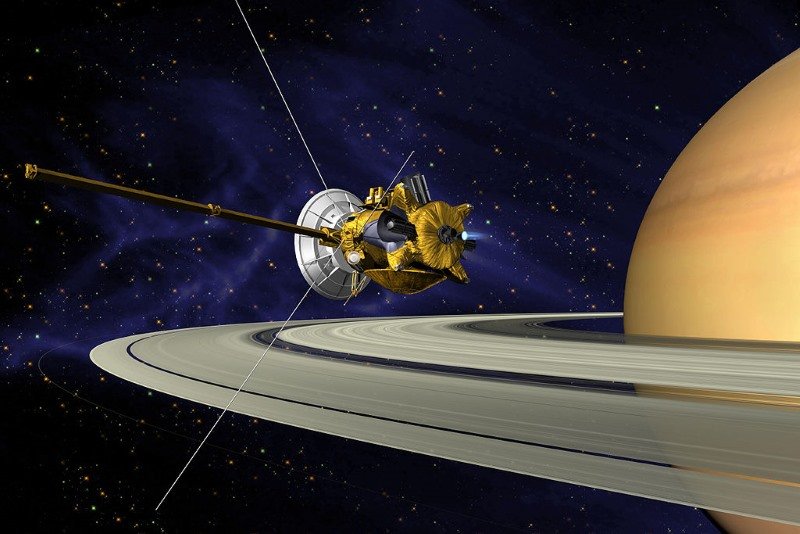
Pioneer 11 flew past Saturn in 1979, followed by Voyager 1 in 1980 and Voyager 2 in 1981. The real breakthrough came with Cassini, which orbited Saturn from 2004 to 2017 and sent its Huygens probe to land on Titan.
Cassini ended its mission with a deliberate dive into Saturn’s atmosphere, to avoid any risk of contaminating moons that might host life. The next visitor will be NASA’s Dragonfly, a nuclear-powered drone due to arrive at Titan in the 2030s.
5. It has more moons than any other planet
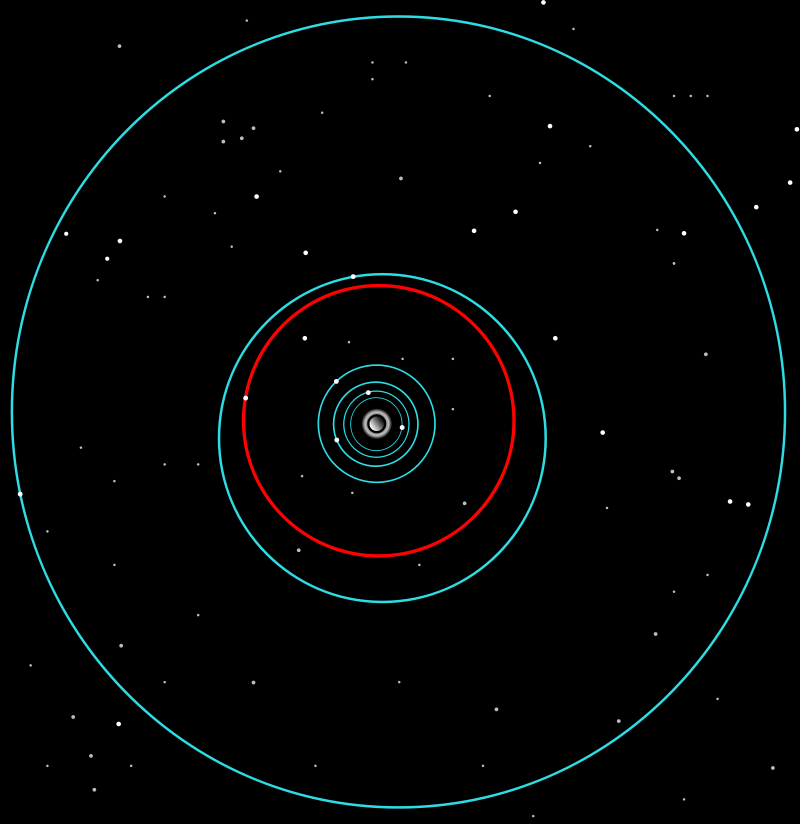
In 2025, astronomers announced 128 newly confirmed moons of Saturn, bringing its total to 274. That is more than all the other planets combined, and it makes Saturn the undisputed moon champion of the solar system.
Most are tiny chunks of rock and ice just a few kilometers across. Titan is the exception: it is bigger than the planet Mercury and the only moon in the solar system with a thick atmosphere and lakes of liquid methane on its surface.
6. Its day was surprisingly hard to measure
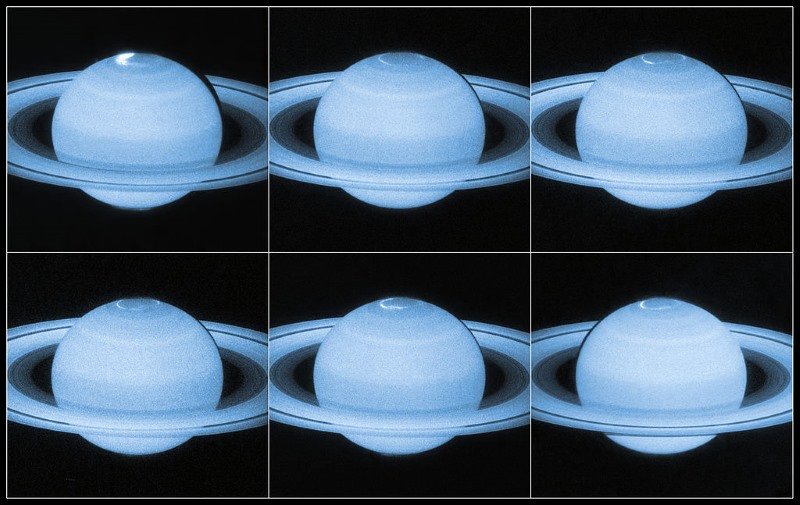
Since Saturn has no solid surface, there are no landmarks to time a rotation. For decades, its exact day length was uncertain.
The answer came from the rings. By studying tiny waves in the rings caused by vibrations inside the planet, scientists calculated in 2019 that a day on Saturn lasts about 10 hours, 33 minutes and 38 seconds.
7. The rings may be younger than the dinosaurs
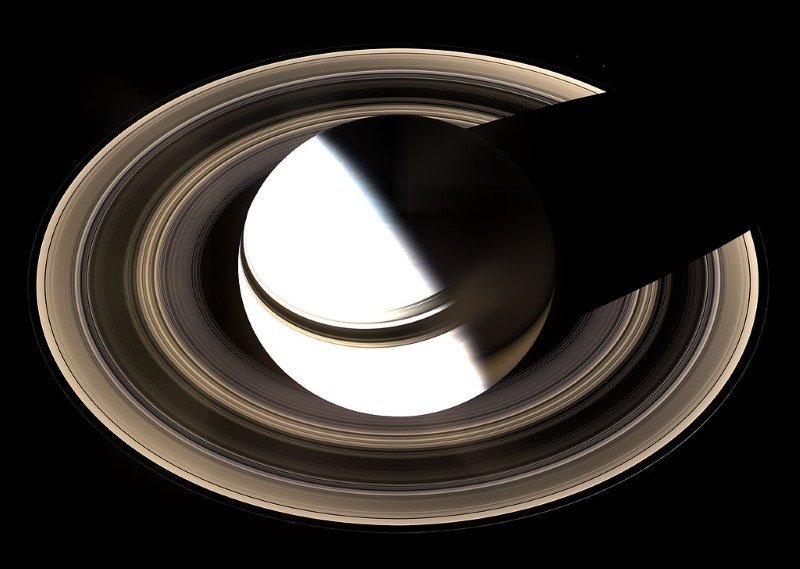
The rings are made almost entirely of water ice, in pieces ranging from tiny grains to chunks the size of a house. They stretch for hundreds of thousands of kilometers, yet in most places they are only about ten meters thick.
How old they are is still debated. Cassini data suggests the rings are surprisingly clean and young, perhaps only a few hundred million years old, which would mean they formed when dinosaurs already roamed the Earth. Other scientists argue they could be as old as Saturn itself.
8. Sometimes the rings seem to disappear
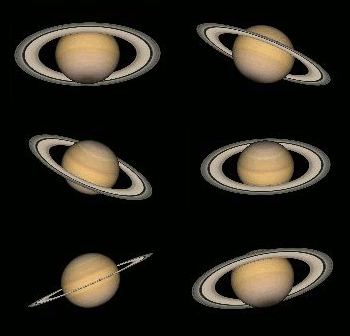
Saturn is tilted on its axis, so our view of the rings changes as it orbits the Sun. About every 15 years, Earth lines up exactly with the plane of the rings and we see them edge-on.
Because they are so thin, the rings almost vanish from view at those moments. The last time it happened was in March 2025. Over the coming years the rings will open up again and look more impressive every year.
9. You can see Saturn without a telescope
Saturn is one of five planets you can see with the naked eye. It looks like a steady, golden-yellow star and was known to ancient astronomers as the slowest-moving of the wandering stars.
To see the rings, though, you need help. Even a small telescope with a magnification of about 25 times is enough to reveal them, and it is a sight people rarely forget.
10. One of its moons may be habitable
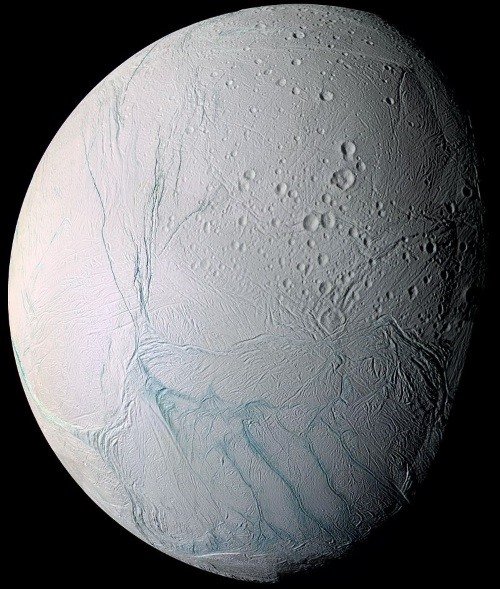
Saturn itself is no place for life, but its small moon Enceladus is one of the most exciting places in the solar system. Cassini discovered geysers shooting water vapor and ice into space from cracks near its south pole.
Those plumes come from a salty ocean hidden beneath the ice. Cassini flew through them and detected water, salts and organic molecules, some of the key ingredients for life. That makes Enceladus a prime target in the search for life beyond Earth.