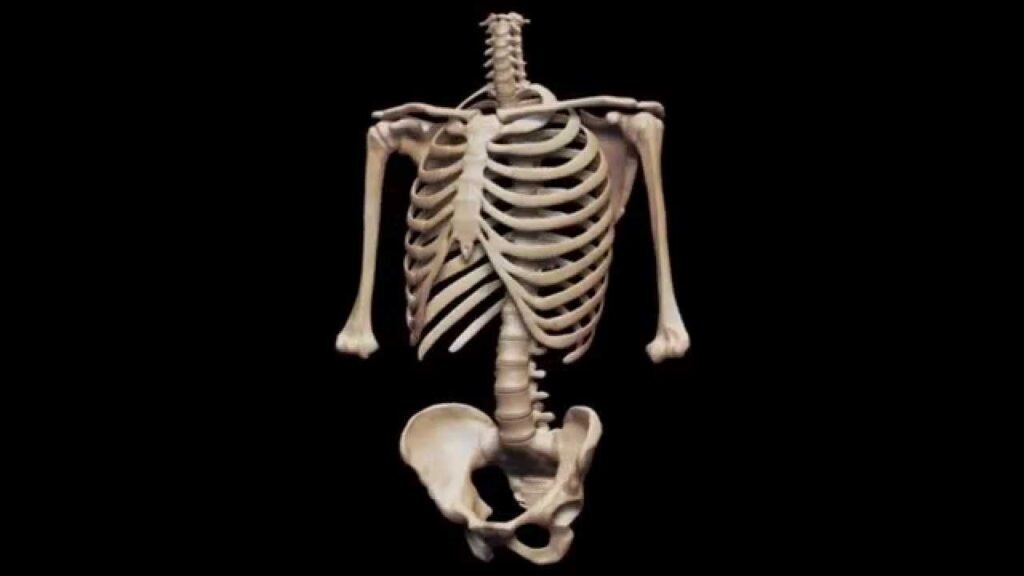
An adult human body usually has 206 bones. Babies are born with around 270 to 300, but many of them fuse together as we grow up, for example in the skull and the base of the spine. Bones give our body structure and protect our organs, and although we often think of them as dead and rigid, bone is living tissue that is constantly being broken down and rebuilt. Over about ten years, most of your skeleton is replaced.
These are ten fascinating facts about human bones.
10. Most broken bones: Evel Knievel
Stuntmen have to be tough, and Robert “Evel” Knievel was the undisputed king of spectacular crashes. In the 1960s and 1970s, he performed death-defying jumps on his motorcycle, including his infamous jump over the fountains at Caesars Palace in Las Vegas in 1967, which ended in a horrific crash.
He is listed by Guinness World Records for the most bones broken in a lifetime, with 433 fractures, although that number has been questioned, and Knievel himself gave much lower figures. Either way, his body took an incredible beating. He died in 2007, aged 69, of lung disease.
9. Strangest bone disease: Gorham’s disease
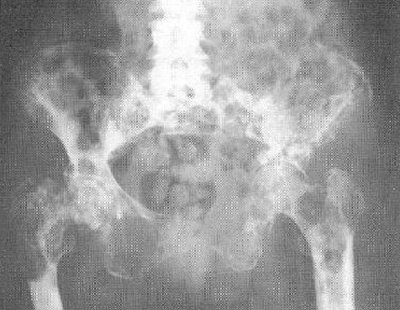
Gorham’s disease, also known as vanishing bone disease, is extremely rare: only a few hundred cases have been described worldwide since the first report in the 19th century. In this condition, blood or lymph vessels grow uncontrollably inside a bone, and the bone tissue gradually dissolves and is replaced by fibrous tissue.
It can occur anywhere in the body, but is most often seen in the skull, jaw, shoulders, ribs and pelvis. Because the cause is still not fully understood, treatment remains a challenge. In some cases, it can even be fatal, for example when the ribs or spine are affected.
8. Most common bone cancer: osteosarcoma
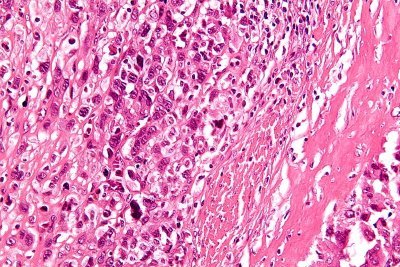
Osteosarcoma is the most common form of cancer that starts in the bone itself. The cancer cells produce immature bone tissue. It mainly affects teenagers and young adults during their growth spurt.
The tumor is often found near the knee or in the upper arm. Symptoms usually start with persistent pain that gets worse at night, or swelling around a joint. Thanks to combinations of surgery and chemotherapy, survival rates have improved greatly: when the cancer has not spread, around 60 to 70 percent of patients survive.
7. Most common bone disease: osteoporosis
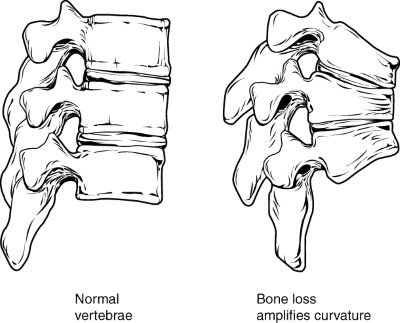
Osteoporosis affects hundreds of millions of people worldwide. In this condition, bone density decreases, making the bone porous and brittle. It is often called a “silent” disease, because you usually only notice it when something breaks.
Women after menopause are at particular risk, but men can get it too. The most common osteoporotic fractures are of the hip, wrist and vertebrae. Regular exercise, especially weight-bearing exercise, and a diet with enough calcium and vitamin D help keep your bones strong for as long as possible.
6. A common bone and joint procedure: arthroscopy
Arthroscopy, or keyhole surgery on a joint, is one of the most frequently performed procedures in orthopedics. The surgeon makes a few small incisions through which a tiny camera and instruments are inserted. The knee is the most common target, followed by the shoulder.
The big advantage of this technique is that recovery is much faster than after traditional open surgery. It allows doctors to examine joint problems very precisely and often treat them right away, for example by repairing a torn meniscus.
5. Most commonly broken bones: collarbone and wrist
The collarbone, or clavicle, is often named as the most commonly broken bone in the human body, especially in children. It takes a big hit when someone falls on their shoulder or an outstretched hand. In adults, fractures of the wrist, especially the end of the radius, are among the most common of all.
Ankle fractures are also very common. They usually involve the fibula, the tibia or both. Depending on the severity, they are treated with a cast or with surgery using screws and plates.
4. Easy to break: the toes
The small bones of the toes, the phalanges, break easily. Because they sit at the very end of our body and are barely protected by fat or muscle, they are vulnerable. Just think of stubbing your foot hard against a table leg.
The big toe has two of these bones, while the other toes usually have three. A broken small toe is often simply taped to the toe next to it, a technique known as buddy taping. Small as it is, a broken toe can seriously limit your mobility for weeks.
3. Body part with the most bones: the hand
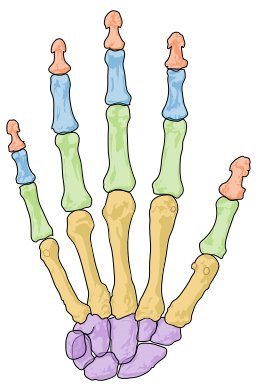
Each hand, including the wrist, consists of 27 bones. That means that more than a quarter of all the bones in your body are in your hands and wrists. The eight small carpal bones in the wrist provide enormous flexibility.
Thanks to the 14 finger bones and the unique construction of the thumb, which can touch each of the other fingers, we can perform very fine movements, such as writing or threading a needle. Your feet are not far behind, with 26 bones each.
2. Largest bone in the human body: the femur
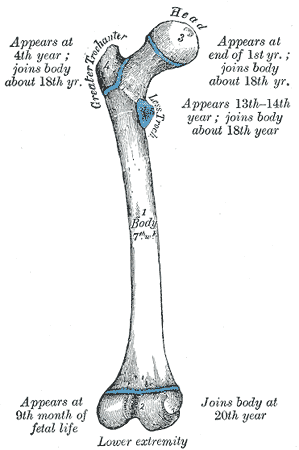
The thigh bone, or femur, is the longest, heaviest and strongest bone in the human body. It runs from the hip to the knee and makes up around a quarter of a person’s height. In an adult man, it is on average around 48 centimeters long.
The femur can withstand enormous forces, many times your own body weight, thanks to its thick layer of compact bone. A broken femur is therefore usually the result of a major trauma, such as a car accident or a fall from a great height, except in older people with osteoporosis, where a fall can be enough to break the top of the femur.
1. Smallest bone in the human body: the stapes
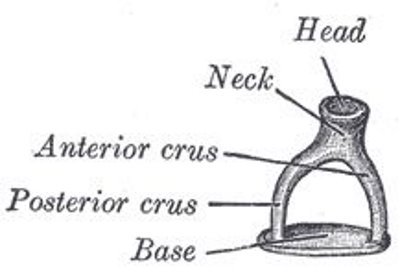
The smallest bone in the human body sits in the middle ear: the stapes, or stirrup. It is only around 3 millimeters long and weighs a few milligrams. Together with the malleus (hammer) and incus (anvil), it forms a chain that passes sound vibrations from the eardrum to the inner ear.
Without this tiny bone, our hearing would be severely impaired. If the stapes becomes fixed in place, a condition called otosclerosis, hearing loss follows. In that case, a surgeon can replace the bone with a tiny prosthesis, a procedure known as a stapedectomy.