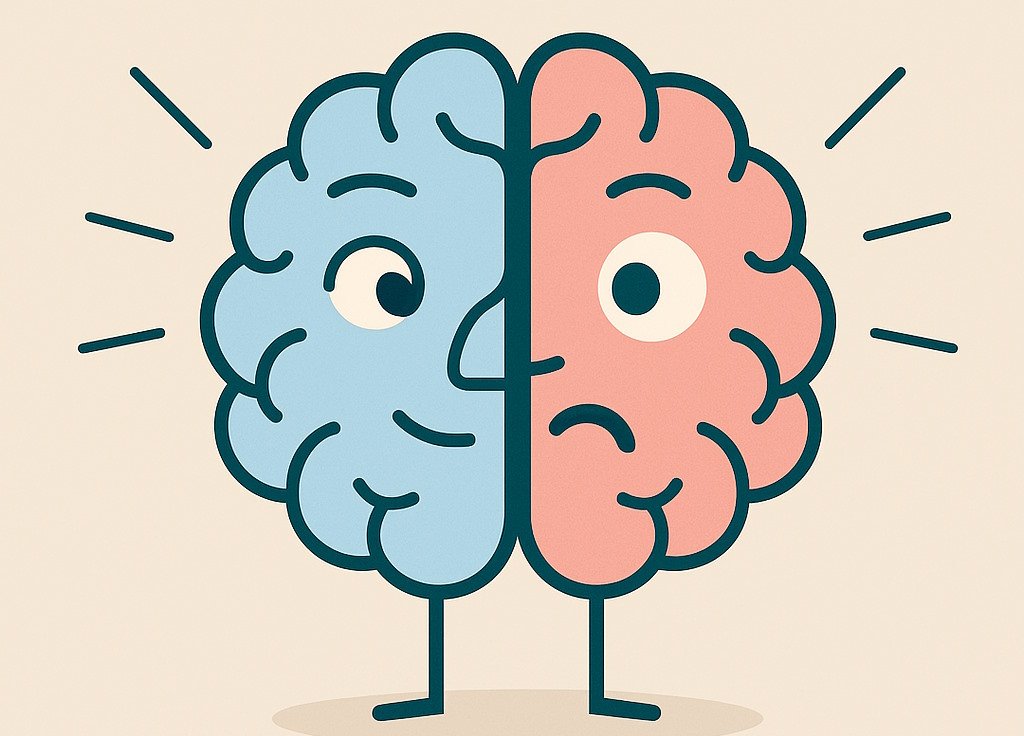
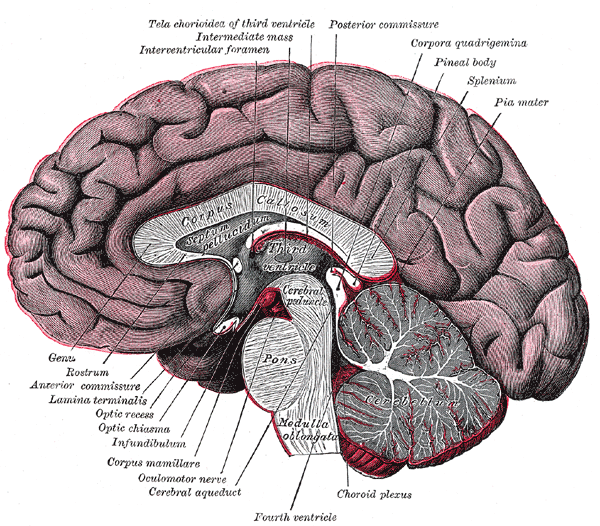
Inside human skulls, two distinct cerebral hemispheres communicate across a dense bundle of two hundred million nerve fibers called the corpus callosum. When surgical intervention severs this neural bridge to treat severe epilepsy, the mind splits into two semi-independent operating systems. Here are ten bizarre facts about the split-brain phenomenon that revolutionized neuroscience.
10. A Surgical Cure for Severe Epilepsy
During the mid-twentieth century, neurosurgeons developed the corpus callosotomy as a radical treatment for patients suffering from untreatable, life-threatening seizures. By severing the main neural superhighway between the hemispheres, electrical storms could no longer cross from one side to the other.
The surgery proved successful at reducing seizure severity, allowing patients to live otherwise normal daily lives while providing researchers an unprecedented window into human cognition.
9. Unique Hemispheric Specializations
Neuroscientists Roger Sperry and Michael Gazzaniga conducted pioneering experiments demonstrating that each hemisphere handles distinct cognitive tasks. The left hemisphere generally governs spoken language, analytical thinking, and mathematical logic.
The right hemisphere excels at spatial awareness, facial recognition, artistic pattern processing, and interpreting emotional vocal tones.
8. Two Separate Streams of Consciousness
When sensory information is presented exclusively to one side of the body, split-brain patients exhibit what appears to be two distinct minds coexisting in one skull. The left hemisphere can speak about what it sees through the right eye, while the right hemisphere remains mute yet conscious.
These observations challenged traditional philosophical views that human consciousness is an indivisible, single entity.
7. The Left Brain Invents Confabulated Stories
When researchers flashed an instruction to the right hemisphere commanding a patient to walk, the patient stood up and began walking. When asked by the experimenter why he stood up, his verbal left hemisphere, completely unaware of the flashed command, instantly invented a plausible excuse, claiming he wanted a soda.
Gazzaniga dubbed this left-hemisphere mechanism the interpreter, revealing how the brain constantly fabricates post-hoc rationalizations for actions it did not consciously initiate.
6. Alien Hand Syndrome and Physical Conflicts
In the initial months following surgery, some patients experience intermanual conflict where their hands act with opposing intentions. A patient might select a dress from the closet with her right hand, only for her left hand to grab a completely different outfit and put the first one back.
In another famous case, a man’s left hand repeatedly unbuttoned his shirt as fast as his right hand buttoned it up.
5. Answering the Same Question Differently
Researchers asked a split-brain patient what profession he wished to pursue, directing the inquiry to each hemisphere separately. The verbal left hemisphere answered out loud that he wanted to be an analytical draftsman.
When asked to arrange Scrabble letters with his left hand, guided by his silent right hemisphere, he spelled out: race car driver.
4. Enhanced Multitasking Abilities
Because the hemispheres no longer share attentional limits, split-brain individuals can occasionally outperform normal brains on specific multitasking challenges. A patient can easily draw a circle with their left hand while simultaneously drawing a square with their right hand.
Normal individuals struggle with this task because interconnected hemispheres attempt to coordinate symmetrical motor routines.
3. Emotional Processing Remains Linked
While detailed cognitive information cannot cross the severed corpus callosum, primitive emotional signals can still travel across deeper, subcortical brain structures. When researchers presented a scary image exclusively to a patient’s right hemisphere, the patient felt sudden anxiety and heart palpitations without knowing why.
The verbal left hemisphere noticed the physical nervousness and began speculating about environmental causes for the sudden dread.
2. A Nobel Prize That Changed Psychology
In 1981, neurobiologist Roger Sperry was awarded the Nobel Prize in Physiology or Medicine for his groundbreaking discoveries concerning the functional specialization of cerebral hemispheres. His split-brain experiments dismantled long-held assumptions about the unitary self and provided empirical foundations for modern cognitive neuroscience.
His work proved that complex mental faculties are distributed across specialized neural networks rather than concentrated in a single command center.
1. Traces of Split-Brain in Every Normal Mind
While healthy individuals possess an intact corpus callosum, modern neuroimaging reveals that healthy brains frequently experience micro-delays between hemispheres. Everyday moments of hesitation, competing impulses, and sudden intuitive feelings often reflect subtle negotiations between left-brain logic and right-brain perception.
The split-brain condition serves as an exaggerated mirror of the complex internal dialogue occurring continuously inside every human head.