The periodic table looks like a boring grid of boxes, but some of those boxes contain substances that behave as if they came from science fiction. A metal that melts in your hand, a liquid that crawls up the walls against gravity, an element of which there is never more than a gram on the whole planet.
These are ten elements with properties you would never expect, and what makes them so special.
1. Gallium: the metal that melts in your hand
Gallium looks like aluminum, but it melts at just 29.8 degrees Celsius. Hold a piece in your palm and within minutes it turns into a silvery puddle. Chemistry teachers love to make spoons out of it that disappear in a cup of hot tea.
Even stranger, gallium expands when it solidifies, just like water turning into ice. If you let liquid gallium freeze in a sealed glass bottle, it can crack the glass. In practice, it is mainly used in electronics: gallium nitride and gallium arsenide are found in LEDs, laser diodes and solar panels.
2. Helium: the only element that never freezes on its own
Every substance turns solid if you make it cold enough. Except helium. Even at absolute zero, it stays liquid unless you put it under about 25 times normal atmospheric pressure. The reason is quantum mechanics: helium atoms keep jiggling even at zero kelvin, with just enough energy not to lock into a crystal.
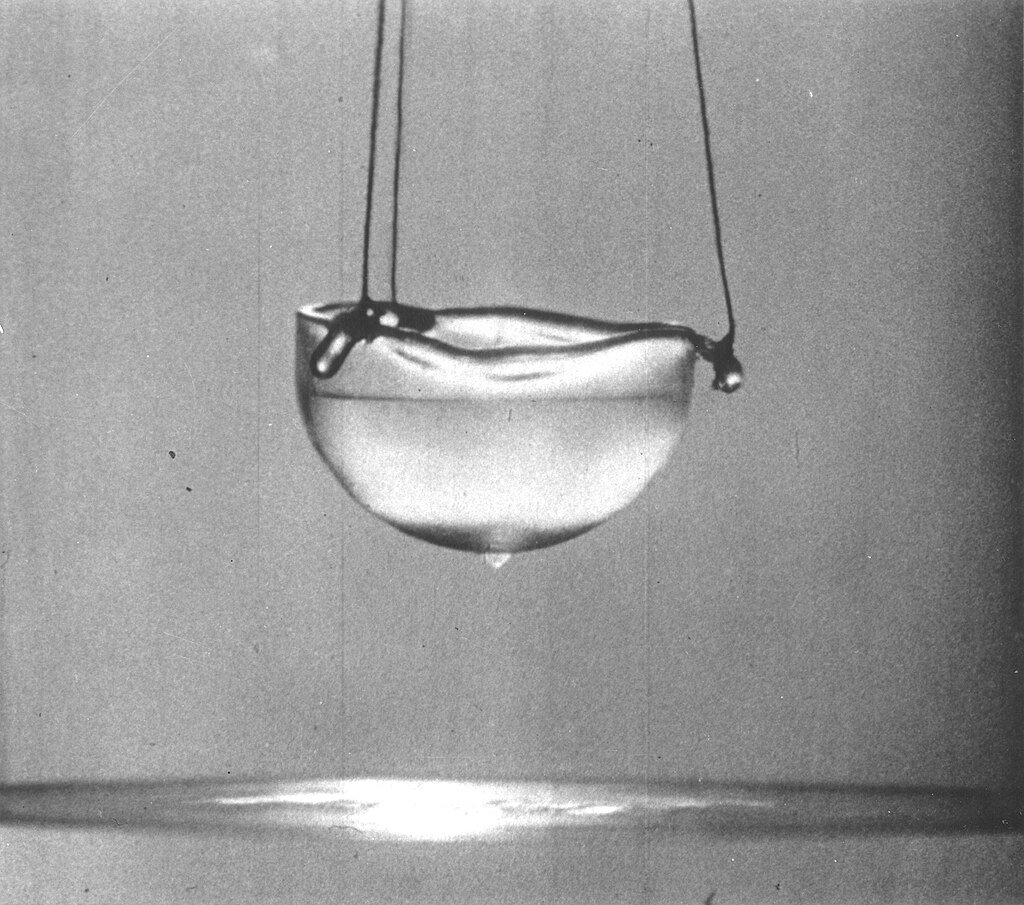
Below 2.17 kelvin, something even stranger happens. Helium becomes a superfluid and loses all its viscosity. It leaks through pores no ordinary liquid can pass, keeps swirling forever once set in motion, and creeps up the inside wall of its container as a thin film, over the rim and down the outside, until the container is empty.
3. Fluorine: the most reactive element of all
Fluorine is the most aggressive element in the periodic table. It reacts with almost everything, often spontaneously and often in flames: steel wool, wood and even water can catch fire in a stream of fluorine gas. It is also one of the few substances that can force noble gases to react, something long thought impossible.
That reactivity made it extremely hard to isolate. For more than 70 years, chemists tried to produce pure fluorine. Several were badly poisoned and some died; they are known as the “fluorine martyrs”. It was finally done in 1886 by the Frenchman Henri Moissan, who won the Nobel Prize in 1906. Bound to other elements, fluorine is perfectly ordinary: it is in your toothpaste and in Teflon pans.
4. Francium: the metal nobody has ever seen
At any given moment, there is estimated to be only about 20 to 30 grams of francium in the entire Earth’s crust. That is because it falls apart almost immediately: its longest-lived form has a half-life of just 22 minutes.
No one has ever seen a visible lump of it. The largest amount ever collected was a few hundred thousand atoms, trapped with lasers and magnetic fields at a US university, visible only as a tiny glowing dot on a camera. Most of what we know about francium comes from calculations and measurements on a handful of atoms.
5. Bismuth: radioactive, but completely harmless
Until 2003, bismuth was considered the heaviest stable element. Then French researchers showed that it does decay after all, but with a half-life of about 20 quintillion years, more than a billion times the age of the universe. In practice, it is harmless.
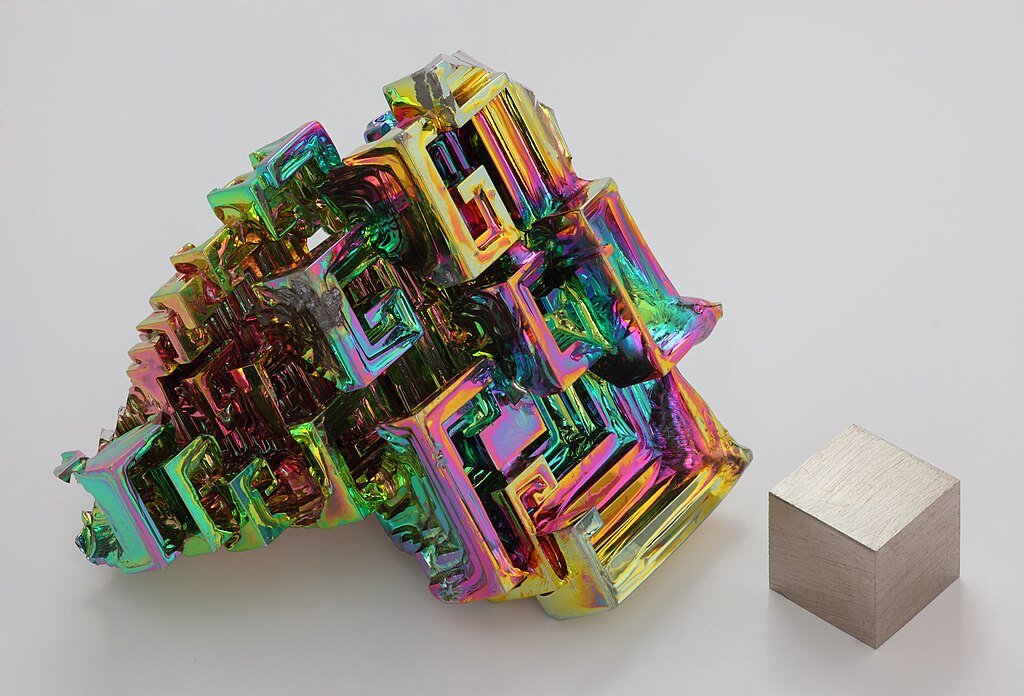
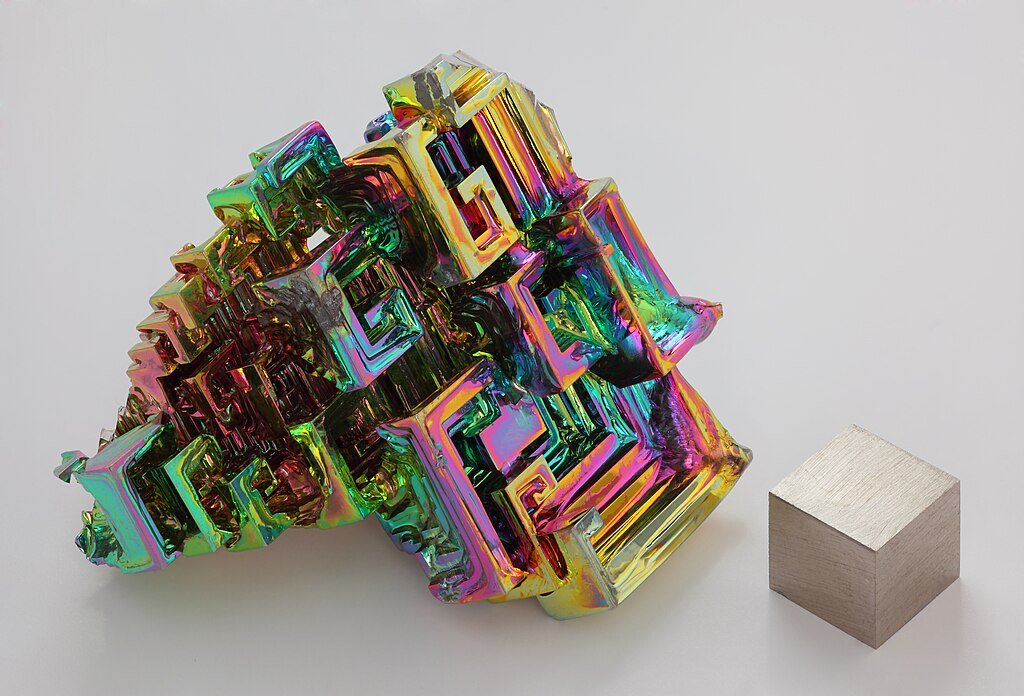
It is also a surprisingly gentle heavy metal. While lead and mercury are toxic, bismuth is the active ingredient in some stomach remedies, such as Pepto-Bismol. When it cools slowly, it forms stair-step crystals with an oxide layer that shines in all the colors of the rainbow, making it a favorite with collectors.
6. Osmium: the densest element
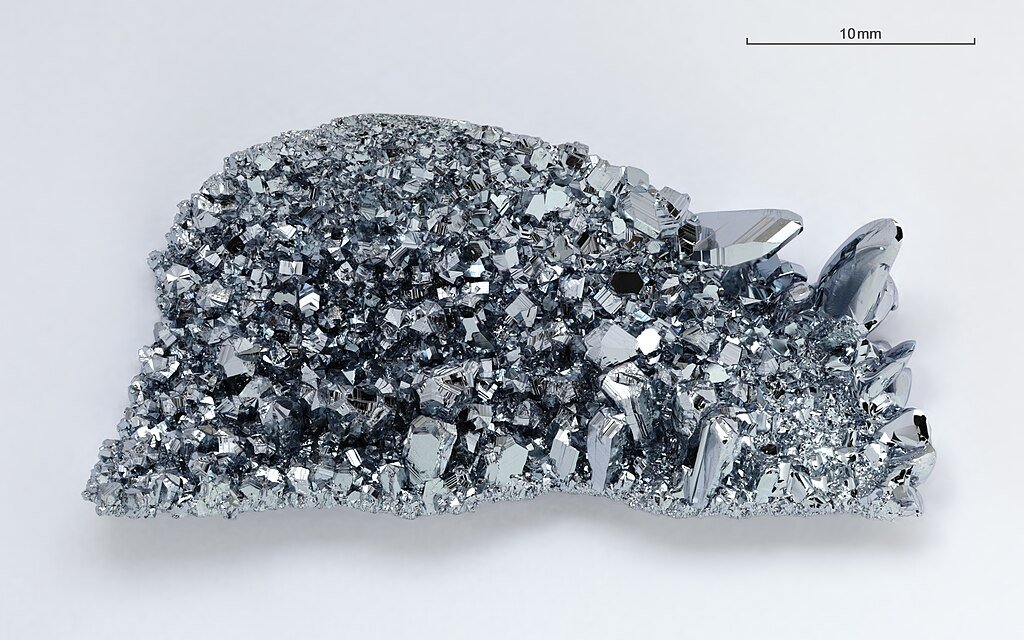
Osmium has the highest density of any naturally occurring element: 22.59 grams per cubic centimeter, about twice as dense as lead. A cube the size of a sugar cube weighs around 100 grams. The metal has a bluish shine and is so hard that it was once used for record player needles and fountain pen tips.
Its name comes from the Greek word for smell, and that is not a compliment. In air, osmium slowly forms osmium tetroxide, a volatile compound with a pungent, chlorine-like odor that is highly toxic and can damage the eyes even in tiny amounts.
7. Radon: the danger you cannot smell
Radon is a radioactive noble gas produced by the decay of uranium in soil and rocks. It is colorless and odorless, so it can seep unnoticed from the ground into basements, crawl spaces and poorly ventilated homes.
According to the World Health Organization, radon is one of the leading causes of lung cancer, and the leading cause among people who have never smoked. The gas itself is mostly breathed out again, but its radioactive decay products attach to dust particles and stay behind in the lungs. Testing your home is easy and cheap with a simple detector.
8. Tantalum: the metal that even aqua regia cannot touch
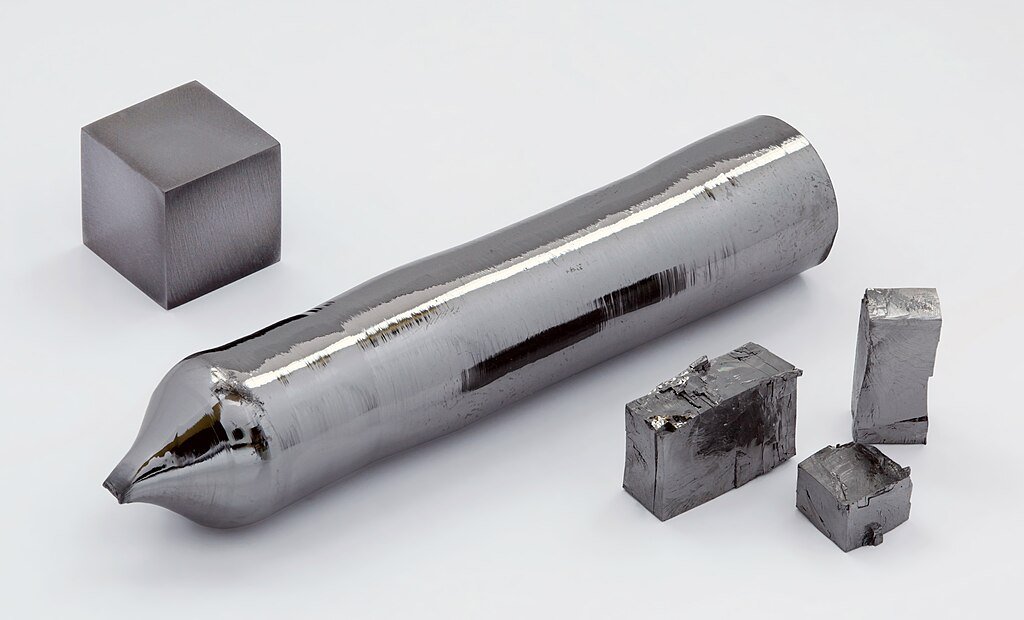
Tantalum is almost completely immune to acids. Even aqua regia, the mixture that dissolves gold, leaves it untouched at room temperature. Only hydrofluoric acid can attack it. It also has one of the highest melting points of any metal, above 3,000 degrees Celsius.
The body does not reject it, so it has long been used for implants such as skull plates and bone screws. Today, its biggest use is in your phone: tantalum capacitors are small and reliable. There is a dark side, though: much of its ore, coltan, comes from conflict zones in Central Africa, which is why tantalum is on the list of conflict minerals.
9. Einsteinium: the element that destroys itself
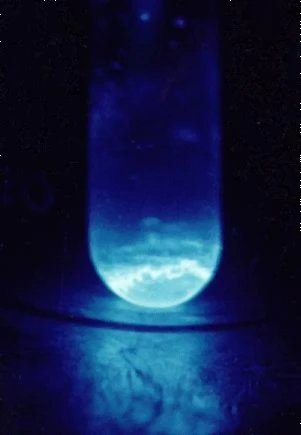
Einsteinium was discovered in 1952 in the debris of the first hydrogen bomb test. It is so radioactive that a sample glows in the dark from its own radiation and gives off noticeable heat.
That same radiation is also its downfall. The particles it releases damage its own crystal structure from the inside, and the most common form decays so fast that a sample loses about 3 percent of its mass every day. Only tiny amounts have ever been made. In 2021, researchers in California managed to measure some of its basic properties using just 200 nanograms, almost 70 years after its discovery.
10. Astatine: the rarest element on Earth
At any moment, there is less than a gram of astatine in the entire Earth’s crust, making it the rarest naturally occurring element. It only exists briefly as a step in radioactive decay chains, and its most stable form has a half-life of just over eight hours.
No one has ever seen a visible amount, and no one ever will: if you could gather enough atoms to see them, the heat of their own radiation would instantly vaporize the sample. Still, it has a real use. Astatine-211 emits alpha particles that only travel a few cell widths, so it is being tested in cancer treatments to kill tumor cells without harming surrounding tissue.