Time zones seem like a simple and logical idea. We need them because the Sun cannot be at its highest point everywhere at the same time. Without them, it would be midday in one place when the clock says it is midnight.
But although the idea behind them is logical, time zones are full of strange exceptions and historical quirks. These are ten facts that show that time zones are anything but boring.
1. Railways invented time zones
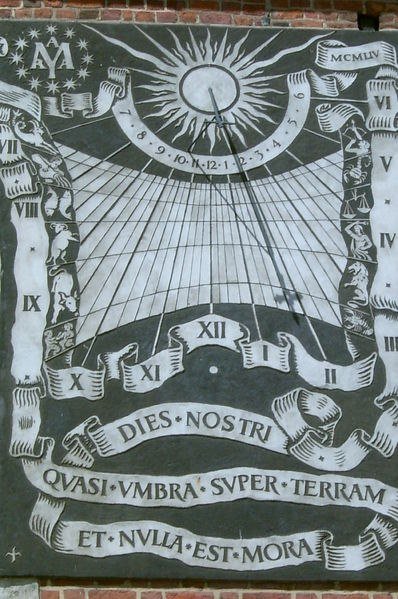
For most of history, time was local. Every town set its clocks by the Sun, so noon in one city was a few minutes different from noon in the next. Because travel was slow, nobody noticed.
The railways changed everything. Timetables were impossible to make if every station used a different time. British railways adopted a single standard time, “railway time”, in the 1840s, and in 1883, American and Canadian railroads introduced the time zones that are still used in North America today. In the US, it took until 1918 for them to become law.
2. The world chose Greenwich in a vote in 1884
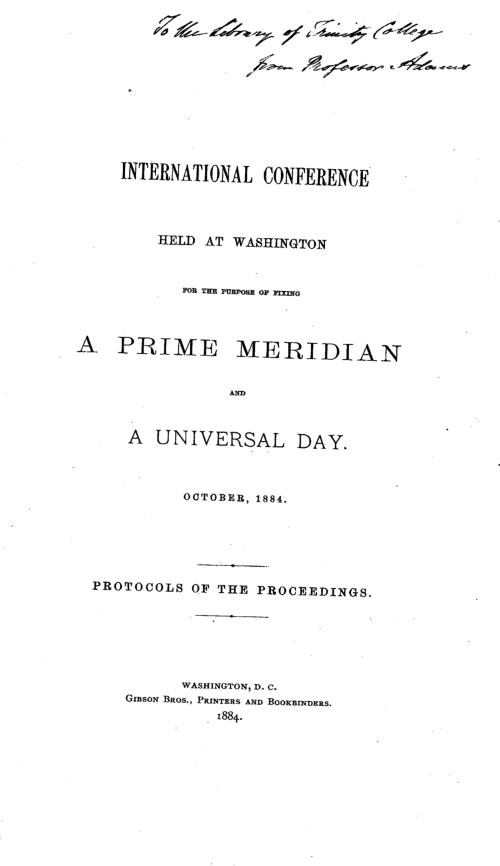
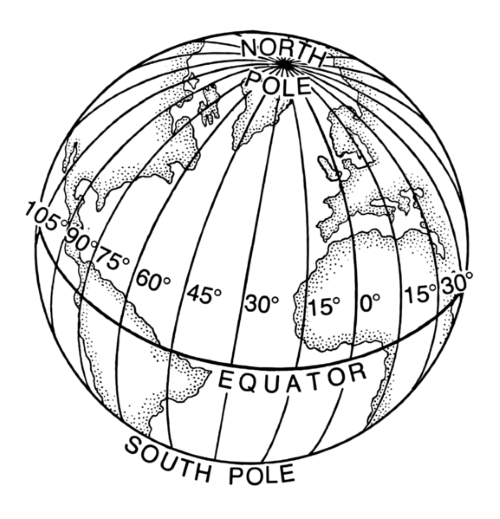
In 1884, delegates from 25 countries met in Washington for the International Meridian Conference to choose a single prime meridian, the line of zero longitude. The meridian through the Royal Observatory in Greenwich, near London, won with 22 votes. Only San Domingo, today the Dominican Republic, voted against, while France and Brazil abstained.
The French were not happy with a British zero line and continued to use Paris Mean Time for decades, until 1911. Greenwich was chosen largely because most of the world’s shipping already used charts based on it.
3. GMT is not quite the same as UTC
Greenwich Mean Time, GMT, is based on the position of the Sun at Greenwich. Today, the world officially uses Coordinated Universal Time, UTC, which is based on extremely precise atomic clocks. Because the Earth’s rotation is slightly irregular, a “leap second” was occasionally added to keep UTC in line with the Earth’s rotation. In everyday life, the two are practically the same, and many people still say GMT when they mean UTC. Leap seconds are set to be abolished by 2035.
4. China has only one time zone
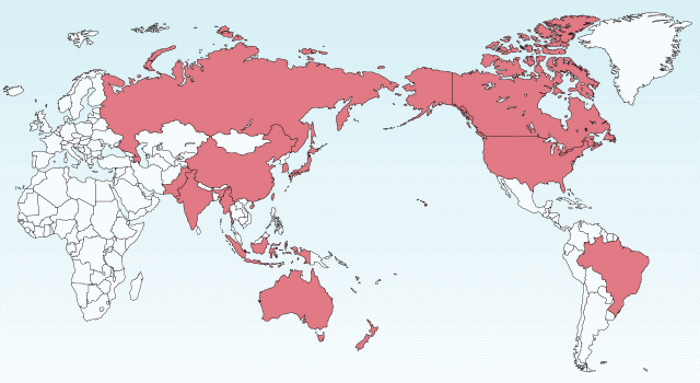
China is so wide that it would naturally span five time zones, but since 1949, the whole country has officially used a single one: Beijing time. In the far west of China, in Xinjiang, the Sun reaches its highest point only around 3 p.m., and in winter it does not rise until around 9 or 10 a.m. Many local people therefore unofficially use “Xinjiang time”, two hours behind Beijing. And if you cross the border from China into Afghanistan, you have to turn your clock back three and a half hours, the largest time difference at any international border.
5. Some time zones are off by half an hour or 45 minutes
Not all time zones differ from each other by whole hours. India uses a single time zone that is five and a half hours ahead of UTC. Parts of Australia, such as Adelaide, are half an hour behind Sydney. Nepal is five hours and 45 minutes ahead of UTC, and the Chatham Islands of New Zealand are 12 hours and 45 minutes ahead. On tiny Lord Howe Island, between Australia and New Zealand, clocks change by only half an hour for daylight saving time.
6. Going east, but turning the clock back
The general rule is: if you travel east, you set your clock forward. But there are exceptions. The Russian port city of Vladivostok uses UTC+10, while Japan, which lies largely to the east of it, uses UTC+9. So if you fly from Vladivostok to Tokyo, you have to set your clock back an hour, even though you are traveling east and slightly south.
7. A country that skipped a day
The International Date Line runs through the Pacific Ocean, and some countries have moved it to suit their needs. At the end of 2011, Samoa switched sides of the date line to align itself with its trading partners Australia and New Zealand. It did so by simply skipping Friday 30 December 2011: the country went straight from Thursday to Saturday. In 1995, Kiribati moved the date line so that the whole country would be on the same day, which also made its Line Islands the first inhabited place on Earth to start each new day.
8. Daylight saving time is far from universal
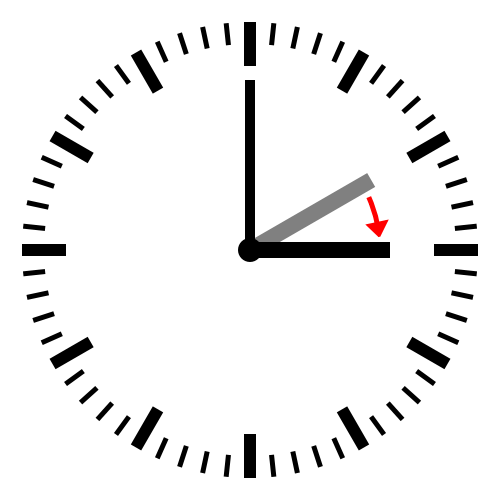
Daylight saving time is meant to make better use of daylight by moving the clock forward an hour in spring, giving more light in the evening. It was first widely introduced during the First World War, to save fuel. Today, only around a third of the world’s countries use it. Countries near the equator have roughly the same amount of daylight all year, so it makes little sense there. In the United States, Arizona does not use daylight saving time, but the Navajo Nation within Arizona does.
9. Astronauts use UTC

The International Space Station circles the Earth around every 90 minutes, so astronauts see around 16 sunrises and sunsets a day and fly through every time zone constantly. To keep things simple, the ISS uses UTC. That is a practical compromise between the mission control centers in Houston and Moscow, and it gives the crew a fixed rhythm for sleeping and working, no matter which continent they are floating over.
10. An island with two time zones
Märket is a tiny, rocky island in the Baltic Sea, around 350 meters long, which is divided between Sweden and Finland. Because Sweden and Finland are in different time zones, this uninhabited island, with only a lighthouse, has two times: one part is an hour behind the other. The border on the island even has a strange zigzag shape, because it was redrawn in 1985 so that the Finnish lighthouse would be on Finnish territory.