Japanese religion is a rich blend of two traditions. Shinto, Japan’s native faith, honors countless kami: spirits and gods found in nature, places and ancestors. Buddhism, which arrived from Korea and China in the 6th century, brought its own holy figures, and over time the two became closely intertwined.
Many of these figures still appear in Japanese daily life, in shrines and temples, at festivals and even in anime. These are ten of the most important, counting down to the goddess at the top.
10. Jizo, protector of children and travelers
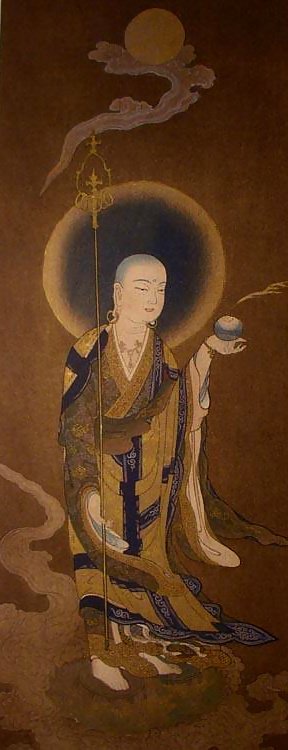
Jizo is a Buddhist bodhisattva, a being who delays his own enlightenment to help others. In Japan, he is the beloved guardian of travelers, children and especially the souls of children who died young.
Small stone statues of Jizo can be found along roads and in temple grounds all over Japan, often dressed by visitors in red bibs and knitted caps.
9. Raijin and Fujin, gods of thunder and wind
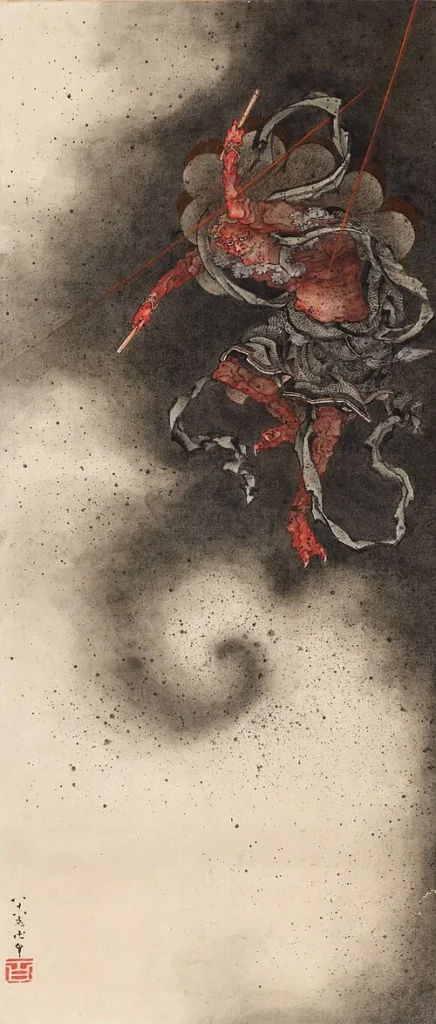
Raijin, the god of thunder and lightning, is shown as a fierce demon beating a ring of drums. His brother Fujin, the god of wind, carries a large bag full of wind on his shoulders.
The pair often guard temple gates, and a famous 17th-century folding screen by the painter Tawaraya Sōtatsu shows them dancing across a golden sky. According to one superstition, children should cover their belly buttons during thunderstorms, or Raijin will eat them.
8. The Nio, the temple guardians
At the entrance of many Buddhist temples stand two huge, muscular wooden guardians with furious expressions: the Nio, or Kongorikishi. They protect the temple from evil.
One, Agyo, has his mouth open, and the other, Ungyo, has his mouth closed. Together they represent the first and last sounds of the Sanskrit alphabet, “a” and “un”, symbolizing the beginning and end of all things.
7. Inari, god of rice and prosperity
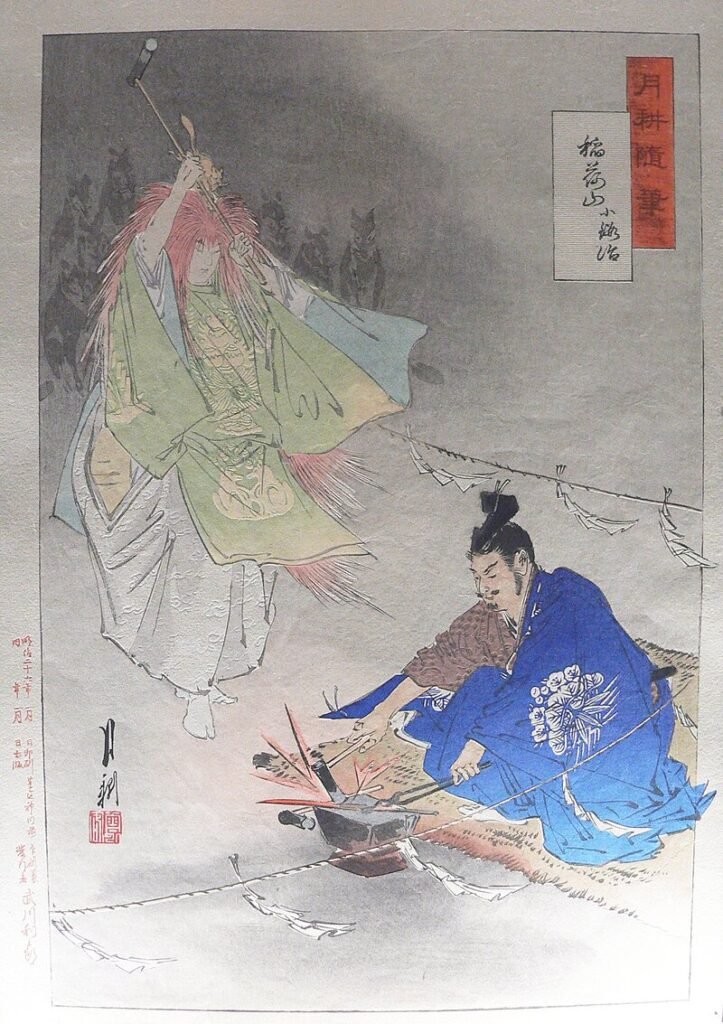
Inari is the kami of rice, fertility, business and prosperity, and one of the most widely worshipped in Japan, with tens of thousands of shrines. Inari is sometimes shown as male, sometimes female, sometimes both.
Foxes are Inari’s messengers, and fox statues guard every Inari shrine. The most famous, Fushimi Inari Taisha in Kyoto, is known for its thousands of bright orange torii gates, donated by businesses hoping for success.
6. Kannon, goddess of mercy
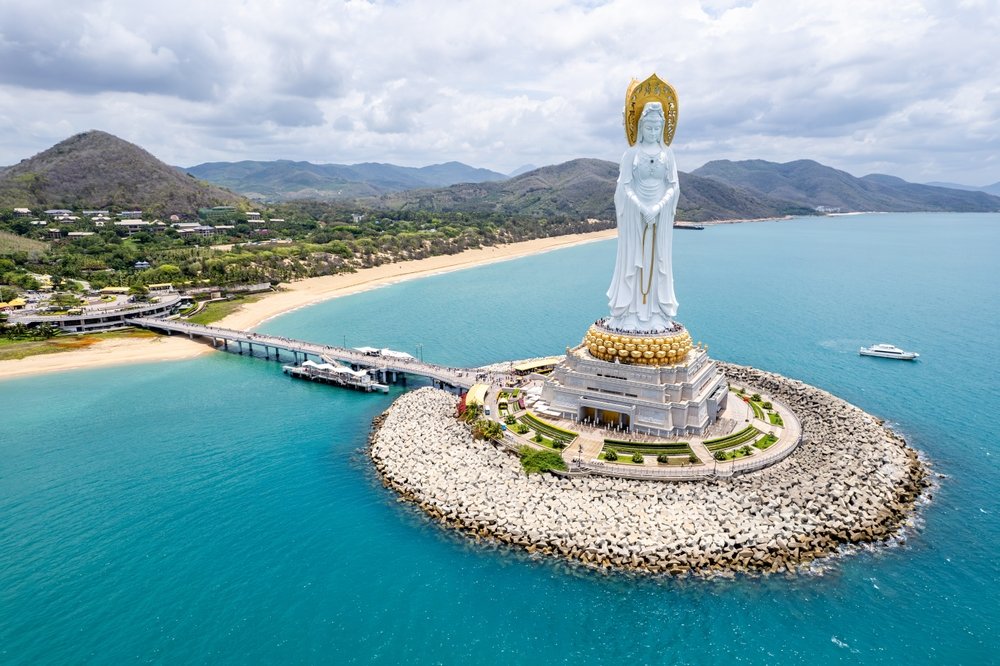
Kannon is the Japanese name for the Buddhist bodhisattva of compassion, known in China as Guanyin. She is said to hear the cries of all who suffer and is sometimes shown with a thousand arms, the better to help them.
She is one of the most beloved figures in Japanese Buddhism. The camera company Canon even took its name from an early prototype camera called Kwanon.
5. Benzaiten, goddess of music and art
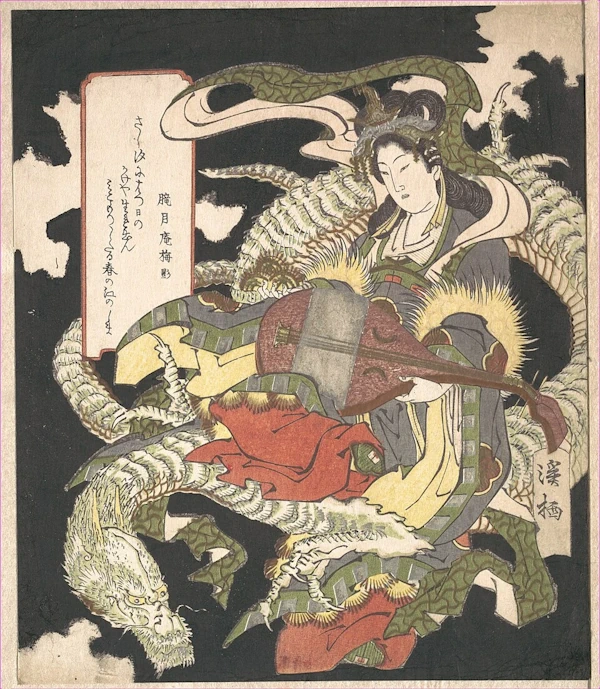
Benzaiten is the goddess of everything that flows: water, words, music, eloquence and wealth. Originally the Hindu goddess Saraswati, she came to Japan through Buddhism and is usually shown playing a lute called a biwa.
She is the only goddess among the Seven Lucky Gods of Japanese folklore, and her shrines are often found on islands or near water.
4. Ebisu, god of fishermen and luck
Ebisu is the cheerful god of fishermen, commerce and good fortune, always smiling, carrying a fishing rod and a large sea bream. He is one of the Seven Lucky Gods and the only one who is originally Japanese.
He is especially popular with shopkeepers. His face also appears on the label of Yebisu beer, and a whole district of Tokyo is named after the brewery.
3. The tengu, mountain spirits
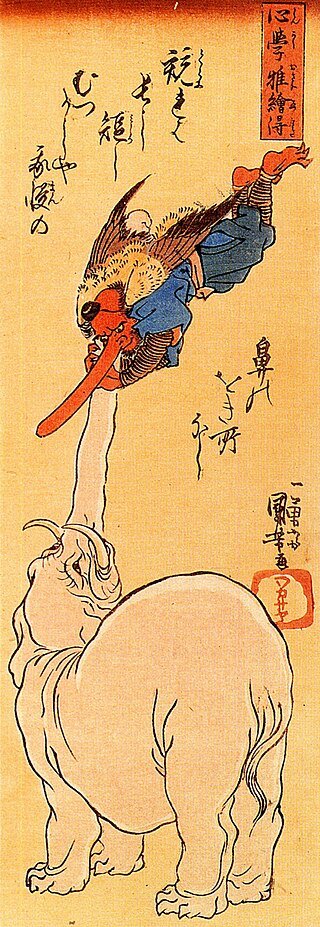
Tengu are supernatural beings of the mountains and forests, somewhere between gods and demons. Early tengu looked like birds of prey; later they were shown as red-faced men with extremely long noses.
They were said to be proud and mischievous, but also masters of martial arts. According to legend, the famous warrior Minamoto no Yoshitsune learned swordsmanship from a tengu king in the mountains.
2. Izanagi and Izanami, the creators
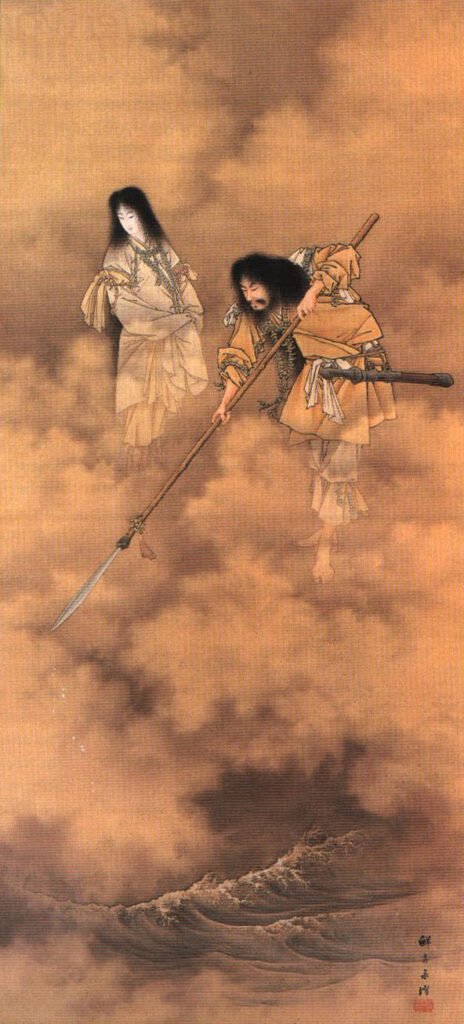
According to Japan’s oldest chronicles, the divine couple Izanagi and Izanami created the islands of Japan by stirring the ocean with a jeweled spear. They went on to give birth to many of the gods.
When Izanami died giving birth to the god of fire, Izanagi followed her to the land of the dead. Like Orpheus in Greek myth, he was told not to look at her, did anyway and saw her rotting body. He fled, and in revenge she swore to kill a thousand people every day.
1. Amaterasu, goddess of the Sun
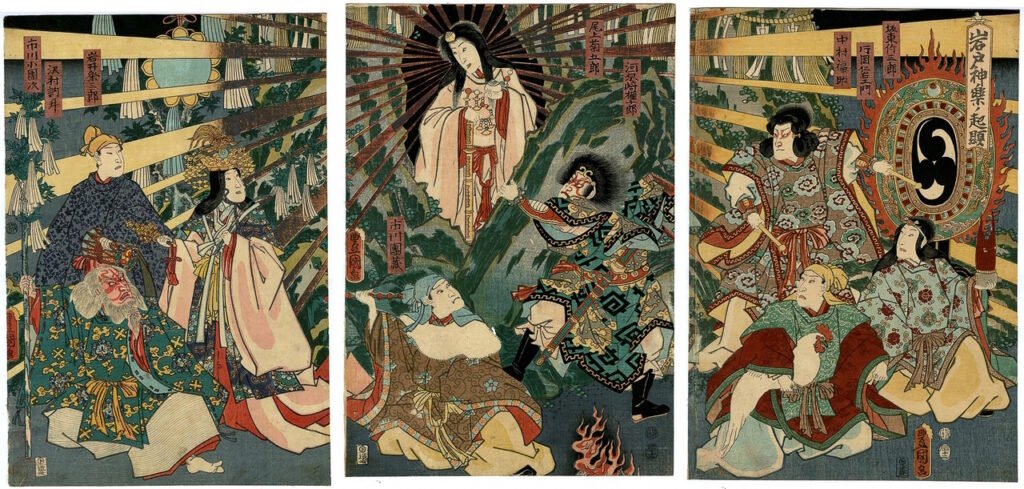
Amaterasu, the Sun goddess, was born from Izanagi’s left eye as he washed himself after his escape from the underworld. She is the most important deity in Shinto.
In her most famous myth, she hides in a cave after a quarrel with her storm god brother Susanoo, plunging the world into darkness. The other gods lure her out with a party and a mirror. According to tradition, the Japanese imperial family descends from her, and her main shrine at Ise is the holiest in Japan.