For 76 years, Pluto was the ninth planet. Then, in 2006, astronomers decided it did not meet the new definition of a planet and reclassified it as a dwarf planet, to the dismay of a lot of people who grew up with it.
Planet or not, Pluto turned out to be far more interesting than anyone expected when NASA’s New Horizons flew past it in 2015. Here are ten facts about the little world at the edge of the solar system.
1. It was named by an 11-year-old girl
Pluto was discovered in 1930 by Clyde Tombaugh, a young astronomer at the Lowell Observatory in Arizona, who spotted it by comparing photographs of the same patch of sky taken days apart.
The name came from Venetia Burney, an 11-year-old schoolgirl in Oxford, England. She suggested Pluto, the Roman god of the underworld, and her idea reached the observatory, where it won the vote. As a reward, her grandfather gave her a five-pound note.
2. It was photographed before it was discovered
Once astronomers knew where to look, they went back through older photographs and found Pluto hiding in plain sight. The earliest known image dates from 1909, more than two decades before its discovery.
At the time, it was simply one faint dot among thousands of stars, and nobody noticed it was moving.
3. It is smaller than our Moon
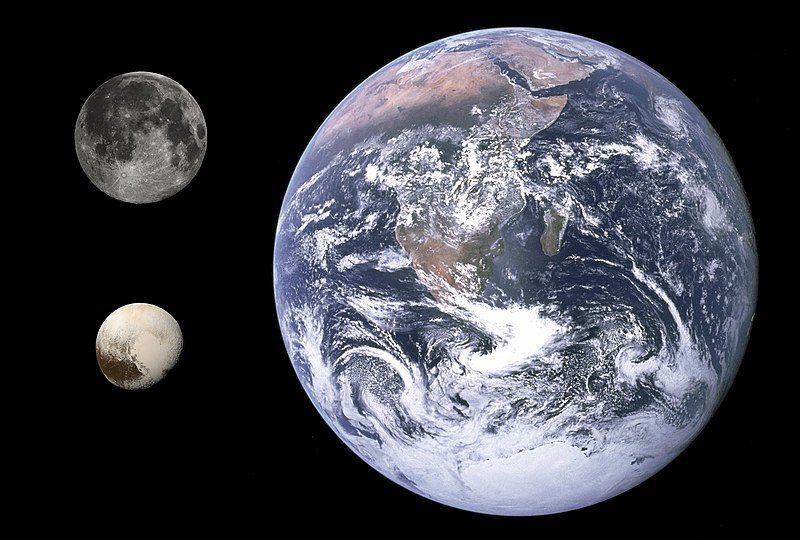
Pluto is just 2,377 kilometers across, about two thirds the width of our Moon and less than a fifth the width of Earth. It is smaller than seven moons in the solar system.
Still, it is the largest known object in the Kuiper Belt, a vast ring of icy bodies beyond Neptune.
4. It has not completed an orbit since we found it
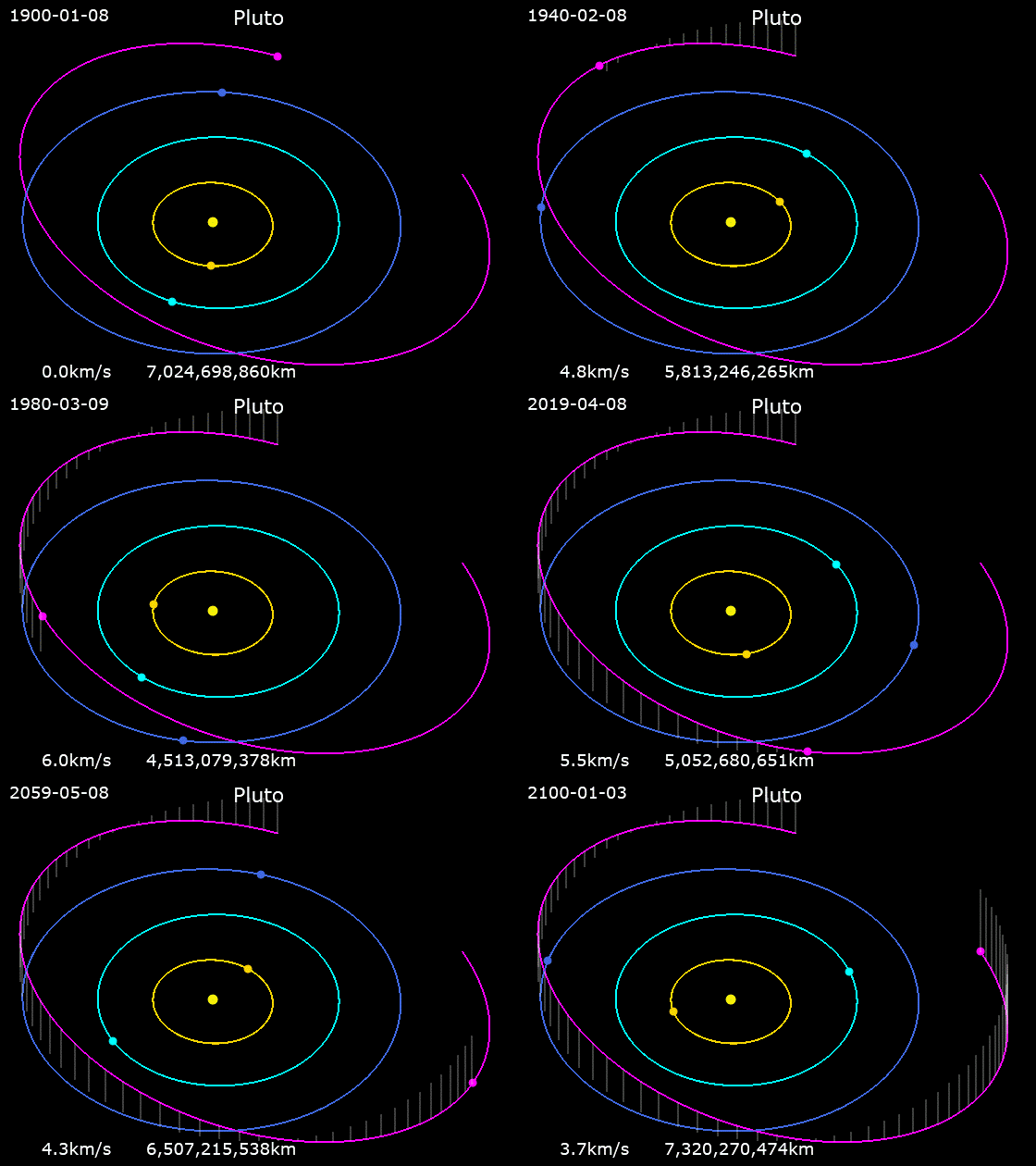
Pluto takes 248 Earth years to go around the Sun once. Since its discovery in 1930, it has covered only about a third of its orbit.
It will not complete its first full orbit since its discovery until 2178.
5. It sometimes comes closer to the Sun than Neptune
Pluto’s orbit is a stretched oval and tilted compared to those of the planets. For about 20 years of every orbit, it is actually closer to the Sun than Neptune. The last time was from 1979 to 1999.
Despite crossing paths, Pluto and Neptune will never collide. Their orbits are locked in a rhythm: Pluto goes around the Sun exactly twice for every three trips Neptune makes, which keeps them safely apart.
6. It has an atmosphere

Pluto is tiny and frozen, yet it has a thin atmosphere, mostly of nitrogen. New Horizons photographed it glowing blue as sunlight shone through it from behind, with dozens of layers of haze.
That atmosphere comes and goes. As Pluto moves away from the Sun and cools, much of it is expected to freeze and fall back to the surface as snow.
7. Pluto and Charon dance together
Pluto has five known moons: Charon, Nix, Hydra, Kerberos and Styx. Charon is by far the largest, about half the size of Pluto itself.
The two are so similar in size that Charon does not simply circle Pluto. Instead, both orbit a point in the empty space between them. They also always show each other the same face, so from one side of Pluto, Charon hangs motionless in the sky.
8. It has a giant heart

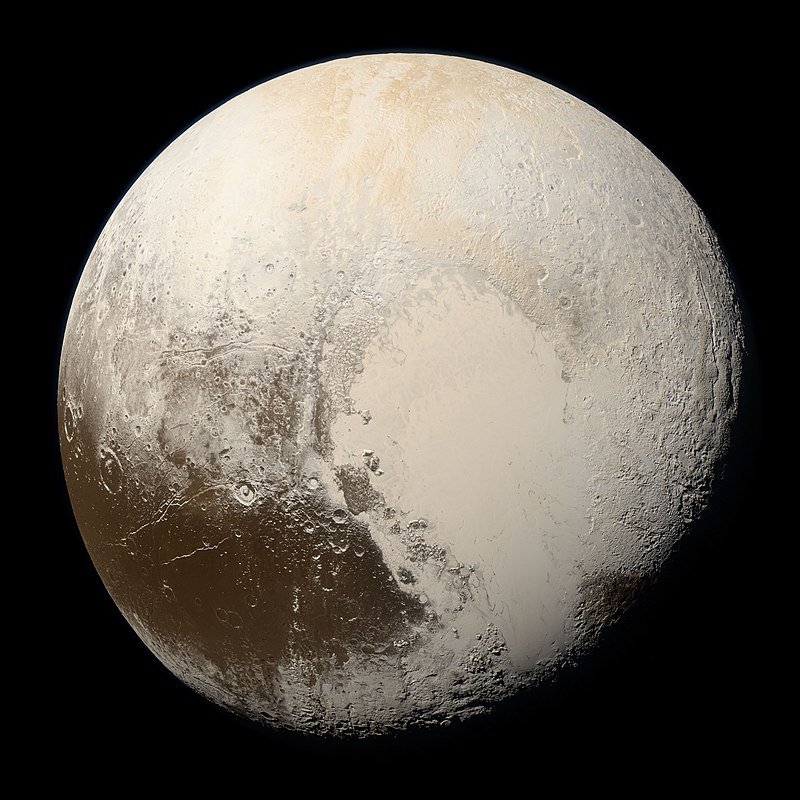
The most famous image New Horizons sent back shows a huge, pale, heart-shaped region on Pluto’s surface. It was named Tombaugh Regio, after the man who discovered Pluto.
The left half of the heart is a vast plain of frozen nitrogen about 1,000 kilometers across, called Sputnik Planitia. It is slowly churning, with blocks of ice welling up from below like a giant lava lamp.
9. Daylight on Pluto is brighter than you think
Pluto is on average about 40 times farther from the Sun than Earth, so you might expect it to be pitch black. In fact, noon on Pluto is about as bright as Earth shortly after sunset.
NASA even calls this moment “Pluto Time”. Step outside at the right moment of twilight where you live, and the light around you is roughly what a sunny day on Pluto looks like.
10. It has mountains of ice
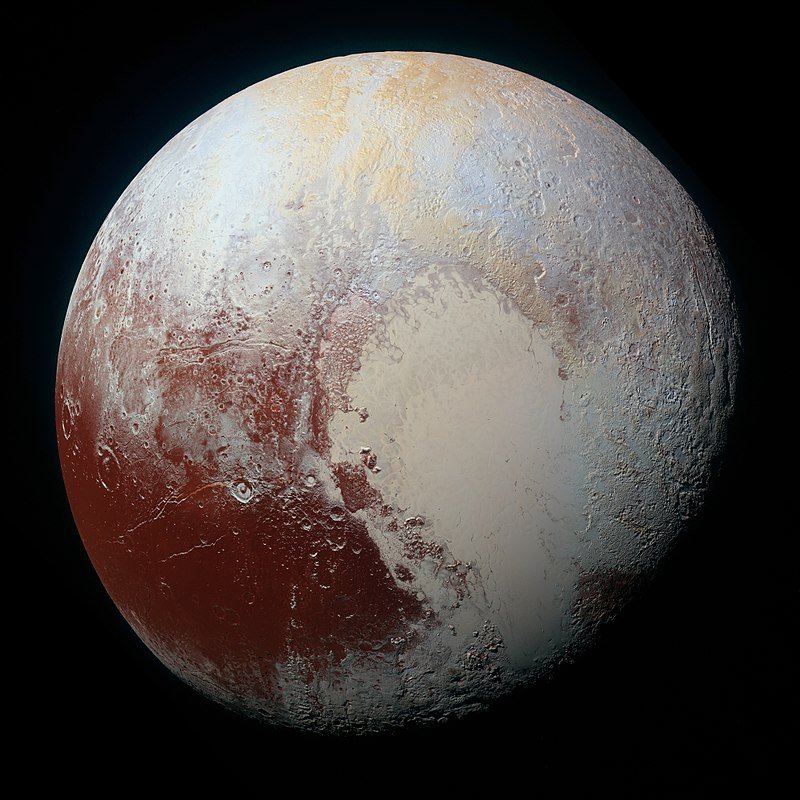
Scientists expected Pluto to be a dead, cratered ball of ice. Instead, New Horizons found mountains several kilometers high made of water ice, which at Pluto’s temperatures is as hard as rock.
Parts of the surface have almost no craters at all, meaning they are geologically young. Somehow, this small, cold world is still active, a discovery that changed how scientists think about the dwarf planets of the outer solar system.