Our brain is a remarkable organ, but it has its limits. To make decisions quickly, it relies on mental shortcuts. Most of the time, they work just fine. But sometimes they lead to systematic thinking errors, known as cognitive biases.
Throughout history, these unconscious patterns have contributed to some of the most tragic disasters ever. From air crashes to financial crises, and from space disasters to wars that dragged on and on, cognitive biases played a role again and again.
1. Groupthink: the Challenger disaster (1986)
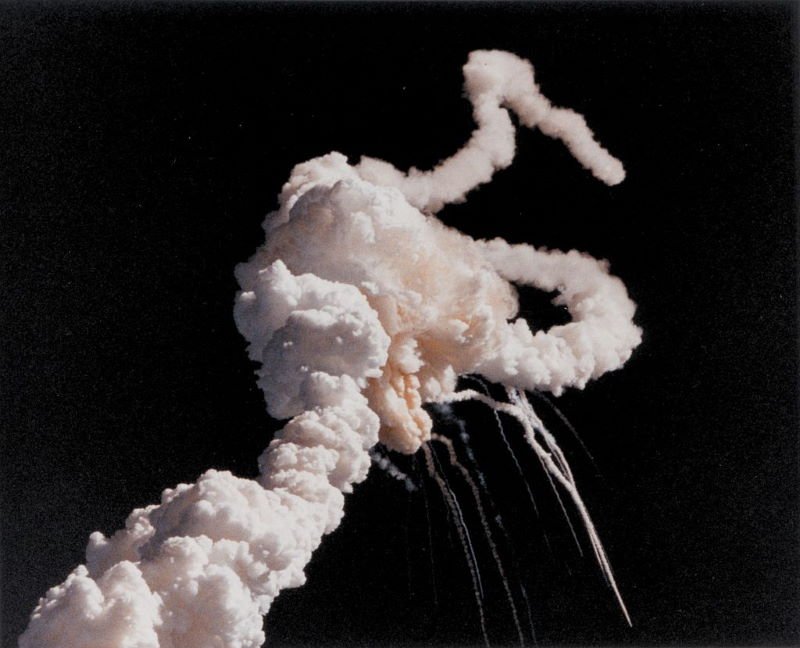
On 28 January 1986, the Space Shuttle Challenger broke apart 73 seconds after launch, killing all seven crew members. The cause was a failed O-ring seal in one of the rocket boosters, which could not cope with the freezing temperatures that morning.
The night before, engineers at the booster manufacturer Morton Thiokol had warned that a launch in such cold was dangerous. Under pressure from NASA, their managers overruled them and approved the launch. Few people dared to challenge the decision openly.
This kind of groupthink, in which critical voices are suppressed to keep the peace or meet a deadline, is one of the most dangerous biases in organizations. Investigators found similar problems in NASA’s culture after the loss of Columbia in 2003.
2. The sunk cost fallacy: the Vietnam War
The sunk cost fallacy is the tendency to keep going with a lost cause because so much has already been invested in it. American involvement in the Vietnam War is a textbook example. As the war went on and losses mounted, it became harder and harder to pull out.
“We cannot let our soldiers have died in vain” became the argument. As early as 1965, Undersecretary of State George Ball warned President Johnson in memos that the United States was heading into a war it could not win. But the investments already made, in lives, money and political prestige, made a change of course psychologically almost impossible. The war dragged on for years, at the cost of countless more lives.
3. Normalcy bias: Pompeii (79 AD) and Hurricane Katrina (2005)

During a disaster, many people show normalcy bias: they underestimate the threat and believe everything will turn out fine because it has never been that bad before. In 79 AD, when Mount Vesuvius erupted, many inhabitants of Pompeii fled, but others stayed behind, perhaps hoping it would blow over, and were killed.
Almost two thousand years later, thousands of people in New Orleans refused to leave as Hurricane Katrina approached, despite warnings that the area would be “uninhabitable for weeks”. Even after Mayor Ray Nagin ordered the first mandatory evacuation in the city’s history, many stayed at home, some because they had no means to leave. Around 1,400 people died in Louisiana alone.
4. Overconfidence: the financial crisis (2008)

The global financial crisis of 2008 was an epidemic of overconfidence. Home buyers believed that prices could only go up. Banks were convinced that their risk models were watertight. Regulators assumed the market would correct itself.
In July 2008, less than two months before the collapse of Lehman Brothers, US Treasury Secretary Henry Paulson still described the American banking system as “safe and sound”.
Research suggests that banks led by overconfident CEOs took on more risk and were hit harder by the crisis. Overconfidence blinded almost everyone to the warning signs.
5. Confirmation bias: Deepwater Horizon (2010)

On 20 April 2010, the drilling rig Deepwater Horizon exploded in the Gulf of Mexico. Eleven workers were killed, and around 4 million barrels of oil poured into the sea, the largest marine oil spill in history.
Hours before the blowout, the crew carried out a crucial pressure test on the well. The results showed that something was wrong, but the team accepted an explanation that fit their belief that the well was safe. It is a classic case of confirmation bias: information that contradicted the plan was explained away. The cement failed, the blowout preventer did not work, and the rest is history.
6. Sunk costs and overconfidence: Mount Everest (1996)

In May 1996, eight climbers died on Mount Everest in a single storm, including two highly experienced expedition leaders, Rob Hall and Scott Fischer. The disaster shows how several biases can work together. The expeditions had a strict rule: anyone who had not reached the summit by the agreed turnaround time in the early afternoon had to turn back.
But after months of preparation, and with clients who had paid tens of thousands of dollars, many climbers kept going long after that time, a clear example of the sunk cost fallacy. Rob Hall had already guided 39 clients to the summit and seemed convinced that a disaster could not happen to his team. He died near the summit after staying with a struggling client.
7. Fear of losing time: the Tenerife disaster (1977)
The deadliest accident in aviation history took place on 27 March 1977, when a KLM Boeing 747 crashed into a Pan Am 747 on a foggy runway at Tenerife airport. 583 people were killed.
The KLM captain, Jacob van Zanten, one of the airline’s most senior pilots and head of its 747 training, started his takeoff without clearance from the control tower. Many factors played a role, including fog, radio miscommunication and a congested airport. But the pressure of time was one of them: the crew was worried about strict Dutch rules on duty hours, and exceeding them could have meant a long delay. The fear of “losing” time outweighed caution.
8. The availability heuristic: driving after 9/11
After the attacks of 11 September 2001, many Americans became afraid of flying and took the car instead, with tragic consequences. The German psychologist Gerd Gigerenzer estimated that around 1,500 additional people died on American roads in the year after the attacks, because so many chose the statistically far more dangerous option.
The availability heuristic explains this: dramatic plane crashes that dominate the news are easy to recall, so we overestimate the risk of flying. The thousands of everyday road deaths rarely make headlines and remain invisible. The result was a hidden disaster on top of the visible one.
9. Survivorship bias: aircraft armor in the Second World War
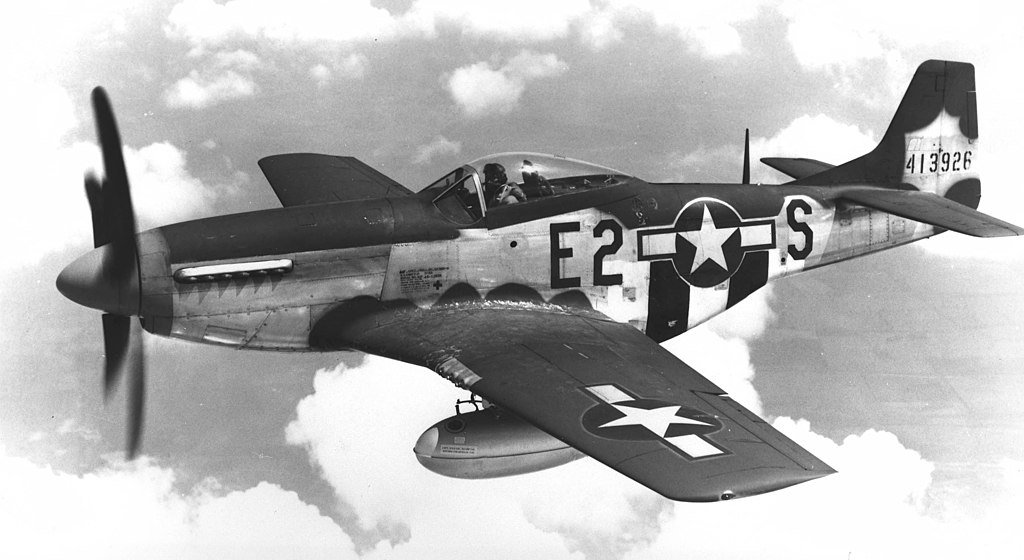
During the Second World War, the American military wanted to improve the survival rate of its aircraft by adding extra armor. Looking at planes that returned from missions, they saw a clear pattern: most bullet holes were in the wings and the fuselage. The logical decision seemed to be to reinforce those areas.
Until the statistician Abraham Wald pointed out a blind spot: they were only looking at the planes that had survived. Planes that were hit in the engines or the cockpit often did not come back at all.
So the bullet holes in the returning planes did not show where armor was needed, but rather where a plane could be hit without going down. This is survivorship bias: the tendency to focus on the survivors, or successes, and ignore the invisible failures, which leads to completely wrong conclusions.
10. Hindsight bias: Pearl Harbor and 9/11
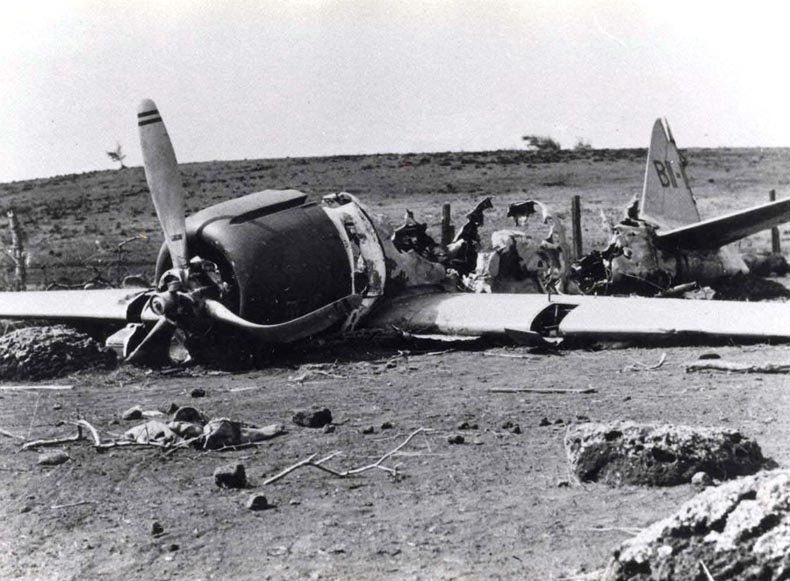
After every major disaster, analysts say: “The signs were there.” That is hindsight bias, the tendency to believe afterwards that an event was predictable. What we forget is the enormous amount of noise in which those signals were buried.
Before Pearl Harbor, there were indeed clues pointing to a Japanese attack, but they were mixed in with thousands of other pieces of information. The same applied to 9/11: the CIA knew about two of the future hijackers, but that information did not reach the FBI in time.
Hindsight bias leads to unfair blame and, worse, to the false confidence that “next time” we will recognize the signs, while in reality we may be just as blind to new threats.
Cognitive biases are not proof that people are stupid. They show that our brains evolved for a simpler world than the one we live in now. The lesson of these disasters is not that we can eliminate our biases, but that we need to design systems that take them into account. Checklists, encouraging dissent and separating decisions from the people who made them are all ways to compensate for the limits of human thinking.