When Yuri Gagarin became the first human to orbit the Earth on 12 April 1961, a new era of technological rivalry began. From the outside, crewed spaceflight looked like a string of triumphs. Behind the scenes, it was a dangerous business full of enormous risks.
Rockets are essentially controlled bombs, and a faulty valve or a crack in a heat shield can be fatal. Remarkably, most deaths in the history of spaceflight did not happen in space, but on the launch pad or during the descent through the atmosphere. These are the ten worst space disasters in history, judged by the number of lives lost and their impact on space exploration.
10. The near-disaster of Voskhod 2 (1965)
On 18 March 1965, Soviet cosmonaut Alexei Leonov made history with the first spacewalk, floating outside his spacecraft for about twelve minutes on a tether just over five meters long. But in the vacuum of space, something happened the designers had not expected: his spacesuit ballooned.
Leonov could barely bend his fingers and no longer fit through the narrow airlock. Against all protocol, he let air out of his suit to make it smaller, risking decompression sickness, and squeezed back inside head-first.
The trouble was not over. The automatic system for the return failed, so the crew had to fire the braking rocket manually. They landed hundreds of kilometers off course in the snowy forests of the Ural region and spent two freezing nights in the wilderness before rescuers reached them on skis.
9. The Intelsat 708 crash (1996)
On 15 February 1996, a Chinese Long March 3B rocket stood ready at the Xichang launch center in Sichuan province, carrying the American-built communications satellite Intelsat 708.
Seconds after liftoff, a fault in the guidance system sent the rocket off course. It veered over sideways and, about 22 seconds after launch, slammed into a village near the base, exploding with its tanks full of toxic propellant.
Chinese authorities reported six dead and 57 injured. Western engineers who were present and saw the devastation believed the true death toll was much higher, although the exact number has never been confirmed. The aftermath caused a scandal in Washington: American satellite makers were fined for sharing sensitive rocket know-how with China, and US satellites were effectively barred from launching on Chinese rockets from then on.
8. The fatal descent of Soyuz 1 (1967)
According to many accounts, cosmonaut Vladimir Komarov knew before launch on 23 April 1967 that the new Soyuz spacecraft was not ready. Engineers had reportedly found hundreds of problems, but political pressure to deliver a space spectacular won out.
Once in orbit, one of the two solar panels failed to open, leaving the spacecraft short of power and crippling its navigation. After a day of struggling, Komarov managed to steer the capsule back toward Earth by hand.
Then came the final blow. The main parachute failed to deploy, and the reserve parachute became tangled in the lines of the drogue chute. On 24 April 1967, the capsule hit the ground at around 140 kilometers per hour. Komarov was killed instantly, becoming the first person to die during a spaceflight.
7. The Apollo 1 fire (1967)
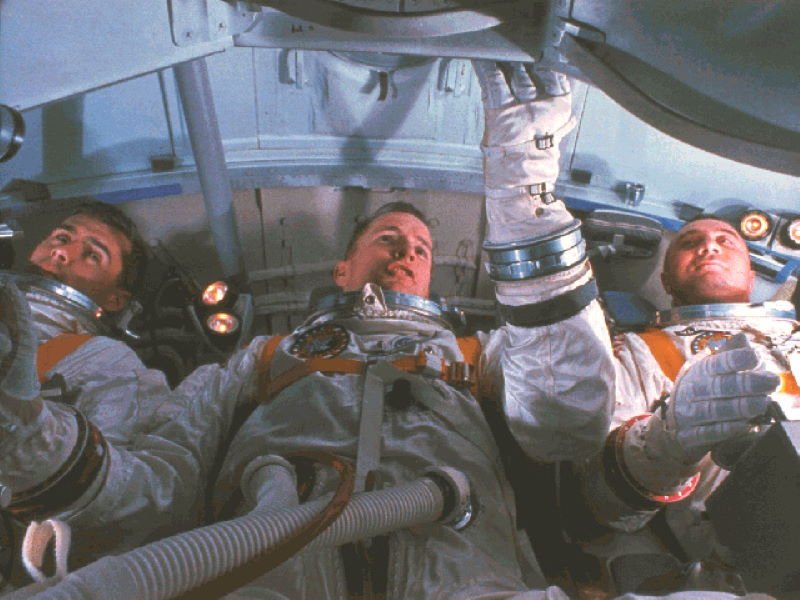
America’s Apollo program got off to a tragic start. On 27 January 1967, astronauts Gus Grissom, Ed White and Roger Chaffee were strapped into their capsule on Launch Complex 34 at Cape Kennedy for a routine countdown rehearsal.
The cabin was filled with pure oxygen at slightly above normal air pressure. A spark, probably from damaged wiring, started a fire, and in the pure oxygen, materials that normally barely burn, such as nylon netting and Velcro, went up in flames within seconds.
The crew reported the fire over the radio and tried to open the hatch, but it opened inward and the pressure inside rose too fast. Neither the astronauts nor the technicians outside could open it in time, and all three men died of asphyxiation. NASA halted crewed flights for 20 months and redesigned the spacecraft with a quick-opening, outward hatch and a safer atmosphere on the launch pad.
6. The Alcântara explosion (2003)
For years, Brazil tried to join the exclusive club of countries able to launch their own satellites. In August 2003, its VLS-1 rocket stood ready at the Alcântara launch center in the northeastern state of Maranhão for a third attempt, after two earlier failures.
On 22 August 2003, three days before the planned launch, one of the rocket’s solid-fuel motors ignited unexpectedly on the pad. Within seconds, the launch tower was engulfed in flames and collapsed.
Dozens of technicians were working around the rocket at the time. Twenty-one engineers and technicians were killed, and Brazil lost many of its most experienced rocket specialists in one blow. The country’s space program never fully recovered.
5. The decompression of Soyuz 11 (1971)
The Soyuz 11 mission seemed like a triumph for the Soviet Union. Cosmonauts Georgy Dobrovolsky, Vladislav Volkov and Viktor Patsayev became the first crew to live aboard a space station, Salyut 1, and set a new endurance record of more than 23 days in space.
On 30 June 1971, as they prepared to return, the explosive bolts separating the descent module jolted open a ventilation valve far too early, at an altitude of about 168 kilometers. Within minutes, all the air escaped from the cabin.
The cosmonauts were not wearing pressure suits, because the capsule was too cramped for three men in spacesuits. The capsule landed automatically and perfectly in Kazakhstan, but when the recovery team opened the hatch, they found all three men dead in their seats. They remain the only people known to have died in space itself, above the atmosphere.
4. The Plesetsk launch pad disaster (1980)
On 18 March 1980, military personnel at the secret Plesetsk Cosmodrome in northern Russia were fueling a Vostok-2M rocket for the launch of a spy satellite when the launch pad turned into an inferno.
The rocket exploded, and 48 people were killed, many of them young soldiers and technicians. The Soviet authorities initially blamed the crew for making mistakes. Investigations later pointed to a technical cause: filters in the hydrogen peroxide system had been made with a material that reacted with the fuel and caused it to ignite. The disaster was kept secret and only officially acknowledged in 1989.
3. The loss of Space Shuttle Columbia (2003)
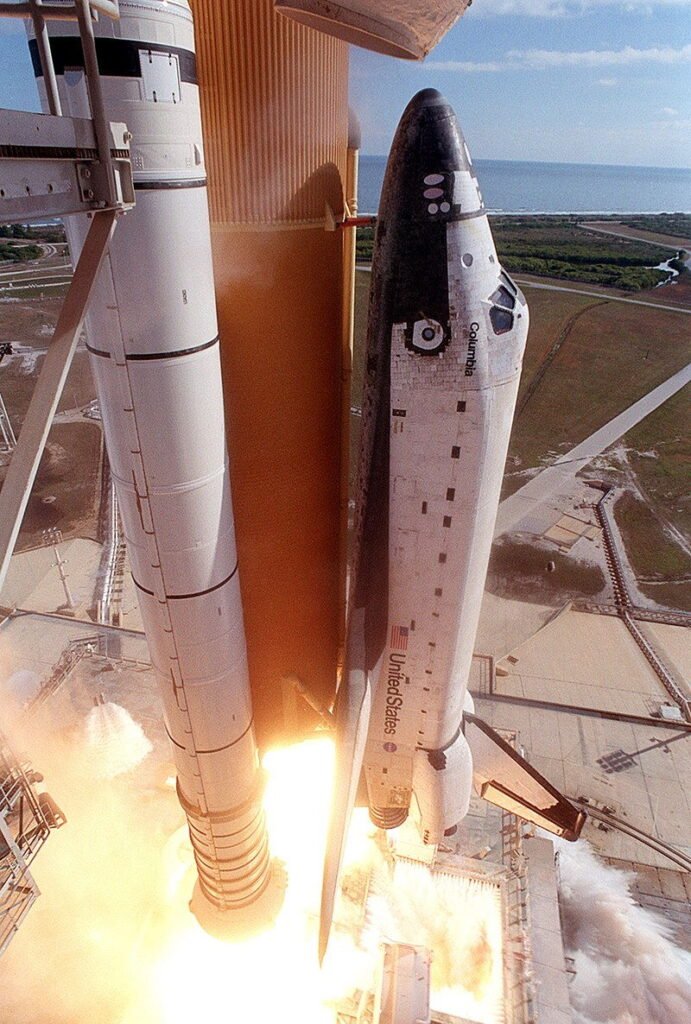
On 1 February 2003, Space Shuttle Columbia was about to land after a 16-day science mission. What the seven crew members did not know was that their fate had been sealed during launch on 16 January. About 82 seconds after liftoff, a briefcase-sized piece of insulating foam broke off the external fuel tank and struck the leading edge of the left wing at more than 800 kilometers per hour.
The impact punched a hole in the wing’s heat-resistant panels. During reentry, superheated gas entered the wing through the hole and melted its aluminum structure from the inside.
Traveling at about Mach 18 over Texas, the shuttle lost control and broke apart. All seven astronauts were killed, including commander Rick Husband and Ilan Ramon, the first Israeli astronaut. The shuttle program was grounded for two and a half years, and NASA decided to retire the shuttles once the International Space Station was complete.
2. The Nedelin catastrophe (1960)
The deadliest disaster in the history of rocketry took place on 24 October 1960 at the Baikonur Cosmodrome in Kazakhstan. Marshal Mitrofan Nedelin, head of the Soviet strategic missile forces, was under heavy pressure to launch the first R-16 intercontinental ballistic missile in time for the anniversary of the October Revolution.
When the fully fueled rocket developed problems on the pad, Nedelin refused to call off the operation and had a chair placed near the rocket to supervise the repairs. Against all safety rules, dozens of technicians kept working around a missile loaded with highly toxic and explosive propellants.
Suddenly, the second-stage engine ignited and burned straight through the fuel tanks of the first stage. The resulting fireball engulfed the launch pad. Estimates of the death toll range from 78 to more than 120, including Nedelin himself. The Soviet Union kept the disaster secret for nearly thirty years and told the public that the marshal had died in a plane crash.
1. The Space Shuttle Challenger disaster (1986)
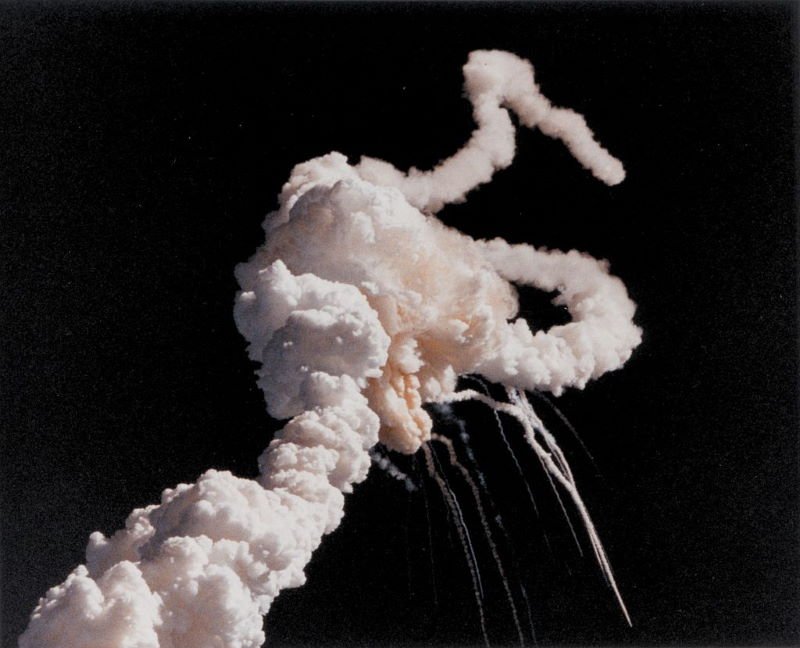
The loss of Space Shuttle Challenger on 28 January 1986 is the most famous accident in the history of spaceflight. Millions of schoolchildren watched the launch live, because teacher Christa McAuliffe was going to be the first teacher in space.
The night before, it had been unusually cold at Cape Canaveral. Engineers at rocket maker Morton Thiokol had warned that the rubber O-rings sealing the joints of the solid rocket boosters could lose their flexibility in freezing temperatures. Under pressure to stick to a busy schedule, NASA went ahead anyway.
Seventy-three seconds after liftoff, a jet of flame burst through a failed seal on the right booster and burned into the external fuel tank. The shuttle broke apart under enormous aerodynamic forces.
Contrary to what many people think, the crew cabin did not explode. It broke away largely intact and continued upward before falling back to the ocean. Investigators found that at least three of the crew’s emergency air packs had been switched on, which suggests some of the astronauts survived the breakup, although it is not known whether they remained conscious. The cabin hit the Atlantic Ocean at more than 300 kilometers per hour, killing all seven crew members. The shuttle program was grounded for nearly three years and NASA’s safety culture was overhauled.