For more than 165 million years, dinosaurs dominated the land, long before the first humans appeared. From the Triassic through the Jurassic to the end of the Cretaceous, they evolved into an incredible variety of shapes and sizes. Some were no bigger than a pigeon, while others became the heaviest and longest animals ever to walk the Earth. The non-avian dinosaurs died out 66 million years ago after an asteroid impact, but their descendants are still with us: birds evolved from small, two-legged theropod dinosaurs.
Many lists simply throw all prehistoric giants together, but each group had its own record holders. On top of that, the skies and oceans were home to giant reptiles that were not dinosaurs, but are too impressive to leave out. These are the biggest dinosaurs and prehistoric giants, group by group. Keep in mind that most size estimates are based on incomplete skeletons and can change with new discoveries.
10. Pachycephalosaurus (dome-headed dinosaurs)
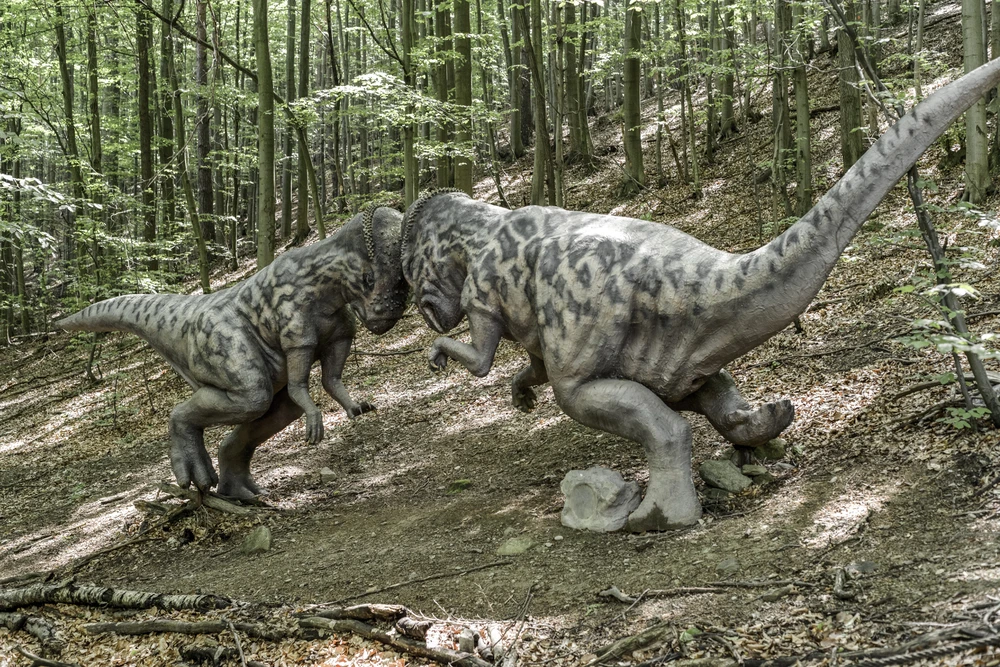
The pachycephalosaurs were two-legged plant-eaters with a bizarre feature: a massive dome of solid bone on top of the skull, up to 25 centimeters thick, surrounded by bony knobs and short spikes. Pachycephalosaurus wyomingensis, about 4.5 meters long and weighing around 450 kilograms, was the largest of the group.
For years, it was thought that these dinosaurs rammed heads at full speed, like modern bighorn sheep. Some studies have questioned whether their necks could handle that, and suggest they may have butted each other’s flanks or used their domes for display. Others have found injuries on the domes that suggest head-butting did happen. The debate continues.
9. Utahraptor (raptors)
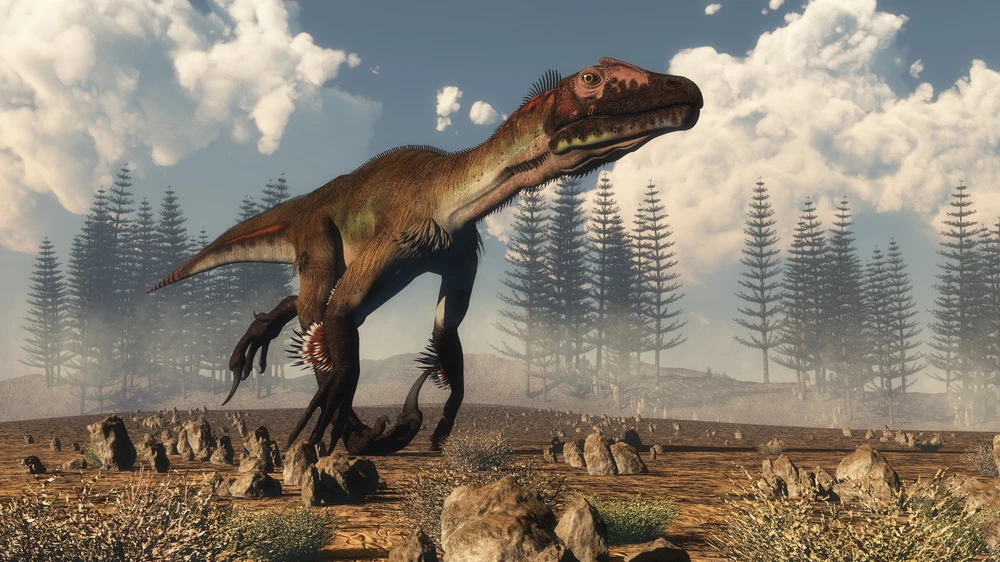
Jurassic Park showed terrifying “Velociraptors” as big as a man, but the real Velociraptor from Mongolia was only about the size of a turkey. The true giant among the raptors, or dromaeosaurs, was Utahraptor ostrommaysi. This heavily built, feathered predator reached a length of around five to seven meters and weighed up to about 500 kilograms. On its second toe, it carried a sickle-shaped claw more than 20 centimeters long. It lived in what is now Utah around 135 million years ago.
8. Triceratops (horned dinosaurs)
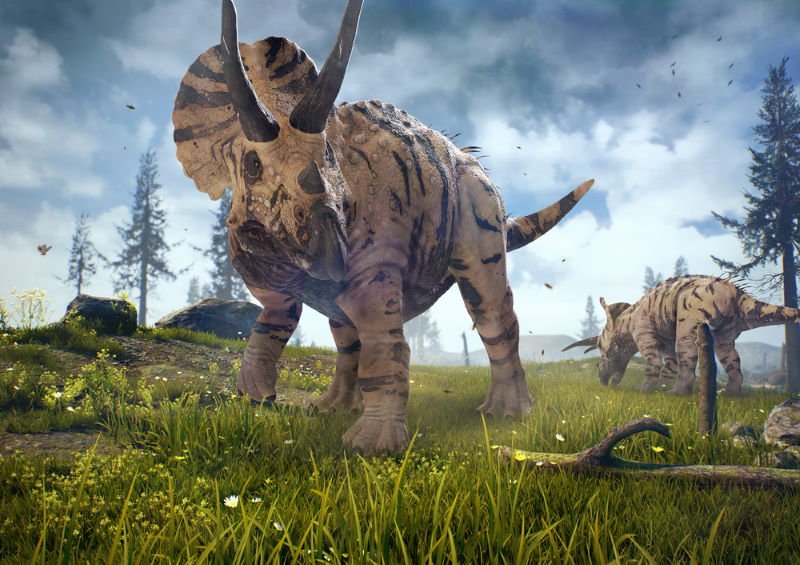
With its massive neck frill and three horns, Triceratops looked like a giant prehistoric rhinoceros. It was one of the largest horned dinosaurs: adults reached a length of eight to nine meters and weighed between six and ten tons.
Its skull alone could be more than two meters long, one of the largest skulls of any known land animal. Unlike many relatives, its frill was solid bone without large openings. Its horns may have been used against predators such as Tyrannosaurus rex, but fossil injuries show that Triceratops also used them in fights with each other.
7. Stegosaurus (plated dinosaurs)
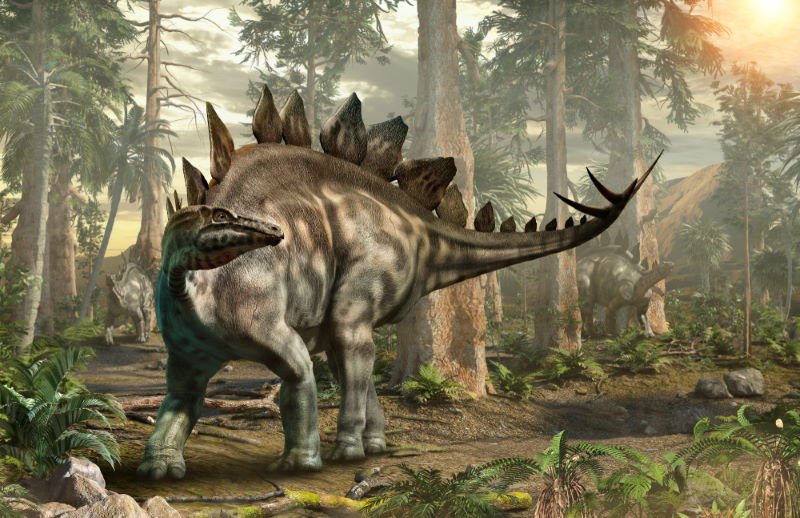
Among the armored dinosaurs, the roughly nine-meter-long Stegosaurus is the most iconic heavyweight. Weighing around five tons, it carried 17 large bony plates along its back. Because its brain was famously small, about the size of a walnut, early researchers suggested it had a “second brain” in its hips. That turned out to be a myth: the space probably held a structure for storing energy, as in modern birds.
For defense, Stegosaurus had four sharp tail spikes up to a meter long, nicknamed the “thagomizer” after a Far Side cartoon. A fossil Allosaurus vertebra with a hole that fits a Stegosaurus spike shows they really were used.
6. Quetzalcoatlus (flying reptiles)
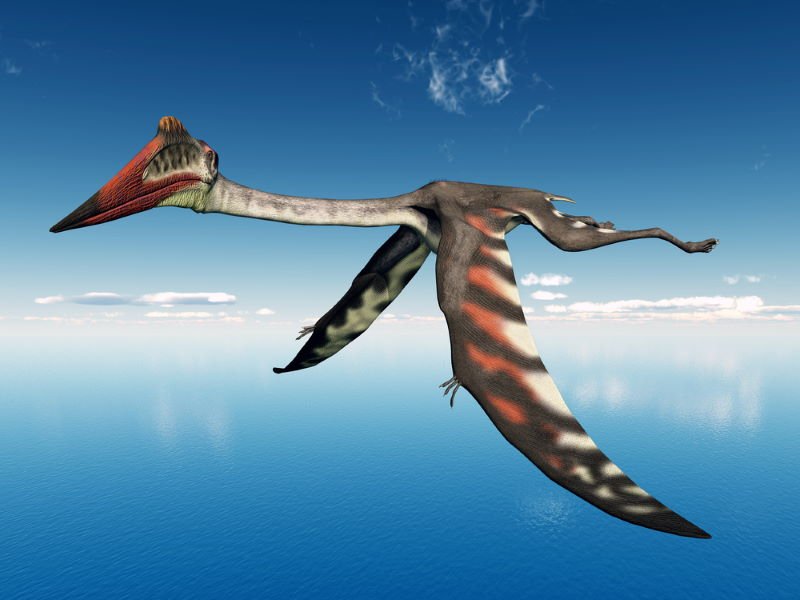
Strictly speaking, Quetzalcoatlus northropi was not a dinosaur but a pterosaur, a flying reptile. Still, it cannot be left out, because it was one of the largest flying animals that ever lived, with a wingspan of around 10 to 11 meters, as wide as a small airplane.
Standing on the ground, it was about as tall as a giraffe. Despite its enormous size, it is estimated to have weighed only around 200 to 250 kilograms, thanks to its hollow, air-filled bones. It probably walked on all fours on the ground, stalking prey like a giant stork.
5. Spinosaurus (meat-eaters)
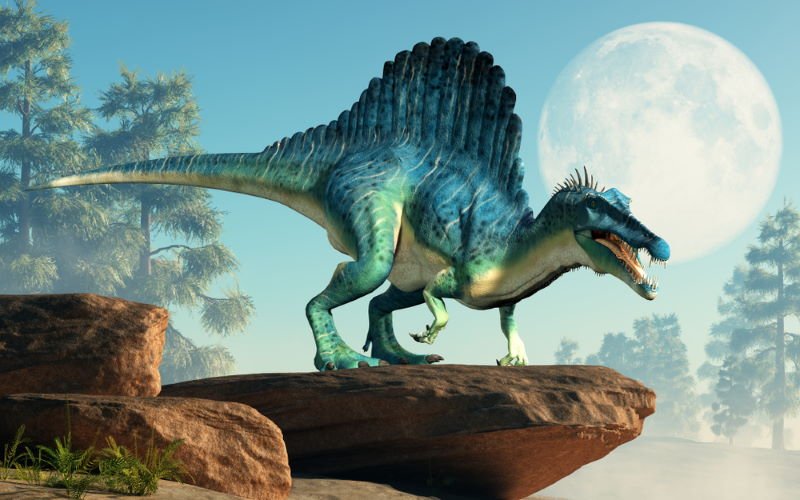
For a long time, Tyrannosaurus rex was considered the largest meat-eating dinosaur. In terms of length, however, it was probably beaten by Spinosaurus aegyptiacus from North Africa, with estimates of around 14 to 15 meters. T. rex was bulkier and probably heavier, but Spinosaurus had the longest body of any known predatory dinosaur.
It had a sail on its back of spines up to almost two meters tall, and a long, narrow snout full of cone-shaped teeth, similar to a crocodile’s, ideal for catching fish. In 2020, a team led by paleontologist Nizar Ibrahim described a nearly complete Spinosaurus tail from Morocco, which turned out to be broad and paddle-like. They concluded that Spinosaurus swam actively in rivers, although some other paleontologists think it was more of a wading hunter, like a giant heron.
4. Shastasaurus (marine reptiles)
Like the pterosaurs, the great marine reptiles were not dinosaurs. One of the largest known is Shastasaurus sikanniensis, an ichthyosaur from the Late Triassic of Canada. At an estimated 21 meters long, it was about the size of a sperm whale. Unlike later dolphin-shaped ichthyosaurs, it had a long, slender body and a short snout with few or no teeth, and probably fed by suction. Fragments of jaws found in England and described in 2024 suggest that an ichthyosaur called Ichthyotitan may have been even bigger, possibly around 25 meters long.
3. Supersaurus (longest dinosaur)
Among the long-tailed diplodocids, Supersaurus vivianae takes the crown for length. Its fossils were found in 1972 in Colorado. Further fossils assigned to the same animal led to new estimates of around 33 to 39 meters from snout to tail, which could make it one of the longest dinosaurs ever.
Despite its enormous length, Supersaurus was relatively slender, weighing perhaps 35 to 40 tons. Its tail ended in a long, whip-like section. Computer simulations in the 1990s suggested that diplodocids could crack their tails like a whip faster than the speed of sound, but a study in 2022 concluded that this was probably not possible without damaging the tail.
2. Patagotitan (most complete giant)
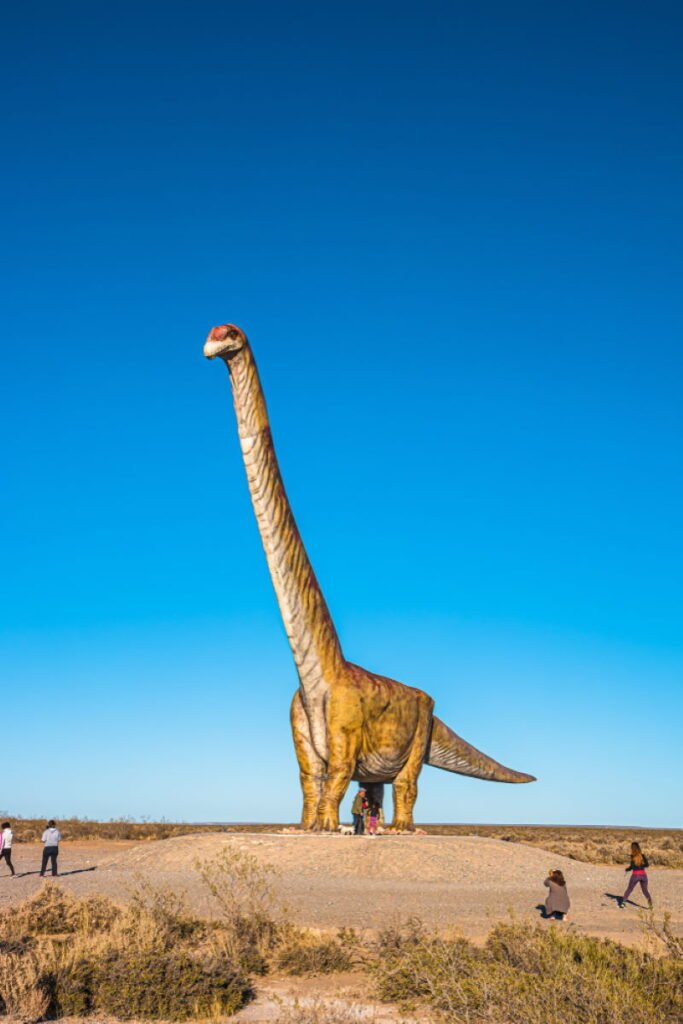
In 2010, a farm worker in Patagonia, Argentina, stumbled upon a giant bone sticking out of the ground. It led to one of the most important dinosaur excavations of this century. Paleontologists uncovered more than 200 bones from at least six individuals of Patagotitan mayorum. That makes it the largest dinosaur for which scientists have a fairly complete skeleton. It was about 37 meters long and weighed an estimated 50 to 70 tons. Its thigh bone alone was 2.4 meters long, much taller than an adult human.
1. Argentinosaurus (largest land animal ever)
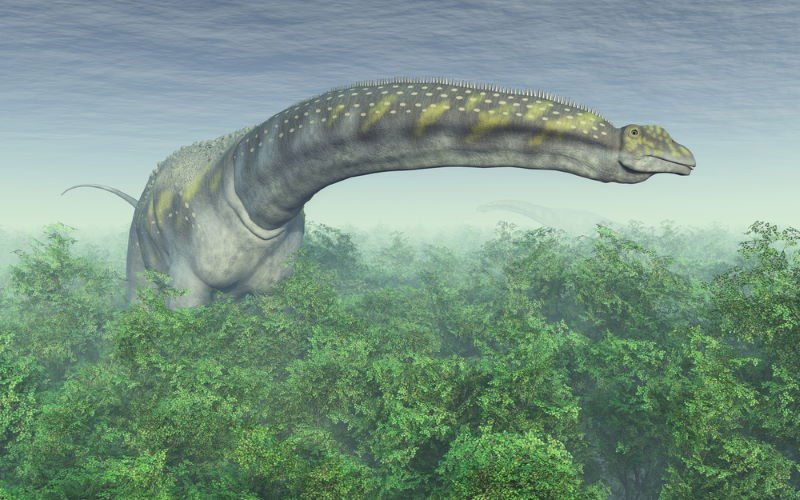
The record holder among all land animals that ever lived is probably Argentinosaurus huinculensis. Its remains were found in 1987 in Neuquén province in Argentina. Only a few bones are known, including vertebrae, ribs and part of a leg, so estimates vary: a length of around 30 to 40 meters and a weight of perhaps 70 to 100 tons, as much as a dozen or more African elephants.
A single back vertebra was about 1.6 meters tall. Like other sauropods, Argentinosaurus hatched from an egg not much bigger than a football, and had to grow thousands of times heavier to reach adult size. Scientists believe that animals of this size were close to the physical limit of what is possible for an animal walking on land.