You could call it the ultimate form of inspiration: biomimicry, the science of copying techniques, structures and methods from nature to solve human problems. Evolution has had millions of years to come up with clever solutions, and engineers and inventors are happy to borrow them.
These are ten inventions inspired by nature, from everyday objects to technology still in development.
1. Japan’s bullet train and the kingfisher
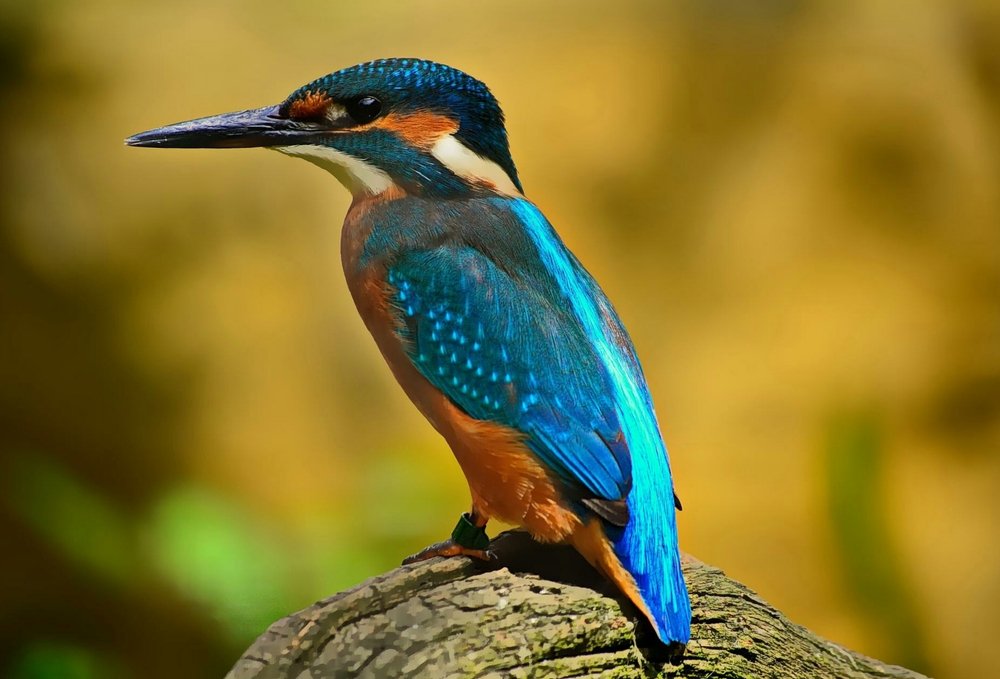
Japan’s famous Shinkansen bullet trains owe part of their efficiency to the kingfisher. In the 1990s, the trains caused a loud boom every time they shot out of a tunnel, because they pushed a wave of compressed air ahead of them. Engineer Eiji Nakatsu, a keen birdwatcher, realized that the kingfisher dives into water with hardly a splash. By shaping the nose of the 500 Series train like a kingfisher’s beak, the train became quieter, and according to the engineers it also used about 15 percent less energy and ran about 10 percent faster.
2. Velcro and the burdock plant

Velcro is the classic example of biomimicry. After a walk in 1941, Swiss engineer George de Mestral was annoyed by the burdock burrs stuck in his clothes and his dog’s fur. Under a microscope, he saw that the burrs were covered in tiny hooks that caught on anything with loops. It took him years to copy the idea, but he patented his hook-and-loop fastener in the 1950s under the name Velcro. Today it is used in everything from children’s shoes to astronauts’ equipment.
3. Tardigrades and medicines without a fridge
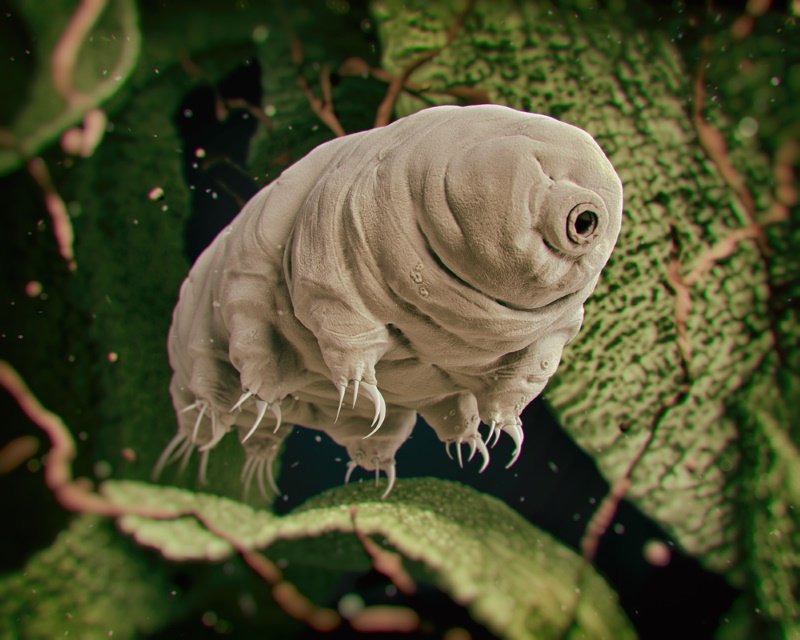
The tiny tardigrade, or water bear, is known as one of the toughest animals on Earth. It survives extreme heat and cold and even the vacuum of space by drying itself out almost completely. Scientists discovered that tardigrades use special proteins, and in some species the sugar trehalose, to protect their cells while dried out. Researchers are now using these tricks to try to store vaccines, medicines and biological samples without refrigeration, which could make a huge difference in places without a reliable cold chain.
4. A drill inspired by the wood wasp
Female wood wasps have an egg-laying tube that works like a drill. With it, they bore holes into wood to lay their eggs. The secret is that the drill consists of two halves with backward-pointing teeth that slide back and forth against each other, so the wasp needs almost no downward pressure. Engineers, with support from the European Space Agency, have developed drills based on this principle that could be used to bore into the soil of other planets, where low gravity makes it hard to push down on a normal drill.
5. The bat-inspired UltraCane
Bats find their way in complete darkness by sending out ultrasonic sounds and listening to the echoes. This principle of echolocation inspired the UltraCane, a walking cane for blind and visually impaired people. The cane sends out ultrasonic pulses, and when an obstacle comes close, buttons in the handle start to vibrate. The closer the object, the faster the vibration. It even warns about obstacles at head height, such as branches, which a normal cane would miss.
6. Robots that walk on water like water striders
Water striders use the surface tension of water to walk across ponds without sinking. Scientists have used the same trick to build tiny robots that can stand on and even jump off the surface of water. In 2015, researchers from Seoul National University and Harvard presented a robot insect that could leap from the water just like the real thing. In the future, such robots could be used to monitor water quality or for search and rescue.
7. Sharkskin against bacteria
Scientists noticed that sharks stay remarkably clean: algae and barnacles have a hard time attaching to their skin, unlike ship hulls or whales. This is due to the unique structure of their scales, called denticles. The company Sharklet Technologies copied the pattern in a plastic surface with millions of tiny diamond-shaped ridges. Bacteria find it difficult to settle and grow on it, which makes it useful for surfaces in hospitals and on medical devices, without the use of chemicals.
8. A robot arm like an elephant’s trunk
An elephant’s trunk contains tens of thousands of muscle units and is incredibly flexible and strong. German company Festo developed the Bionic Handling Assistant, a robot arm that moves like a trunk. It works with air pressure and inflatable segments instead of hard joints. Because it is soft and flexible, it is much safer around people than a traditional industrial robot.
9. X-ray telescopes based on lobster eyes
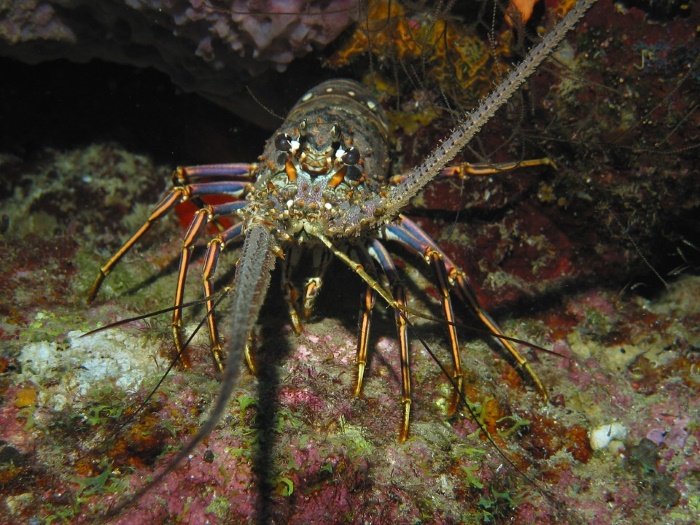
Most animals with compound eyes use lenses, but lobsters see with thousands of tiny square tubes with reflective walls, which bounce light to a single focal point. X-rays are hard to focus with lenses, so scientists copied the lobster’s design to build X-ray telescopes with a very wide field of view. The Chinese-European Einstein Probe, launched in 2024, uses lobster-eye optics to scan large parts of the sky for X-ray flashes from exploding stars and black holes.
10. Robots based on the lamprey
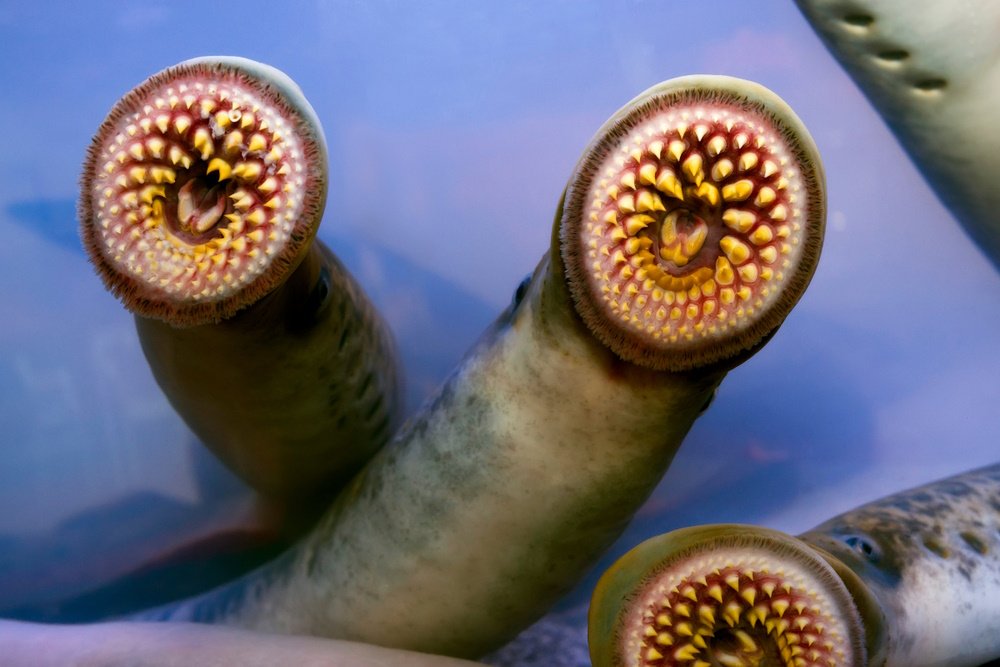
The lamprey is a primitive, eel-like fish with a relatively simple nervous system, which makes it a favorite model for scientists. Around 2012, an international research project called Cyberplasm set out to build a tiny robot based on the lamprey, combining electronics with living cells that respond to light and chemicals. The long-term dream is micro-robots that can swim through the body to detect disease. That is still far in the future, but lamprey-inspired swimming robots are already used to study how animals move.