The ground beneath our feet seems solid, but the Earth’s crust is made up of giant tectonic plates that are constantly on the move. They grind past each other, collide head-on or dive beneath one another in deep ocean trenches. When the stress that builds up over decades or centuries is suddenly released, the Earth shakes with staggering force.
Seismologists measure that force on the moment magnitude scale (Mw). The scale is logarithmic: each whole step up means about 32 times more energy, so a magnitude 9.0 earthquake releases roughly thirty times more energy than an 8.0. These are the most powerful earthquakes recorded since instrumental measurements began around 1900, according to the US Geological Survey.
10. Aleutian Islands, Alaska (1946): 8.6
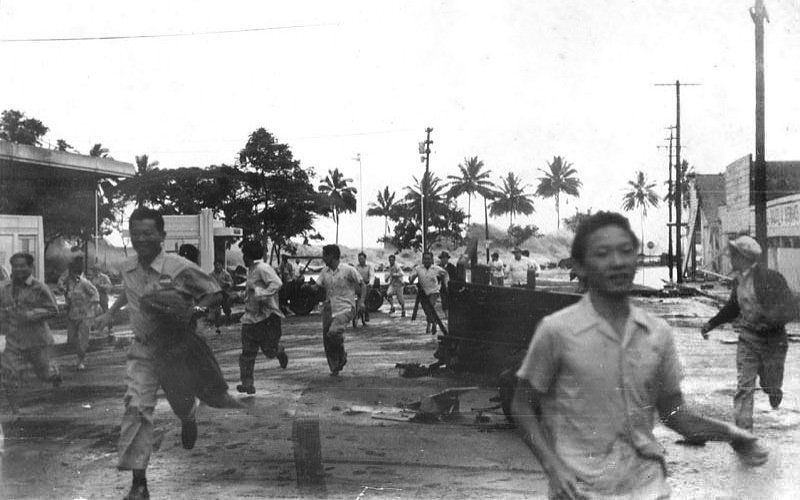
On 1 April 1946, the seafloor ruptured near the Aleutian Islands. The shaking was strong, but the tsunami it generated was far more destructive. On Unimak Island, the concrete Scotch Cap lighthouse, standing well above sea level, was destroyed by a wave estimated at around 35 meters high. All five men inside were killed.
Hours later, the tsunami reached Hawaii, where it killed 159 people, most of them in the town of Hilo. The disaster led directly to the founding of what is now the Pacific Tsunami Warning Center. Several other earthquakes share this magnitude of 8.6, including the 1950 Assam-Tibet earthquake and the 2012 Indian Ocean earthquake off Sumatra, the strongest “strike-slip” quake ever recorded.
9. Rat Islands, Alaska (1965): 8.7
On 4 February 1965, the arc of islands off Alaska shook again, this time near the Rat Islands. Along hundreds of kilometers, the Pacific Plate lurched beneath the North American Plate.
The earthquake sent a tsunami of around ten meters onto Shemya Island. Because the area consisted almost entirely of uninhabited tundra and a few military installations, the damage remained limited and there were no reported deaths.
8. Ecuador-Colombia (1906): 8.8
On 31 January 1906, one of the earliest well-documented megathrust earthquakes struck off the coast of Ecuador and Colombia, where the oceanic Nazca Plate dives beneath South America.
The tsunami that followed destroyed coastal settlements and killed an estimated 500 to 1,500 people. The waves crossed the entire Pacific: tide gauges in Hawaii, San Francisco and Japan recorded them hours later.
7. Maule, Chile (2010): 8.8
In the early hours of 27 February 2010, central Chile shook for about three minutes. The epicenter lay off the coast of the Maule region, and around 80 percent of the country’s population felt strong shaking, in cities including Concepción and Santiago.
The earthquake and tsunami killed 525 people, a relatively low number for a quake of this size, thanks largely to Chile’s strict building codes. The economic damage, however, ran to around 30 billion dollars.
6. Kamchatka, Russia (2025): 8.8
The most recent entry on this list happened on 30 July 2025 (local time), off the coast of Russia’s Kamchatka Peninsula. It was the strongest earthquake anywhere in the world since Japan in 2011.
Tsunami warnings went out across the entire Pacific, from Japan and Hawaii to Chile, and millions of people were told to move to higher ground. Waves of several meters flooded the port of Severo-Kurilsk in the Kuril Islands, but thanks to the remote location and timely warnings, the death toll remained remarkably low.
5. Kamchatka, Russia (1952): 9.0
The same region had already produced a giant earthquake in November 1952, the first in recorded history to reach magnitude 9.0.
The tsunami hit the town of Severo-Kurilsk hard. Many survivors of the first wave returned to the harbor to collect their belongings, only to be caught by a second, much higher wave. More than 2,300 people died. The Soviet authorities kept the scale of the disaster secret for years during the Cold War.
4. Tōhoku, Japan (2011): 9.1
The undersea earthquake off northeastern Japan on 11 March 2011 is the strongest in the country’s recorded history. The seafloor shifted by up to around fifty meters, and the resulting tsunami reached heights of nearly forty meters in some places.
The waves overtopped the seawalls of the Fukushima Daiichi nuclear power plant, knocked out its backup generators and caused meltdowns in three reactors. More than 18,000 people were killed or went missing. Parts of Japan’s northeastern coast sank permanently, and the main island of Honshu moved more than two meters to the east.
3. Sumatra, Indonesia (2004): 9.1
On 26 December 2004, the ocean floor off northwestern Sumatra tore open over a length of about 1,300 kilometers. The rupture lasted around ten minutes, the longest ever observed for an earthquake, and the entire planet vibrated measurably.
With no warning system in the Indian Ocean, the tsunami waves reached the coasts of Indonesia, Thailand, Sri Lanka, India and even Somalia within hours. About 228,000 people died. The disaster prompted the rapid creation of a tsunami warning network for the Indian Ocean.
2. Prince William Sound, Alaska (1964): 9.2
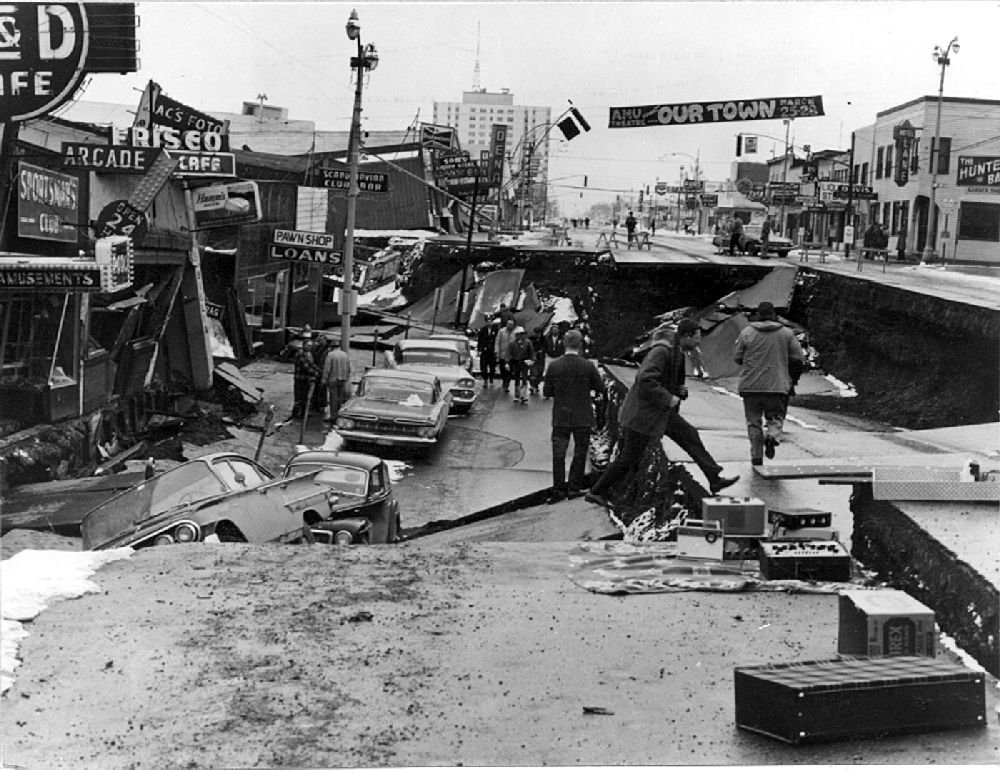
On Good Friday 1964, Alaska was hit by the strongest earthquake in North American history. The ground shook for about four and a half minutes. In Anchorage, entire neighborhoods slid away on unstable layers of clay and streets split in two.
Underwater landslides and the main tsunami devastated ports such as Valdez and Seward. Because Alaska was sparsely populated, the death toll was limited to 139. Scientifically, the earthquake was a breakthrough: field studies of its effects helped confirm the theory of plate tectonics.
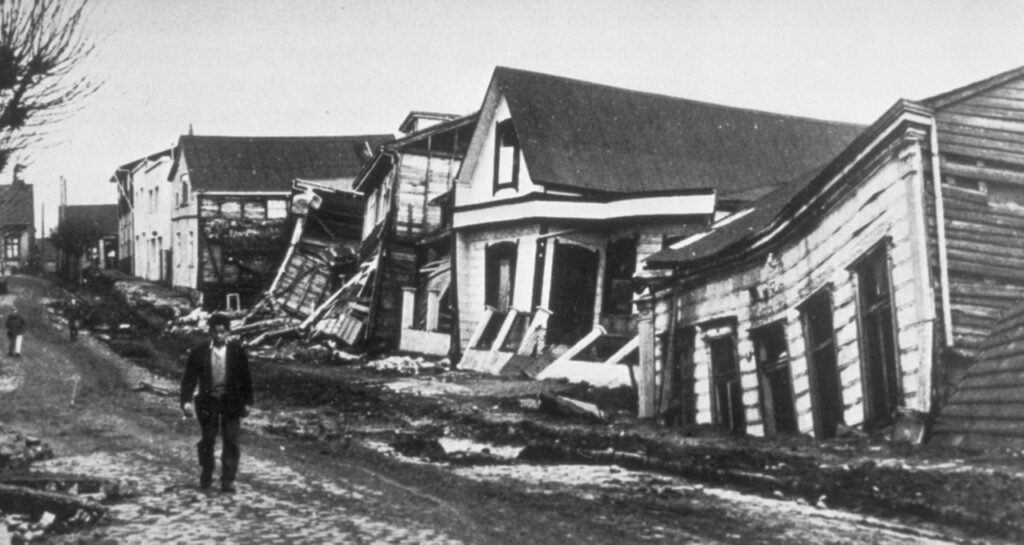
1. Valdivia, Chile (1960): 9.5
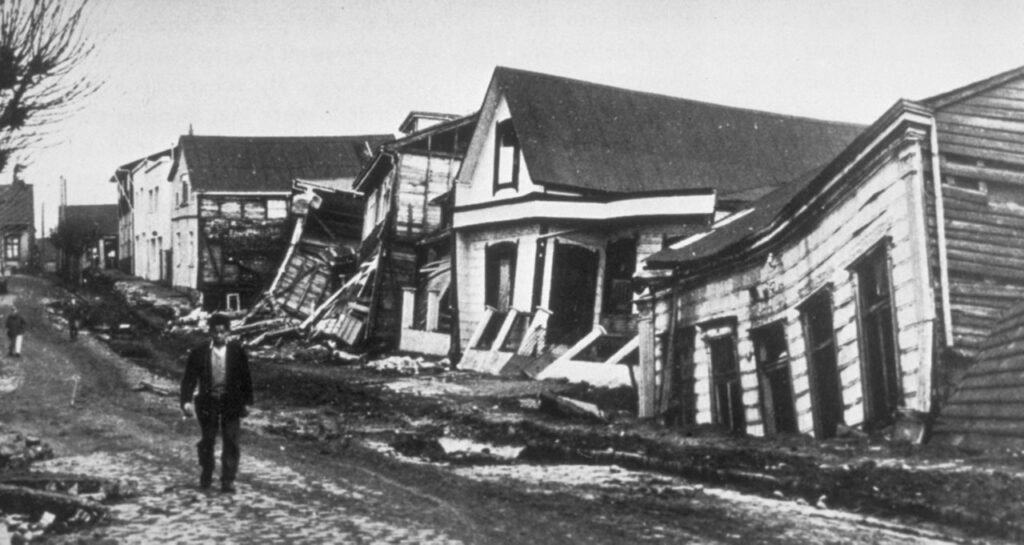
The most powerful earthquake ever recorded struck southern Chile on 22 May 1960. A fault zone around 1,000 kilometers long ruptured, releasing an almost unimaginable amount of energy.
In Chile, the landscape changed dramatically: stretches of coastline sank by up to two meters and rivers flooded entire valleys. The tsunami crossed the Pacific at the speed of a jet plane. About fifteen hours later it killed 61 people in Hilo, Hawaii, and a day later around 140 people died in Japan. Estimates of the death toll in Chile range from about 1,000 to 6,000. It would have been higher, but strong foreshocks the day before had already driven many people out of their homes.