How did the universe begin? Today, almost all scientists agree that it started about 13.8 billion years ago in an extremely hot, dense state, and has been expanding and cooling ever since. We call this the Big Bang.
It took a long time, and a lot of arguing, before that idea was accepted. Here are ten facts about the theory that explains where everything came from.
1. It was not an explosion
The name suggests a giant bang in the middle of empty space, but that is not what the theory describes. There was no “outside” for the universe to explode into, and no center.
Instead, space itself began to expand, everywhere at once. Every part of the universe has been moving away from every other part ever since, like dots on the surface of an inflating balloon.
2. Einstein did not like the idea
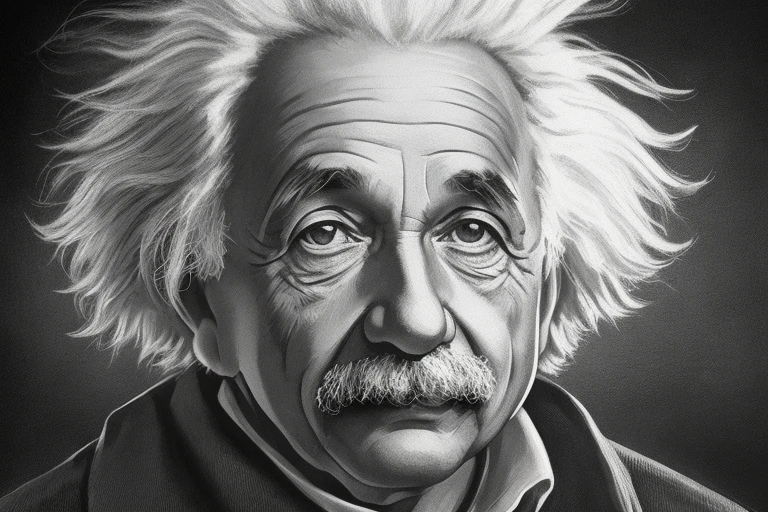
Albert Einstein’s general theory of relativity, published in 1915, suggested that the universe could not stay still: it had to expand or contract. Einstein believed the universe was eternal and unchanging, so he added an extra term, the cosmological constant, to keep it static.
When the evidence for expansion came in, he dropped it. According to physicist George Gamow, Einstein later called it the biggest blunder of his life, although historians are not sure he ever said those words.
3. A Belgian priest came up with it
In the 1920s, Russian mathematician Alexander Friedmann and Belgian physicist and Catholic priest Georges Lemaître independently showed that Einstein’s equations allowed for an expanding universe.
Lemaître went further. In 1927 and 1931, he proposed that the universe had begun as a single “primeval atom” that broke apart. That was the first version of what we now call the Big Bang.
4. Hubble saw galaxies flying apart
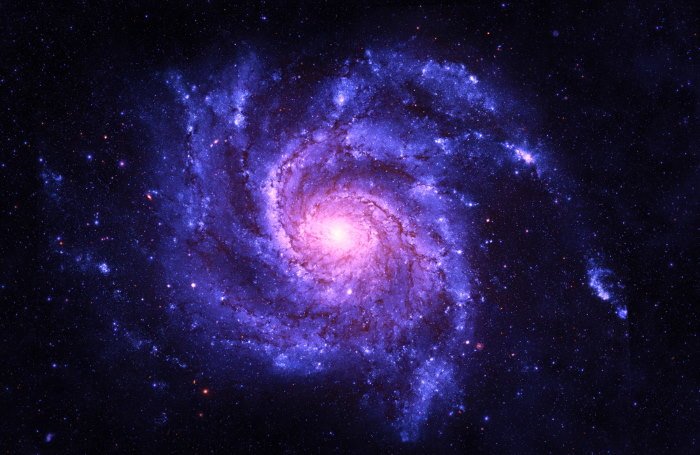
In 1929, American astronomer Edwin Hubble, after whom the space telescope is named, published measurements showing that distant galaxies are moving away from us, and that the farther away they are, the faster they recede.
That is exactly what you would expect in an expanding universe. Run the film backward, and everything comes together at a single moment in the past.
5. The name was meant as a joke
For decades, many scientists rejected the idea. One of its fiercest critics was British astronomer Fred Hoyle, who believed in a steady-state universe without a beginning.
In a BBC radio broadcast in 1949, Hoyle called the theory “this big bang idea”. He later said he did not mean it as an insult, just as a vivid image, but the name stuck, and ended up attached to the very theory he opposed.
6. The afterglow was predicted in the 1940s
In the late 1940s, George Gamow and his colleagues Ralph Alpher and Robert Herman worked out what the early universe must have been like. They realized it would have been filled with intense radiation.
As the universe expanded, that radiation would have cooled down. Alpher and Herman predicted it should still be around today, as a faint glow just a few degrees above absolute zero, coming from every direction in the sky.
7. It was found by accident, and blamed on pigeons
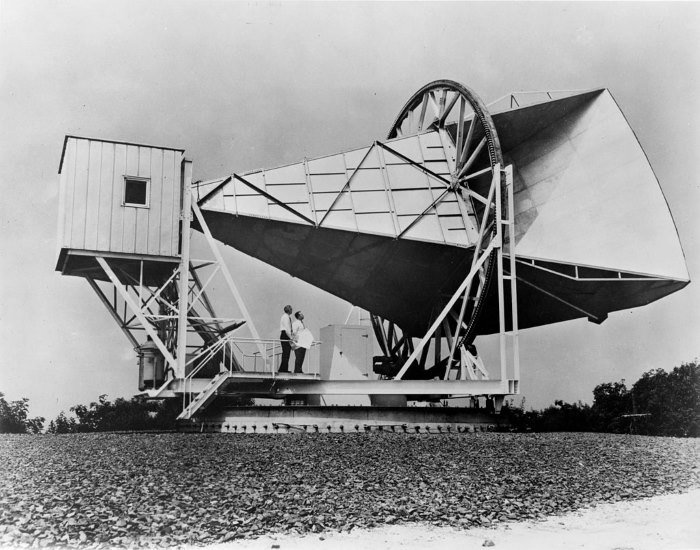
In 1964, Arno Penzias and Robert Wilson at Bell Labs in New Jersey were testing a large horn-shaped antenna and kept picking up a faint hiss from every direction, day and night.
They suspected the pigeons nesting in the antenna and cleaned out what they politely called “white dielectric material”. The noise remained. It turned out to be the cosmic microwave background, the afterglow of the Big Bang, and it earned them the Nobel Prize in Physics in 1978.
8. Tiny ripples became galaxies
The cosmic microwave background has a temperature of about 2.7 degrees above absolute zero, almost the same everywhere. In 1992, the COBE satellite discovered tiny variations in it, just a few hundred-thousandths of a degree.
Those small differences are the seeds of everything we see today. Slightly denser regions pulled in more matter and eventually grew into galaxies and clusters of galaxies. The discovery earned another Nobel Prize, in 2006.
9. The universe may have inflated in an instant
The original Big Bang theory had a few puzzles, such as why the universe looks so similar in every direction. In 1980, physicist Alan Guth proposed a solution called cosmic inflation.
According to this idea, in a tiny fraction of the first second, the universe expanded faster than the speed of light, growing by an enormous factor. It is now part of the standard picture, although scientists are still searching for direct proof.
10. There are still open questions
The Big Bang theory is one of the best-supported ideas in science, but it does not explain everything. What, if anything, came before it? What are dark matter and dark energy, which together make up about 95 percent of the universe?
New telescopes keep adding puzzles. The James Webb Space Telescope has found surprisingly bright, mature galaxies very early in cosmic history, and different methods give slightly different answers for how fast the universe is expanding. The story of the beginning is still being written.