Japanese folklore is home to yokai, an extraordinary classification of supernatural spirits, monsters, and apparitions ranging from playful mischief makers to terrifying nocturnal predators. Deeply rooted in animistic Shinto and Buddhist traditions, yokai reflect the Japanese worldview that everyday objects and natural forces possess living spirits.
Woodblock prints in the British Museum Asian Collection by artists like Toriyama Sekien and Hokusai popularized these curious beings during the Edo period. Here are 10 of the most bizarre yokai celebrated in Japanese folklore.
10. Yama-uba, the Mountain Witch
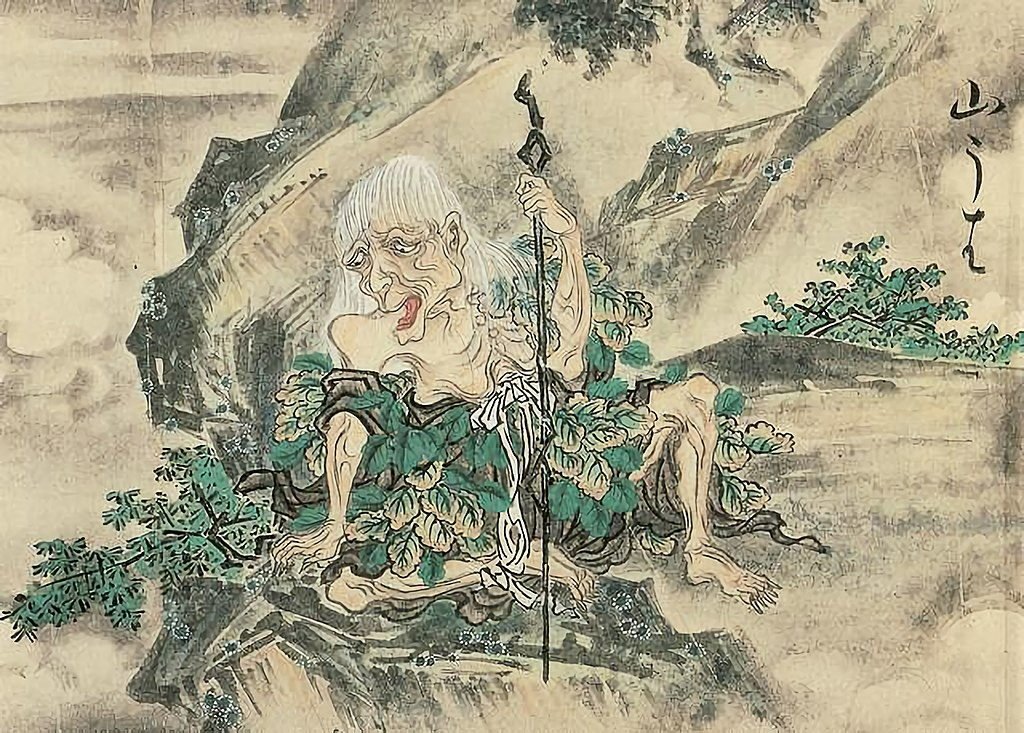
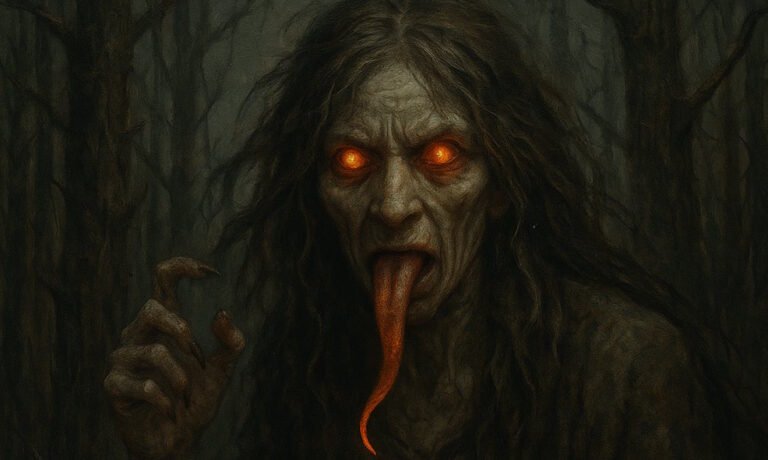
Dwelling deep within misty Japanese mountain ranges, Yama-uba is an old crone who appears as a frail, kindly grandmother to offer shelter to lost travelers in her isolated mountain hut. Once her guest falls asleep, she reveals her true nature and devours them.
Folklore describes her unkempt white hair shifting into venomous serpents that pull victims into a second mouth concealed beneath the hair on the back of her head.
9. Jorogumo, the Spider Temptress
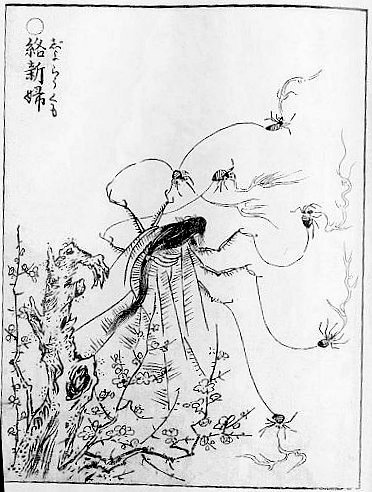
When an orb weaver spider lives for four hundred years, it transforms into the cunning Jorogumo. Capable of assuming the appearance of a captivating young woman playing traditional stringed instruments, she tempts solitary men into deserted shrines.
While her victim listens entranced to her music, fine gossamer threads wrap around his limbs until he is completely immobilized, allowing the giant spider to inject lethal digestive enzymes.
8. Noppera-bo, the Faceless Ghost
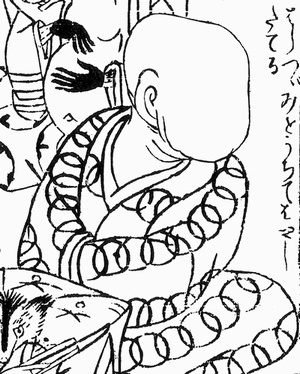
The Noppera-bo is a shape shifting apparition that appears outwardly as an ordinary human traveler wearing a wide straw hat on dark rural roads. When approached by a friendly passerby, the figure turns, stroking its head to reveal a completely smooth, blank face with no eyes, nose, or mouth.
Though terrifying to behold, Noppera-bo are largely harmless tricksters that delight in watching terrified mortals scream and flee into the dark night.
7. Rokurokubi, the Long-Necked Woman
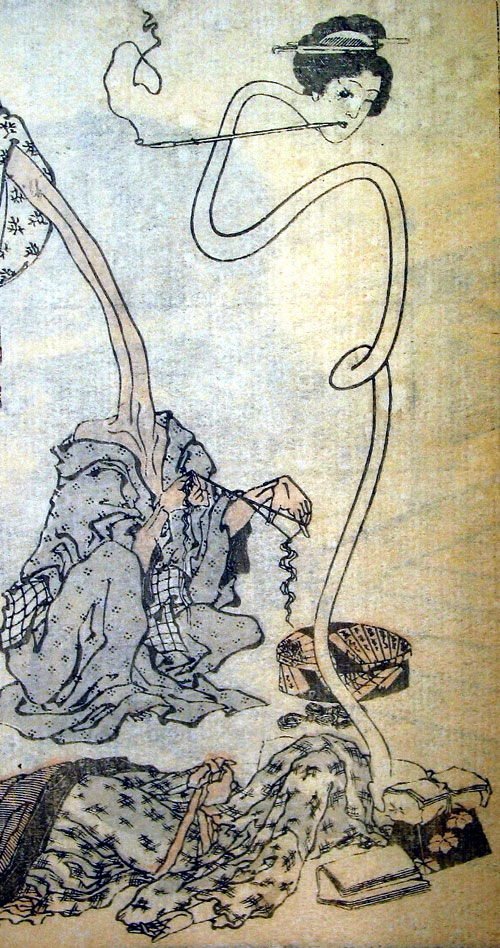
By day, Rokurokubi live ordinary lives as respectable wives and daughters in Japanese towns. However, while their bodies sleep at night, their necks stretch out like rubbery snakes, slithering out open windows to lick oil from street lamps or hunt small insects.
Many Rokurokubi do not realize their affliction, assuming their nocturnal adventures through city alleyways are merely vivid dreams.
6. Oni, the Horned Ogre

The Oni is Japan classic ogre, sporting red, blue, or black skin, ferocious fangs, two sharp horns, and a tiger skin loincloth. Carrying immense spiked iron clubs called kanabo, they represent brute, unstoppable physical force.
In popular folklore, they act as tormentors in the underworld, guarding the gates of hell and punishing sinners, while also featuring in heroic tales like Momotaro, the Peach Boy who liberated an island of Oni.
5. Yuki-onna, the Snow Maiden
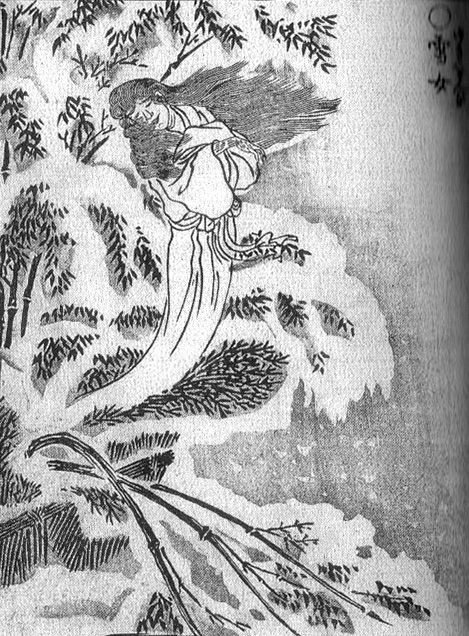
Appearing on snowy mountain slopes during winter blizzards, Yuki-onna is a spirit possessing pale, translucent skin, dark hair, and piercing blue eyes. She glides above the snow without leaving footprints.
She can freeze travelers solid with a single breath of icy mist, though classic tales tell of her sparing young woodcutters on the condition that they never speak of having met her.
4. Kitsune, the Nine-Tailed Fox
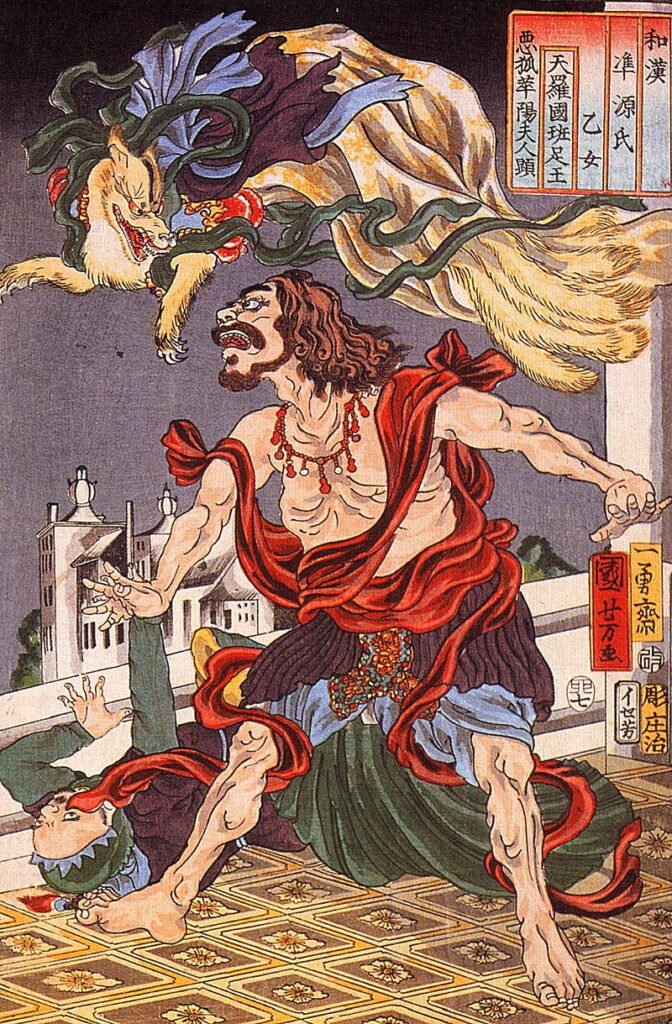
In Japanese Shinto lore, foxes possess keen supernatural intelligence and magical shape shifting prowess. As a Kitsune grows older, it gains additional tails, reaching nine tails at one thousand years old when its fur turns brilliant white or golden.
Serving as sacred messengers for Inari, the deity of rice and prosperity, Kitsune can also be mischievous tricksters, casting illusions called kitsune-bi (fox fire) to lead travelers astray.
3. Tengu, the Avian Mountain Hermit
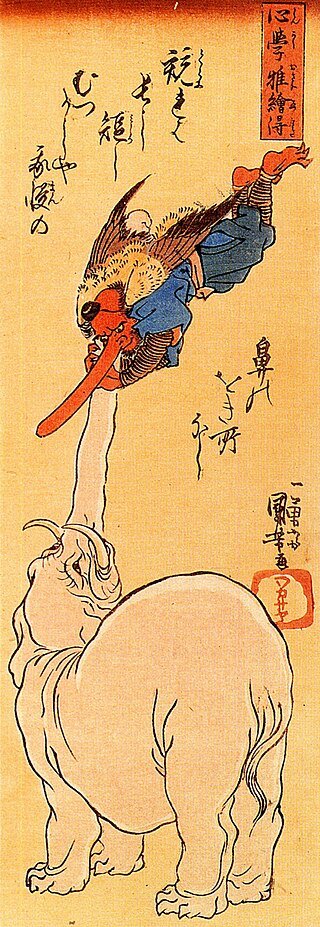
Originally depicted as predatory birds of prey, Tengu evolved into red faced mountain ascetics sporting an unusually long, prominent nose and feathered black wings. Carrying a magic feathered fan called a hauchiwa, they command mountain winds.
Revered as master swordsmen, Tengu were believed to inhabit sacred cedar forests, occasionally instructing mortal samurai heroes like Minamoto no Yoshitsune in secret martial arts techniques.
2. Kappa, the Water Trickster
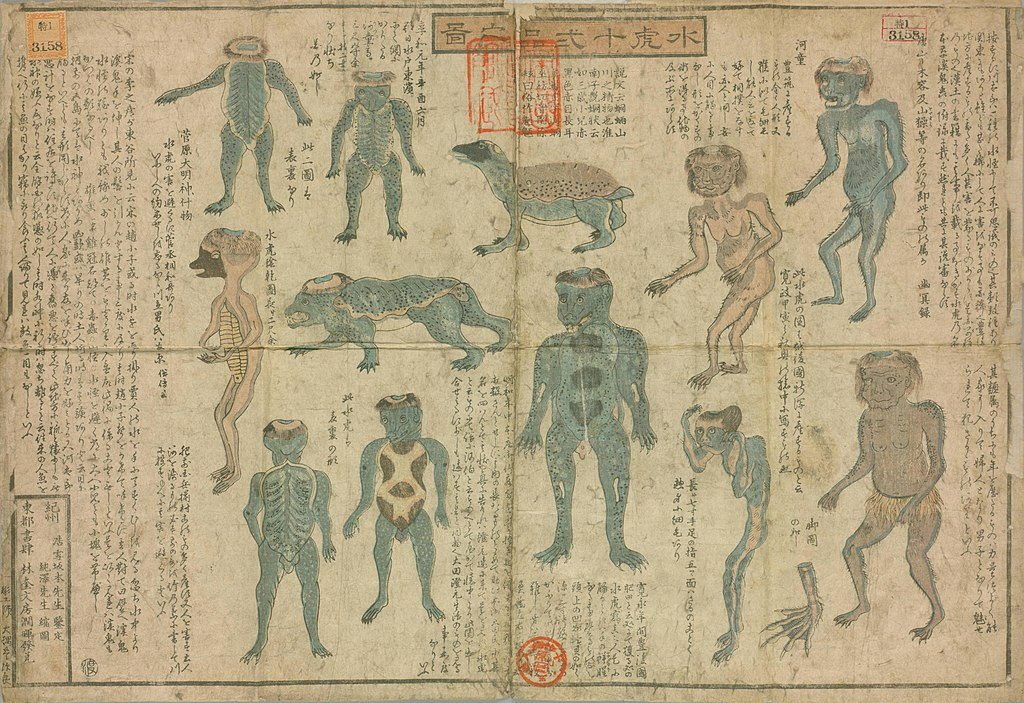
Dwelling in freshwater rivers and irrigation ponds across Japan, the Kappa is a green amphibious creature combining a turtle shell, scaly skin, webbed fingers, and a dish shaped depression on top of its head holding water.
If the water in its head dish spills, the Kappa loses all supernatural strength. Extremely polite despite their violent habits of drowning bathers, travelers could escape a Kappa by bowing deeply, forcing the creature to bow in return and spill its vital head liquid.
1. Tanuki, the Shape Shifting Raccoon Dog
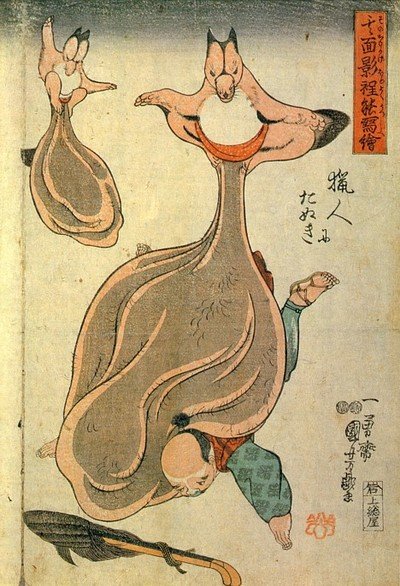
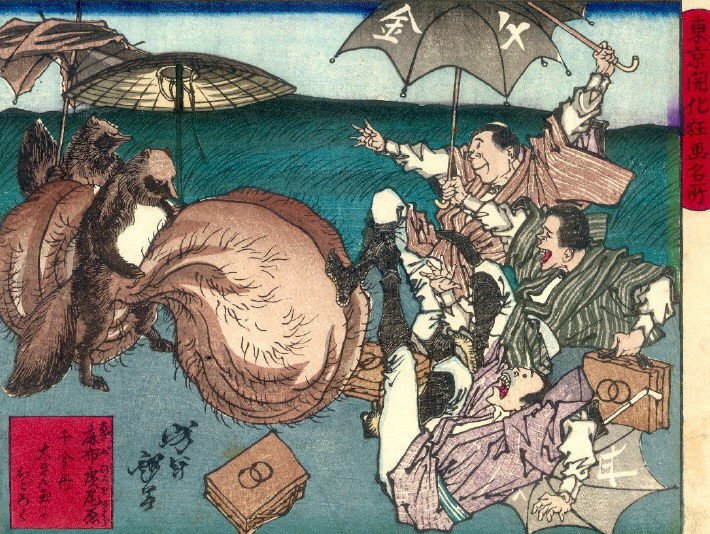
Topping the list of bizarre Japanese spirits is the Tanuki, the Japanese raccoon dog. In folklore, Tanuki are merry, sake loving pranksters capable of transforming into tea kettles, Buddhist monks, and autumn leaves.
Their most unusual mythological trait, documented across historic folklore accounts at the World History Encyclopedia, is an extraordinarily elastic and magical scrotum that they expand into fishing boats, cloaks, drums, and flying sails. Ceramic Tanuki statues holding sake bottles remain fixtures outside Japanese taverns today.
Conclusion
Yokai continue to thrive in modern Japan, evolving from folkloric terrors into celebrated pop culture icons found in anime, video games, and festival merchandise. Their enduring charm lies in their blend of humor, creepiness, and moral reflection.
Through these eccentric spirits, Japanese folklore continues to remind us to look at the natural world with curiosity and respect.