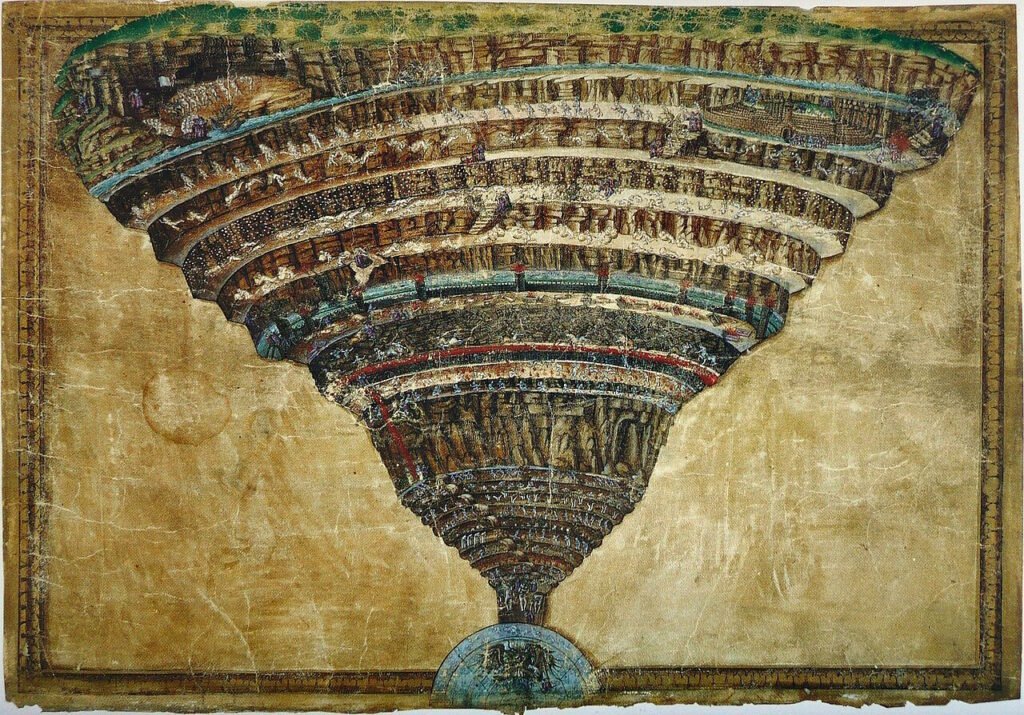
Written in the early fourteenth century by Italian poet Dante Alighieri, the Inferno represents one of the greatest masterpieces of world literature. Guided by the Roman poet Virgil, Dante embarks on a descent through nine descending circular terraces of torment beneath Jerusalem, each designed to mirror specific earthly sins through poetic justice known as contrapasso.
Scholarly editions documented at Britannica Western Literature explain how Dante merged classical mythology with medieval Christian theology. Here is a guided journey through all 9 circles of Dante Inferno.
9. The Ninth Circle: Treachery (Cocytus)
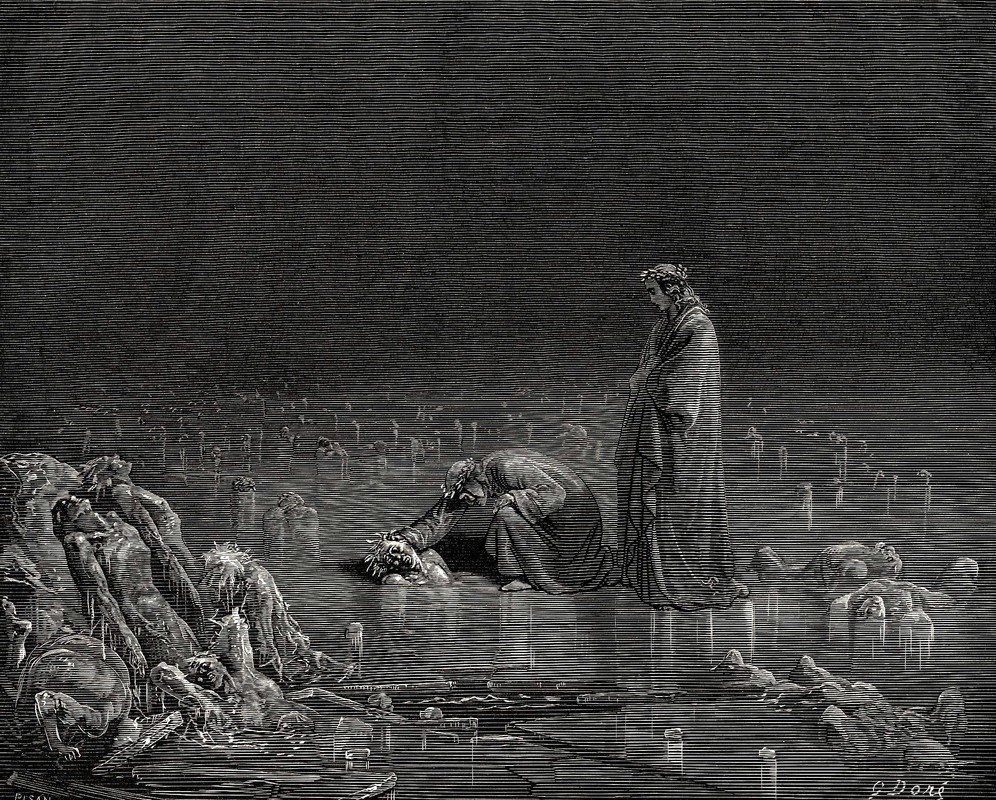
At the very bottom of Hell lies Cocytus, a vast lake of solid ice frozen by the beating wings of Lucifer himself. Treachery, the ultimate sin against love and trust, is punished here in four concentric rings: Caina (traitors to kin), Antenora (traitors to country), Ptolomaea (traitors to guests), and Judecca (traitors to benefactors).
Lucifer stands trapped in the ice up to his waist, weeping tears of blood and chewing eternally upon history greatest traitors in his three mouths: Judas Iscariot, Brutus, and Cassius.
8. The Eighth Circle: Fraud (Malebolge)
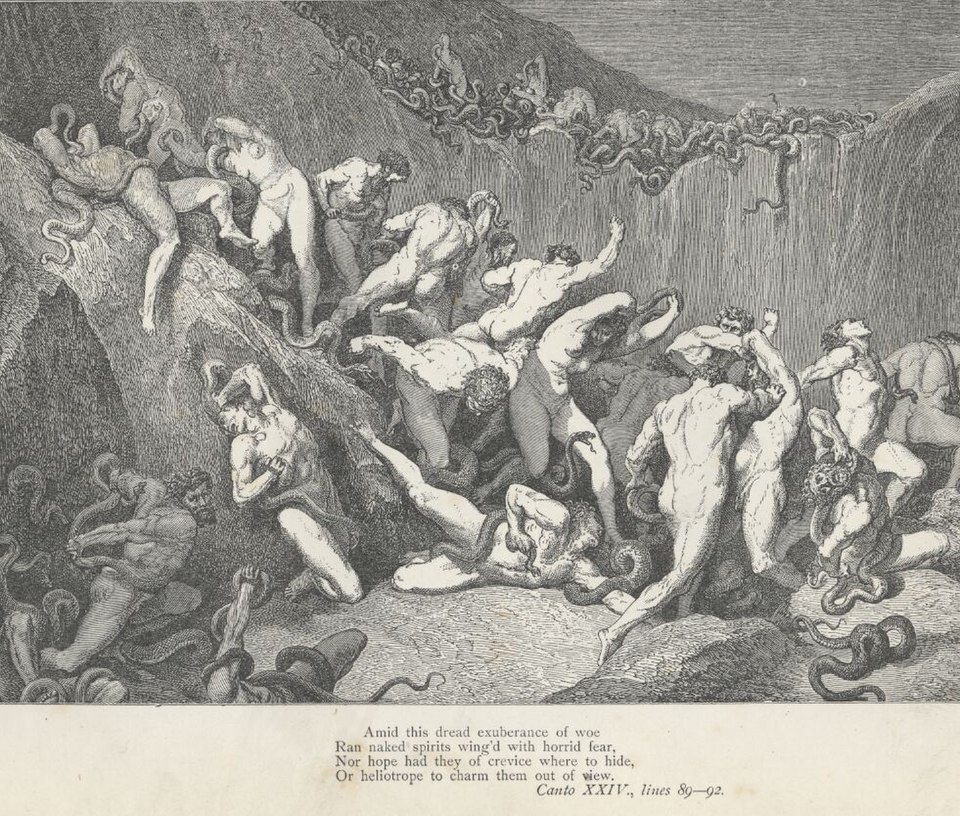
The eighth circle, known as Malebolge (Evil Ditches), is a stone amphitheater containing ten concentric circular trenches for those who deliberately used human intellect to deceive others. Sins punished here include panderers, flatterers, simoniacs, sorcerers, corrupt politicians, hypocrites, thieves, false counselors, sowers of discord, and falsifiers.
Punishments range from drowning in boiling pitch guarded by winged devils with hooks to being transformed back and forth into venomous serpents.
7. The Seventh Circle: Violence
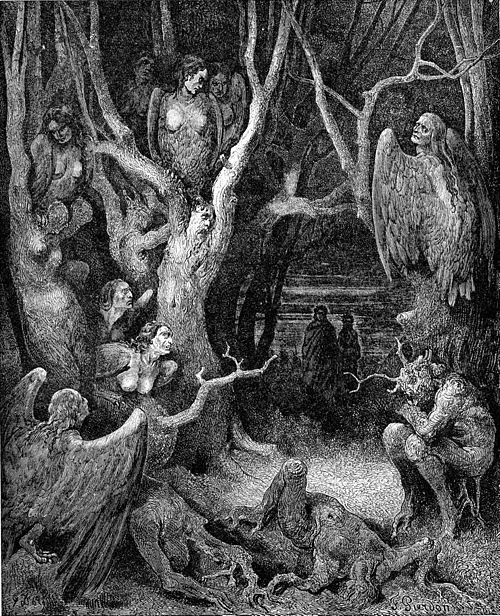
Guarded by the raging Minotaur, the seventh circle punishes violent offenders across three distinct zones. The outer ring features the Phlegethon, a river of boiling blood where tyrants and murderers are submerged while centaurs shoot arrows at any who try to rise above their assigned depth.
The middle ring is the Wood of the Suicides, where people who destroyed their own bodies become thorny, bleeding trees pecked by Harpies, while the inner ring is a burning desert of flaming sand where blasphemers and usurers endure raining flakes of fire.
6. The Sixth Circle: Heresy
Approaching the red hot city walls of Dis, Dante and Virgil enter the sixth circle, where heretics who denied the soul immortality are entombed. These include followers of Epicurus, who believed that the soul perishes with the physical body.
Sinners are sealed inside iron sarcophagi glowing white hot with eternal flames, doomed to an eternity of confinement in the very grave they believed would bring oblivion.
5. The Fifth Circle: Wrath (The River Styx)
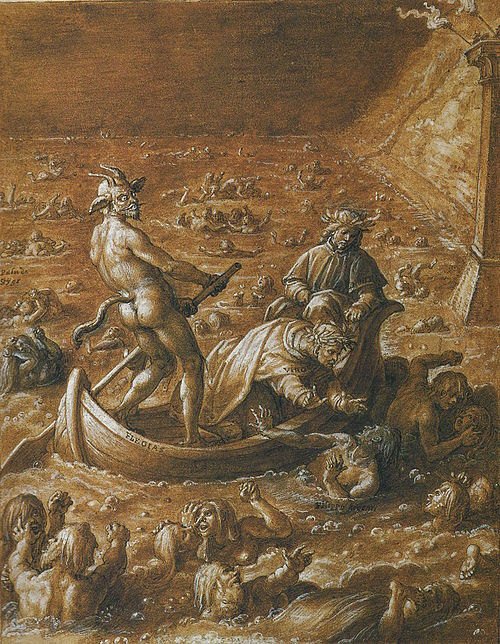
The fifth circle encompasses the foul, bubbling waters of the River Styx. On the muddy surface, the actively wrathful tear and claw at one another in endless furious combat, biting flesh from bone.
Meanwhile, submerged entirely beneath the black muck lie the sullen, who choked back their bitter anger in life and now lie paralyzed at the bottom, their mournful sighs bubbling up through the murky slime.
4. The Fourth Circle: Greed and Prodigality
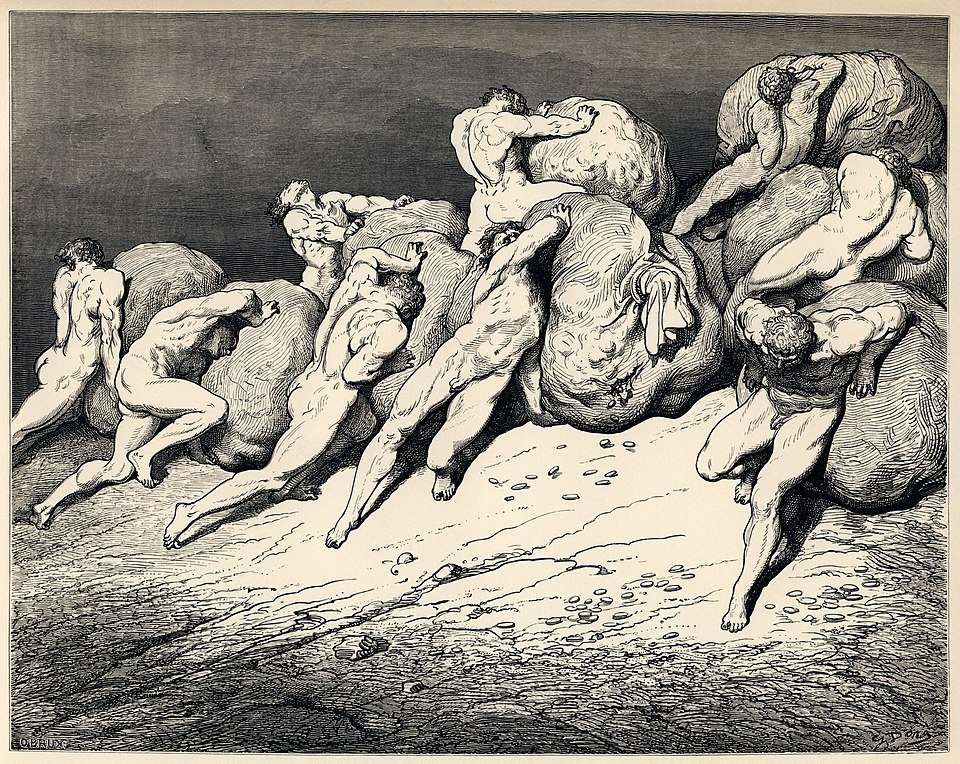
Guarded by Plutus, the ancient god of wealth, the fourth circle punishes two opposite extremes of materialistic folly: the hoarders who greedily held onto wealth and the spendthrifts who squandered it thoughtlessly.
Divided into two opposing factions, the shades push immense boulders with their chests around a circular track, colliding violently against each other before turning around and repeating the useless labor eternally.
3. The Third Circle: Gluttony
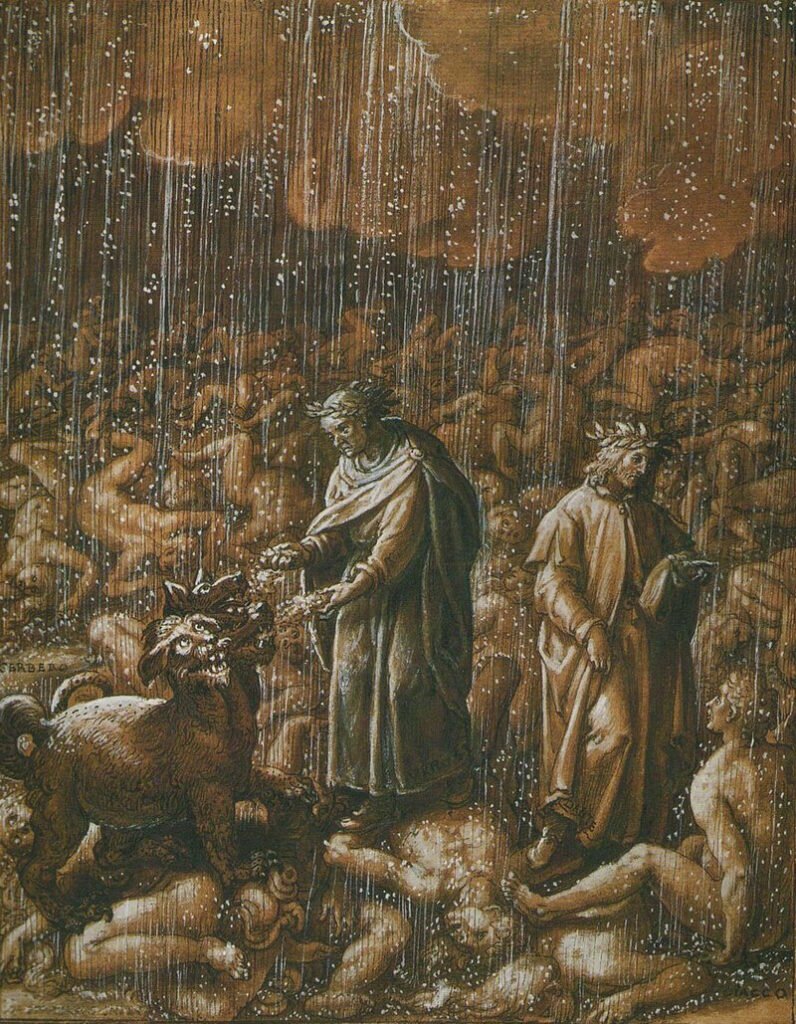
In the third circle, those who overindulged in food and drink are punished. They lie wallowing helplessly face down in foul, icy sludge while a relentless, filthy downpour of icy rain, hail, and black snow beats down upon them.
The monstrous three headed hound Cerberus prowls above the miserable shades, barking furiously and flaying them with razor sharp claws as they writhe in the cold muck.
2. The Second Circle: Lust
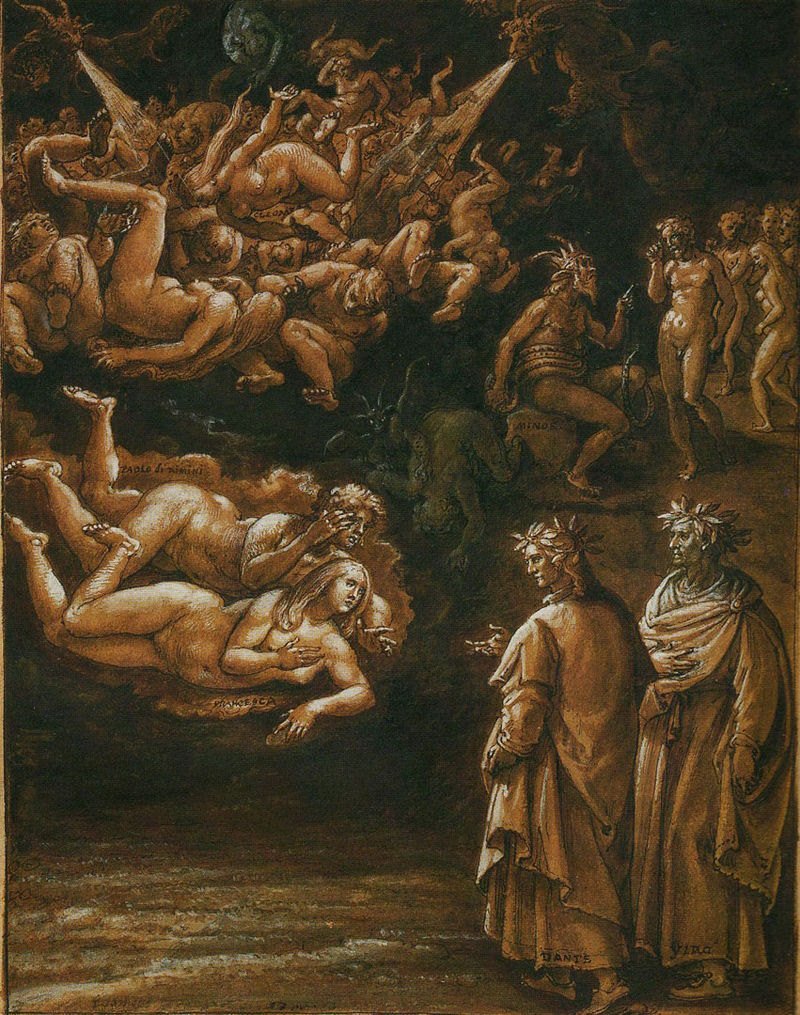
Past King Minos, who judges souls at the entrance to Hell by wrapping his tail around his body, lies the second circle. Here, souls who surrendered their reason to carnal lust are swept along helplessly by a violent, howling gale that never ceases.
Just as passion tossed their moral judgment back and forth in life, the black tempest buffets historical lovers like Cleopatra, Helen of Troy, Achilles, and Paolo and Francesca against jagged cavern rocks.
1. The First Circle: Limbo
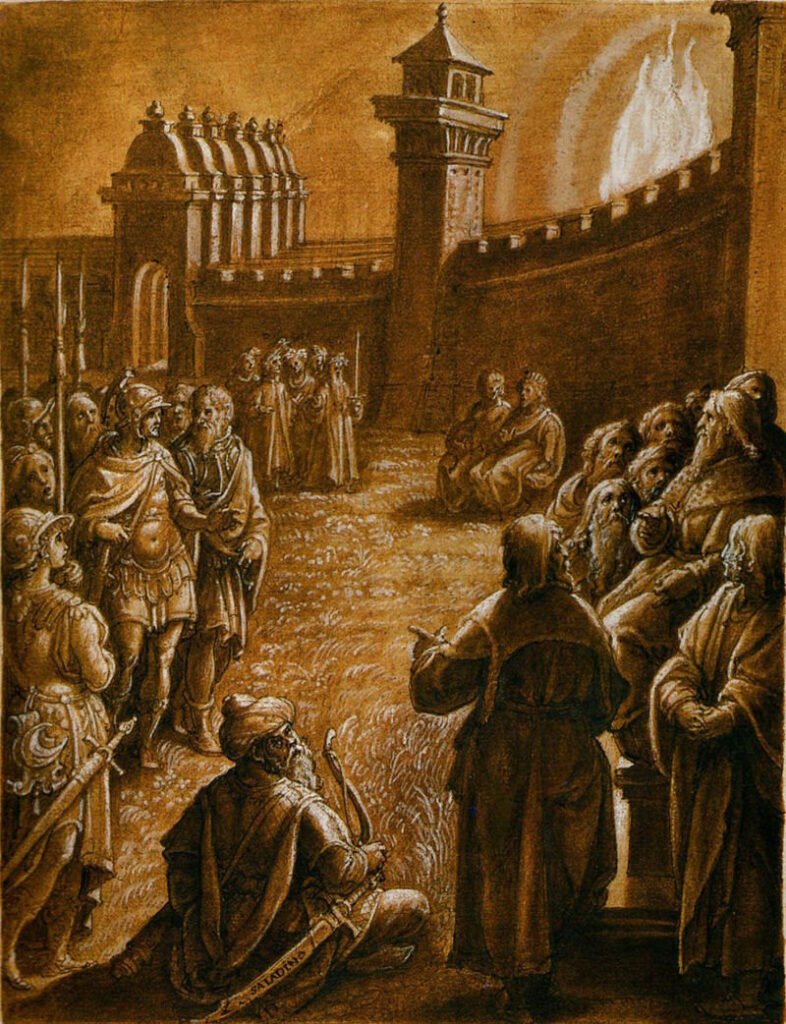
The uppermost circle of Dante underworld is Limbo, reserved for virtuous pagans and unbaptized infants who lived honorable lives before Christ or without Christian baptism. Unlike the deeper terraces, Limbo contains no physical torture, fire, or grotesque demons.
Instead, brilliant philosophers, poets, and statesmen like Homer, Socrates, Plato, and Virgil live in a quiet, dignified green meadow surrounding a seven gated castle. As explored in literary surveys at the World History Encyclopedia, their only sorrow is a gentle, eternal longing for divine grace that can never be fulfilled.
Conclusion
Dante Inferno transformed medieval concepts of justice, shaping world literature and popular imagination for over seven centuries. Through vivid characterizations and precise moral geometry, Dante crafted an enduring vision of human consequence.
His descent through the nine circles remains a profound meditation on free will, moral responsibility, and the human search for redemption.