Infectious diseases have killed more people throughout history than all wars combined. Pandemics have toppled empires, reshaped economies and changed the course of history.
Death tolls from the distant past are educated guesses, often with huge ranges. Here are the ten deadliest pandemics on record, starting with the worst.
1. The Black Death (1346 to 1353)
The bubonic plague, caused by the bacterium Yersinia pestis and spread by fleas on rats, swept from Central Asia into Europe, the Middle East and North Africa in the 1340s. It killed an estimated 75 to 200 million people.
In Europe, somewhere between a third and half of the population died in just a few years. The labor shortage that followed raised wages for survivors and helped bring an end to the feudal system.
2. The Spanish flu (1918 to 1920)
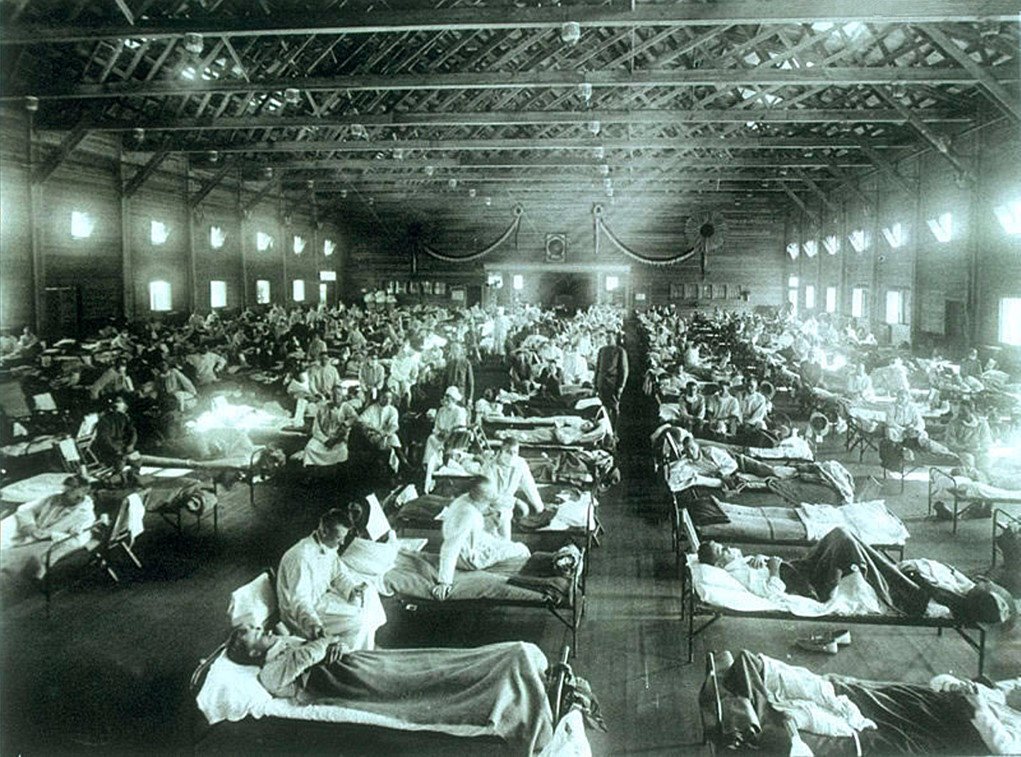
As World War I was ending, a new strain of influenza spread around the world, infecting about a third of the global population. It killed an estimated 50 million people, possibly many more.
Unusually, it was especially deadly for healthy young adults. Despite its name, it did not start in Spain. Spain was neutral in the war and its newspapers reported on the disease freely, while warring countries censored the news.
3. Smallpox in the Americas (16th and 17th centuries)
When Europeans arrived in the Americas, they brought diseases against which Indigenous peoples had no immunity: smallpox, measles, influenza and others. Smallpox was the deadliest.
Estimates vary enormously, but tens of millions died, and some regions lost up to 90 percent of their population. The epidemics played a major role in the collapse of the Aztec and Inca empires.
4. HIV/AIDS (1981 to today)
Since it was first identified in the early 1980s, HIV has killed more than 40 million people worldwide. Sub-Saharan Africa has been hit hardest, with entire generations affected.
There is still no cure or vaccine, but modern medication allows people with HIV to live long, healthy lives and prevents them from passing on the virus. Deaths have fallen sharply since their peak in the mid-2000s.
5. The Plague of Justinian (541 to 549)
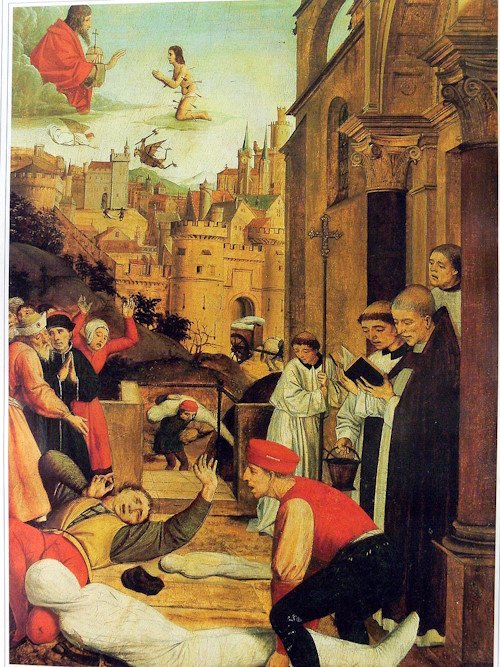
The first recorded plague pandemic struck the Byzantine Empire under Emperor Justinian I, caused by the same bacterium as the later Black Death. At its peak, thousands of people reportedly died every day in Constantinople.
Estimates of the death toll range from 15 to 100 million, though historians debate the higher figures. The disease kept returning in waves for two centuries and weakened the empire’s attempts to restore Roman power.
6. COVID-19 (2019 to today)
The coronavirus that emerged in Wuhan, China, at the end of 2019 spread around the world within months, triggering lockdowns, border closures and the fastest vaccine development in history.
About seven million deaths were officially reported. Because many deaths were never counted as COVID, studies of excess deaths suggest the true toll is far higher, likely somewhere between 15 and 25 million.
7. The third plague pandemic (1855 to 1960)
The plague returned once more in the 19th century, starting in Yunnan in China and spreading through port cities around the world by steamship. India was hit hardest, with more than ten million deaths.
This pandemic finally revealed how plague works. In 1894, in Hong Kong, the bacteriologist Alexandre Yersin identified the bacterium that now bears his name, and later researchers showed that rat fleas spread it.
8. The Hong Kong flu (1968 to 1969)
A new flu strain that emerged in Hong Kong in 1968 spread around the world, helped by troops returning from the Vietnam War. It killed an estimated one to four million people.
Descendants of this H3N2 virus are still circulating today as one of the seasonal flu strains.
9. The Asian flu (1957 to 1958)

The Asian flu began in East Asia and reached the rest of the world within months, killing an estimated one to two million people.
It was the first pandemic in which scientists quickly identified the virus and produced a vaccine, which helped limit the damage compared to 1918.
10. The Russian flu (1889 to 1890)
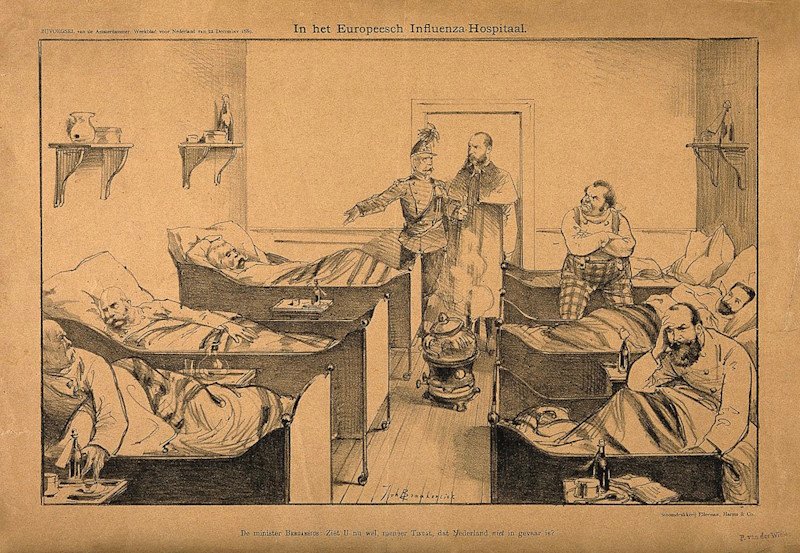
The Russian flu was the first pandemic of the modern, connected world. Thanks to railways and steamships, it spread around the globe in about four months, killing around one million people.
It was long thought to be influenza, but some scientists now suspect it may actually have been caused by a coronavirus.