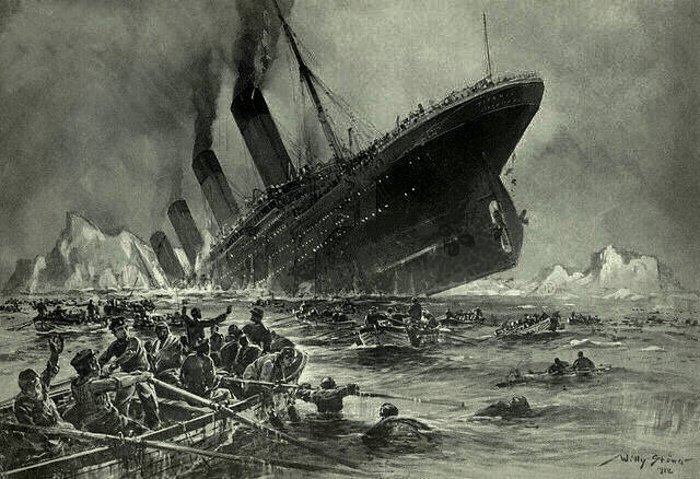
The Titanic is probably the most famous ship that ever sailed. Its sinking on the night of April 14 to 15, 1912, killed around 1,500 people and has fascinated the world ever since, inspiring books, documentaries and one of the most successful films ever made.
Even if you know the story, there are details that might surprise you. Here are ten of them.
10. Two Ryersons on board
Among the more than 2,200 people on board were two men named Ryerson. Arthur Ryerson was a wealthy first-class passenger, traveling home with his family after their son died in a car accident. William Edwy Ryerson was a steward in the crew.
The two were distant relatives but had never met, and it is unclear whether they knew the other was on board. William survived; Arthur put his wife and children in a lifeboat and went down with the ship.
9. The Japanese survivor who was shamed
There was only one Japanese passenger on board: Masabumi Hosono, a civil servant from the Japanese transport ministry. He managed to get a seat in a lifeboat and survived.
Back home, he was branded a coward for surviving while so many women and children died, and he lost his job. His family only cleared his name decades later, when his own account of the night was published.
8. One of the funnels was fake
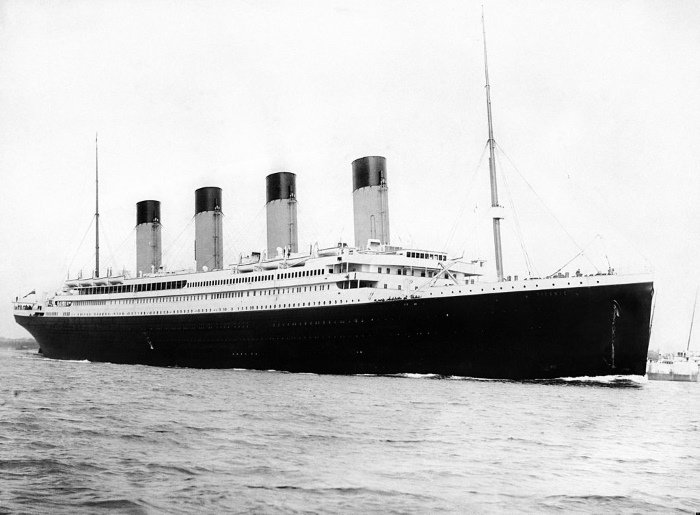
In photos, the Titanic has four large funnels. But only three of them released smoke from the boilers. The fourth was mostly for show, used for ventilation.
The designers added it because four funnels made the ship look bigger, more powerful and more impressive to passengers.
7. The radio operator who stayed at his post
Jack Phillips, the Titanic’s senior radio operator, kept sending distress signals for as long as possible after the collision, even after the captain released him from his duties. He was one of the first to use the new SOS signal alongside the older CQD.
Earlier that evening, he had been too busy sending passengers’ private messages to pass on an ice warning from a nearby ship. Phillips did not survive and is remembered as one of the heroes of the disaster.
6. The conspiracy theory
A persistent conspiracy theory claims the ship that sank was not the Titanic but her damaged sister ship, the Olympic, secretly swapped and deliberately sunk in an insurance fraud.
The theory falls apart on inspection. The wreck has been explored many times, and parts clearly carry the Titanic’s hull number, 401. The Olympic sailed on until 1935.
5. Many victims were buried in Halifax
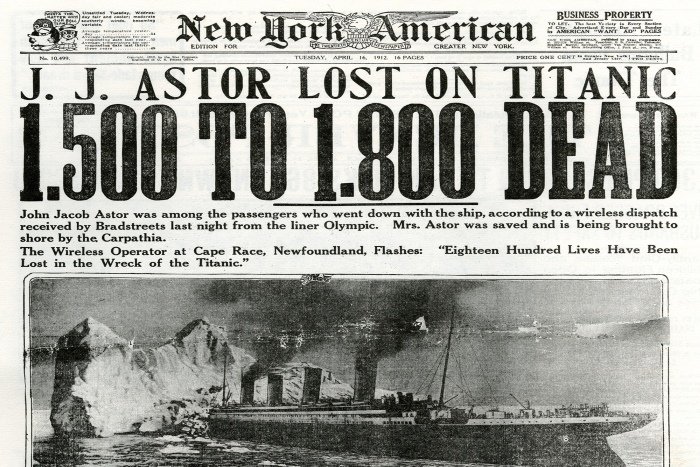
After the disaster, ships from Halifax, Canada, were sent to recover bodies. More than 300 were found, and 150 of them were buried in three cemeteries in the city.
Many headstones carry only a number and the date of the sinking, because the victims were never identified. One grave belonged to J. Dawson, a coal trimmer, and it became a place of pilgrimage after the 1997 film, although the character Jack Dawson was fictional.
4. A fire was burning in the coal bunker
Survivors and inquiries reported that a fire had been smoldering in one of the Titanic’s coal bunkers since before it left Southampton. Fires like this were not unusual on coal-fired ships.
Some researchers believe the fire weakened the hull in the very area where the iceberg struck. Other experts doubt it played a significant role, and the debate continues.
3. Bacteria are eating the wreck
The wreck lies nearly four kilometers deep in the North Atlantic, and it is slowly disappearing. In 2010, scientists identified a new species of bacteria in the rust formations on the hull and named it Halomonas titanicae.
These microbes, along with other organisms, are steadily consuming the iron. Some scientists predict that large parts of the wreck could collapse within the coming decades.
2. There were far too few lifeboats
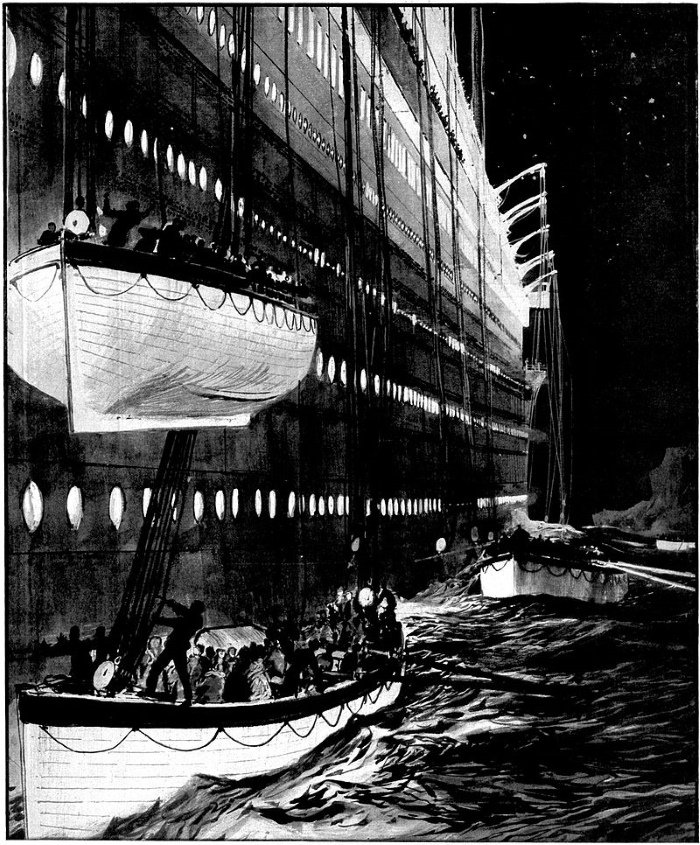
The Titanic carried 20 lifeboats, with room for about 1,178 people, around half of those on board. Remarkably, that was more than British regulations required at the time, which were based on a ship’s tonnage, not the number of passengers.
Many boats were launched half empty in the confusion. After the disaster, international rules were changed to require enough lifeboat space for everyone on board.
1. The price of a ticket
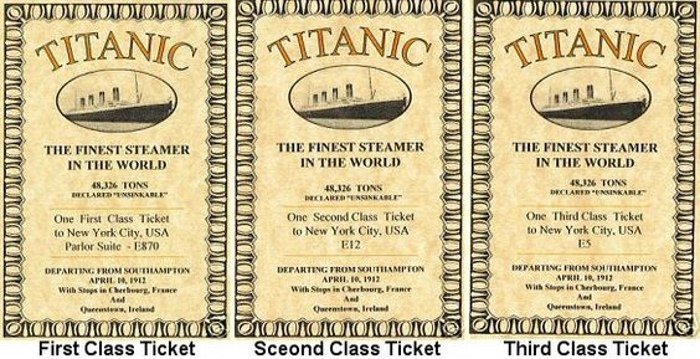
The class differences on board were enormous. The most expensive first-class parlor suites cost around 870 pounds, equivalent to well over 100,000 dollars today. A third-class ticket cost between about 3 and 8 pounds.
Those differences also decided who lived. Around 60 percent of first-class passengers survived, compared with about a quarter of those in third class.