Stock market crashes are like earthquakes: they often come unexpectedly, and the damage can be enormous. From the legendary Wall Street Crash of 1929 to the Flash Crash of 2010, in which around a trillion dollars briefly vanished within minutes, financial history is full of spectacular market dramas.
These are ten of the biggest crashes that shook the financial world to its foundations.
1. The Wall Street Crash of 1929
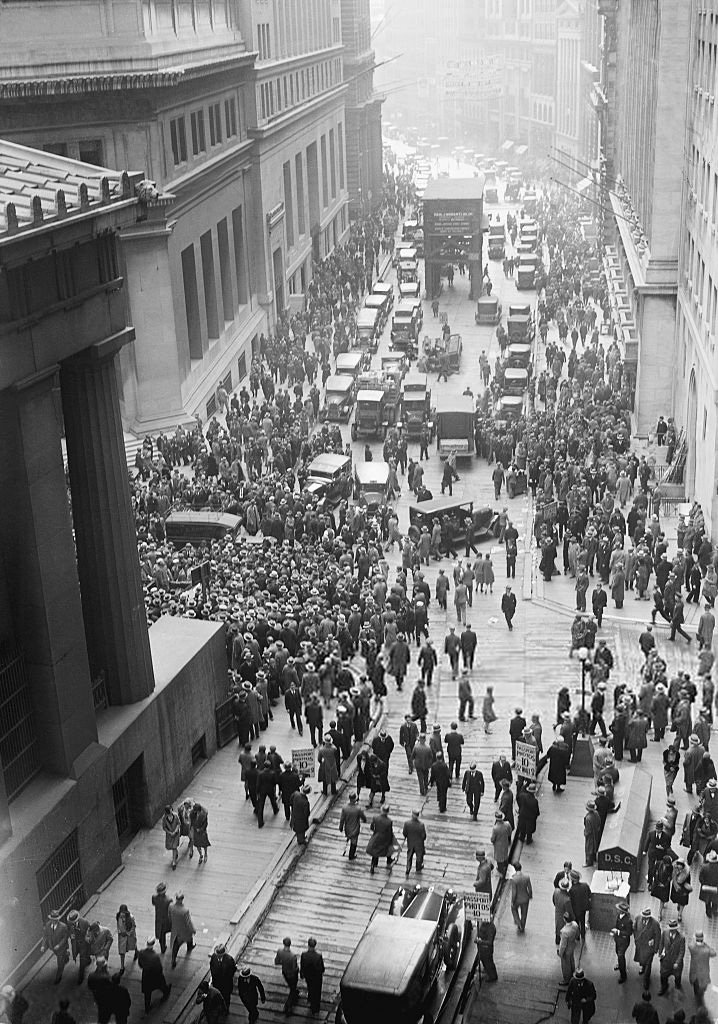
The mother of all crashes. Panic began on Black Thursday, 24 October 1929, but the worst came on Black Monday and Black Tuesday, 28 and 29 October, when the Dow Jones lost around a quarter of its value in two days.
That was only the beginning: by July 1932, the index had lost 89 percent of its value. It took until November 1954, a quarter of a century later, for the Dow to return to its pre-crash level. The crash helped usher in the Great Depression, during which unemployment in the United States rose to around 25 percent. A major cause was speculation with borrowed money: many investors had bought shares with only a small part of their own money. It is a pattern that returns again and again in this list.
2. The Japanese bubble (1990 onwards)
On 29 December 1989, Japan’s Nikkei 225 index reached a peak of almost 38,916 points. Japanese companies dominated the world’s list of most valuable companies, and property prices in Tokyo were so high that, according to a famous calculation, the land under the Imperial Palace was worth more than all the real estate in California.
When the Bank of Japan raised interest rates to cool the bubble, it burst. The Nikkei fell by around 80 percent over the following years, hitting its lowest point in 2009. It took until February 2024, more than 34 years later, for the Nikkei to break its old record. In the meantime, Japan went through its infamous “Lost Decades” of economic stagnation.
3. The financial crisis (2008)
The collapse of the American housing market and the bankruptcy of the investment bank Lehman Brothers in September 2008 triggered a worldwide financial crisis. On 29 September, the Dow Jones lost 778 points in a single day, a record at the time, after the US Congress initially rejected a bank rescue plan.
From its peak in October 2007 to its low in March 2009, the S&P 500 fell by around 57 percent. Trillions of dollars in market value vanished worldwide, and governments had to spend hundreds of billions to rescue banks. The crisis is considered the worst since the Great Depression.
4. The dot-com bubble (2000 to 2002)
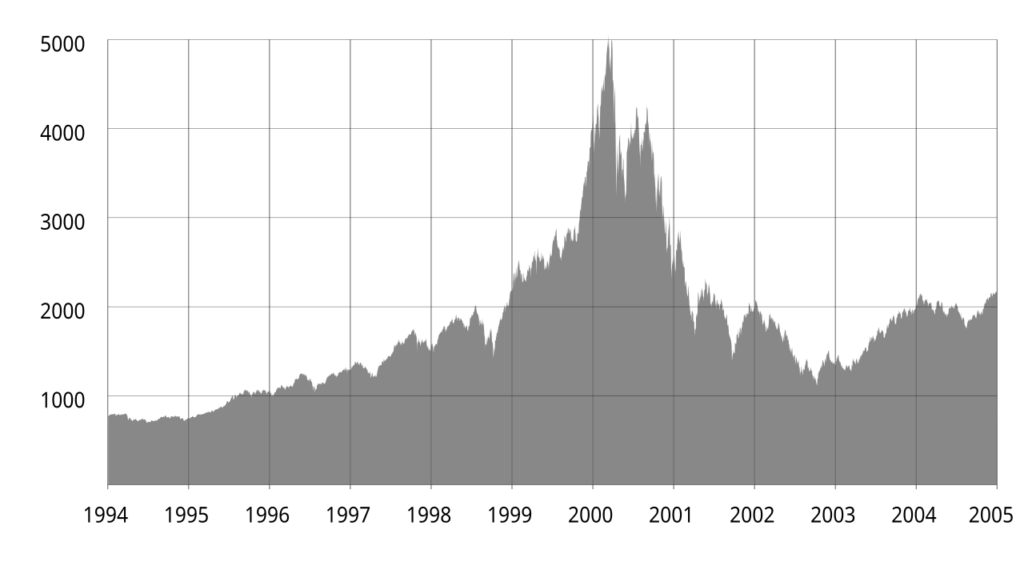
In the late 1990s, investors were crazy about internet companies. The Nasdaq index rose by hundreds of percent between 1995 and March 2000, when it peaked at over 5,000 points. Companies with no profits, and sometimes barely any revenue, were valued at billions. All they needed was a website and an idea.
In March 2000, the bubble burst. By October 2002, the Nasdaq had crashed by 78 percent. Pets.com, which had bought an expensive Super Bowl commercial in early 2000, went out of business before the end of that same year. Even Amazon barely survived: its share price fell from over 100 dollars to around 6 dollars.
5. The crash of 1973 and 1974
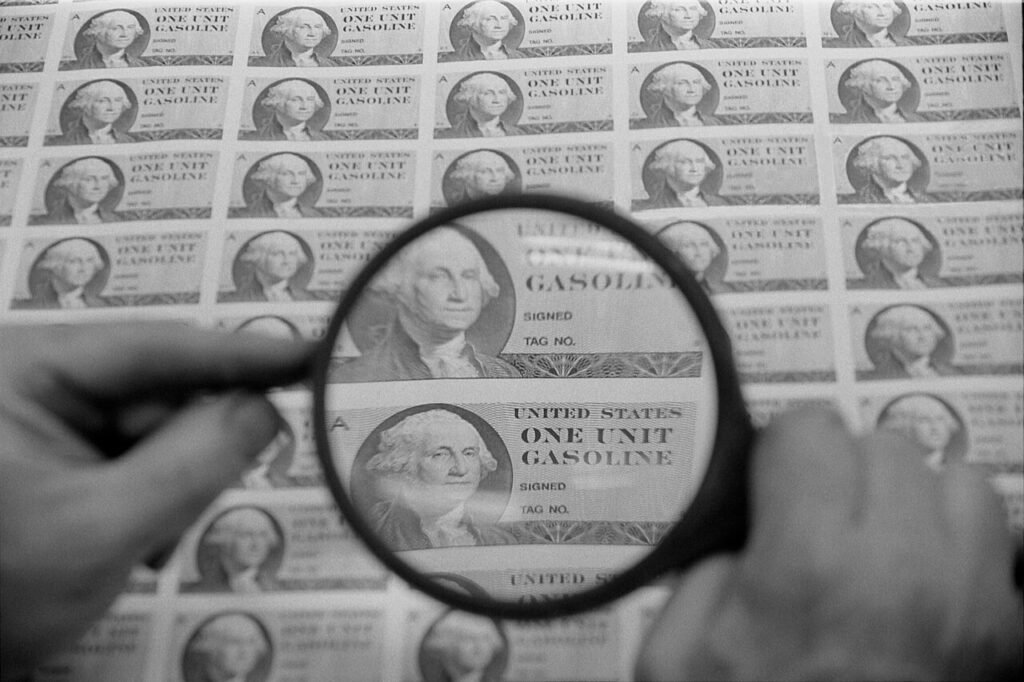
The perfect storm: the collapse of the international monetary system, the Watergate scandal, soaring inflation and, in October 1973, an oil embargo by Arab oil-producing countries after the Yom Kippur War. The price of oil quadrupled. The Dow Jones fell from over 1,050 points in January 1973 to below 580 in December 1974, a loss of around 45 percent. The British stock market was hit even harder, losing around 73 percent. Adjusted for inflation, it took many years for markets to recover.
6. The COVID crash (March 2020)
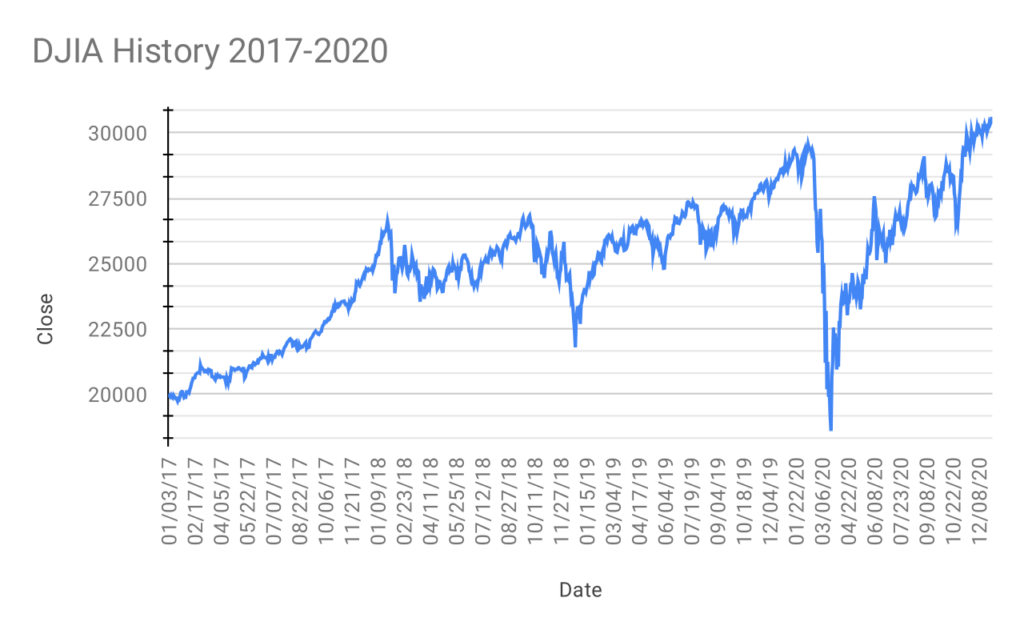
When the coronavirus pandemic spread around the world, markets collapsed. On 16 March 2020, the Dow Jones lost almost 3,000 points, around 13 percent, its largest point drop ever in a single day. In total, the S&P 500 fell by 34 percent in just over a month, one of the fastest crashes in history. Trading was halted several times by circuit breakers. But the recovery was also record-breaking: thanks to massive support from central banks and governments, the S&P 500 was back at its old high within about five months.
7. Black Monday (1987)
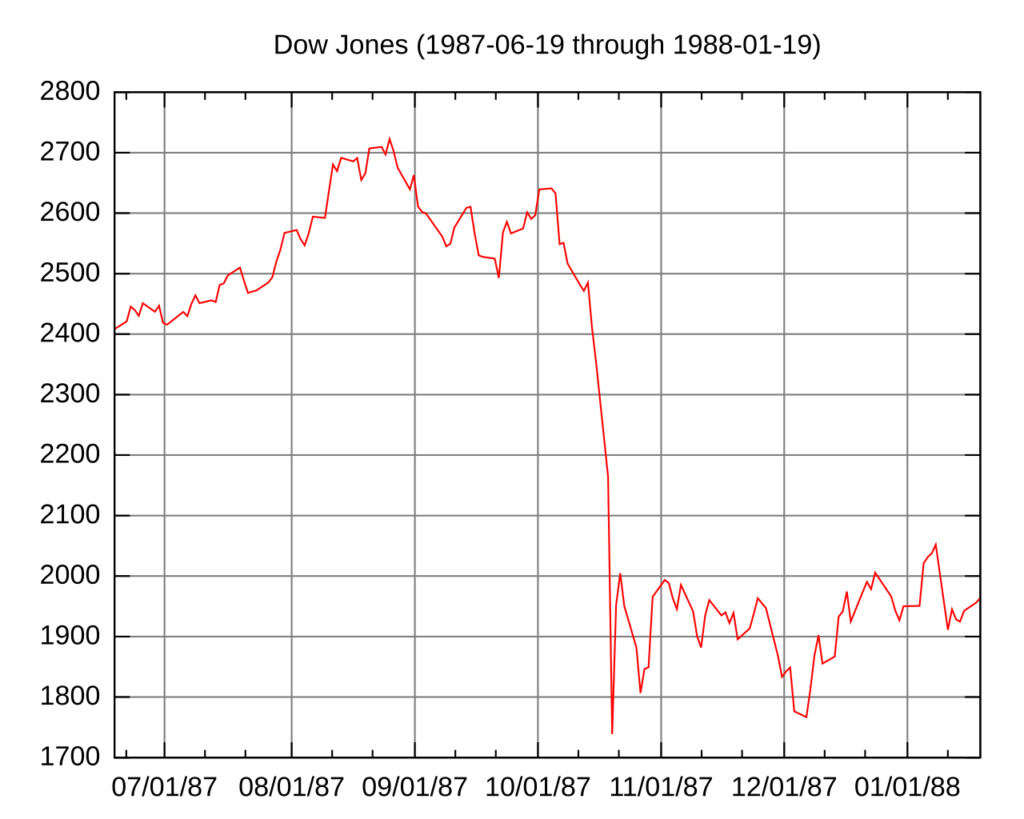
On Monday 19 October 1987, the Dow Jones fell by 22.6 percent, still the largest one-day percentage drop in its history. The crash spread from Asia to Europe and the United States in a single day.
A major factor was computerized trading strategies, so-called portfolio insurance, which automatically sold more shares as prices fell, accelerating the decline. Remarkably, the crash had little impact on the real economy, and the Dow recovered its losses within two years. The crash did lead to the introduction of circuit breakers to slow down future crashes.
8. The Chinese stock market crash (2015)
The Shanghai Composite Index reached a peak of over 5,100 points in June 2015, after more than doubling in a year, driven by millions of new private investors, many of them using borrowed money. When regulators tightened the rules on borrowing to invest, panic broke out. Within a month, the index had lost around a third of its value. Trillions of dollars in market value evaporated. The Chinese government intervened on an unprecedented scale: trading in hundreds of companies was suspended, large shareholders were temporarily banned from selling, and state-backed funds bought shares on a massive scale.
9. The Flash Crash (2010)
This is one of the most bizarre crashes ever. On the afternoon of 6 May 2010, the Dow Jones fell by almost 1,000 points, around 9 percent, within minutes, only to recover most of the loss shortly afterwards. For a moment, around a trillion dollars in market value had vanished. Shares of well-known companies such as Accenture briefly traded for one cent, while others briefly jumped to 100,000 dollars.
Investigators pointed to a very large automated sell order that triggered a chain reaction among high-speed trading computers. In 2015, a British trader, Navinder Singh Sarao, who traded from his parents’ home in London, was arrested and later pleaded guilty to market manipulation that contributed to the crash.
10. The Asian financial crisis (1997 and 1998)
It began with the devaluation of the Thai baht in July 1997, after which the crisis spread like wildfire across Southeast and East Asia. Stock markets in Thailand, Indonesia and South Korea collapsed, and currencies lost much of their value. South Korea had to be rescued by an international bailout led by the IMF of around 58 billion dollars. On 27 October 1997, the Dow Jones lost 554 points, at the time its largest point drop ever, and the circuit breakers were triggered for the first time. A year later, the crisis reached Russia, which defaulted on its debts in August 1998.
What can we learn from this?
Stock market crashes often follow a recognizable pattern: first euphoria and excessive speculation, often with borrowed money, then a trigger that changes the mood, and then panic selling that makes the fall even worse. Markets have always recovered eventually, but the time it takes varies enormously, from a few months after the COVID crash to more than three decades in Japan.