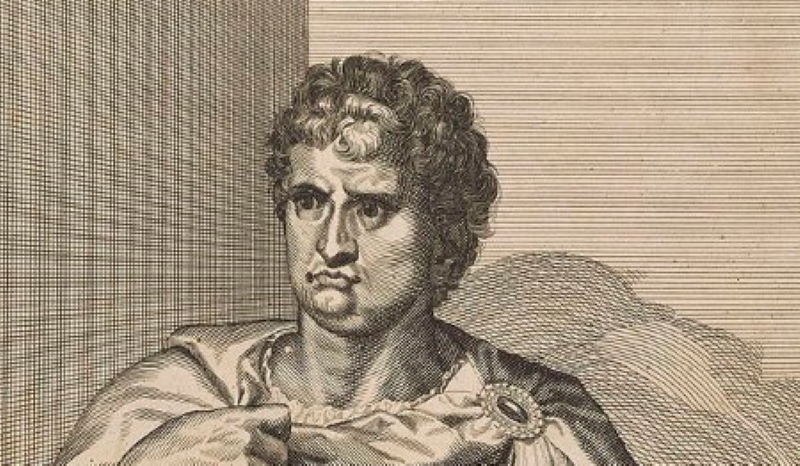
Of all the emperors who ruled ancient Rome, Nero (37 to 68 AD) is perhaps the one who captures the imagination most. When he became emperor in 54, he was only 16 years old. History mainly remembers him as an unpredictable and murderous tyrant, from whom not even his own mother, his stepbrother, his wives or his tutor Seneca were safe.
Keep in mind that almost everything we know about Nero comes from Roman historians such as Tacitus, Suetonius and Cassius Dio, who wrote decades after his death and were hostile to him. Some of their stories may be exaggerated. Still, the picture they paint is extraordinary. These are ten facts about Emperor Nero.
1. He was born into a dangerous family
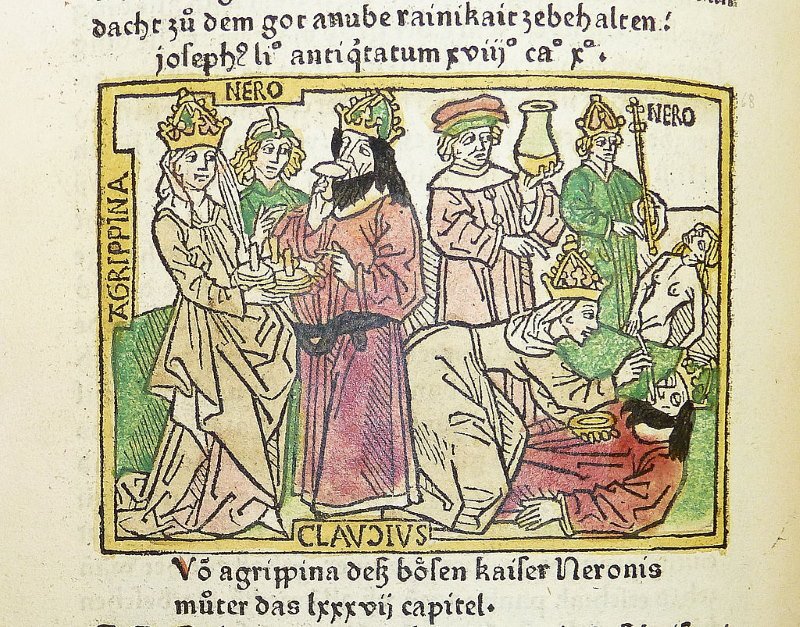
Nero was born on 15 December 37 in Antium, south of Rome, as Lucius Domitius Ahenobarbus. His mother was Agrippina the Younger, a great-granddaughter of Augustus and the sister of the notorious emperor Caligula. His father, Gnaeus Domitius Ahenobarbus, had a reputation for cruelty and is said to have joked that nothing good could come from him and Agrippina. He died when Lucius was three.
Agrippina was ambitious. In 49, she married her own uncle, Emperor Claudius, a marriage the Senate had to specially permit. A year later, Claudius adopted her son, who from then on was called Nero Claudius Caesar. Agrippina made sure Nero, rather than Claudius’s own younger son, Britannicus, was groomed as the heir.
2. His mother probably poisoned his stepfather
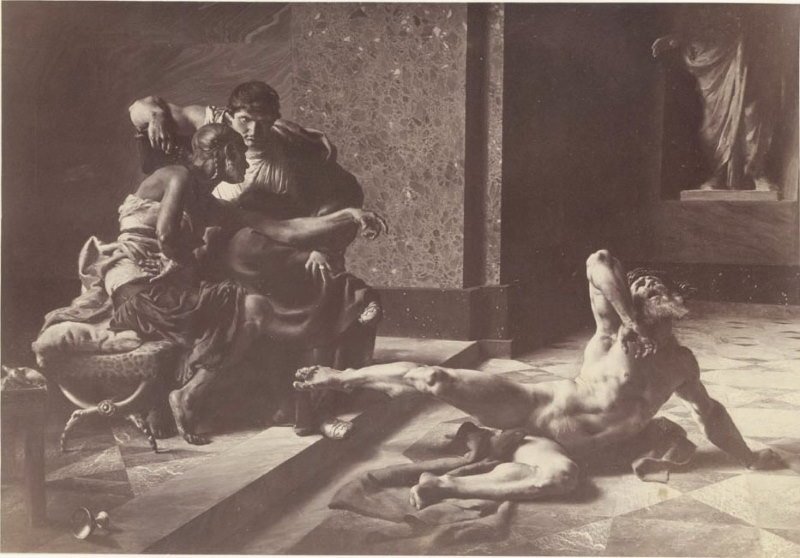
When Claudius died on 13 October 54, most Romans suspected that his wife had a hand in it. According to the ancient historians, Agrippina called in Locusta, a notorious poisoner, and Claudius was served a dish of poisoned mushrooms, his favorite food. Tacitus adds that when the mushrooms did not work quickly enough, a doctor finished the job with a poisoned feather pushed down his throat, supposedly to make him vomit.
Whatever the details, the Praetorian Guard proclaimed the 16-year-old Nero emperor that same day. At the time, he was the youngest emperor Rome had ever had.
3. He had his stepbrother poisoned at dinner
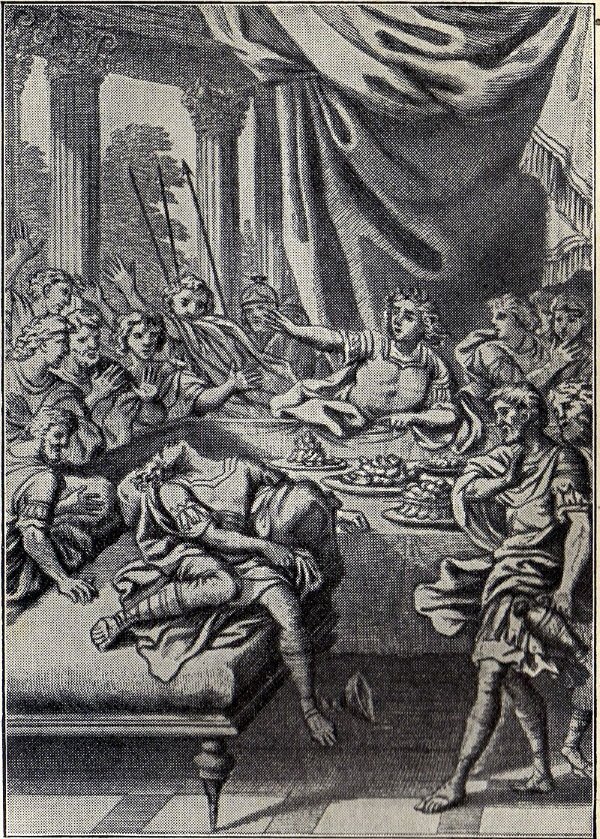
Nero soon tried to break free from his domineering mother. When they clashed, Agrippina threatened to support Britannicus instead, who was about to turn 14 and would then be considered an adult with a claim to the throne. Nero did not wait.
In 55, during a family dinner, Britannicus was served a hot drink that had been tasted by his food taster. When he complained it was too hot, cold water was added, and that water contained the poison. Britannicus collapsed and died. Nero calmly told the other guests that it was just an epileptic fit. Locusta was reportedly rewarded with estates and even allowed to take on pupils.
4. He tried to kill his mother with a collapsing boat
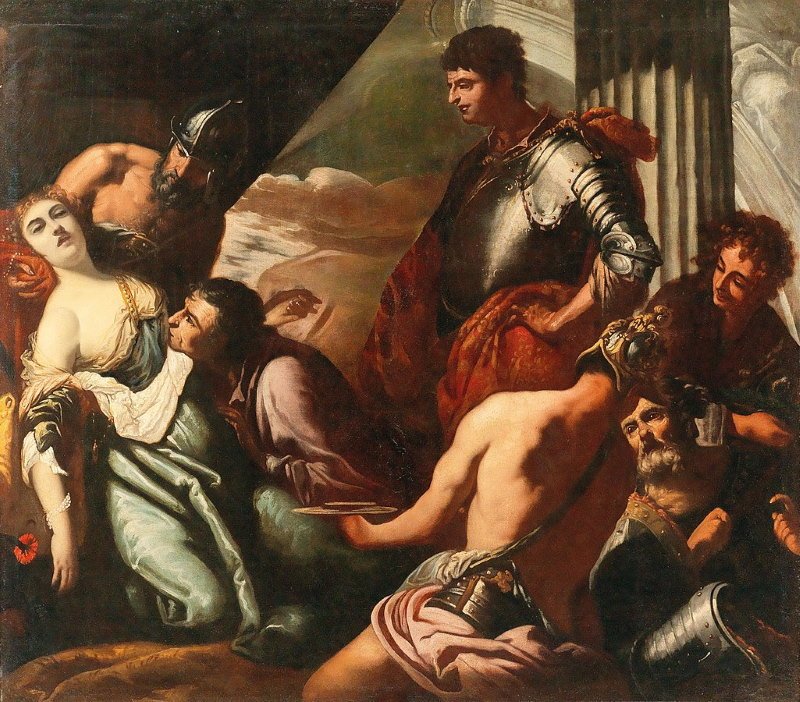
Agrippina kept interfering in her son’s life, including his love life. In 59, Nero decided to get rid of her. His freedman Anicetus, commander of the fleet at Misenum, came up with a plan worthy of an adventure film: a boat designed to fall apart at sea.
It went wrong. A heavy canopy collapsed on Agrippina’s cabin, but she survived, and when the boat did not sink properly, she swam to safety. Nero then sent soldiers to her villa to finish the job. According to Tacitus, she pointed to her womb and said: “Strike here”, the place where Nero had come from.
5. His early years as emperor were actually good
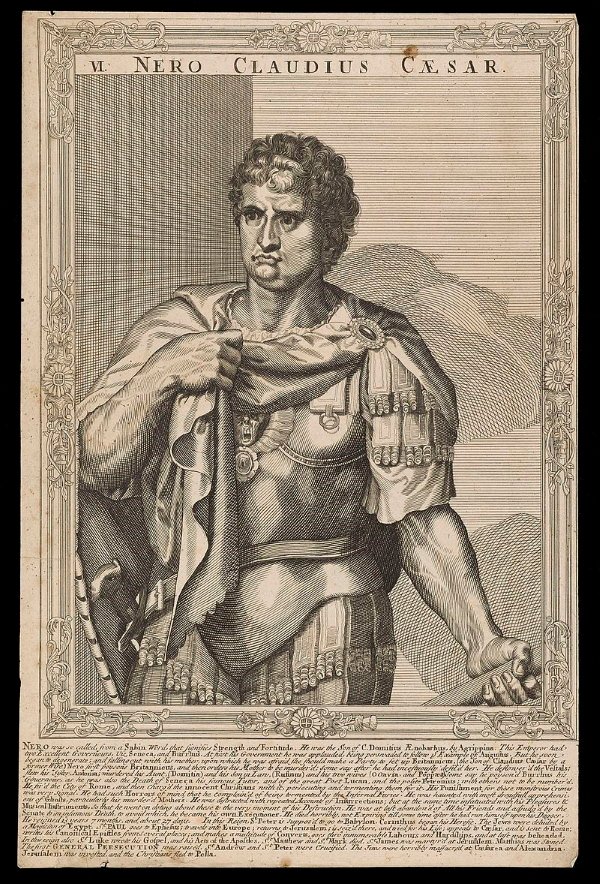
Despite his reputation, the first years of Nero’s reign were considered a good period. Later writers even praised the “quinquennium Neronis”, Nero’s first five years. The reason was probably that the young emperor left much of the government to his advisers: the philosopher Seneca and Burrus, the commander of the Praetorian Guard.
Under their influence, Nero lowered some taxes, gave slaves the right to file complaints against cruel masters and was popular with ordinary people. But after Burrus died in 62, possibly poisoned, and Seneca withdrew from court, Nero’s rule became increasingly erratic and violent.
6. He “won” the Olympic Games with bribes
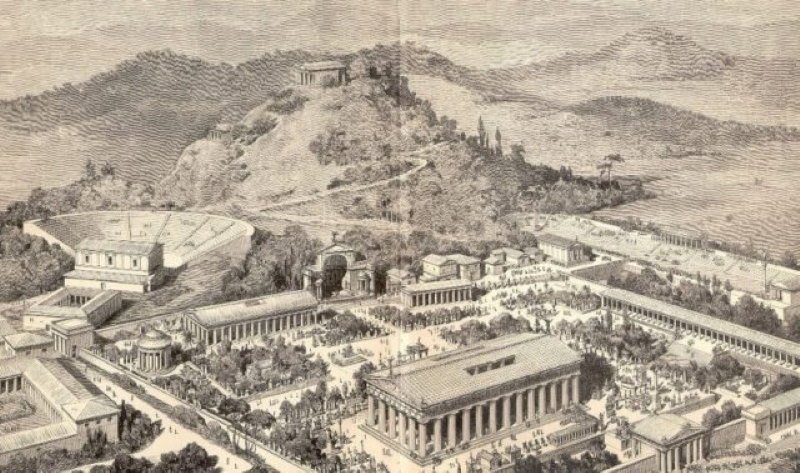
Nero was obsessed with Greek culture. He saw himself as a great singer, lyre player, poet and charioteer, which the Roman elite found deeply embarrassing for an emperor. In 67, he went on a tour of Greece, and the Olympic Games were even postponed by two years so that he could take part. Music competitions were added specially for him.
In the chariot race, Nero drove a chariot pulled by ten horses. He fell out, did not finish, and was still declared the winner. He reportedly returned home with 1,808 victory crowns. During his singing performances, nobody was allowed to leave the theater. According to Suetonius, some spectators pretended to be dead so they could be carried out, and the future emperor Vespasian fell out of favor for falling asleep.
7. He did not fiddle while Rome burned
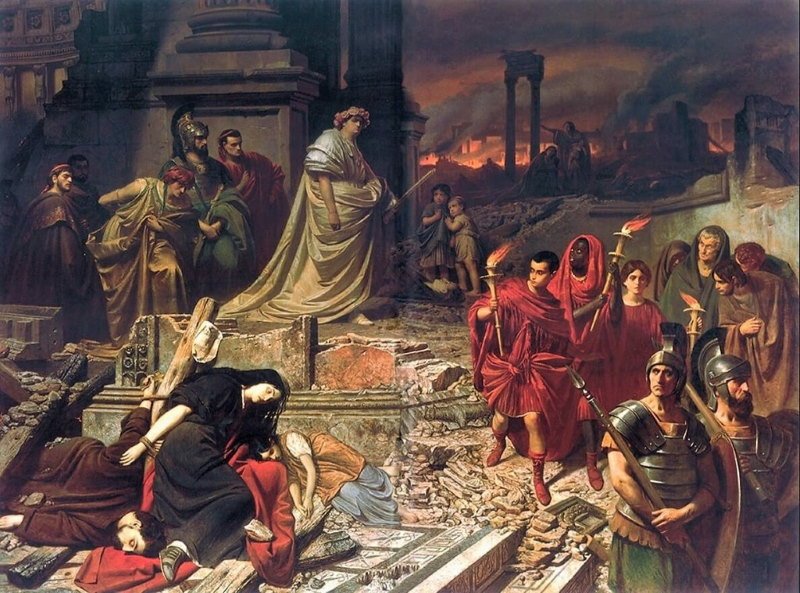
On the night of 18 to 19 July 64, a fire broke out near the Circus Maximus and spread rapidly through the city. It raged for days, and of Rome’s fourteen districts, three were completely destroyed and seven severely damaged.
The famous saying that “Nero fiddled while Rome burned” is a myth, if only because the violin did not exist yet. Tacitus wrote that, according to rumors, Nero sang about the fall of Troy while watching the flames. But Tacitus also says that Nero was in Antium when the fire started, and that he rushed back to Rome, opened buildings and gardens to shelter the homeless and lowered the price of grain. Afterwards, he introduced new building rules to make the city less vulnerable to fire.
8. His Golden House fueled the rumors
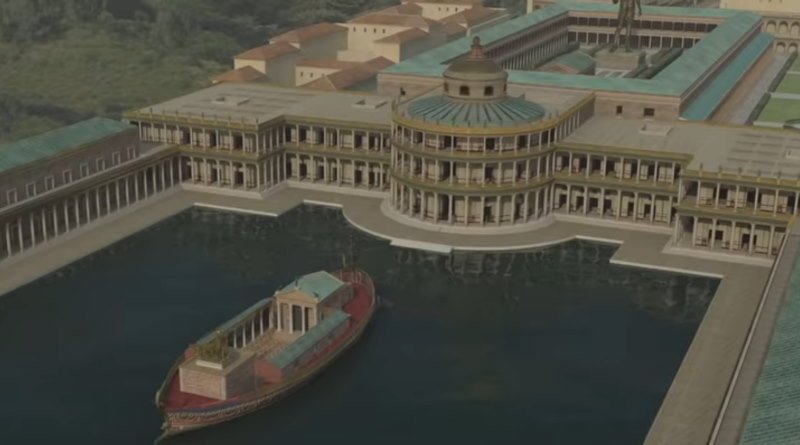
Many Romans still believed that Nero was behind the fire. Their suspicion grew when he began building an enormous new palace on the burned land: the Domus Aurea, or Golden House. The complex had gardens, an artificial lake, rooms covered with gold and gems, ceilings that could shower guests with flowers and perfume, and, according to Suetonius, a dining room that rotated. At the entrance stood a giant bronze statue of Nero, more than 30 meters tall.
Nero is said to have remarked that he could finally live like a human being. The statue, the Colossus, later gave its name to the Colosseum, which was built on the site of the palace’s lake.
9. He blamed the Christians
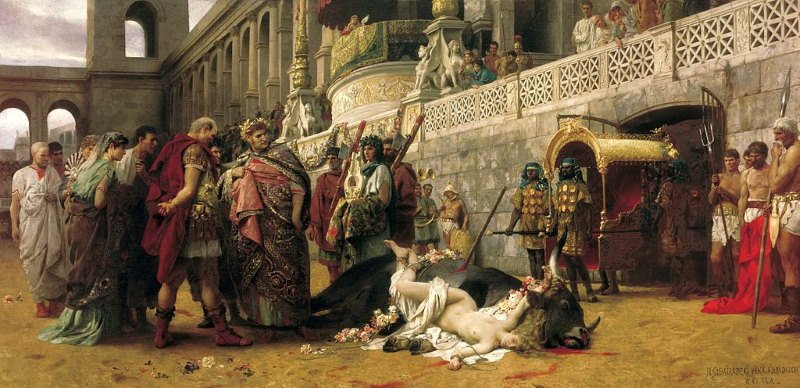
To deflect blame for the fire, Nero accused the Christians, then a small and unpopular group in Rome. According to Tacitus, they were punished in horrific ways: some were dressed in animal skins and torn apart by dogs, others were crucified or set on fire to serve as human torches at night, in Nero’s gardens.
According to Christian tradition, the apostles Peter and Paul were also killed in Rome under Nero: Peter by crucifixion, upside down at his own request, and Paul, a Roman citizen, by beheading. Early Christians came to see Nero as the Antichrist. Many scholars think the number of the beast, 666, from the Book of Revelation, is a coded reference to “Nero Caesar” in Hebrew letters.
10. His last words: “What an artist dies with me”
Nero’s downfall came quickly. In 65, a conspiracy led by the senator Gaius Calpurnius Piso was discovered, and Nero ordered many senators and knights to be executed or to commit suicide, including Seneca and the writer Petronius. In 68, governors in Gaul and Spain revolted, and the Praetorian Guard abandoned him for the governor Galba.
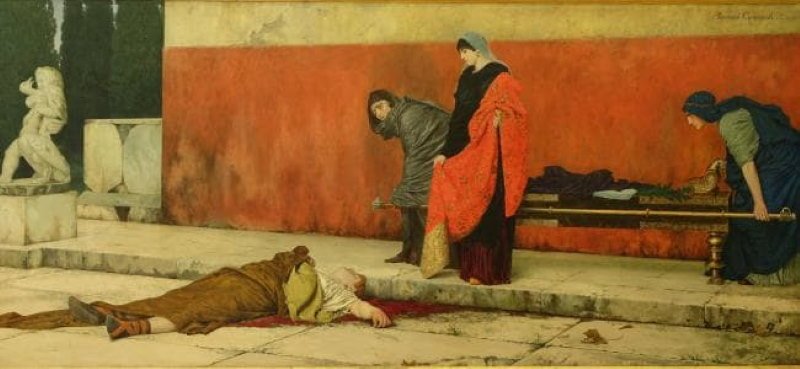
Declared a public enemy by the Senate, Nero fled from Rome. On 9 June 68, with soldiers approaching, he took his own life with the help of his secretary. According to Suetonius, his last words were “Qualis artifex pereo”: “What an artist dies with me”. His death ended the dynasty of Augustus and plunged Rome into a civil war, the Year of the Four Emperors. Remarkably, he remained popular with ordinary people, and for years afterwards, several impostors claiming to be Nero appeared in the east.