More than 400 years after his death, William Shakespeare is still regarded as the greatest writer in the English language. His plays are performed all over the world, filmed again and again and endlessly adapted. He also gave English hundreds of words and expressions we still use every day.
These are the ten best plays by William Shakespeare, counting down to number one.
10. Richard III
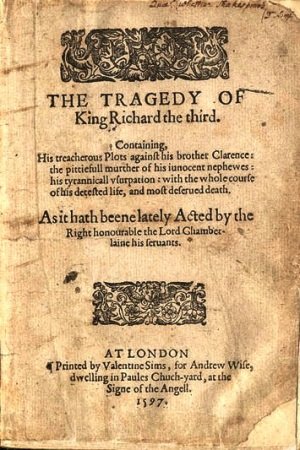
Shakespeare probably wrote the history play Richard III around 1592 or 1593. As sources, he used chronicles such as Edward Hall’s history of the houses of Lancaster and York and Thomas More’s History of King Richard III, which painted a very dark picture of the king.
In the play, Richard is a cunning and ruthless schemer who murders his way to the throne. His monologues, in which he speaks directly to the audience about his own wickedness, make him one of Shakespeare’s most fascinating villains. It opens with one of his most famous lines: “Now is the winter of our discontent”. In 2012, the real Richard III’s skeleton was found under a car park in Leicester.
9. Much Ado About Nothing
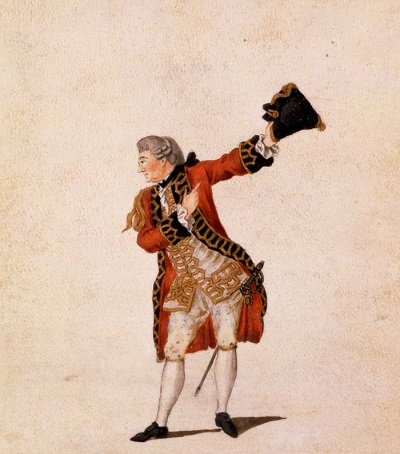
Much Ado About Nothing shows Shakespeare’s playful, romantic side. The comedy is set in Messina, Sicily, where the young Claudio and Hero fall in love, while their friends try to trick the sharp-tongued Beatrice and Benedick, who constantly bicker, into falling in love too.
The play was probably written around 1598 or 1599. Its witty sparring between Beatrice and Benedick is often seen as the model for the romantic comedy. Famous film versions include Kenneth Branagh’s 1993 adaptation and Joss Whedon’s black-and-white version from 2012.
8. Julius Caesar
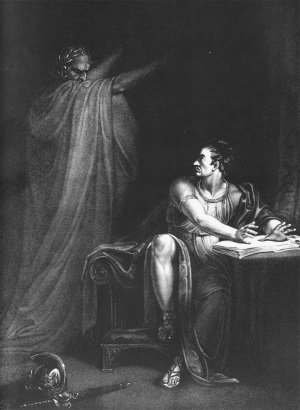
Shakespeare wrote the tragedy Julius Caesar in 1599. Despite the title, Caesar himself appears in only a few scenes. The play centers on the conspiracy against him, led by Brutus and Cassius, and the chaos that follows his murder.
Historians suspect Shakespeare was also reflecting on the uncertain succession in England: the aging Queen Elizabeth I refused to name an heir, and many feared civil war. His main source was Thomas North’s English translation of Plutarch’s Lives. The play gave us lines such as “Et tu, Brute?” and “Friends, Romans, countrymen, lend me your ears”.
7. The Tempest
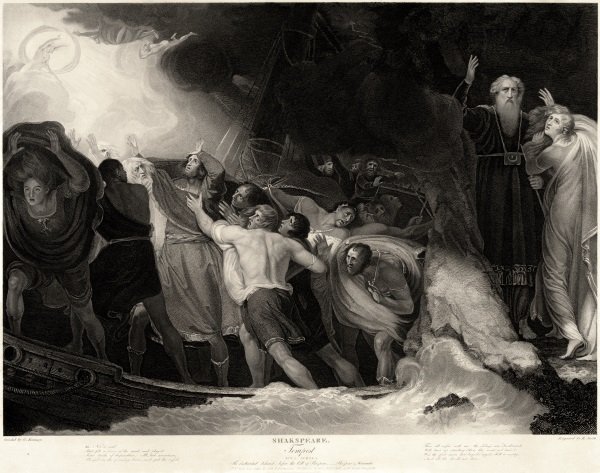
The Tempest is believed to be one of the last plays Shakespeare wrote alone. The first recorded performance was on 1 November 1611, by the King’s Men, before King James I at Whitehall Palace. It was performed again at court in 1613 during the celebrations of the wedding of Princess Elizabeth, and in 1623 it was printed as the very first play in the First Folio, the first collected edition of his plays.
The story revolves around Prospero, the exiled Duke of Milan, who lives on a remote island and uses magic to bring his enemies to him. Many see Prospero’s farewell to his magic at the end as Shakespeare’s own farewell to the theater.
6. A Midsummer Night’s Dream
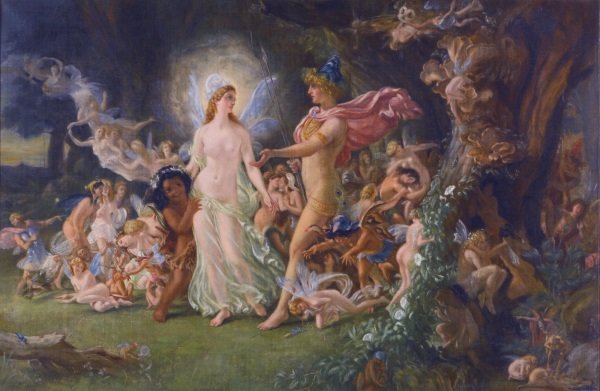
Like Much Ado About Nothing, A Midsummer Night’s Dream is one of Shakespeare’s romantic comedies. Unusually, it does not seem to be based on a single existing story. It follows four young lovers, a group of amateur actors and the fairy king and queen, Oberon and Titania, whose paths cross in an enchanted forest near Athens.
Much of the action takes place by moonlight, which gives the play its dreamy atmosphere. It has inspired countless adaptations, from Mendelssohn’s music to ballets, operas and films. Shakespeare wrote it around 1595 or 1596, around the same time as Romeo and Juliet.
5. Othello
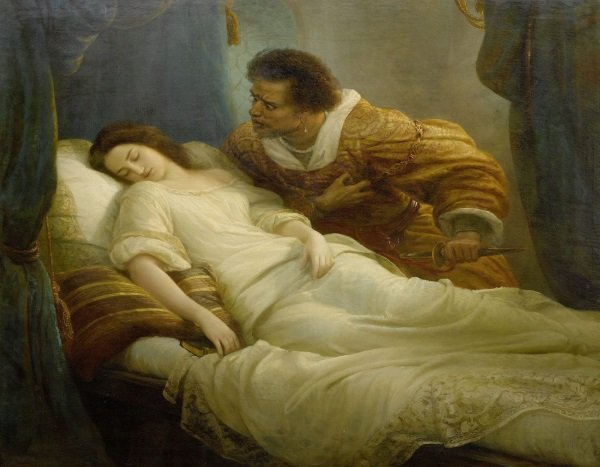
Othello, written around 1603 or 1604, is about love, jealousy, revenge and manipulation. It shows how even a noble man can be destroyed when his trust is poisoned. The villain Iago, who convinces Othello that his wife Desdemona is unfaithful, is one of the most chilling characters in all of literature. The first recorded performance was by the King’s Men at Whitehall in November 1604.
The title role was originally played by Richard Burbage, the company’s leading actor. Shakespeare based the plot on an Italian story by Giovanni Battista Giraldi Cinthio, while Richard Knolles’ history of the Turks provided background on the conflict between Venice and the Ottoman Empire.
4. King Lear
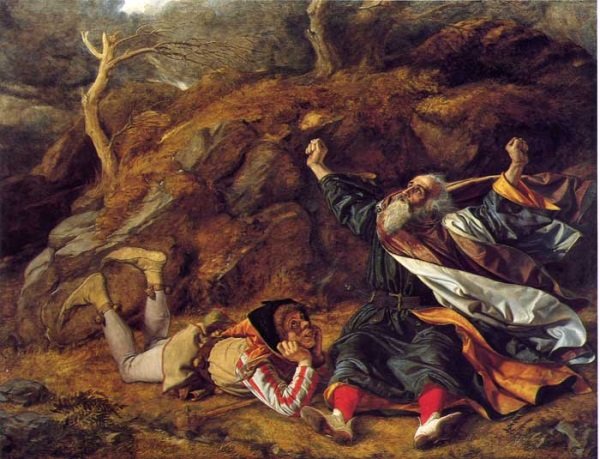
Between Othello and Macbeth, Shakespeare wrote King Lear, around 1605 or 1606. The aging king decides to divide his kingdom among his three daughters, based on how much they say they love him. When his honest youngest daughter, Cordelia, refuses to flatter him, he disowns her, with catastrophic consequences.
Shakespeare may have been inspired by a real court case of the time, in which the daughters of the elderly courtier Sir Brian Annesley tried to have him declared insane to take control of his estate, while his youngest daughter, Cordell, defended him. King Lear is often considered Shakespeare’s most powerful and devastating tragedy.
3. Romeo and Juliet
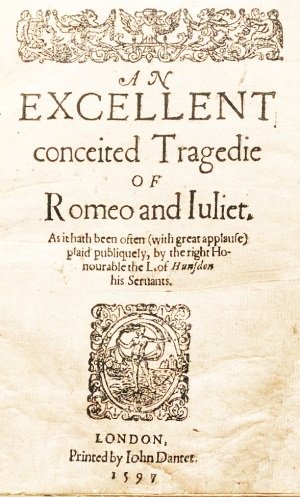
Romeo and Juliet, full title The Most Excellent and Lamentable Tragedy of Romeo and Juliet, is one of Shakespeare’s earliest tragedies, written in the mid-1590s. His direct source was probably Arthur Brooke’s 1562 poem The Tragical History of Romeus and Juliet, which in turn goes back to older Italian stories, including one by Masuccio Salernitano from 1476.
The story of the two star-crossed lovers from feuding families in Verona has been filmed dozens of times, from Franco Zeffirelli’s 1968 version to Baz Luhrmann’s 1996 film with Leonardo DiCaprio. The musical West Side Story is also based on it.
2. Macbeth
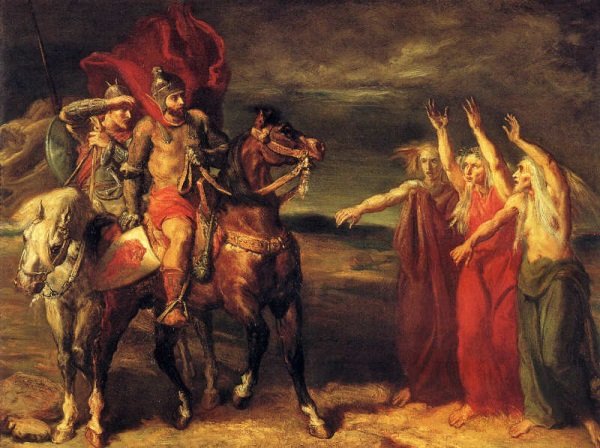
Macbeth is Shakespeare’s shortest and perhaps bloodiest tragedy. It is loosely based on the real Scottish king Macbeth, who seized the throne in 1040 after killing King Duncan I in battle. In the play, three witches predict that Macbeth will become king, and, urged on by his ambitious wife, he murders Duncan in his sleep. To hold on to his stolen power, he is forced into ever more violence.
The play is surrounded by superstition. Many actors refuse to say its name inside a theater and call it “the Scottish play” instead, because productions have supposedly been plagued by accidents.
1. Hamlet
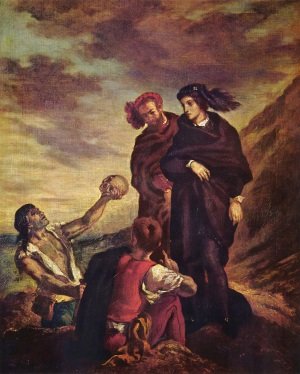
Hamlet, written around 1599 to 1601, is Shakespeare’s longest play and his most famous. It follows the popular form of the revenge tragedy. Claudius murders his brother, the King of Denmark, takes the throne and marries his widow. The ghost of the murdered king appears to his son, Prince Hamlet, and demands revenge.
Shakespeare masterfully builds up Hamlet’s inner struggle between doubt and the urge for revenge. Lines such as “To be, or not to be, that is the question” are part of our collective memory, far beyond the world of theater. It is one of the most performed and most filmed plays in history.