Holy books play a central role in the lives of billions of people around the world. They form the foundation of religions, offer spiritual guidance and contain centuries-old wisdom and moral lessons. Many of them have also shaped art, law, language and culture far beyond their own faith. These are ten of the most important holy books in the world.
1. The Bible (Christianity)

The Bible is a collection of writings composed over a period of more than a thousand years. Its authors, according to tradition, range from kings and prophets to shepherds and fishermen. It is divided into the Old Testament and the New Testament. The Old Testament, largely the same as the Hebrew Bible, contains books such as Genesis, Exodus, the Psalms and Isaiah, and is also sacred to Judaism. The New Testament describes the life and teachings of Jesus and the early Christian community, with the four Gospels, the Acts of the Apostles, the letters of Paul and the Book of Revelation.
The Bible is the most printed and most translated book in the world, with at least parts of it available in thousands of languages. It has had a profound influence on art, literature, music and Western philosophy.
2. The Quran (Islam)
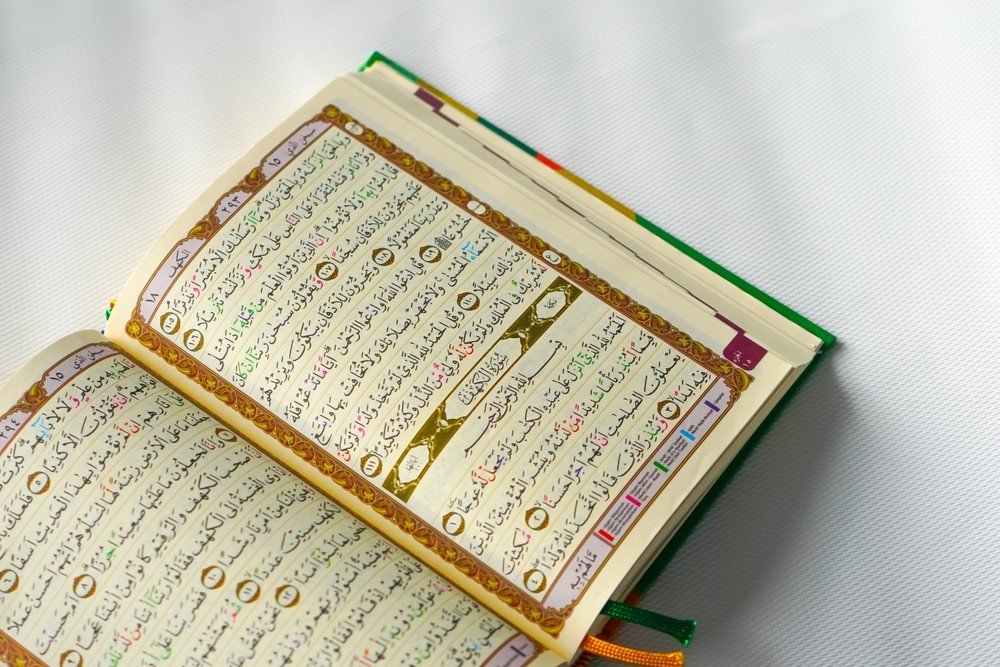
According to Islamic belief, the Quran was revealed to the Prophet Muhammad by the angel Gabriel in the 7th century, over a period of around 23 years. Muslims consider it the literal word of God, in Arabic. The revelations were collected into a single book shortly after Muhammad’s death, and a standard version was established under the third caliph, Uthman.
The Quran consists of 114 chapters, called surahs, each divided into verses. Important surahs include Al-Fatiha (The Opening), which is recited in every prayer, and Al-Baqarah (The Cow), the longest. Many Muslims memorize the entire Quran by heart; someone who does is called a hafiz.
3. The Torah (Judaism)

The Torah consists of the first five books of the Hebrew Bible: Genesis, Exodus, Leviticus, Numbers and Deuteronomy. According to tradition, it was given to Moses on Mount Sinai. It describes the creation of the world, the patriarchs of the Jewish people and the exodus from Egypt, and contains the commandments that govern Jewish life.
In synagogues, the Torah is read from handwritten scrolls on parchment. It is read in weekly portions, so that the entire Torah is completed once a year, which is celebrated on the festival of Simchat Torah.
4. The Vedas (Hinduism)
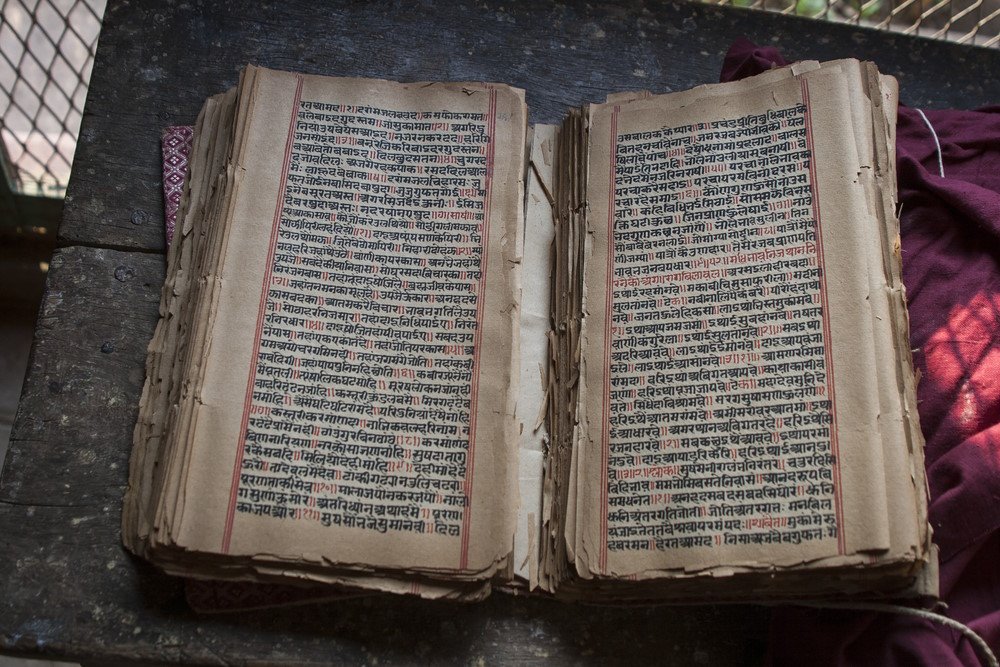
The Vedas are the oldest sacred texts of Hinduism, and among the oldest religious texts in the world. The oldest parts were composed in Sanskrit from around 1500 BC onwards. For many centuries, they were passed down orally, with remarkable precision, before being written down.
There are four Vedas: the Rigveda, the oldest, with hymns to the gods; the Samaveda, with melodies for chanting; the Yajurveda, with formulas for rituals; and the Atharvaveda, with spells and prayers for daily life. The philosophical texts known as the Upanishads form the final part of the Vedic literature.
5. The Tripitaka (Buddhism)
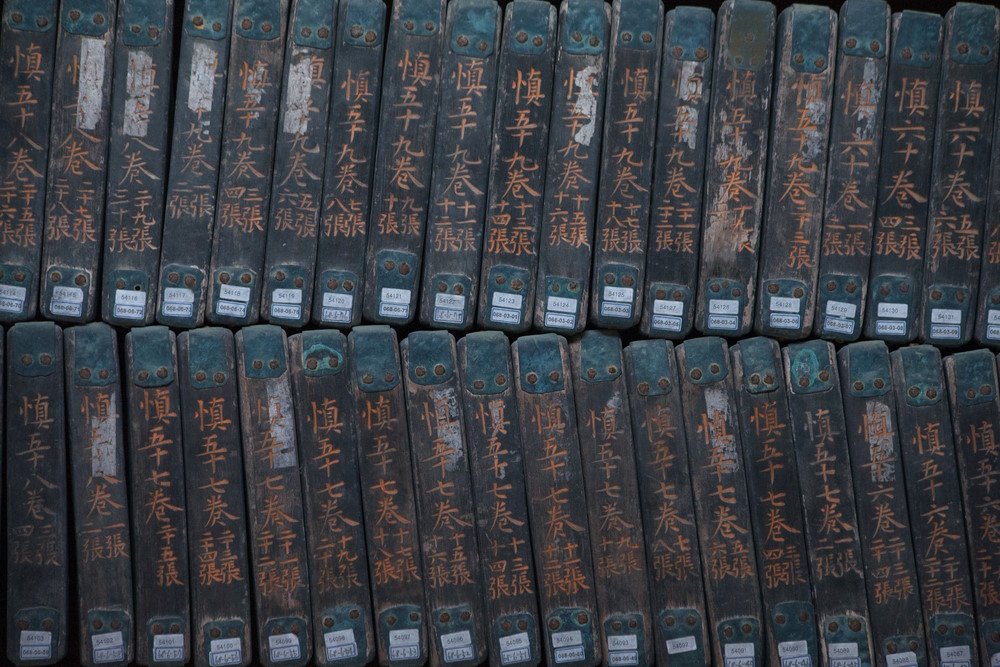
The Tripitaka, or “three baskets”, is the collection of texts containing the teachings of the Buddha. According to tradition, it was compiled by his followers at councils held after his death. The best-known version is the Pali Canon, preserved in the Theravada Buddhism of Sri Lanka and Southeast Asia, and first written down in Sri Lanka in the 1st century BC.
The three baskets are the Vinaya Pitaka, with rules for monks and nuns; the Sutta Pitaka, with the discourses of the Buddha; and the Abhidhamma Pitaka, with philosophical and psychological analysis of the teachings.
6. The Guru Granth Sahib (Sikhism)
The Guru Granth Sahib is the holy scripture of Sikhism. A first version was compiled in 1604 by the fifth guru, Guru Arjan. The tenth guru, Guru Gobind Singh, completed it and declared that after him, there would be no more human gurus: the scripture itself would be the eternal guru.
It contains hymns by six of the Sikh gurus, as well as by Hindu and Muslim saints. It is written in the Gurmukhi script and, in its standard edition, has 1,430 pages. In Sikh temples, called gurdwaras, it is treated with the greatest respect, like a living guru: it rests on a raised platform under a canopy and is ceremonially put to rest at night.
7. The Avesta (Zoroastrianism)
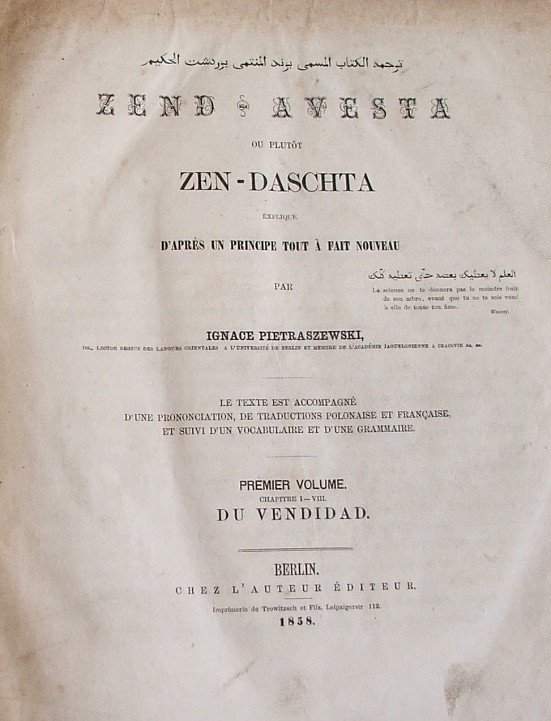
The Avesta is the holy scripture of Zoroastrianism, the ancient religion of Iran. Its oldest parts are the Gathas, hymns attributed to the prophet Zarathustra (Zoroaster) himself. Much of the original Avesta has been lost, but the surviving texts still form the core of the faith.
Besides the Gathas, it contains liturgical texts such as the Yasna and the Visperad, and the Vendidad, with rules for ritual purity. Although there are only around 100,000 to 200,000 Zoroastrians today, including the Parsis of India, the religion had a deep influence on Persian culture and possibly on other faiths.
8. The Tao Te Ching (Taoism)
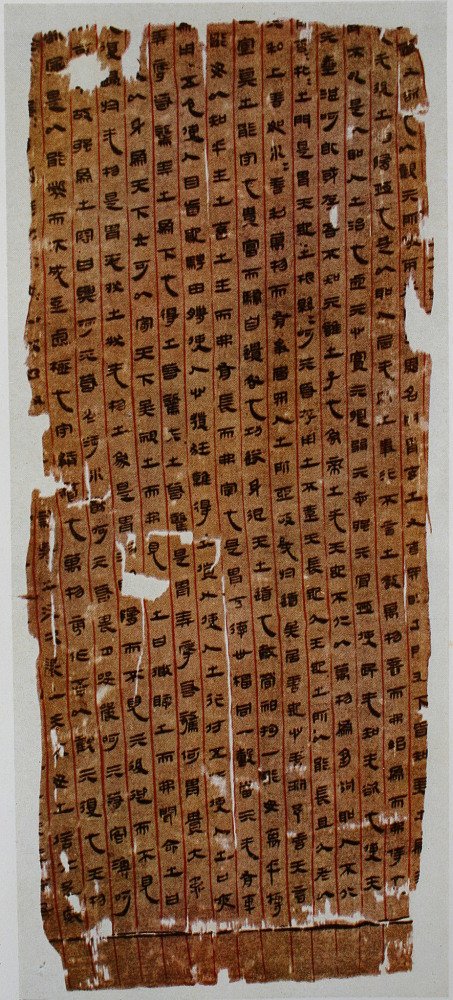
The Tao Te Ching, also spelled Daodejing, is traditionally attributed to the sage Laozi, who is said to have lived in the 6th century BC, although historians debate whether he really existed. The book consists of 81 short chapters with poetic, often cryptic reflections on how to live in harmony with the Tao, “the Way”.
It deals with simplicity, humility, avoiding excess and living in accordance with nature. The Tao Te Ching has had an enormous influence on Chinese culture, philosophy and art, and is one of the most translated books in the world.
9. The Talmud (Judaism)

The Talmud is a vast collection of rabbinic discussions about Jewish law, ethics, philosophy, customs and history. It consists of the Mishnah, the first written record of the oral Torah, compiled around 200 AD, and the Gemara, the commentary and discussions on the Mishnah.
There are two Talmuds: the Jerusalem Talmud and the Babylonian Talmud, completed around 500 AD. The Babylonian Talmud is the more extensive and the most studied. Its pages are famous for their layout, with the core text in the center surrounded by centuries of commentary.
10. The Mahabharata and the Bhagavad Gita (Hinduism)
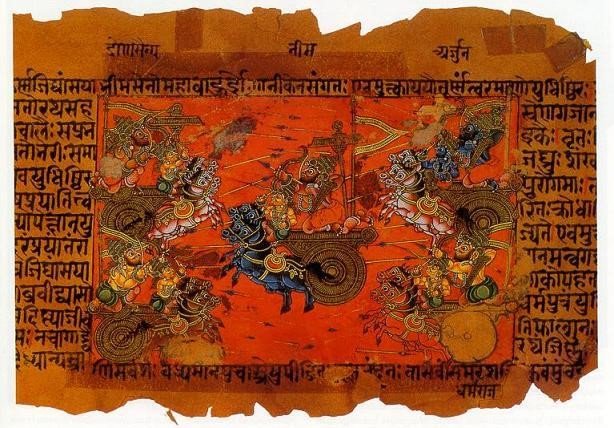
The Mahabharata is one of the longest epic poems in the world, with around 100,000 verses, and was composed over many centuries, roughly between 400 BC and 400 AD. It is attributed to the sage Vyasa and tells the story of the struggle between two branches of a royal family, the Kauravas and the Pandavas.
Its best-known part is the Bhagavad Gita, a philosophical dialogue between Prince Arjuna and the god Krishna on the eve of a great battle, about duty, action and devotion. The Bhagavad Gita is considered one of the most important spiritual texts of Hinduism and has inspired figures from Mahatma Gandhi to the physicist J. Robert Oppenheimer.