Of course you know the name of this ancient Roman city. And you immediately think of Mount Vesuvius, the volcano that in the year 79 buried Pompeii and its neighboring towns under meters of volcanic ash and pumice, preserving them for almost 17 centuries. Nearly three centuries after excavations began, archaeologists are still digging, and around a third of the city still lies underground.
Pompeii has been a UNESCO World Heritage Site since 1997 and attracts around four million visitors a year, so many that a daily limit of 20,000 visitors was introduced in 2024. These are ten facts about Pompeii and the eruption that destroyed it.
1. Pompeii was not originally a Roman city
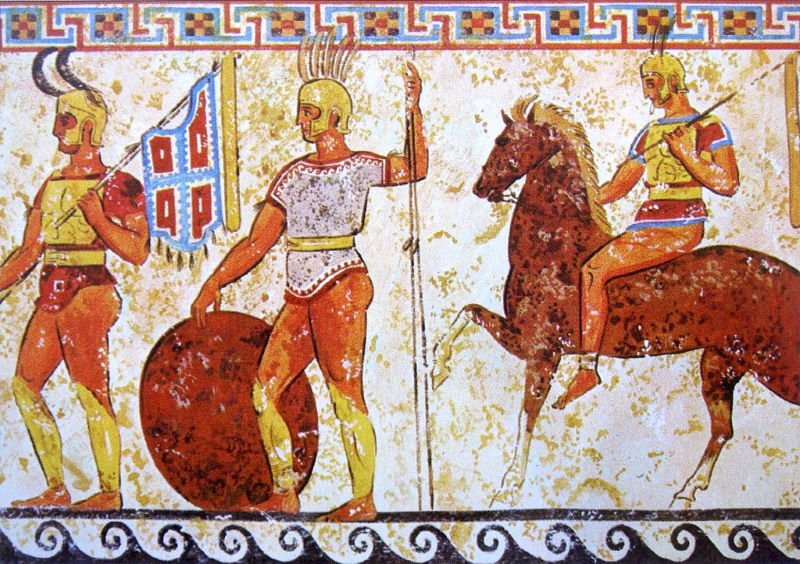
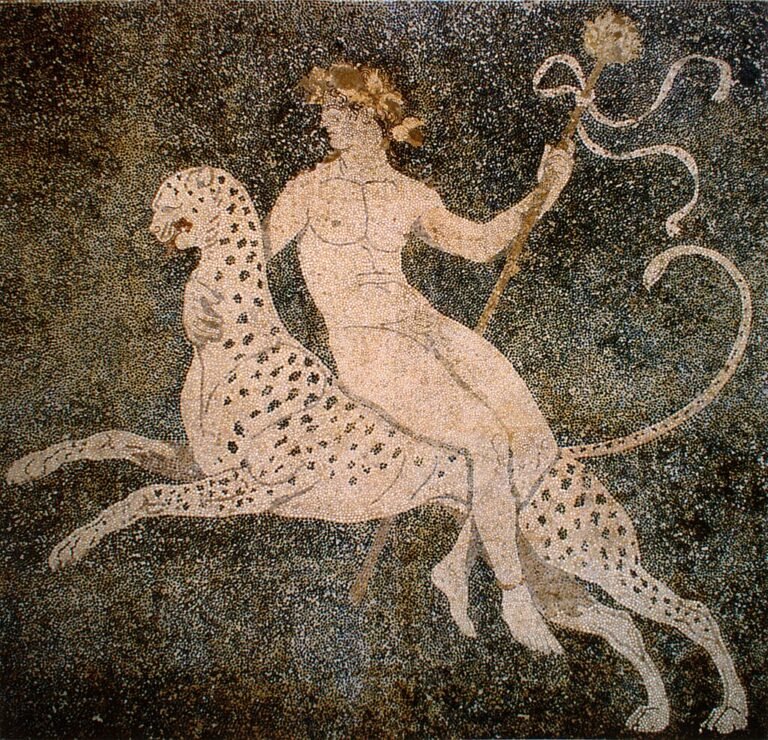
After Rome itself, Pompeii is probably the best-known city of the Roman world. Yet it was not originally Roman. The site, near the mouth of the river Sarno southeast of today’s Naples, was strategic, and several peoples fought over it. The Oscans founded the town, probably in the 7th or 6th century BC. The Greeks and Etruscans exerted influence, and later the Samnites took over.
In the 3rd century BC, Pompeii became an ally of Rome. But when the allies rebelled because they were denied Roman citizenship, Pompeii joined the revolt. In 89 BC, the Roman general Sulla besieged the city, and you can still see the marks of his siege weapons in the city walls. Pompeii became a Roman colony, Latin replaced the local Oscan language, and within a few decades it had become a thriving Roman town with an amphitheater and public baths.
2. The inhabitants did not know they lived next to a volcano
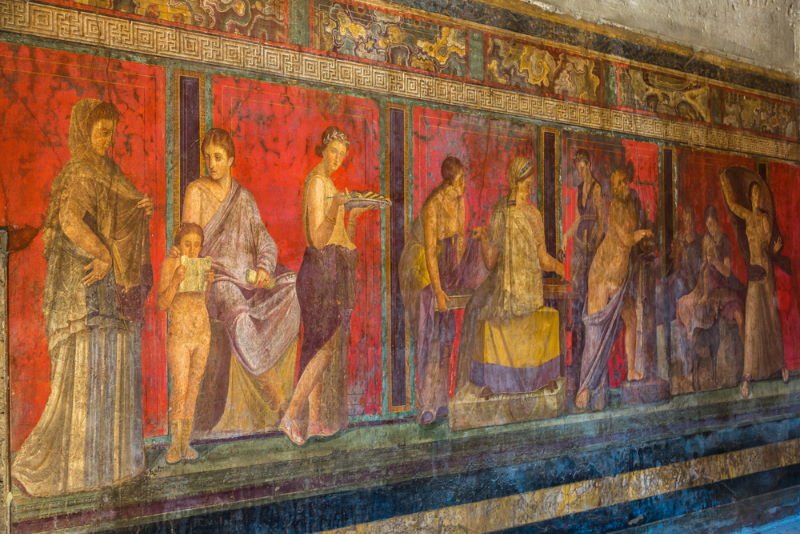
Under the Romans, Pompeii flourished. The city of around 10,000 to 20,000 inhabitants had luxury villas, bakeries, bars, a brothel and an advanced water supply, although the streets were full of dirt and dung. Its olives and wine had an excellent reputation, thanks to the very fertile soil.
What the inhabitants did not realize was that this fertility came from earlier volcanic eruptions. The mountain around 10 kilometers away was a volcano: Mount Vesuvius, today considered one of the most dangerous volcanoes in the world. But how could they have known? Its last major eruption had been many centuries earlier, and the Romans did not think of it as a volcano. Its slopes were covered in vineyards.
3. The eruption released a huge amount of energy
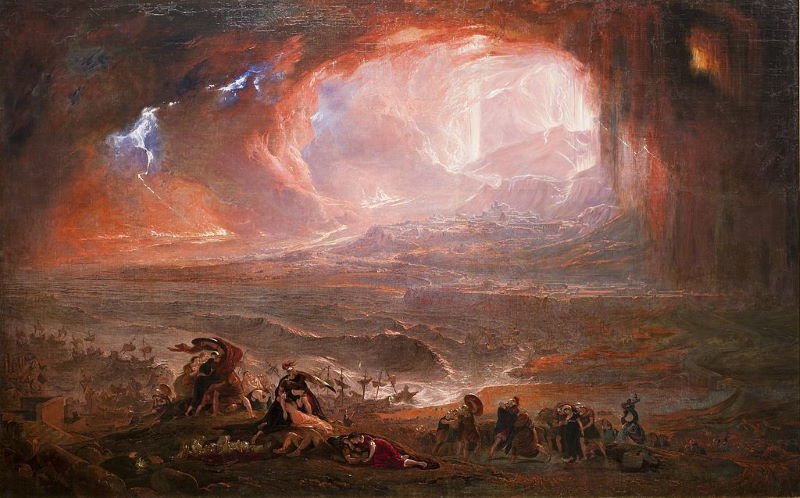
The volcano gave warning signs. In 62 AD, a severe earthquake damaged Pompeii, and 17 years later, the city still had not fully recovered. In the days before the eruption, there were more tremors.
Then the mountain exploded. A huge column of ash and pumice shot up to more than 30 kilometers into the sky and spread out like a giant umbrella, turning day into night. The wind blew the cloud straight over Pompeii, and pumice rained down for hours, until the layer was several meters thick and many roofs had collapsed. The total energy released is often estimated at around 100,000 times that of the Hiroshima bomb.
The next morning, the deadliest phase followed: pyroclastic flows. These avalanches of extremely hot gas, ash and rock raced down the slopes at more than 100 km/h, at temperatures of several hundred degrees. Anyone still in the city had no chance.
4. The horror of Herculaneum
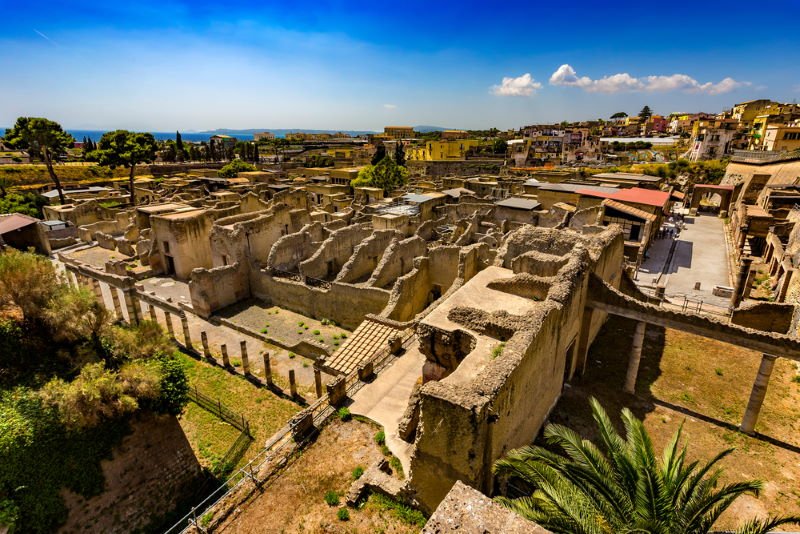
Pompeii was not the only victim. Vesuvius also buried Herculaneum, Stabiae, Oplontis and other nearby towns. In Pompeii, many inhabitants seem to have fled in time. Archaeologists have found the remains of around 1,150 people so far, and many more probably still lie in the unexcavated parts of the city.
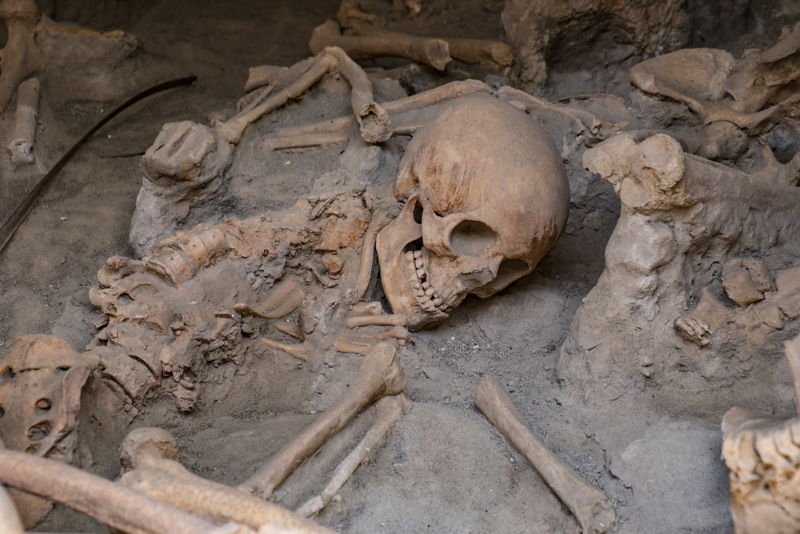
Herculaneum, closer to the volcano, was hit even harder by the pyroclastic flows. In the 1980s and 1990s, archaeologists found around 300 skeletons in the boathouses on the old beach, of people who had hoped to escape by sea. The heat was so intense that it killed them almost instantly. In 2020, researchers announced a remarkable find: in the skull of one victim in Herculaneum, part of the brain had been turned into glass by the extreme heat.
5. There is only one eyewitness account
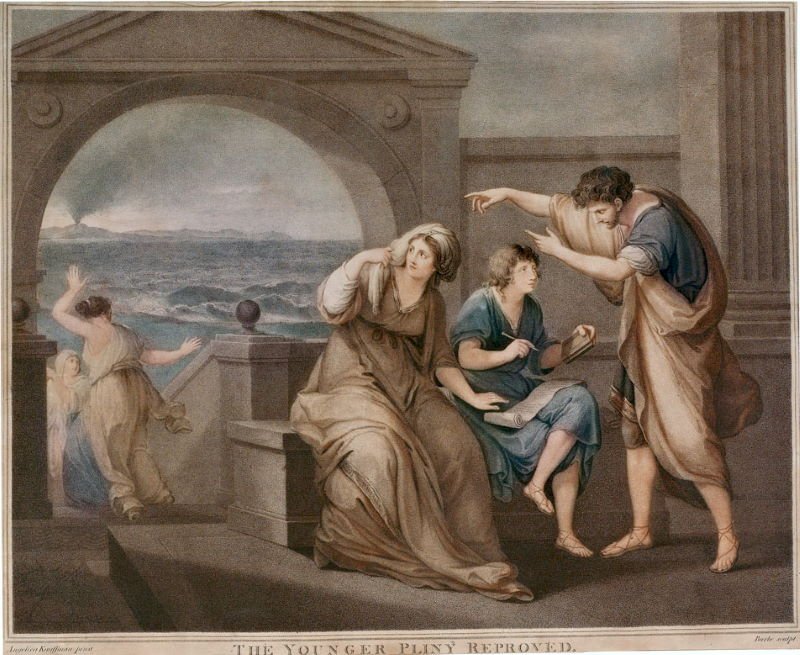
On the day of the eruption, a 17-year-old named Pliny the Younger watched it all from Misenum, on the other side of the Bay of Naples. His uncle, Pliny the Elder, author of a famous encyclopedia, the Natural History, was commander of the Roman fleet there. When he saw the strange cloud and received a call for help, he set out with ships across the bay, partly out of scientific curiosity and partly to rescue people.
He never returned. He died on the beach at Stabiae, probably from the toxic fumes. Around 25 years later, the historian Tacitus asked Pliny the Younger to describe what had happened. He wrote two letters, which are the only surviving eyewitness account of the disaster. Volcanologists still use the term “Plinian eruption” for this type of explosive eruption, in his honor.
6. Did the eruption happen in autumn?
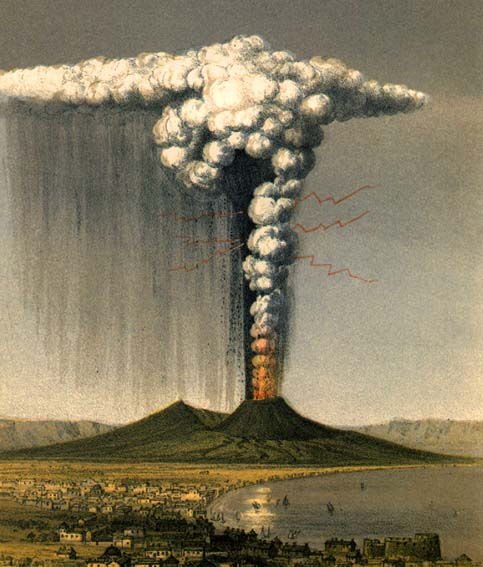
For centuries, the date of the eruption was given as 24 August 79, based on the most widely known manuscripts of Pliny’s letters. But those letters survive only in medieval copies, and the manuscripts give different dates. Archaeologists also found clues that did not fit a summer date: victims wearing warm clothing, autumn fruits such as pomegranates and walnuts, and braziers that had been in use.
In 2018, archaeologists discovered a charcoal inscription on a wall in Pompeii dated “the 16th day before the kalends of November”, which is 17 October. Because charcoal writing does not last long, it was probably written shortly before the eruption. Many researchers now believe that Vesuvius erupted around 24 October 79.
7. Pompeii was found twice, and badly damaged
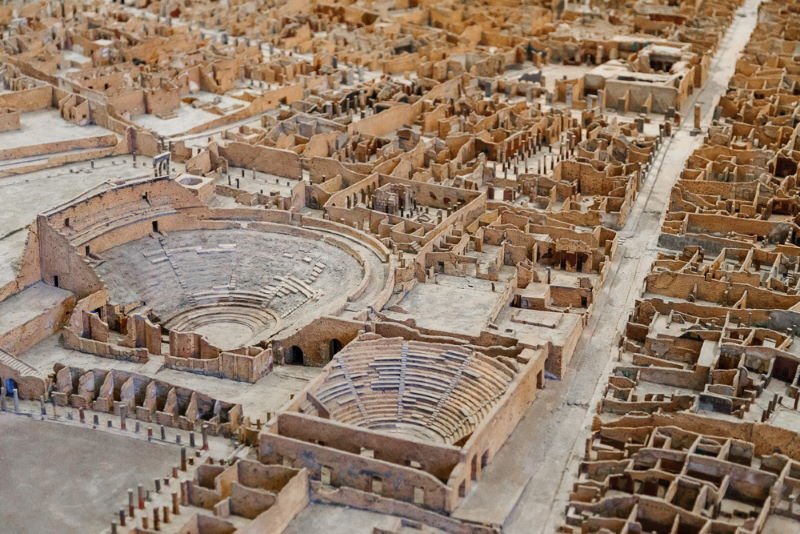
After the eruption, survivors and looters dug into the ruins to recover valuables, but the city was gradually forgotten. In the late 16th century, workers digging an underground canal ran into walls with paintings and inscriptions. Nobody realized what they had found, and the remains were covered up again.
Systematic excavations only began in 1748, ten years after work started at Herculaneum. But the first diggers were mainly treasure hunters looking for statues and paintings for the King of Naples. Shafts were dug at random, and sometimes even explosives were used, causing irreparable damage. It was not until 1763 that an inscription confirmed that the site really was Pompeii.
8. Fiorelli’s famous plaster casts
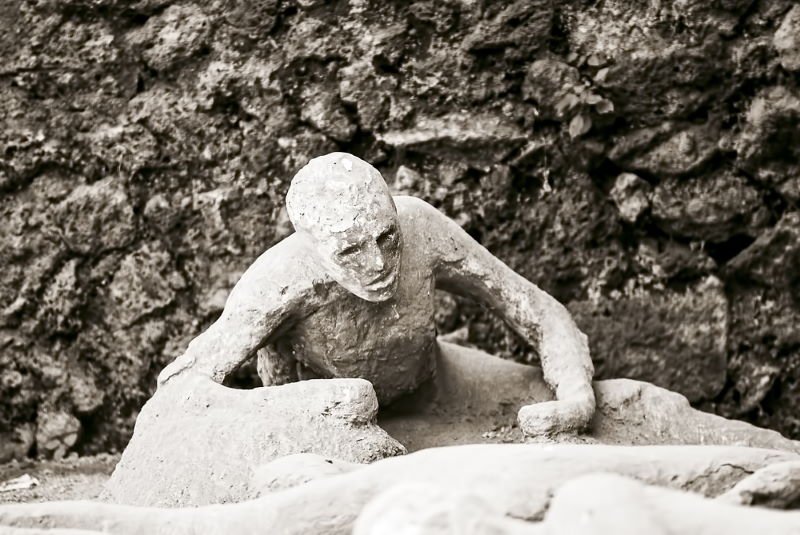
In the 1860s, the Italian archaeologist Giuseppe Fiorelli brought order to the excavations. He divided the city into regions, blocks and houses, a numbering system still used today, and introduced more careful methods.
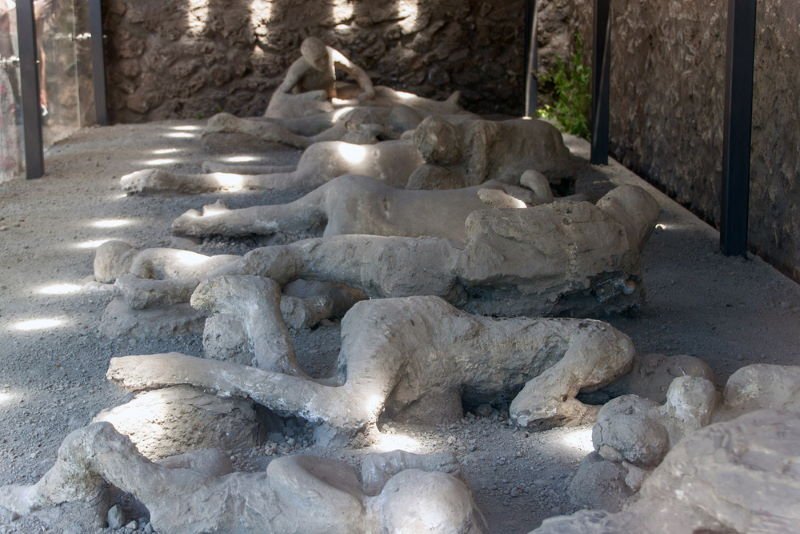
His most famous contribution was the plaster cast method. Workers regularly found hollows in the hardened ash, left by the bodies of victims that had long since decayed. Fiorelli had these hollows filled with liquid plaster, revealing the shapes of the victims in their final moments, sometimes even with the folds of their clothing and their facial expressions. DNA research published in 2024 showed that some traditional stories about the casts were wrong: an adult wearing a gold bracelet holding a child, long assumed to be a mother, turned out to be an unrelated man.
9. A unique window into everyday Roman life
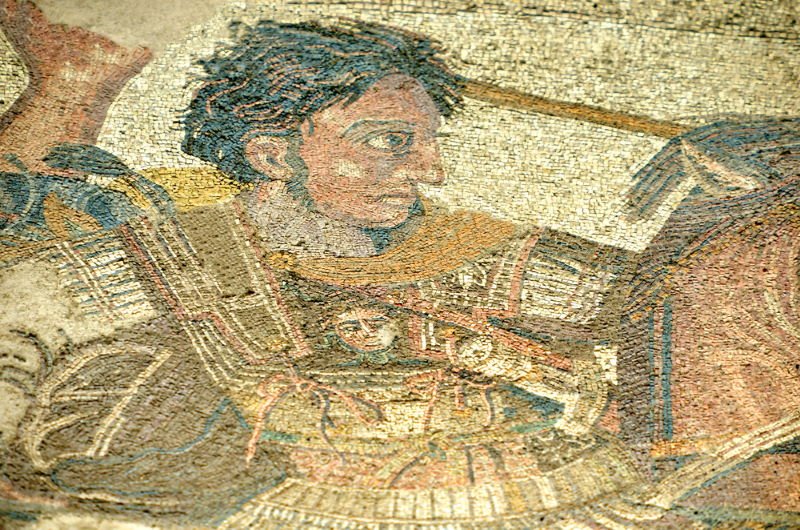
Pompeii contains magnificent villas, frescoes and mosaics, such as the famous Alexander Mosaic, made of more than a million tiny stones. But for historians, its greatest treasure is the detail it reveals about everyday life. Ordinary people rarely appear in history books, but in Pompeii, life stopped in its tracks: loaves of bread were found still in the ovens.
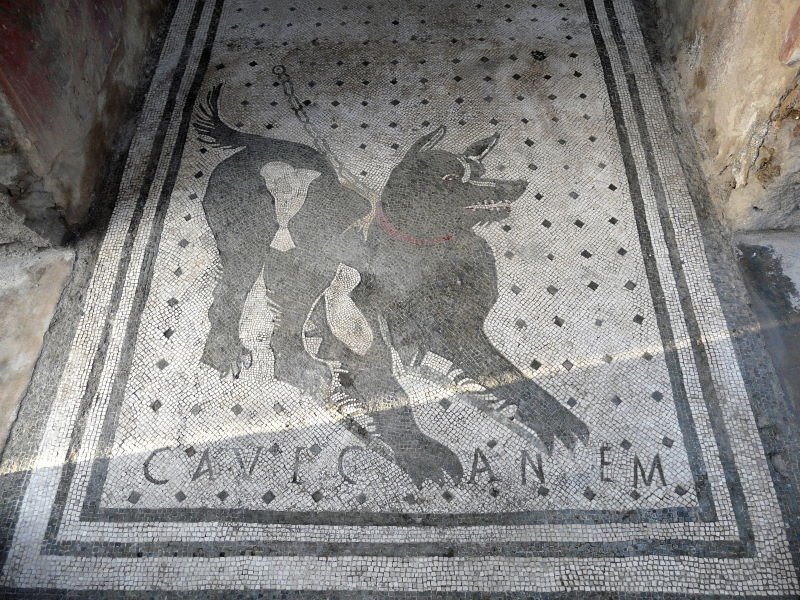
Floor mosaics warn “cave canem”, beware of the dog. Deep ruts in the streets show the traffic of carts, and high stepping stones allowed people to cross without stepping in the dirt. And the walls are covered with graffiti: election slogans, advertisements for gladiator games, love declarations, insults and jokes. One reads, roughly translated: “We were here, the two of us, friends forever. If you want to know our names: Gaius and Aulus.” It shows that the Romans were not so different from us.
10. Pompeii is still in danger
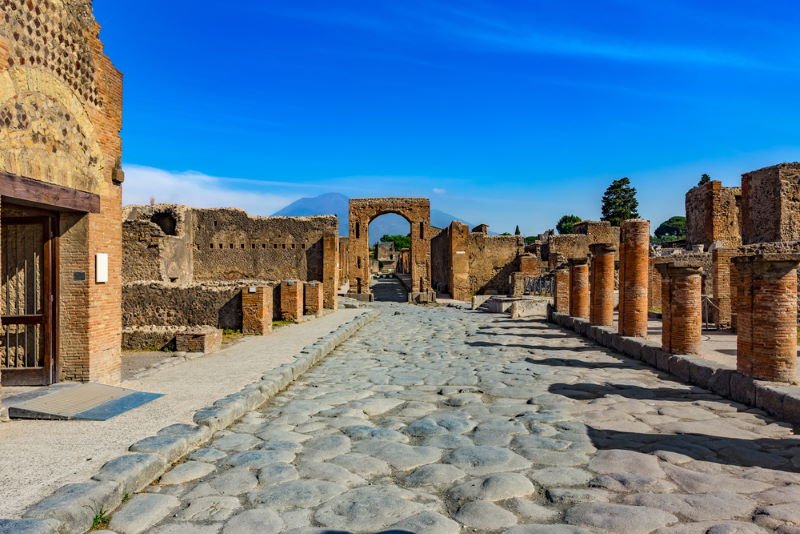
The question is not whether Vesuvius will erupt again, but when. Its last eruption was in March 1944, during the Second World War, when it destroyed dozens of American B-25 bombers at a nearby airfield. Today, around 600,000 to 700,000 people live in the “red zone” around the volcano, which would have to be evacuated in an emergency. That is why Vesuvius is constantly monitored by the Vesuvius Observatory, founded in 1841 and the oldest volcano observatory in the world.
The ancient city itself also faces threats: weather, vegetation, mass tourism, theft and decades of poor management. In 2010, the collapse of the House of the Gladiators shocked the world. Since then, a large restoration program, partly funded by the European Union, has turned things around, and new excavations keep producing spectacular finds. And every year, tourists send back stolen souvenirs, often with letters claiming that the stones brought them bad luck.