Alchemy was an ancient practice that combined early science, philosophy and spirituality. Alchemists tried to turn ordinary metals into gold, searched for an elixir of eternal life and dreamed of perfecting both matter and the soul. They never found what they were looking for, but along the way they laid some of the foundations of modern chemistry.
These are ten fascinating facts about alchemy.
1. It began in Greco-Roman Egypt

Western alchemy has its roots in Egypt in the first centuries AD, when the country was part of the Greek-speaking Roman world. Alexandria was the center of learning, where Egyptian metalworking crafts met Greek philosophy. One of the earliest known alchemists whose writings survive is Zosimos of Panopolis, who lived around 300 AD. The word “alchemy” itself comes via Arabic, from al-kimiya, and is related to our word “chemistry”.
2. The goal was the Magnum Opus
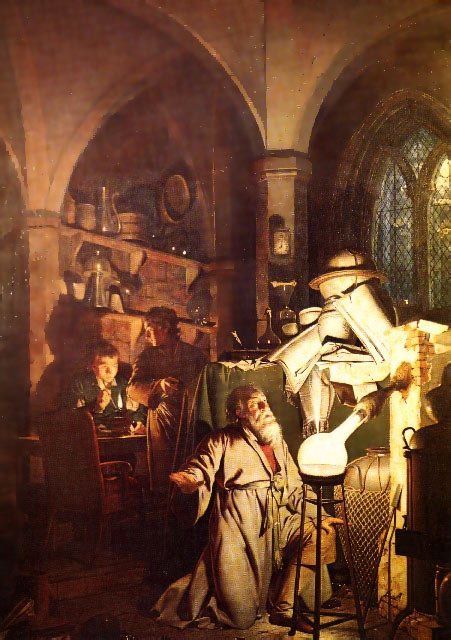
The Magnum Opus, or “Great Work”, was the ultimate goal of many alchemists: creating the Philosopher’s Stone, a substance that could turn base metals such as lead into gold and, according to some, grant eternal life. The process was described in stages named after colors, such as nigredo (blackening), albedo (whitening) and rubedo (reddening), and involved chemical operations such as calcination, dissolution, distillation and coagulation.
3. “Hermetically sealed” comes from alchemy

Alchemists honored the legendary Hermes Trismegistus, “Thrice-Great Hermes”, as the father of their art. He was a mythical blend of the Greek god Hermes and the Egyptian god Thoth, and many texts were attributed to him. The most famous is the Emerald Tablet, with its well-known line “as above, so below”. Because alchemists sealed their glass vessels airtight in the name of Hermes, we still speak of something being “hermetically sealed” today.
4. Alchemy paved the way for chemistry
Although alchemy is often seen as mystical nonsense, it played an important role in the development of chemistry. Alchemists were among the first to work systematically in laboratories. They developed and improved equipment and techniques such as distillation, sublimation and crystallization. Medieval Islamic scholars associated with the name Jabir ibn Hayyan described many substances and processes, and Persian scholar al-Razi classified chemicals into groups. Even Robert Boyle, one of the founders of modern chemistry in the 17th century, practiced alchemy.
5. Isaac Newton was an alchemist
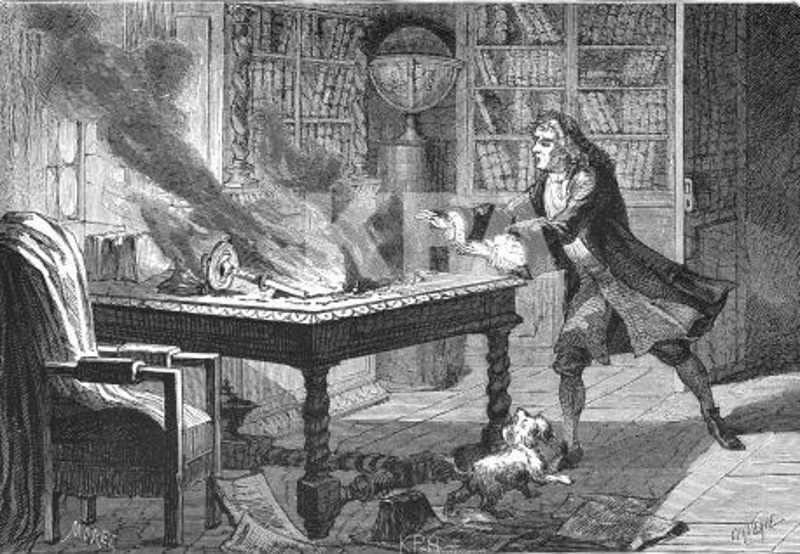
Sir Isaac Newton, one of the greatest scientists in history, spent decades secretly studying alchemy. He wrote more than a million words on the subject, far more than on physics or mathematics, and carried out countless experiments in search of the Philosopher’s Stone. When economist John Maynard Keynes bought a large collection of Newton’s papers in 1936, he was so surprised that he called Newton “not the first of the age of reason” but “the last of the magicians”.
6. Alchemy shaped medicine
In the 16th century, the Swiss physician Paracelsus turned alchemy towards medicine. He argued that alchemists should stop chasing gold and instead produce medicines from minerals and chemicals. He rejected the ancient theory of the four humors and introduced substances such as mercury, sulfur and antimony into medicine, sometimes with dangerous results. His famous principle that “the dose makes the poison” is still a basic rule of toxicology. Alchemists were also among the first to distill strong alcohol, which they called aqua vitae, the “water of life”.
7. The search for eternal life
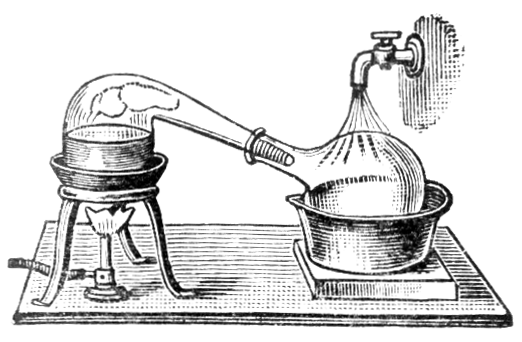
Besides turning lead into gold, many alchemists searched for the elixir of life, a substance that would grant eternal youth or immortality. In China, alchemists pursued the same dream with dangerous results: several Chinese emperors are believed to have died after taking “elixirs of immortality” containing mercury and other toxic substances.
8. Alchemy lives on in esoteric traditions
Alchemical symbols and ideas were adopted by Western esoteric movements, such as the Rosicrucians in the 17th century, who presented themselves as a secret brotherhood of wise men. Some of their symbolism later found its way into Freemasonry. In these traditions, alchemy was seen less as a chemical project and more as a metaphor for the spiritual transformation of a person.
9. There were famous female alchemists
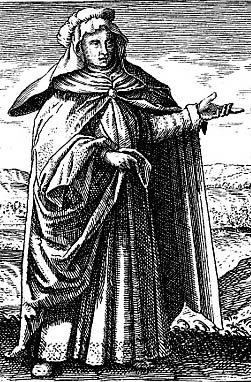
Alchemy is often associated with bearded men, but some of the earliest alchemists were women. Mary the Jewess, who probably lived in Alexandria in the first centuries AD, is credited with inventing several pieces of laboratory equipment, including a type of distillation apparatus and the water bath. That is why the French still call a water bath a “bain-marie”, Mary’s bath. Another early female alchemist was known as Cleopatra the Alchemist, not to be confused with the famous queen.
10. Scientists have actually turned lead into gold
The alchemists’ dream has, in a way, come true. In 2025, physicists at CERN’s Large Hadron Collider reported that near-miss collisions between lead nuclei had briefly knocked out protons and created gold nuclei, in amounts far too tiny to see, and they fell apart almost immediately. Earlier experiments had done the same in particle accelerators. It works, but it costs far more than the gold is worth. Meanwhile, alchemy lives on in popular culture, from Harry Potter and the Philosopher’s Stone, which features the real medieval figure Nicolas Flamel, to Paulo Coelho’s novel The Alchemist and the anime Fullmetal Alchemist.