For centuries, a witch was seen as someone who worked with evil powers or made a pact with the devil. The idea of witchcraft is ancient, but the great waves of persecution we now associate with witch hunts mainly took place in the early modern period, roughly from the 15th to the 18th century. Both church and secular courts were involved, and punishments ranged from hanging to beheading and burning.
Historians estimate that around 100,000 people were prosecuted for witchcraft in Europe and its colonies, and that roughly 40,000 to 60,000 were executed. Most were women, but certainly not all. These are ten famous “witches” from history, including a few whose stories are mostly legend.
10. Catherine “La Voisin” Monvoisin
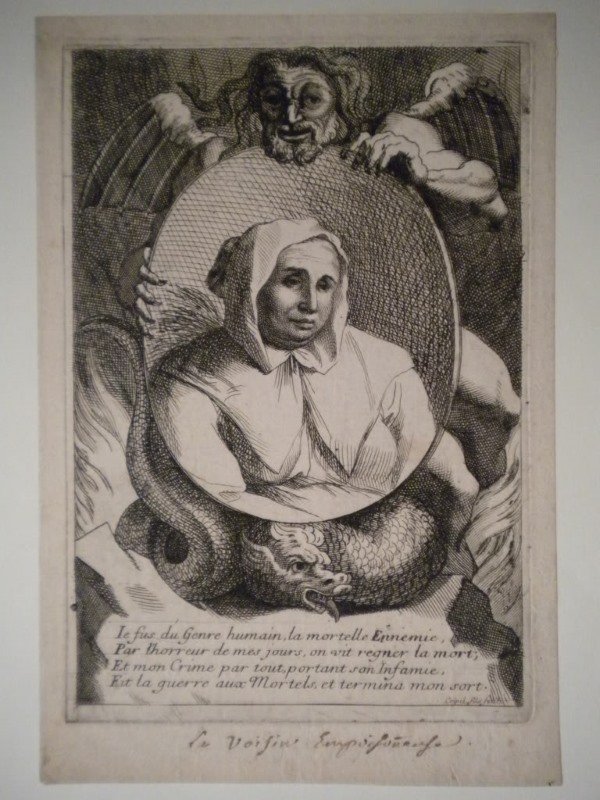
Catherine Monvoisin, better known as La Voisin, was a notorious fortune teller in 17th-century Paris who sold love potions, “inheritance powders” (in other words, poison) and other forbidden services. She ended up at the center of a huge scandal known as the Affair of the Poisons, in which members of the French aristocracy, and even a mistress of King Louis XIV, were implicated.
The investigation produced stories of black masses and even child sacrifices, but many of these claims came from testimony under pressure and are hard to verify. What is certain is that La Voisin was arrested in 1679, sentenced to death and burned in Paris on 22 February 1680.
9. Agnes Sampson

Agnes Sampson was a Scottish midwife and healer and one of the best-known suspects in the North Berwick witch trials of 1590 and 1591. The trials were fueled by the paranoia of King James VI of Scotland, who believed that witches had raised storms to sink the ship carrying him and his bride, Anne of Denmark.
Sampson was brutally tortured until she confessed, which was often all the “proof” needed at the time. She was strangled and then burned on Castlehill in Edinburgh in January 1591. King James was so obsessed with witchcraft that he later wrote a book about it, Daemonologie.
8. Alice Kyteler

Alice Kyteler is often called the first major witchcraft case in Ireland. She was wealthy, had been married four times and had made enemies at a time when jealousy, money and religious power formed a toxic mix. In 1324, in Kilkenny, she was accused of poisoning her husbands, heresy and demonic rituals.
Kyteler managed to escape, probably to England, before she could be punished, and what happened to her afterwards is unknown. Her maid, Petronella de Meath, was less fortunate. She was tortured and burned at the stake, and is often named as the first person in Ireland to be burned for witchcraft.
7. Angèle de la Barthe
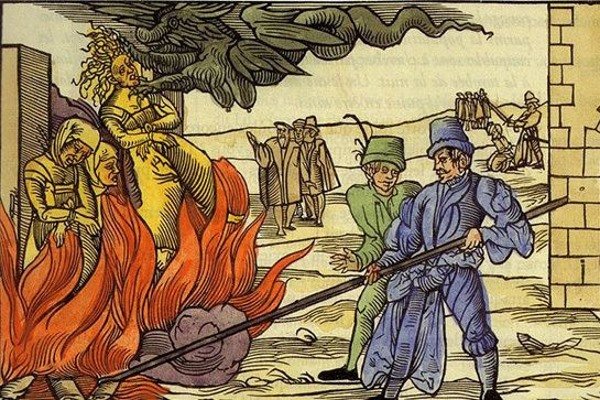
The story of Angèle de la Barthe is infamous, but most likely invented. According to the legend, she was a noblewoman from Toulouse who had the devil as her lover and gave birth to a monstrous child that ate babies, and she was burned in 1275. It sounds like pure medieval horror, and that is exactly the problem.
Modern historians have shown that there are no reliable court records from 1275 to support the story. It only appears in much later, sensational texts. In short, Angèle is a famous witch story, but almost certainly not a historical witch.
6. Merga Bien
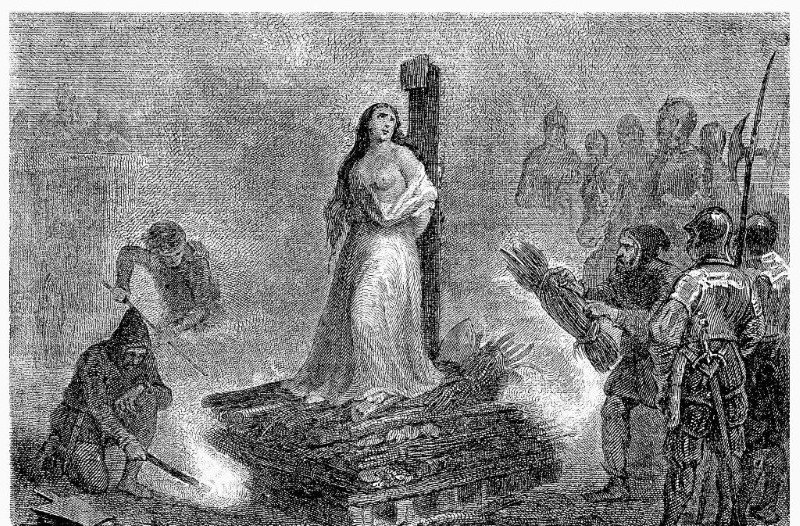
Merga Bien became the best-known victim of the Fulda witch trials in Germany between 1603 and 1606. The persecution was driven by Prince-Abbot Balthasar von Dernbach and is estimated to have cost around 250 lives.
Merga was wealthy, having inherited from previous husbands, which quickly made her a target. Under interrogation and torture, she was forced to “confess” to killing family members, attending witches’ sabbaths and even being pregnant by the devil. She was condemned and burned at the stake in 1603.
5. Mother Shipton

Mother Shipton, often identified as Ursula Southeil, is mainly a figure of English folklore: a legendary prophetess from Yorkshire who supposedly predicted disasters and great events. The catch is that the famous “biographies” and prophecies attributed to her only appeared many decades after her supposed death in the 16th century, and some were later admitted to be fabrications.
It is safer to see her as a legendary figure built up from gossip, pamphlets and tall tales. Her supposed home, a cave in Knaresborough, is still a tourist attraction today.
4. Märet Jonsdotter

Märet Jonsdotter was one of the best-known victims of the great Swedish witch panic known as Det stora oväsendet, “the great noise”, which lasted from around 1668 to 1676. She was accused of taking children on flights to Blåkulla, a mythical place where the devil supposedly held his sabbaths.
Shockingly, testimony from children played a huge role in these trials. Jonsdotter denied the accusations to the end, but was convicted anyway and executed in 1672. In Sweden, the condemned were usually beheaded and then burned.
3. Marie Laveau
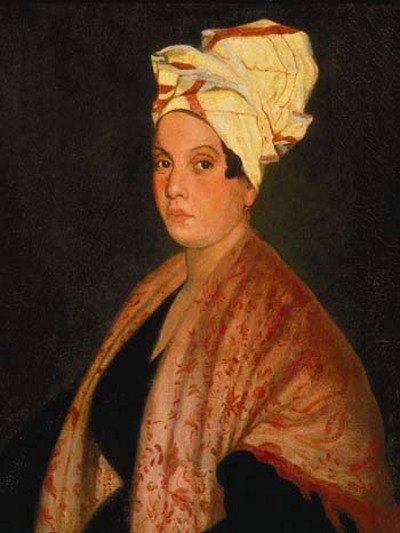
Marie Laveau was not a witch in the classic European sense, but a Voodoo practitioner, herbalist and healer who became famous in 19th-century New Orleans as the “Voodoo Queen”. Like many legends, her life is a mix of fact and myth.
She was probably born around 1801 and died in 1881. Public rituals on St. John’s Eve on the shores of Lake Pontchartrain were linked to her name, and some accounts claim that thousands of people attended. Her tomb in St. Louis Cemetery No. 1 is still one of the most visited graves in the United States.
2. Agnes Waterhouse

Agnes Waterhouse was one of the first women executed for witchcraft in England. She was tried in Chelmsford in 1566, and the trial featured a “familiar”: a cat called Sathan, which she supposedly later turned into a toad. Such animal helpers of the devil became a recurring feature of English witch trials.
She was accused of causing illness and death and harming livestock, found guilty and hanged in July 1566. Her case became famous because it was spread through pamphlets, which helped shape the image of the witch in England for generations.
1. The Salem witch trials

Salem, Massachusetts, is the textbook example of mass hysteria. In 1692 and 1693, more than 200 people were accused of witchcraft. Nineteen were hanged, and Giles Corey was pressed to death with heavy stones because he refused to enter a plea. Several others died in prison.
The process of setting things right took centuries. As early as 1711, the colony reversed the convictions of many of the accused and paid compensation to their families. Further symbolic exonerations followed in 1957 and 2001, and in 2022, Elizabeth Johnson Jr. became the last convicted “witch” of Salem to be officially cleared.