Artifacts give us a glimpse into our shared human history. They are objects made by human hands that reflect the culture, art, technology and beliefs of different civilizations. From a weathered stone that unlocked Egyptian hieroglyphs to a clay army built to protect an emperor in the afterlife, these are ten of the most famous artifacts in the world.
1. The Rosetta Stone
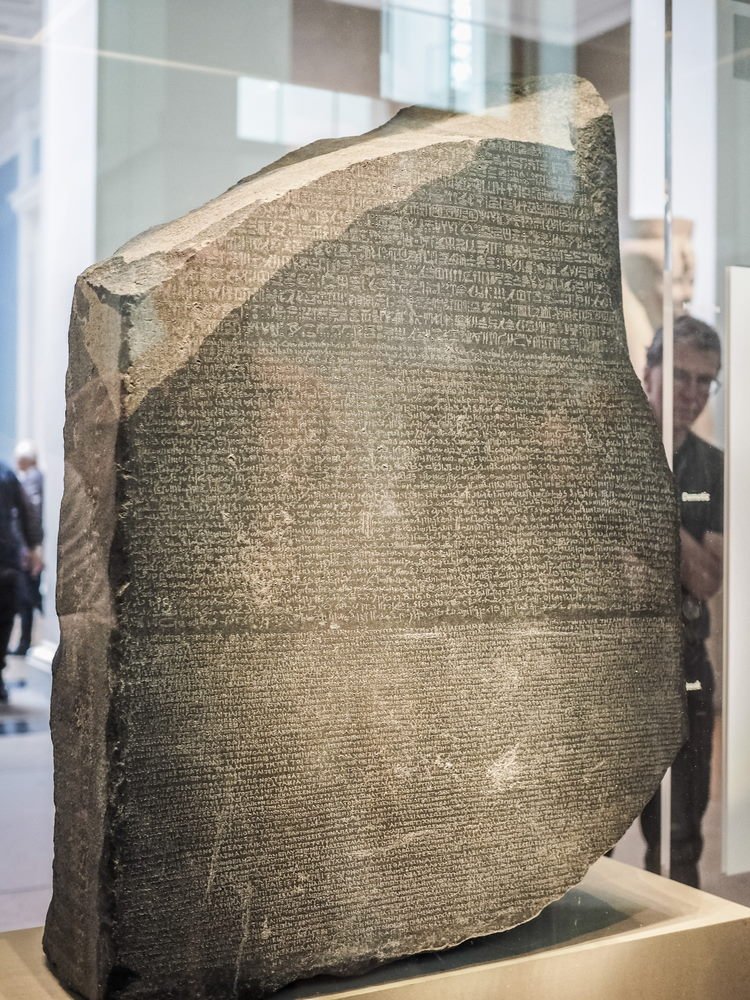
The Rosetta Stone was found in 1799 by French soldiers in Egypt. It carries the same decree, issued in 196 BC, in three scripts: Egyptian hieroglyphs, Demotic and ancient Greek. Because scholars could read the Greek, the stone became the key to deciphering hieroglyphs, a breakthrough finally achieved by Jean-François Champollion in 1822. After the British defeated the French in Egypt, the stone was taken to London, and it has been in the British Museum since 1802.
2. The Terracotta Army
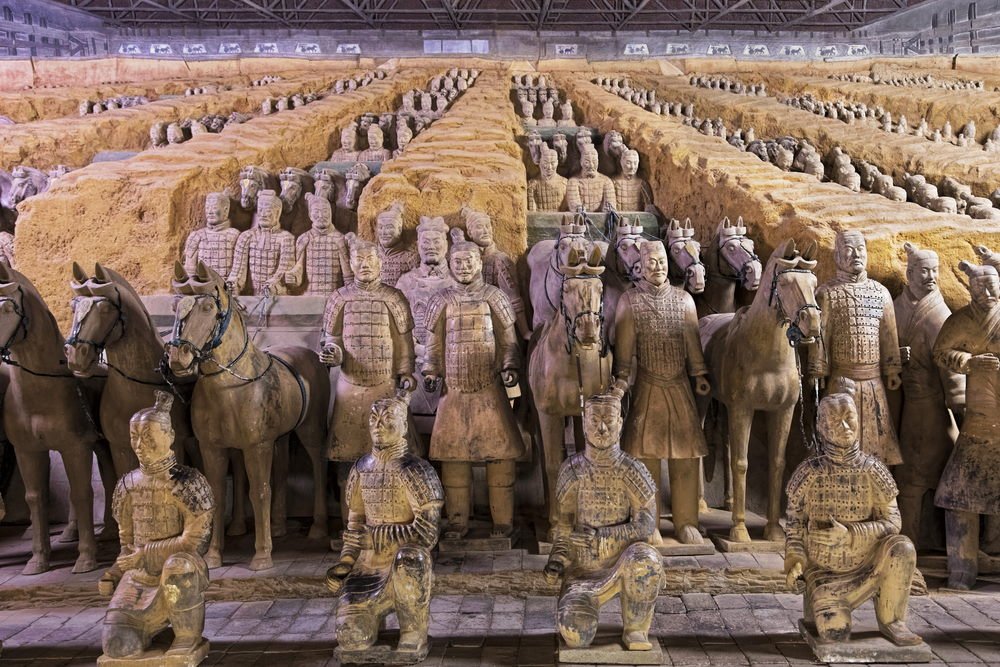
In 1974, farmers digging a well near Xi’an in China discovered fragments of clay figures. It turned out to be the Terracotta Army: thousands of life-size soldiers, horses and chariots, made to guard the tomb of Qin Shi Huang, the first emperor of China, in the afterlife.
Every face looks different, which was long seen as proof that each soldier was a portrait of a real person. Research suggests the makers worked with a limited number of molds for faces, heads and bodies, which were combined in many ways and then finished by hand. Either way, it shows an astonishing scale of production and organization more than 2,200 years ago. The emperor’s own tomb has still not been opened.
3. The Shroud of Turin
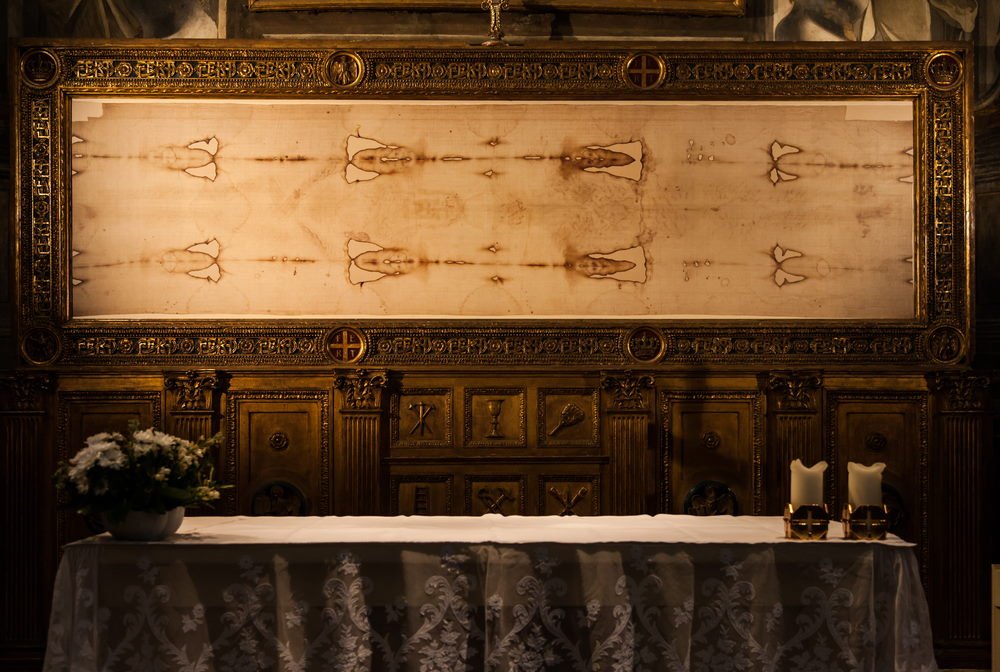
The Shroud of Turin, kept in the cathedral of Turin in Italy, is a linen cloth bearing the faint image of a man who appears to have been crucified. Some believe it is the burial cloth of Jesus of Nazareth, while others see it as a medieval creation.
In 1988, three independent laboratories used radiocarbon dating to date the cloth to between 1260 and 1390 AD. Supporters of its authenticity dispute the result, arguing that the sample may have come from a later repair. Most scientists accept the medieval date, but the shroud remains one of the most studied and debated objects in the world.
4. The Dead Sea Scrolls
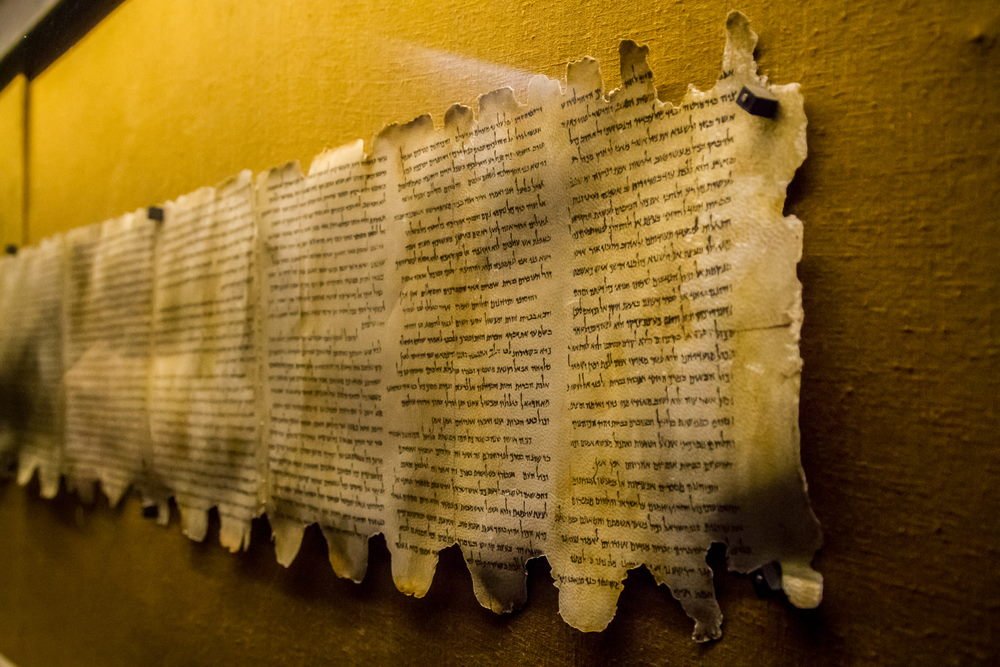
In 1947, Bedouin shepherds discovered ancient scrolls in caves near Qumran, close to the Dead Sea. Over the following years, around 900 manuscripts were found, in thousands of fragments. They include the oldest known copies of books of the Hebrew Bible, around a thousand years older than the previously known manuscripts, as well as other religious and everyday texts from around the beginning of our era. Many of them are now kept in the Shrine of the Book at the Israel Museum in Jerusalem.
5. The bust of Nefertiti
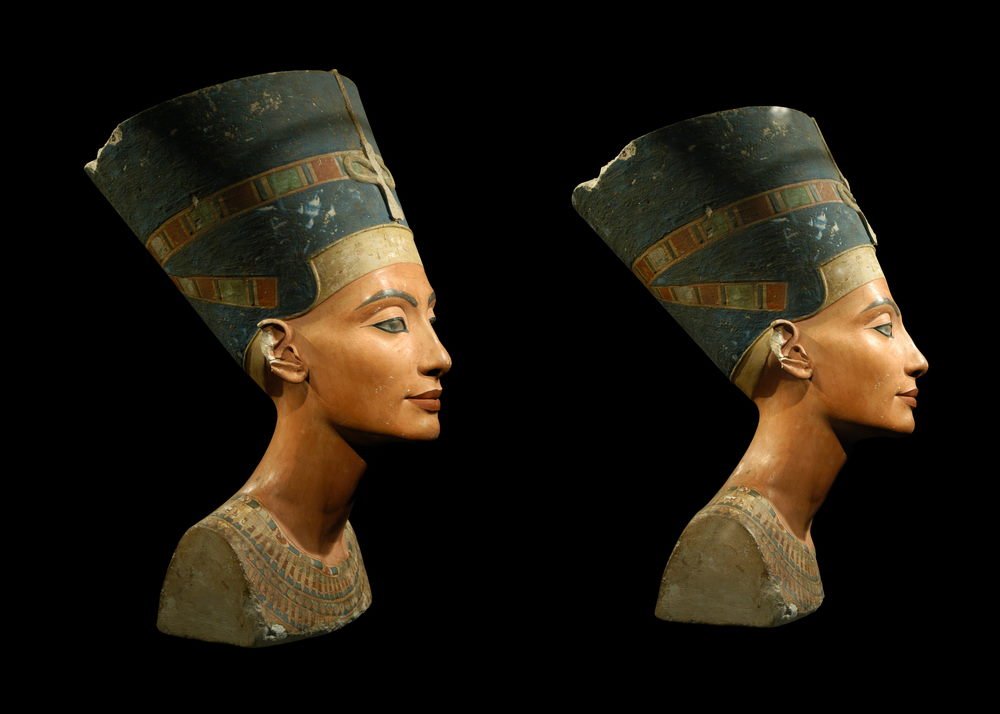
The bust of Nefertiti was found in 1912 by a German expedition in the workshop of the sculptor Thutmose in Amarna, Egypt. Made around 1345 BC, it shows the famous Egyptian queen, wife of Pharaoh Akhenaten, and is one of the most copied works of ancient art.
Strangely, the left eye is missing, which has led to speculation that the bust was a model for other sculptors. Since 1913, it has been in Germany and is now the star attraction of the Neues Museum in Berlin, much to the frustration of Egypt, which has asked for its return for decades.
6. The golden mask of Tutankhamun
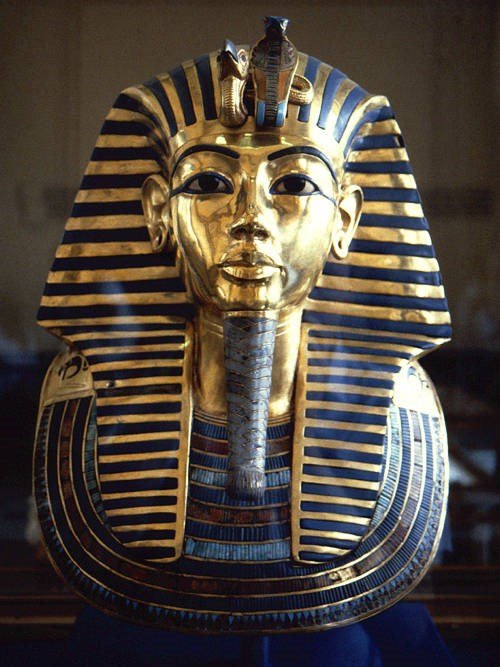
Archaeologist Howard Carter discovered the tomb of the young pharaoh Tutankhamun in the Valley of the Kings in 1922. The funerary mask, found in 1925 on the mummy itself, is made of more than 10 kilograms of gold, inlaid with lapis lazuli, quartz and colored glass. It was meant to protect the king in the afterlife.
Unlike most royal tombs, Tutankhamun’s was found largely intact, with more than 5,000 objects. That makes it one of the most important discoveries in the history of archaeology. The mask itself has become a symbol of ancient Egypt and almost never leaves the country.
7. The Venus of Willendorf
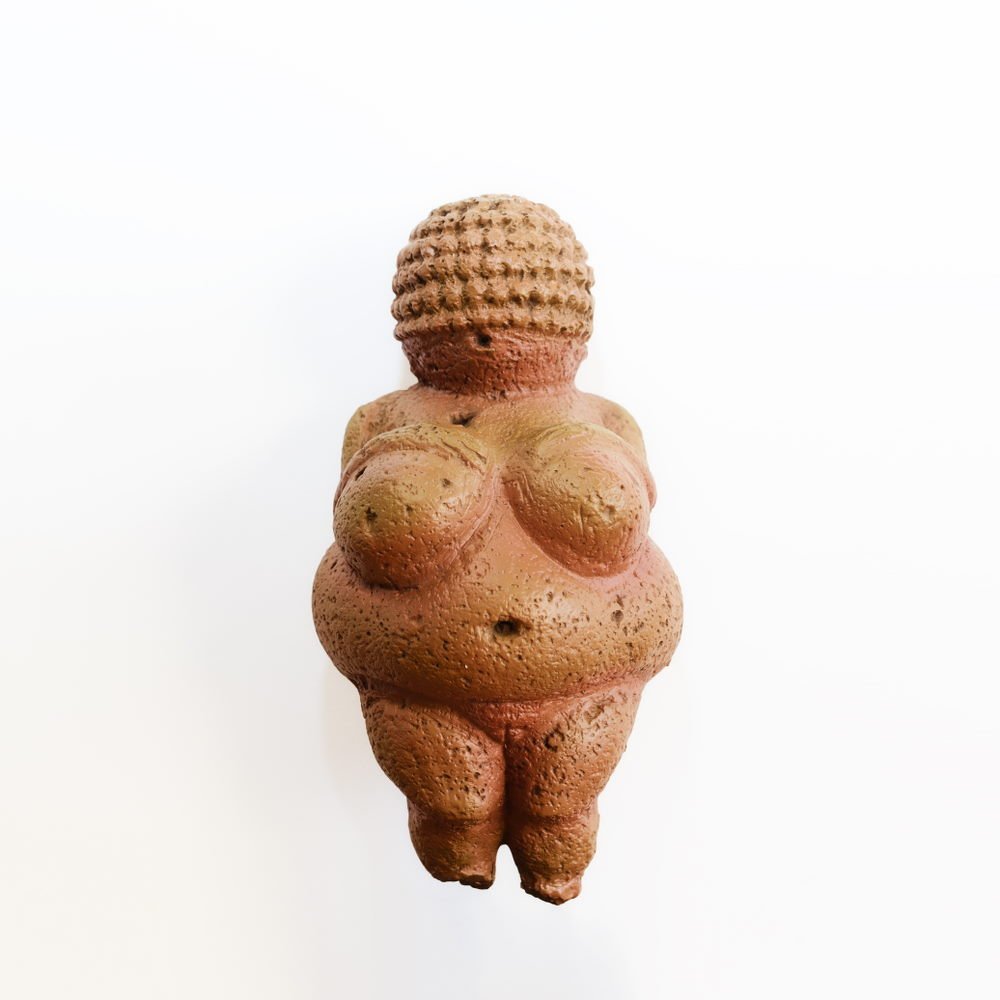
The Venus of Willendorf is one of the oldest known figurines in the world, about 30,000 years old. It was found in 1908 near the village of Willendorf in Austria and is only 11 centimeters tall. It is made of a type of limestone that does not occur locally; a study in 2022 suggested the stone may have come from northern Italy, hundreds of kilometers away.
The figure shows a woman with exaggerated breasts, belly and hips, which may point to a link with fertility. Her face is covered by what may be braided hair or a headdress. The name “Venus”, after the Roman goddess of love, is a modern addition: we have no idea what its makers called it.
8. The Olmec colossal heads
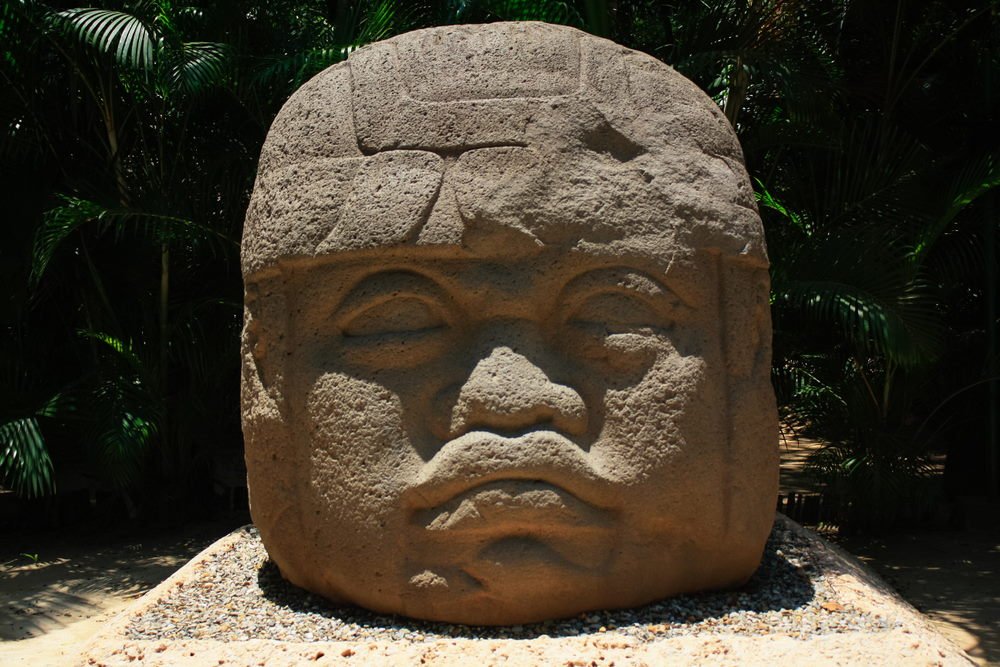
Among the most famous legacies of the Olmec civilization of Mexico, one of the earliest in the Americas, are its colossal stone heads. Seventeen are known. The largest are more than three meters tall and weigh many tons, and they are believed to be portraits of powerful Olmec rulers.
Each head was carved from a single block of basalt, which was quarried in mountains dozens of kilometers away. That shows that the Olmecs, around 3,000 years ago, already had sophisticated ways of transporting and working huge stones, long before the Maya civilization reached its height.
9. Stonehenge
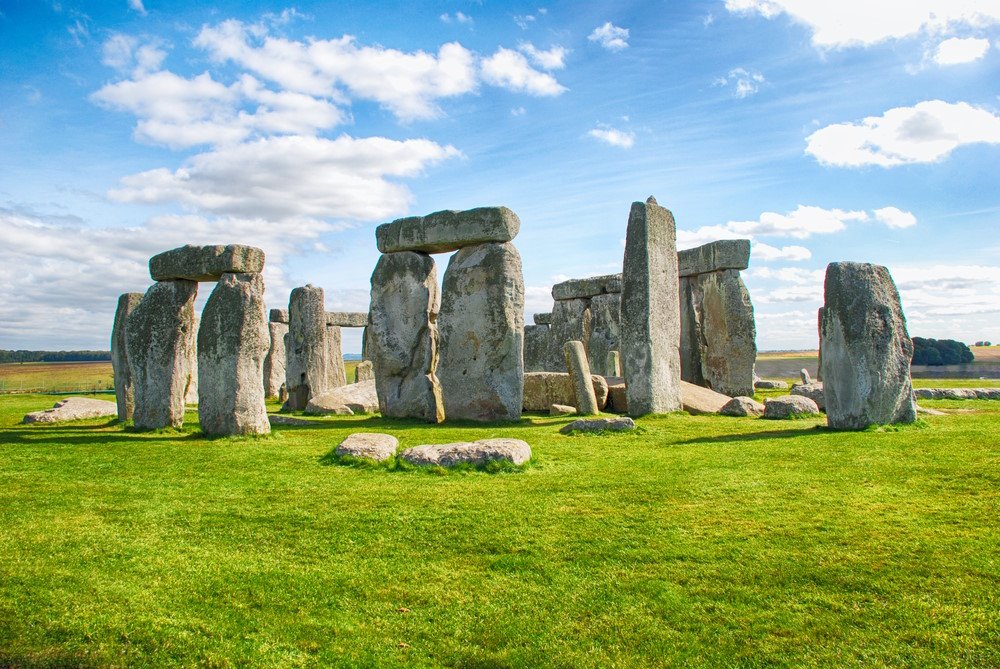
Stonehenge is a prehistoric monument in southern England, a circle of standing stones built in several phases between about 3000 and 1500 BC. Despite extensive research, its exact purpose remains partly a mystery, although it is clearly aligned with the sunrise at the summer solstice and the sunset at the winter solstice.
A study in 2024 shed surprising new light on where the stones came from. The central Altar Stone, long assumed to come from Wales, turned out to come from northeastern Scotland, more than 700 kilometers away. How the builders transported a six-ton stone over such a distance is still a puzzle.
10. The moai of Easter Island
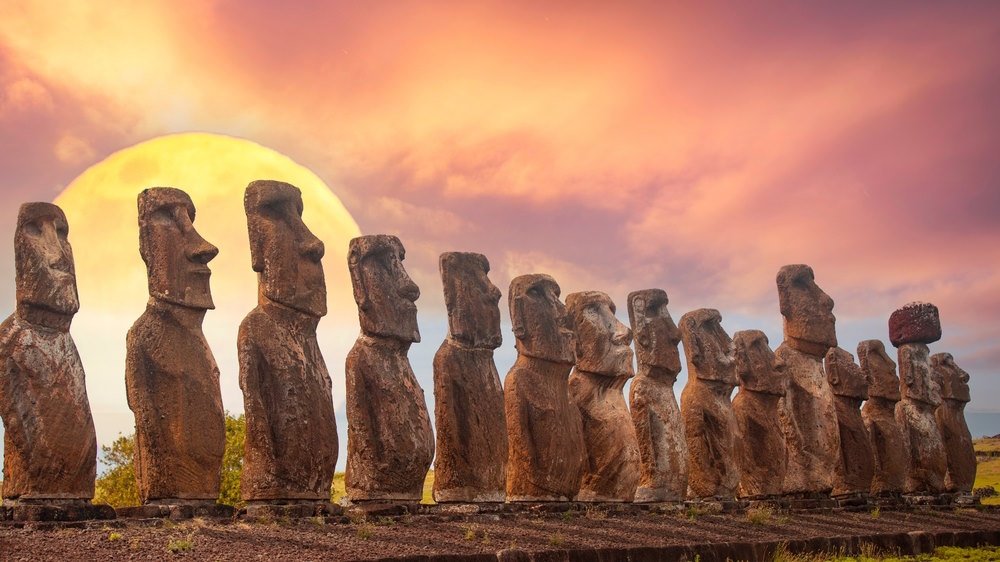
The giant stone statues of Easter Island, or Rapa Nui, known as moai, are among the most impressive examples of monolithic sculpture in the world. Nearly 1,000 of them were carved by the Rapa Nui people, probably to honor their deified ancestors.
What many people do not realize is that most of the famous “heads” actually have bodies. On the slopes of the quarry, many statues were buried up to their shoulders by centuries of soil and erosion. Excavations revealed full figures beneath, some with carvings on their backs.