Many people have heard of the Knights Templar, for example from The Da Vinci Code by Dan Brown, but few know exactly what role these knights played in history. The Templars were one of the first military religious orders, founded during the period of the Crusades. They were recognizable by their white mantle with a red cross. Originally, they were a small group of knights who protected Christian pilgrims in Jerusalem. Within two centuries, they had grown into one of the most powerful and wealthy organizations in Europe, which eventually led to their downfall. These are ten facts about the Knights Templar.
1. They were warrior monks
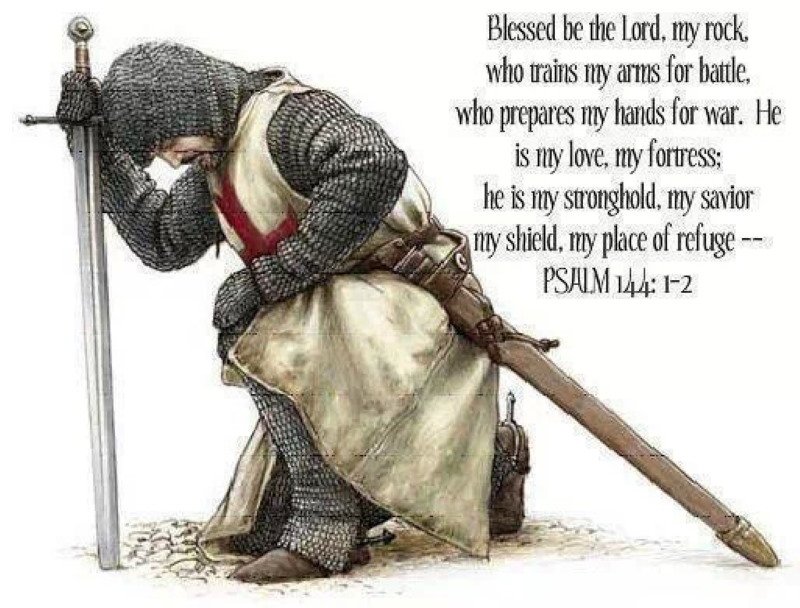
The Templars were knights who took religious vows. Many came from noble families, but when they joined the order, they swore vows of poverty, chastity and obedience, and handed over their personal possessions. In effect, they were fighting monks, dedicated to defending Christianity and protecting pilgrims.
Only a minority of the members were actual knights. Most were sergeants, squires, servants and other support staff who managed the order’s farms, estates and finances across Europe.
2. They were feared on the battlefield
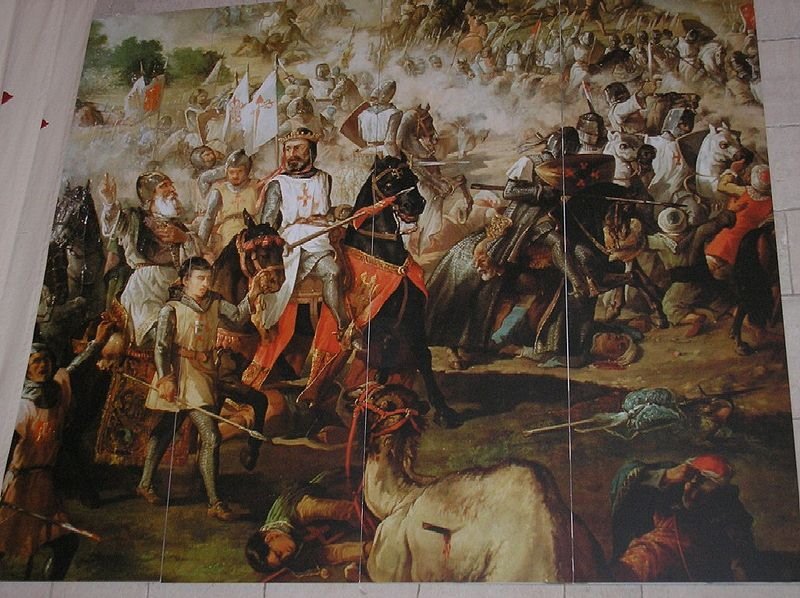
The Templars were determined fighters who believed that dying in battle against the enemies of Christianity would take them straight to heaven. According to their rules, they were not allowed to retreat unless they were outnumbered by at least three to one, and even then only with permission. Because the order was rich, its knights had the best weapons and horses of the time. They formed an elite force, often deployed at the most dangerous positions in battle.
3. Their name comes from the Temple of Solomon
The order was founded around 1119 or 1120 by the French knight Hugues de Payens and a handful of companions. The King of Jerusalem gave them a headquarters on the Temple Mount, in a wing of the royal palace in the Al-Aqsa Mosque, which the Crusaders believed was built on the site of the ancient Temple of Solomon. That is where the order’s full name came from: the Poor Fellow-Soldiers of Christ and of the Temple of Solomon.
Legends claim the knights excavated beneath the Temple Mount in search of treasures such as the Ark of the Covenant or the Holy Grail. There is no historical evidence of this, but the story inspired many novels and films, including The Da Vinci Code.
4. They were officially recognized by the Church in 1129
In 1129, the order was officially recognized by the Church at the Council of Troyes, partly thanks to the support of the influential abbot Bernard of Clairvaux. The Templars originally wore simple white robes as a symbol of purity. Around 1147, Pope Eugenius III allowed them to wear a red cross on their mantles, a symbol of martyrdom. A papal bull also made them answerable only to the pope, exempting them from taxes and the authority of local bishops and kings.
5. They were Europe’s first international bankers
The Templars received countless donations of land and money from nobles and kings. At their peak, they owned hundreds of estates, farms, castles and churches across Europe and the Middle East. With all that wealth, they began to act as bankers: they lent money to kings, including the King of France, and managed the treasure of nobles and merchants.
They also introduced an early form of the bank check. A pilgrim could deposit money at a Templar house in Europe, receive a letter of credit and exchange it for money in the Holy Land, without having to carry gold on the dangerous journey. The order charged a fee for this service.
6. Their downfall began on Friday 13 October 1307
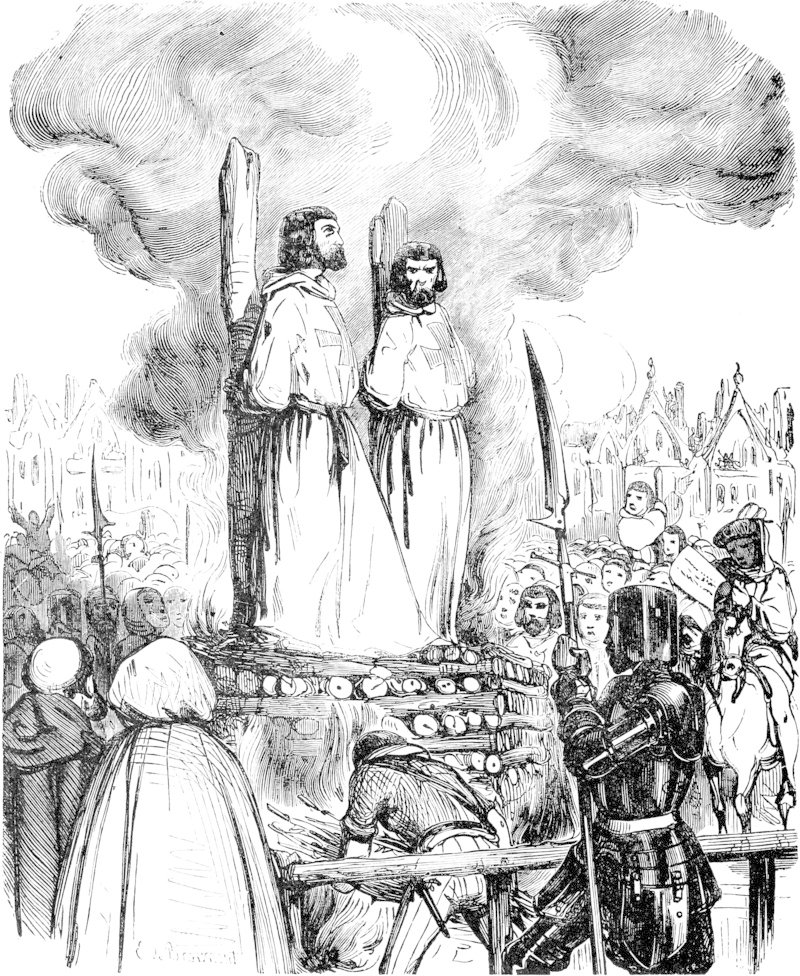
After the fall of Acre in 1291, the last Crusader stronghold in the Holy Land, the Templars lost their original purpose and moved their headquarters to Cyprus. Meanwhile, King Philip IV of France was deeply in debt, including to the Templars, and was jealous of their wealth and independence.
At dawn on Friday 13 October 1307, Philip had all Templars in France arrested at the same time. They were accused of heresy, idolatry and obscene rituals. Under torture, many confessed. Pope Clement V, under heavy pressure from the king, dissolved the order in 1312. The last grand master, Jacques de Molay, withdrew his confession and was burned at the stake in Paris in March 1314. According to legend, he summoned the pope and the king to appear before God within a year. Both died within months.
7. The pope had actually absolved them
In 2001, a researcher in the Vatican archives rediscovered a long-lost document, the Chinon Parchment. It shows that Pope Clement V had secretly absolved the leaders of the Templars of the charge of heresy in 1308. He dissolved the order anyway, probably to avoid a conflict with the French king. The Vatican published the document in 2007. Most historians now agree that the accusations against the Templars were largely invented.
8. Friday the 13th: a myth
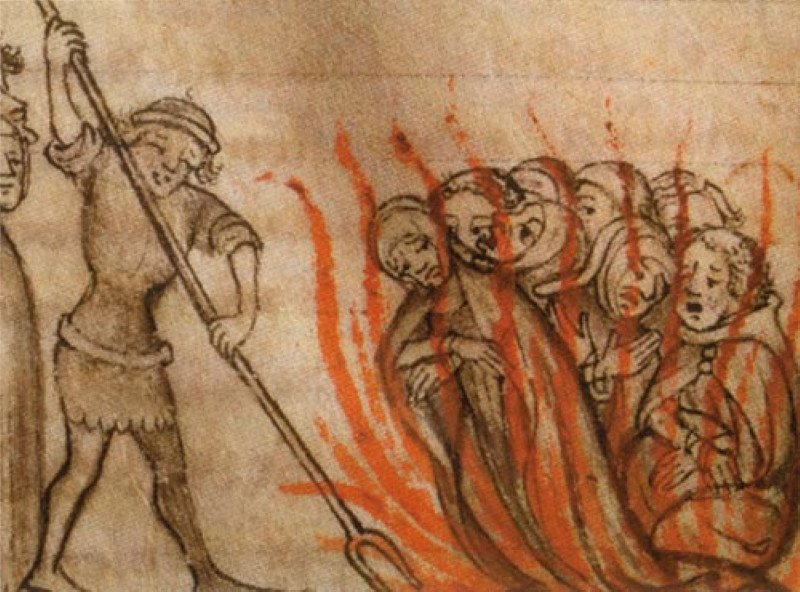
It is often claimed that the superstition about Friday the 13th as an unlucky day goes back to the arrest of the Templars on Friday 13 October 1307. It is a good story, but historians have found no evidence for it. The idea of Friday the 13th as a particularly unlucky day only appears in the 19th century, and the link to the Templars was mainly popularized in the 20th century by novels such as The Da Vinci Code.
9. Did they secretly survive?
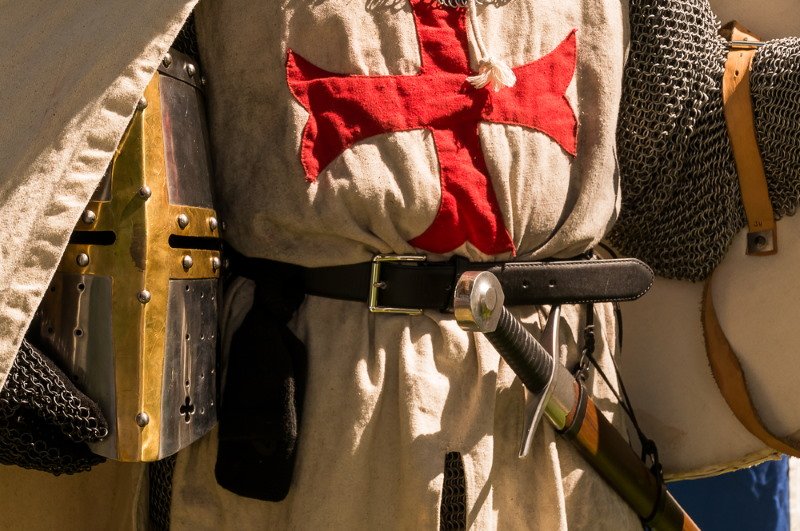
The rumor that the Templars secretly survived after their dissolution has been around for centuries. In reality, most members were released, retired or joined other orders, such as the Knights Hospitaller, who also received most of the Templars’ property. In Portugal, the order was simply renamed the Order of Christ.
But legends persist: that Templars fled to Scotland and fought for Robert the Bruce at the Battle of Bannockburn in 1314, that they were the forerunners of the Freemasons, or that a Scottish earl, Henry Sinclair, sailed to America a century before Columbus. Historians have found no evidence for any of these stories.
10. The treasure of Oak Island
What happened to the Templars’ wealth has been the subject of speculation for centuries. One of the most famous stories involves Oak Island, a small island off the coast of Nova Scotia in Canada. Since the late 18th century, treasure hunters have been digging in the so-called Money Pit there, convinced that a fabulous treasure is buried deep underground.
Theories about its origin range from pirate loot to lost manuscripts of Francis Bacon, and of course the treasure of the Templars. The digging has cost several lives over the years, as shafts collapsed or flooded. So far, no treasure has been found, but the search continues, and it has even become a long-running reality TV series.