In international law, the Latin phrase terra nullius means nobody’s land: territory that does not belong to any sovereign state. In an age when nations argue fiercely over tiny coral reefs and barren rocks, you might assume every square meter of Earth has been claimed.
Surprisingly, a few pockets of genuine no-man’s-land still exist, alongside vast stretches of global commons where sovereignty is banned by treaty. From frozen polar sectors to paradoxical desert trapezoids, here are ten territories and legal zones that no country claims as its own.
1. Marie Byrd Land, Antarctica (1.6 Million km²)
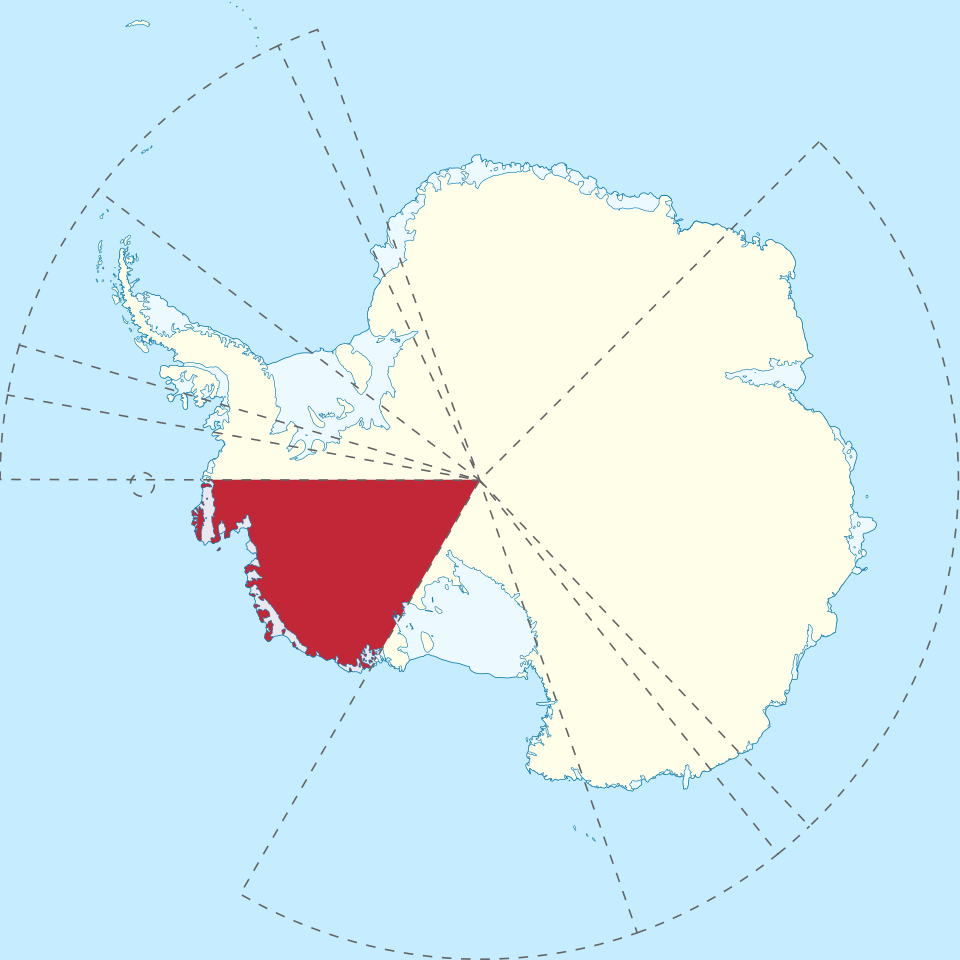
Covering 1.6 million square kilometers of West Antarctica, an area larger than France, Germany, and Spain combined, Marie Byrd Land is by far the largest unclaimed territory on Earth.
While seven countries staked out pie-slice territorial claims across the rest of Antarctica during the first half of the twentieth century, this remote, storm-lashed region between the Ross Ice Shelf and Ellsworth Land was so inaccessible that no government formally claimed it before the 1959 Antarctic Treaty froze all existing territorial claims below 60 degrees south and prohibited any new ones.
2. Bir Tawil, Between Egypt and Sudan (2,060 km²)
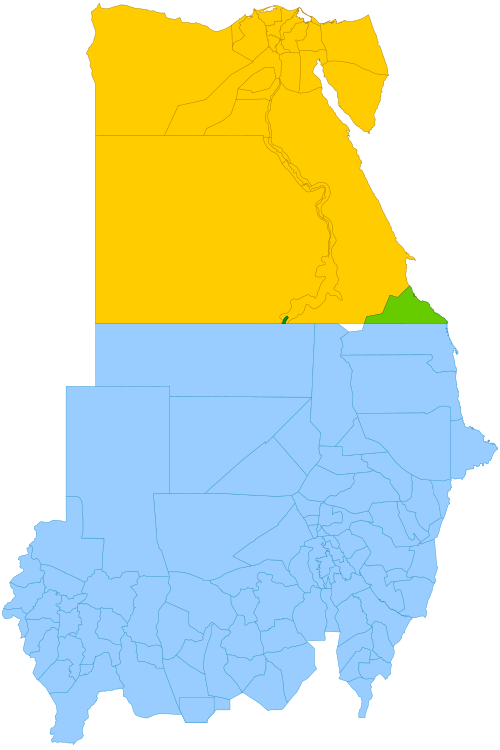
Bir Tawil is the only habitable piece of land on Earth that two neighboring countries actively insist belongs to the other.
This 2,060-square-kilometer patch of scorching sand and rock owes its strange status to two contradictory British colonial maps. In 1899, Britain drew a straight political border between Egypt and Sudan along the 22nd parallel, placing Bir Tawil inside Sudan and the much larger, fertile Red Sea coastal region known as the Hala’ib Triangle inside Egypt. Three years later in 1902, Britain drew a jagged administrative boundary reflecting tribal grazing lands, which gave barren Bir Tawil to Egypt and coastal Hala’ib to Sudan.
Today, Egypt claims the 1899 border and Sudan claims the 1902 border. Because claiming Bir Tawil would mean surrendering their claim to the far more valuable Hala’ib Triangle, neither country will touch it, prompting eccentric adventurers to travel into the desert and plant homemade royal flags that no government recognizes.
3. Gornja Siga (Liberland), Between Croatia and Serbia (7 km²)
Along the middle Danube, Croatia and Serbia disagree on how to define their border: Serbia holds that the boundary follows the current main channel of the meandering river, while Croatia insists it follows the nineteenth-century cadastral river course recorded before hydraulic engineering straightened the bends.
Because Gornja Siga lies on the western bank of the modern river but fell on the eastern side of the old cadastral maps, neither Zagreb nor Belgrade claims it. In 2015, Czech libertarian activist Vit Jedlicka seized on this cartographic loophole to proclaim the Free Republic of Liberland on the seven-square-kilometer floodplain, though Croatian border police promptly blocked settlers from camping there.
4. Three Smaller Danube Pocket Enclaves (Approx. 2 km² Total)
Alongside Gornja Siga, the exact same river-border disagreement between Croatia and Serbia created three smaller unclaimed pockets along the western bank of the Danube near Sombor and Apatin. Covered in marshy woods and subject to seasonal flooding, these tiny strips of land exist in legal limbo until the two Balkan neighbors sign a permanent border treaty.
5. Unsurveyed Shifting Dunes of the Deep Sahara
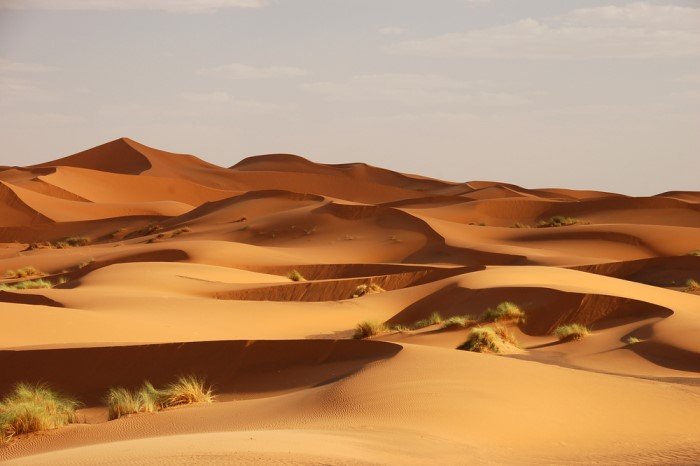
Legally, every kilometer of the Sahara Desert belongs to a sovereign African state. In practice, colonial powers drew straight geometric lines across empty maps of the interior without placing physical boundary markers on the shifting sand seas of the Grand Erg and Tanezrouft, leaving stretches where no border patrol operates and exact jurisdiction on the ground remains purely theoretical.
6. The High Seas and the International Seabed
Beyond the 200-nautical-mile Exclusive Economic Zones of coastal states lie the high seas, covering roughly half of the planet’s surface where no nation may claim sovereignty. Beneath those waters, the deep ocean floor and its polymetallic nodules are regulated as the common heritage of mankind by the Jamaica-based International Seabed Authority under the UN Convention on the Law of the Sea.
7. Rockall, North Atlantic (Terra Nullius Until 1955)

Jutting 17 meters out of the stormy North Atlantic more than 370 kilometers west of Scotland’s Outer Hebrides, the wave-swept granite cone of Rockall remained unclaimed terra nullius until September 18, 1955, when Royal Marines lowered from a helicopter cemented a brass plaque onto the rock to prevent the Soviet Navy from placing radar equipment there to spy on British missile tests.
8. Erik the Red’s Land, East Greenland (Claimed in 1931)
In 1931, Norwegian fur trappers occupied an uninhabited stretch of eastern Greenland and declared it Erik the Red’s Land, arguing the icy coast was terra nullius. Denmark took Norway to the Permanent Court of International Justice in The Hague, which ruled in 1933 that Denmark held valid sovereignty over the entire island, effectively ending the era of European powers claiming polar land by planting a flag.
9. The Moon and Other Celestial Bodies

Signed at the height of the Space Race in 1967, the Outer Space Treaty prohibits any nation from claiming sovereignty over celestial bodies, including the Moon and Mars, whether by occupation or by planting a flag. Novelty websites that sell novelty lunar real estate deeds online have zero legal standing under international law.
10. Why You Cannot Actually Start Your Own Country Today
In the age of exploration, colonial empires routinely invoked terra nullius to seize lands even when indigenous populations lived there, a practice formally rejected by the International Court of Justice in its 1975 Western Sahara advisory opinion. Today, the handful of genuinely unclaimed spots left on Earth like Bir Tawil and Gornja Siga exist only as temporary side effects of border disputes between established states, meaning no United Nations member will recognize a self-proclaimed kingdom in the desert.