They inspire countless Halloween costumes, star in horror films and give scientists unique information about our distant past. Mummies capture the imagination, but they are much more than spooky stories: they are real people, and tangible witnesses of history.
Whether they were embalmed by people or preserved by nature in ice, peat or desert sand, some mummies have become world famous after their discovery. These are the ten most famous mummies in the world, counting down to number one.
10. Ramesses II
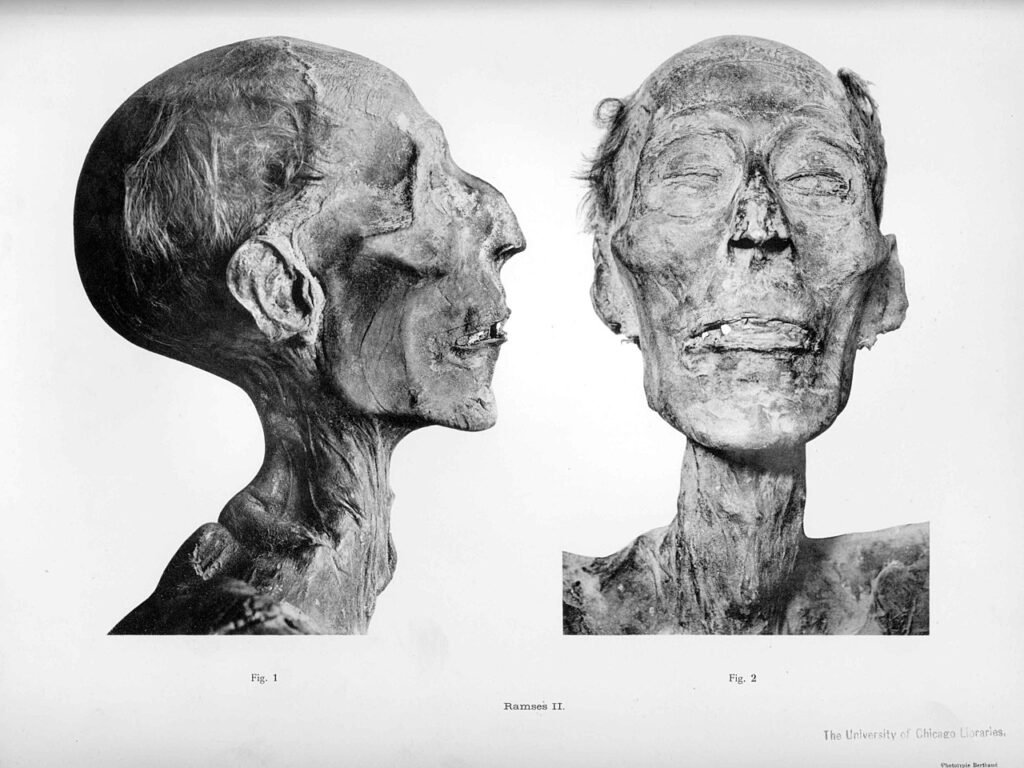
Ramesses II, also known as Ramesses the Great, was already a legend during his lifetime. He ruled Egypt for 66 years in the 13th century BC and is seen as one of the most powerful pharaohs ever. After his death, priests moved his body several times to protect it from tomb robbers. It was eventually found in 1881 in a hidden cache of royal mummies near Luxor.
In 1976, his mummy was flown to Paris for treatment against a fungal infection. According to a famous story, he was even issued an Egyptian passport for the trip, listing his occupation as “King (deceased)”. Scientists found that he had suffered from arthritis and dental problems in old age, and that his hair, after more than 3,000 years, still had a reddish color. Today he rests in the National Museum of Egyptian Civilization in Cairo.
9. The Tollund Man
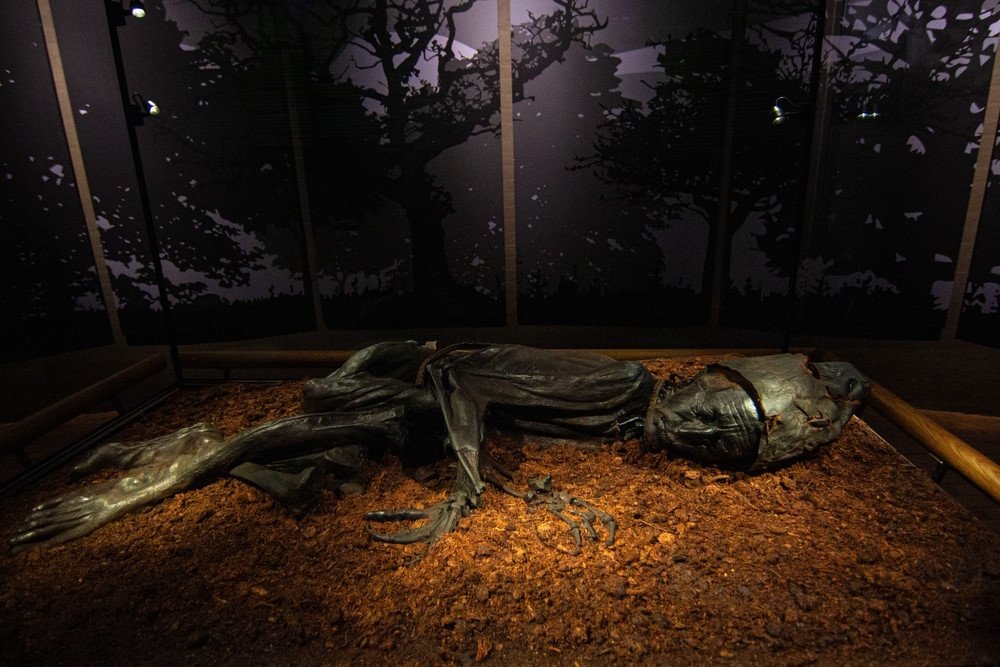
We usually associate mummies with the heat of Egypt, but some of the best-preserved bodies come from cold, wet places. The Tollund Man is the perfect example. He was found in 1950 by peat cutters in a bog in Denmark, who thought they had discovered a recent murder victim.
In reality, he had lived around 2,400 years ago, in the Iron Age. Thanks to the acidic, oxygen-poor conditions in the bog, his face is so well preserved that you can still see the wrinkles in his skin and the stubble on his chin. A rope was still around his neck: he had been hanged, probably as a sacrifice.
8. The Cherchen Man
In the Tarim Basin in northwestern China, hundreds of remarkably well-preserved mummies have been found, naturally preserved by the extremely dry, salty desert. One of the best known is the Cherchen Man, who lived around 3,000 years ago. He was tall, had light-brown hair and wore colorful woolen clothing with patterns that reminded researchers of European textiles.
For a long time, that led to theories that the Tarim mummies were descended from migrants from the west. But a large DNA study published in 2021 revealed a surprise: the oldest Tarim mummies were a genetically isolated local population, descended from an ancient Asian group, who had nevertheless adopted farming and herding from their neighbors.
7. The Grauballe Man
Not far from where the Tollund Man was found, another remarkable bog body came to light in 1952: the Grauballe Man. He lived in the 3rd century BC and is preserved in an eerily realistic way. His hands and feet are so well preserved that police were even able to take his fingerprints.
His body tells a violent story: his throat had been cut from ear to ear, which suggests he was the victim of a ritual sacrifice or an execution. Although his skin has turned dark and leathery in the peat, he offers a chilling glimpse into the Iron Age.
6. Bernadette Soubirous
Bernadette Soubirous became world famous for her visions of the Virgin Mary in the French town of Lourdes in 1858. She died in 1879, at the age of 35. When her body was exhumed in 1909 as part of the process of her canonization, it was found to be remarkably well preserved.
For many believers, this was a sign of her holiness. Her body now rests in a glass reliquary in a convent chapel in Nevers, visited by pilgrims from all over the world. Less well known is that her face and hands were covered with thin wax masks in the 1920s, because the skin had darkened after the exhumations.
5. Rosalia Lombardo
In the Capuchin Catacombs of Palermo in Sicily lies a little girl known as “Sleeping Beauty”. Rosalia Lombardo died in 1920 of pneumonia, shortly before her second birthday. Her heartbroken father asked the embalmer Alfredo Salafia to preserve her.
The result is as beautiful as it is eerie: a century later, Rosalia still looks as if she has just fallen asleep, with her blonde curls and a silk bow in her hair. Some visitors claim that she opens her eyes slightly during the day, an optical illusion caused by the changing light. Salafia’s secret formula was only discovered decades later in his notes.
4. Xin Zhui (Lady Dai)
Xin Zhui was the wife of a nobleman during China’s Han dynasty. She died around 168 BC. When her tomb at Mawangdui was opened in the early 1970s, archaeologists found what is considered the best-preserved ancient mummy ever discovered. Her body was wrapped in more than twenty layers of silk and lay in a mysterious liquid inside four nested coffins.
The result was astonishing: after more than 2,100 years, her skin was still soft, her joints could still bend and there was even blood in her veins, allowing scientists to determine her blood type. An autopsy showed that she had been overweight and suffered from heart disease. She probably died of a heart attack, and undigested melon seeds were still in her stomach.
3. Tutankhamun
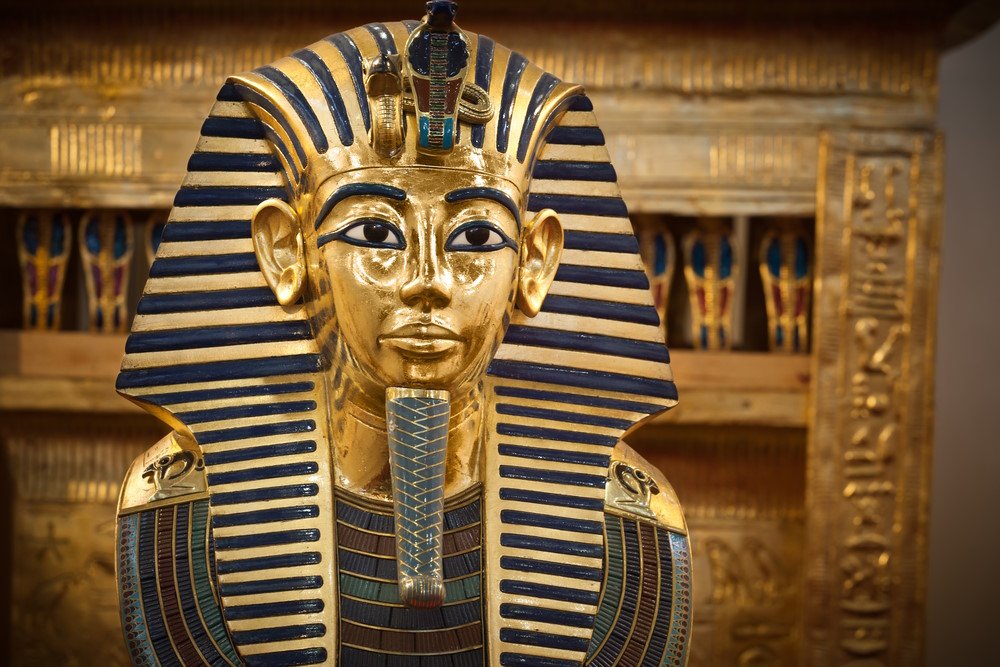
No list of mummies is complete without the boy king. Tutankhamun played only a small role in history during his short reign, and he died at around 19 years old. But when Howard Carter discovered his almost untouched tomb in 1922, he became a global icon.
His mummy lay beneath the legendary golden death mask, which has become the symbol of the splendor of ancient Egypt. The discovery also gave rise to the myth of the “curse of the pharaoh”, after the death of Lord Carnarvon, who had funded the excavation. In reality, most of the people involved lived for many more years, including Carter himself.
2. Ötzi the Iceman
Ötzi the Iceman is one of the most important archaeological finds of the 20th century. He was discovered in 1991 by hikers in the Ötztal Alps, on the border between Austria and Italy. At first, they thought he was a mountaineer who had died recently. In fact, he had lived around 5,300 years ago, in the Copper Age.
Thanks to the ice, not only his body, but also his clothing, his copper axe, his bow and arrows and even his last meal were preserved. Researchers found 61 tattoos on his body, probably applied as a form of treatment for joint pain. And Ötzi did not die a natural death: in 2001, an arrowhead was discovered in his shoulder. He was murdered.
1. Vladimir Lenin
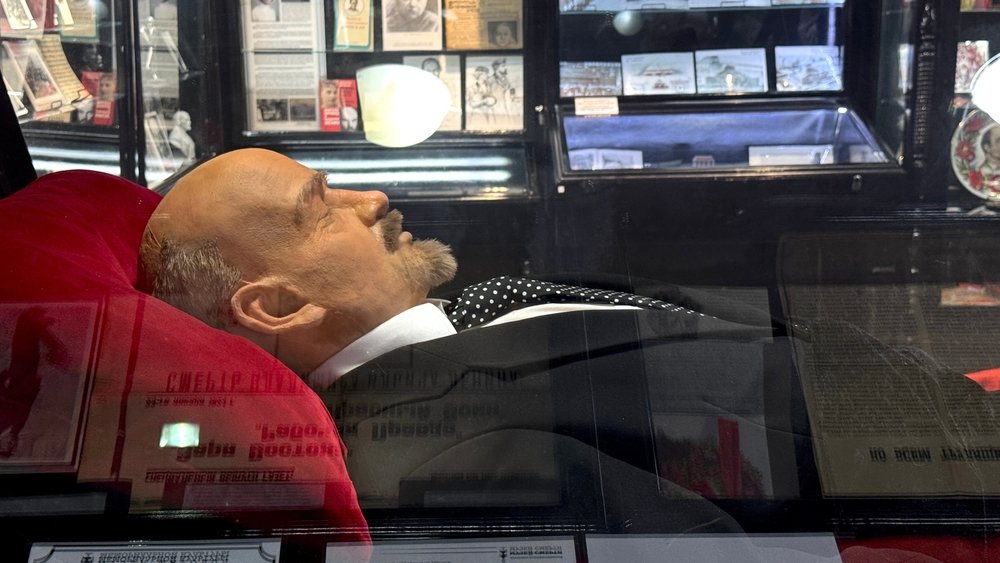
Not all famous mummies are ancient. Vladimir Lenin, the leader of the Russian Revolution, is the best-known modern mummy. After his death in 1924, the Soviet leadership decided to embalm his body and put it on permanent display, as a kind of secular relic of communism.
For more than a hundred years, a specialized team of scientists has maintained his body, regularly bathing it in a special embalming solution. Visitors can still file past his glass coffin in the mausoleum on Red Square in Moscow, to see the man who changed the course of the 20th century.