Throughout history, military engineers have tried to build the ultimate super weapon. The result? Guns so big that they could smash fortress walls, or so impractical that they impressed more on paper than on the battlefield.
These are the ten largest cannons in history, ranked by caliber, the diameter of the barrel. Keep in mind that for the oldest guns, measurements vary between sources.
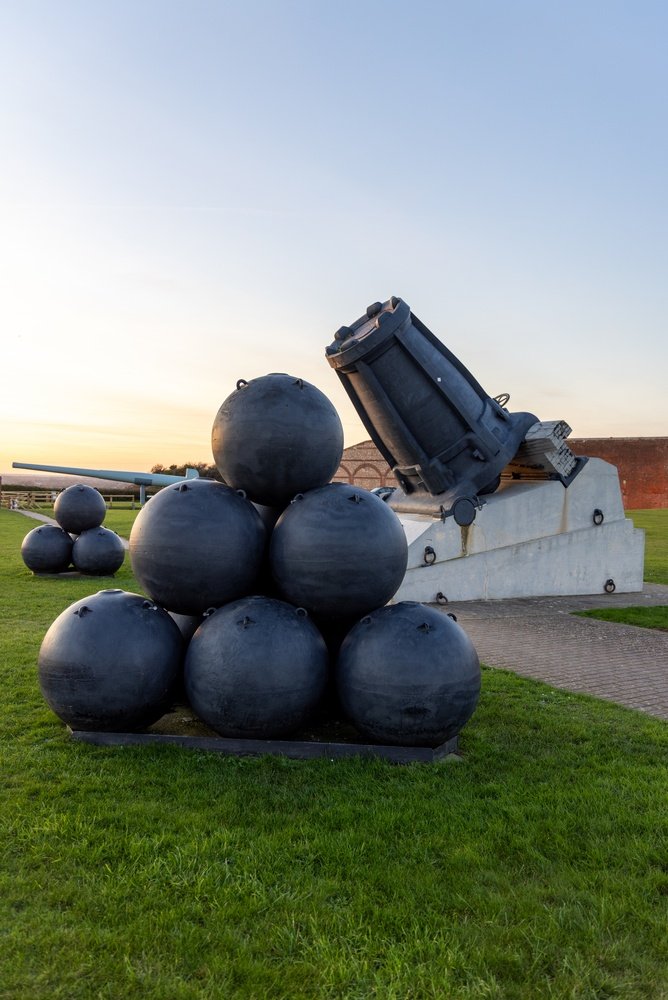
1. Mallet’s Mortar (914 mm)
- Built: 1857
- Type: mortar
- Country: United Kingdom
This Victorian monster was designed by the Irish engineer Robert Mallet during the Crimean War, to hurl huge shells at enemy fortifications. With its caliber of 914 millimeters (36 inches), it shares the record for the largest caliber of any gun ever built.
The war ended before it was finished, and it was only fired in a series of tests, during which it was repeatedly damaged. It never saw action, and the project was abandoned. Two examples were made, and both still survive in England.
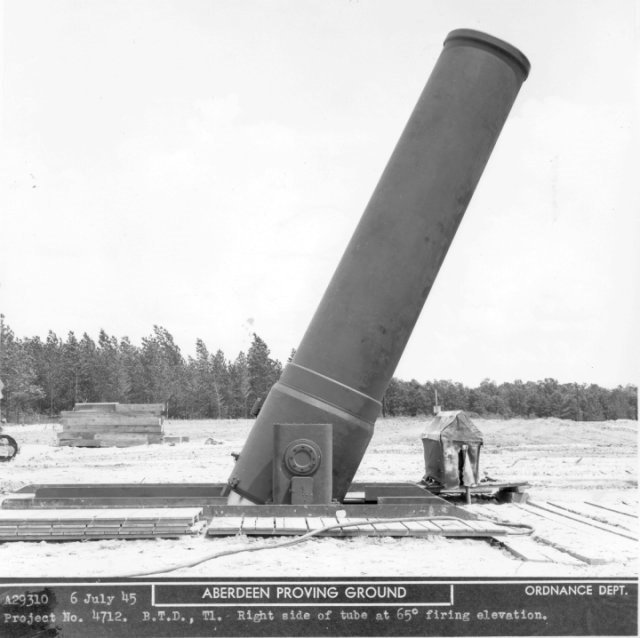
2. Little David (914 mm)
- Built: 1944
- Type: mortar
- Country: United States
Little David began as a device for test-firing aerial bombs, but during the Second World War, the US Army developed it into a siege weapon to destroy heavy bunkers, for example during a possible invasion of Japan. It matched Mallet’s Mortar with a caliber of 914 millimeters.
The war ended before it became operational, and it was never used in combat. Today it is on display at Fort Gregg-Adams in Virginia.
3. Tsar Cannon (890 mm)
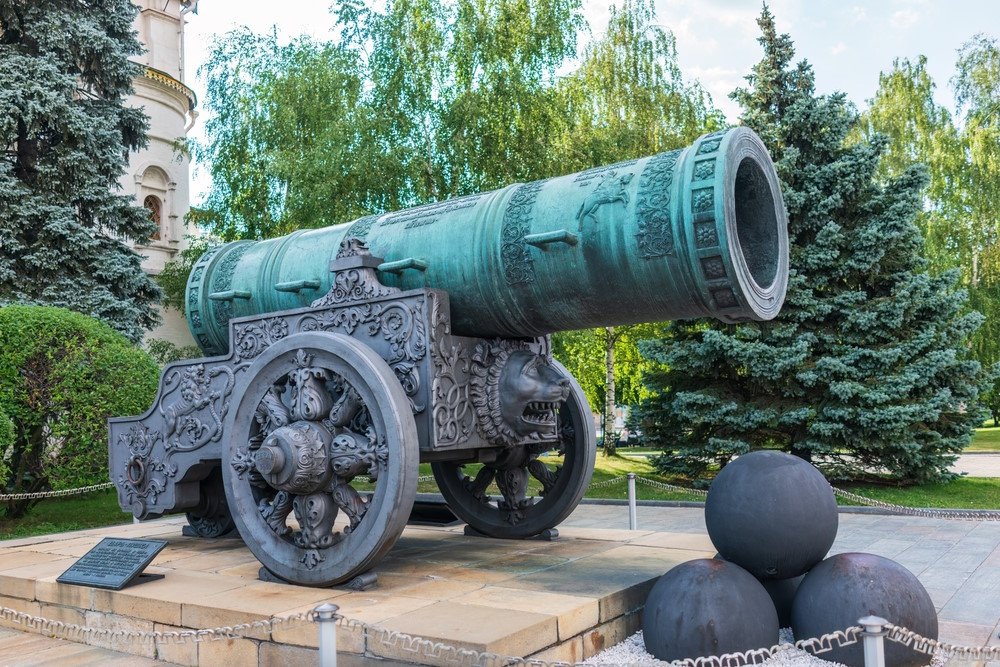
- Built: 1586
- Type: bombard
- Country: Russia
The tsars loved grandeur, and this cannon fits that picture perfectly. Cast in bronze by the master founder Andrey Chokhov and richly decorated, the Tsar Cannon in the Moscow Kremlin weighs almost 40 tonnes.
The giant cast iron cannonballs lying in front of it were added in the 19th century as decoration and are far too large to be fired from it. It has probably never been used in battle. A giant, then, but mainly a symbolic one.
4. Pumhart von Steyr (about 800 mm)
- Built: early 15th century
- Type: bombard
- Country: Austria
One of the largest cannons of the late Middle Ages, this Austrian bombard was made of wrought iron bars, welded together and held in place with iron rings. It weighs around 8 tonnes and could fire stone balls weighing hundreds of kilos.
There is no evidence that it was ever used in battle, but it remains an impressive piece of medieval engineering. It is now on display at the Museum of Military History in Vienna.
5. Schwerer Gustav (800 mm)
- Built: 1941
- Type: railway gun
- Country: Germany
Nazi Germany had this monster built by Krupp as the ultimate siege weapon. It was designed to destroy the heavy forts of France’s Maginot Line, and could fire shells weighing around 7 tonnes at targets more than 40 kilometers away.
The gun weighed around 1,350 tonnes and had to be transported in pieces and assembled on specially built double tracks, which took weeks and thousands of men. It saw action only once, during the siege of Sevastopol in 1942. It is the largest caliber rifled gun ever used in combat, but above all, it was a prestige project.
6. Dora (800 mm)
- Built: 1942
- Type: railway gun
- Country: Germany
Dora was the sister gun of Schwerer Gustav, also built by Krupp and technically identical. It was so heavy and difficult to move that it barely saw action. It was reportedly moved to the area near Stalingrad in 1942, but was withdrawn before it could fire, as Soviet forces closed in. Lots of preparation, very little result.
7. The Basilica, or Orban’s great bombard (about 750 mm)
- Built: 1453
- Type: bombard
- Country: Ottoman Empire
The Basilica, also known as the Great Turkish Bombard, was used during the famous siege of Constantinople in 1453. It was designed by Orban, a Hungarian gunsmith in Ottoman service, and fired stone balls weighing hundreds of kilos.
It was slow, cumbersome and dangerous for its crew. According to some accounts, it cracked after only a few days of use. Still, the Ottoman guns helped breach the famous walls of Constantinople, which fell after a siege of almost two months. No trace of the gun itself survives.
8. Faule Mette (about 700 to 800 mm)
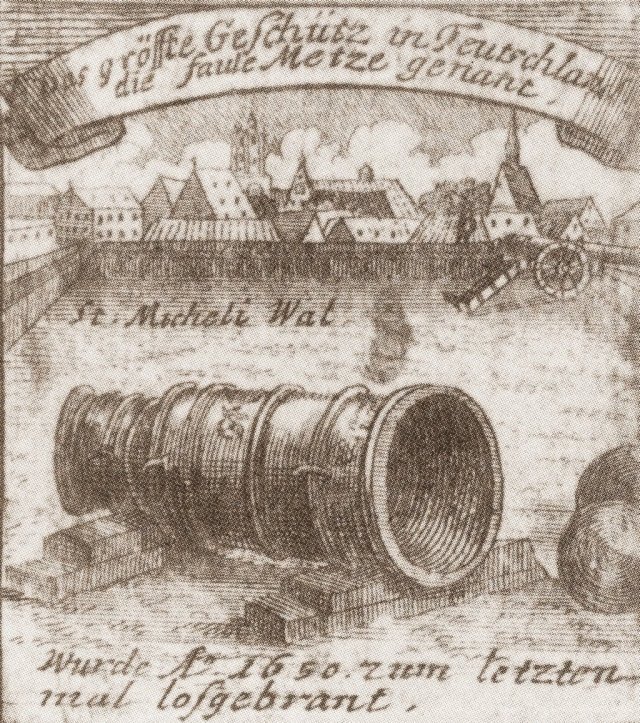
- Built: 1411
- Type: bombard
- Country: Holy Roman Empire
“Lazy Mette” was one of the first truly large European cannons. It was cast in 1411 for the city of Braunschweig in Germany, and is an early example of how cities invested in heavy artillery themselves. It was used to defend the city, but also had a symbolic function: anyone who owned such a gun showed that they mattered. It was melted down in the 18th century.
9. Malik-e-Maidan (about 700 mm)
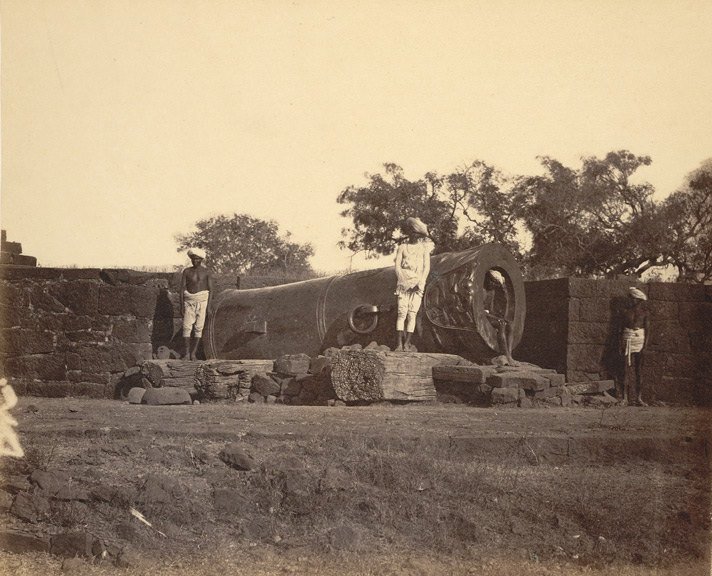
- Built: 1549
- Type: bombard
- Country: India (Ahmadnagar Sultanate)
This impressive bronze cannon, whose name means “Lord of the Battlefield”, was cast in 1549 in Ahmadnagar and later taken to Bijapur, in the south of India, where it still sits on a bastion of the city walls and is a popular tourist attraction. It is around 4.5 meters long and weighs an estimated 55 tonnes. Its muzzle is shaped like the head of a lion with open jaws, swallowing an elephant.
10. Dardanelles Gun (about 630 mm)
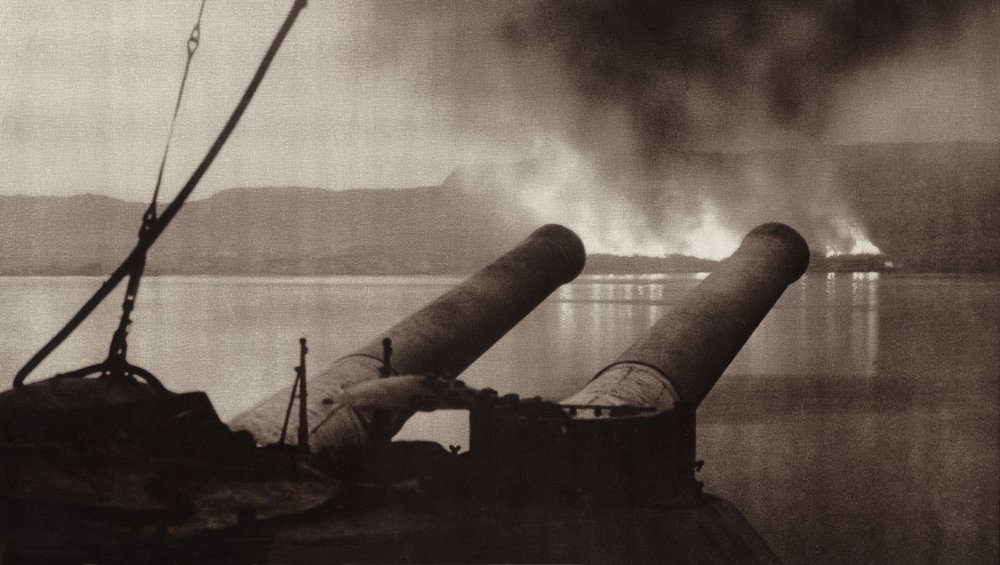
- Built: 1464
- Type: bombard
- Country: Ottoman Empire
This giant bronze bombard was cast in 1464 by the Ottoman gunsmith Munir Ali, modeled on the great guns that helped conquer Constantinople. It was placed at the Dardanelles to defend the strait, and in 1807, more than three centuries after it was made, it was still fired at a British fleet.
The gun is made in two parts that screw together, which made it easier to transport. In 1866, the Ottoman sultan gave it to Queen Victoria, and today it is on display at Fort Nelson near Portsmouth, England.
Huge, cumbersome and often more show than firepower: the cannons on this list were not all practical, but they are certainly impressive. They reflect the age-old human urge to combine power, technology and intimidation in one metal monster.