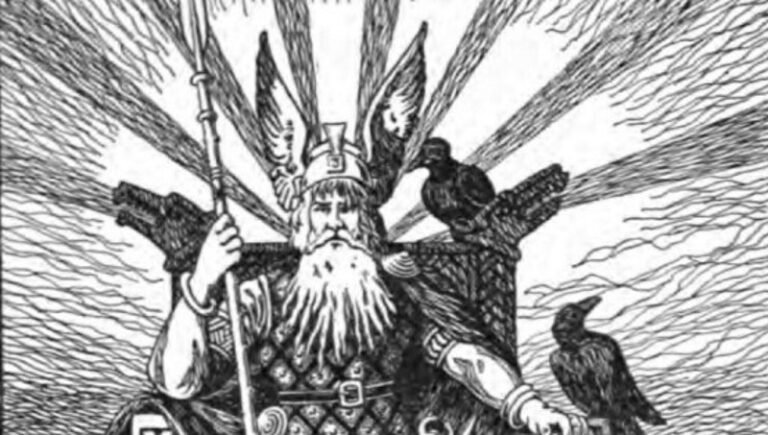
In romantic stories, medieval knights are noble men in shining armor who fight for their king and an unreachable lady. Real life on the battlefields of Europe and the Middle East was a lot rougher: behind the courtly poems and tournament rules lay a hard world of heavy cavalry, political scheming, plunder and enormous ransoms.
From a robber knight with a mechanical iron hand to crusaders and the most famous legend in literature, these are the ten most legendary knights in history, counting down to number one.
10. Ulrich von Liechtenstein

If you have seen A Knight’s Tale (2001), you know the name Heath Ledger’s character uses as a cover on the tournament circuit. It was borrowed from a real nobleman and poet from Styria in Austria, who lived from around 1200 to 1275. Ulrich was not famous for great battles, but for taking courtly love to extremes.
In his autobiographical poem Frauendienst (“Service of Ladies”) from 1255, he describes how, in honor of a noble lady, he traveled from Venice to Bohemia dressed as the goddess Venus, complete with white dresses and long braids. Along the way he challenged every knight to a joust, and by his own account broke more than 300 lances without once being unhorsed.
9. Götz von Berlichingen
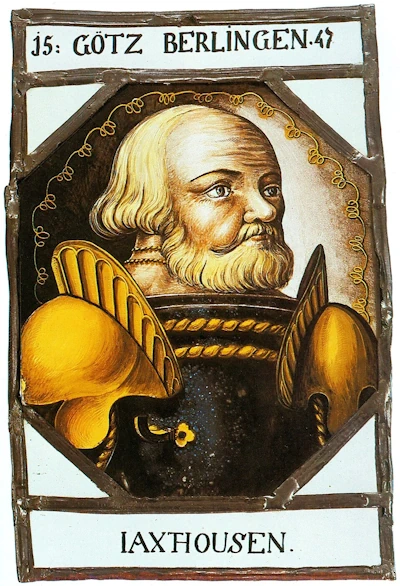
During the siege of Landshut in 1504, a cannonball fired by his own side shattered the right hand of the 24-year-old German knight Götz von Berlichingen. For most knights that would have ended their career. Götz had a mechanical iron hand made instead.
Using springs, ratchets and a release button, the iron fingers could grip a sword, a lance, reins and even a quill. With it, he spent decades as a notorious robber knight and mercenary, attacking merchants and fighting feuds. The hand can still be seen at Jagsthausen Castle. In 1773, Goethe made him immortal in a play in which Götz tells an enemy commander, in so many words, that he can kiss his backside. Germans still call that the “Götz quote”.
8. Pierre Terrail, Seigneur de Bayard
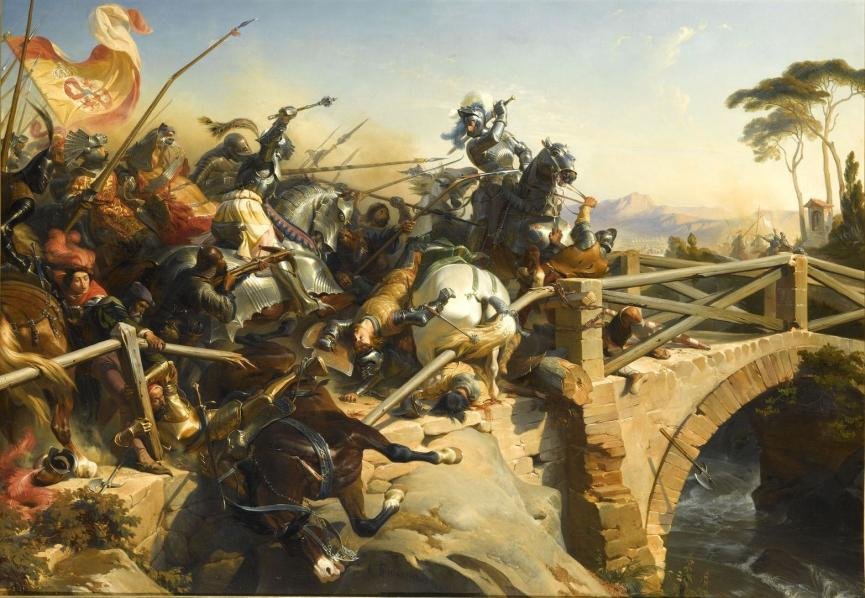
The French knight Pierre Terrail, Seigneur de Bayard (around 1476 to 1524) was known even in his own lifetime as “le chevalier sans peur et sans reproche”: the knight without fear and beyond reproach. He fought for three French kings in the Italian Wars.
According to legend, he once held a bridge over the Garigliano river almost single-handedly against some 200 Spanish soldiers. After the Battle of Marignano in 1515, King Francis I asked to be knighted by Bayard himself. He was fatally wounded in 1524 by a shot from an arquebus, a sign that the age of the knight was ending. Even his enemies honored him as he died.
7. Edward of Woodstock, the Black Prince
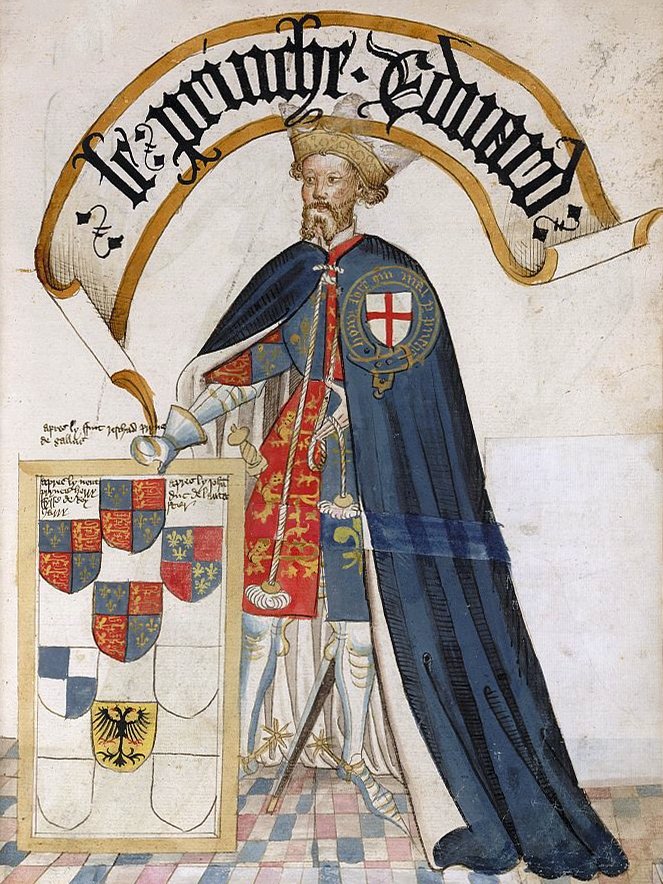
At just 16, Edward of Woodstock (1330 to 1376), eldest son of King Edward III of England, earned his spurs in the vanguard at the Battle of Crécy. Ten years later, at Poitiers in 1356, he led the English army to a crushing victory and captured the French king, John II, on the battlefield. Following chivalric custom, Edward personally served his royal prisoner at dinner that evening. England then demanded a ransom of three million gold crowns.
Oddly, nobody called him “the Black Prince” during his lifetime. The nickname only appears in writing in the 16th century, probably referring to his black shield, or to the destruction his troops caused in France. He never became king: he died in 1376 after a long illness, a year before his father.
6. Godfrey of Bouillon
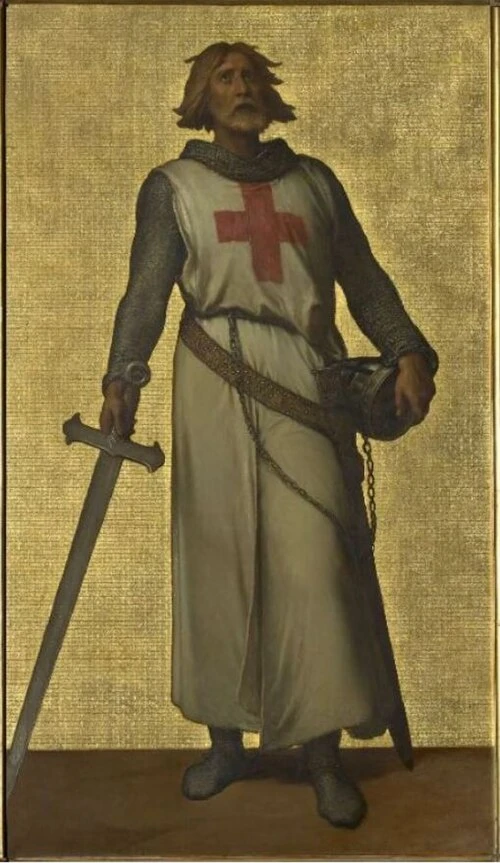
To pay for his part in the First Crusade in 1096, Godfrey of Bouillon (around 1060 to 1100), Duke of Lower Lorraine, pledged his family castle at Bouillon to the Bishop of Liège. After an exhausting three-year march across Asia Minor and Syria, he was among the first crusaders to cross onto the walls of Jerusalem from a wooden siege tower on 15 July 1099. The capture of the city was followed by a massacre of its Muslim and Jewish inhabitants.
The crusader leaders offered him the crown, but Godfrey reportedly refused to wear a crown of gold where Christ had worn a crown of thorns, and took the title Defender of the Holy Sepulchre instead. He died a year later in Jerusalem. Medieval writers later counted him among the “Nine Worthies”, the greatest heroes of history.
5. William Marshal
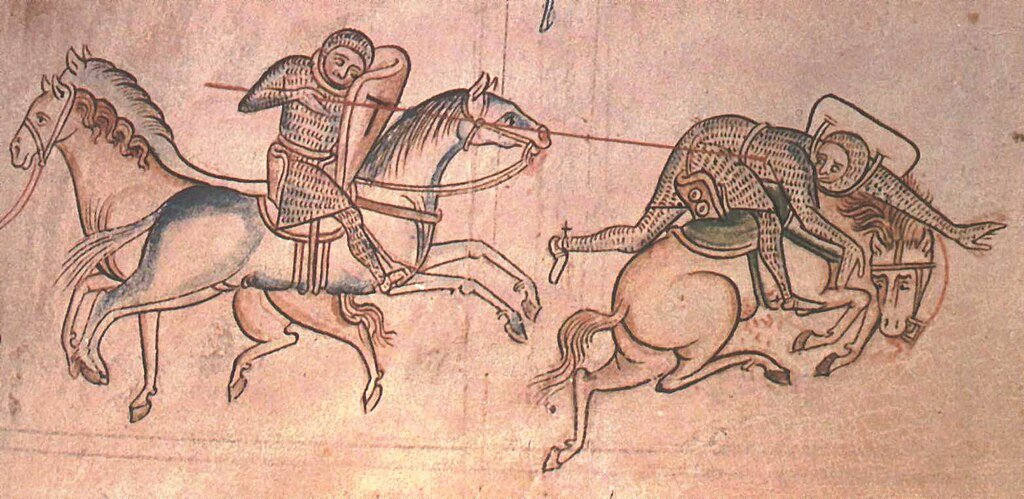
His life almost ended at the age of five. During the English civil war, his father handed young William Marshal (1147 to 1219) to King Stephen as a hostage, then broke his promise and kept defending his castle. When threatened with his son’s execution, he reportedly replied that he still had the hammer and anvil to forge even better sons. The king could not bring himself to kill the boy.
As a landless younger son, William became a star of the brutal tournament circuit in northern France. On his deathbed he claimed to have captured some 500 knights for ransom. He served five English kings, became regent for the nine-year-old Henry III, helped reissue Magna Carta and, at about 70, personally led the charge at the Battle of Lincoln in 1217. At his funeral, the Archbishop of Canterbury called him the best knight who ever lived.
4. William Wallace
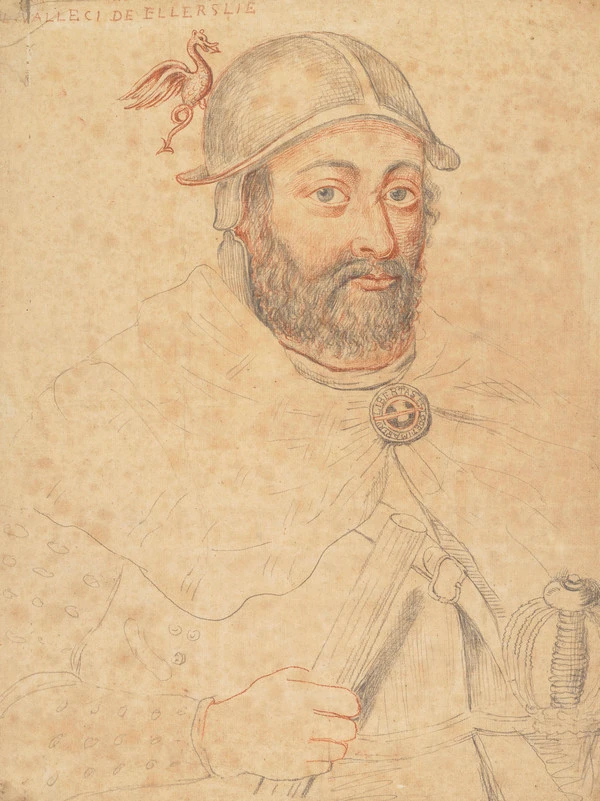
On 11 September 1297, Scottish rebel leader William Wallace (around 1270 to 1305) waited calmly at Stirling while English knights and soldiers crossed a narrow wooden bridge over the river Forth. Only when the English army was split in two did he attack, slaughtering the trapped vanguard. After the Battle of Stirling Bridge, Wallace was knighted and named Guardian of Scotland.
Most people’s image of him comes from Braveheart (1995), which is historically wildly inaccurate. Wallace’s men did not wear kilts, which appeared centuries later, or blue face paint. And his romance with the French princess Isabella is impossible: she was a child of about three at the time.
His gruesome end in the film is accurate, however. Betrayed in 1305, he was taken to London and convicted of treason. He was dragged through the streets, hanged, disemboweled while still alive, beheaded and cut into four pieces.
3. Richard the Lionheart

A large statue of King Richard I (1157 to 1199) on horseback stands outside the Houses of Parliament in London, but Richard cared little for England. He spoke French rather than English and spent only about six months of his ten-year reign in the country. He mainly saw England as a source of money for his wars and reportedly joked that he would sell London if he could find a buyer.
On the Third Crusade, however, he fully earned the name Lionheart, defeating Saladin at the Battle of Arsuf in 1191. On his way home, he was captured near Vienna by Duke Leopold of Austria, and England had to pay a huge ransom of 150,000 marks. He met an inglorious end in 1199 at the siege of a small castle at Châlus in France: while inspecting the walls without full armor, he was hit in the shoulder by a crossbow bolt. The wound turned gangrenous and he died days later.
2. El Cid
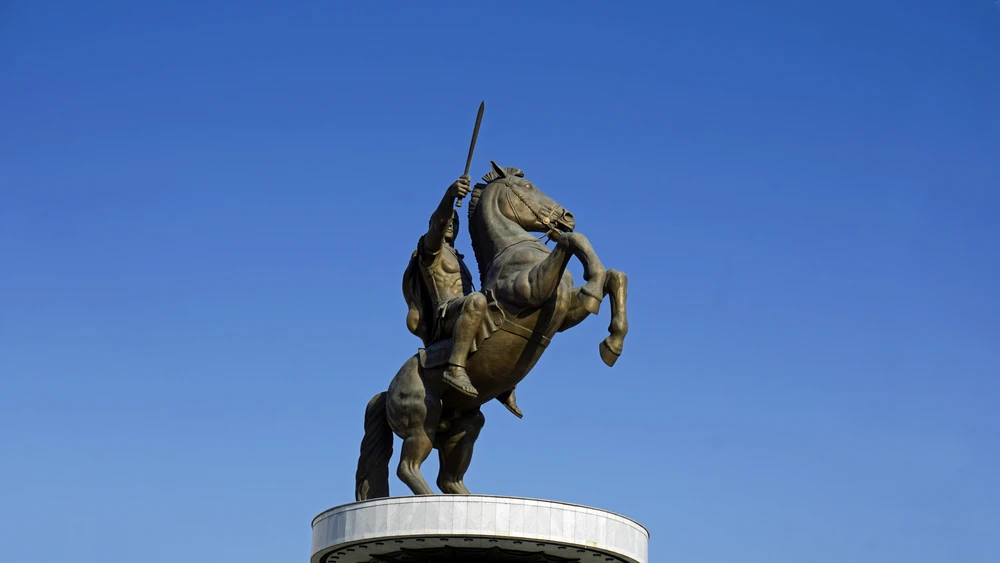
Few medieval figures have been shaped as much by legend and later propaganda as the Castilian nobleman Rodrigo Díaz de Vivar (around 1043 to 1099). In the Spanish epic poem Cantar de mio Cid and the 1961 Hollywood film starring Charlton Heston, he is the pious national hero who fought the Moors.
The reality was more pragmatic. After being exiled by King Alfonso VI of Castile in 1081, Rodrigo spent years as a mercenary commander for the Muslim rulers of Zaragoza, defeating Christian armies from Aragon and Barcelona. Even his nickname mixes both cultures: El Cid comes from the Arabic al-sayyid, “the lord”.
In 1094 he captured the rich city of Valencia, where he ruled as an independent prince over Muslims and Christians until his death. The famous story that his embalmed body was tied onto his horse Babieca to scare off the enemy one last time is a later legend.
1. King Arthur and the Knights of the Round Table
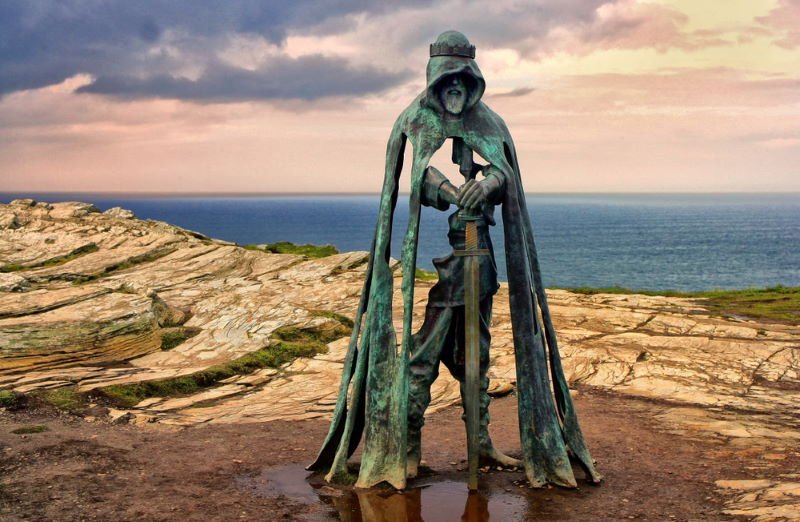
Historians have argued for centuries about whether a real British war leader fought the invading Anglo-Saxons around the year 500. But no figure has shaped the ideal of the knight as much as King Arthur. From the 12th century, Geoffrey of Monmouth and the French poet Chrétien de Troyes turned old Celtic tales into a whole world of Camelot, the sword Excalibur, the quest for the Holy Grail and knights such as Lancelot, Gawain and Percival, seated at a round table so that no one was above anyone else.
The irony is that this fiction began to shape the behavior of real knights and kings. Edward I and Edward III of England held tournaments in which nobles dressed up as Arthur’s knights. Around 1290, a huge oak Round Table, 5.5 meters across and weighing about 1,200 kilos, was made; it still hangs in the Great Hall at Winchester. And in 1191, the monks of Glastonbury Abbey, badly in need of money after a fire, conveniently “discovered” the graves of Arthur and Guinevere. It was almost certainly a fake, but it drew pilgrims for centuries.