Whistleblowers expose secret abuses, corruption or illegal surveillance inside companies and governments, because they believe the public interest outweighs secrecy. Laws often promise to protect them, but most paid a heavy personal, financial or legal price.
These are the ten most famous whistleblowers in history, counting down to number one.
10. Frances Haugen
In 2021, former Facebook product manager Frances Haugen leaked tens of thousands of internal documents to The Wall Street Journal and US authorities. The “Facebook Files” showed that the company knew from its own research that Instagram could harm the mental health of teenage girls, and that its algorithms boosted divisive content.
Haugen testified before the US Congress and the European Parliament. Her revelations fed directly into new rules for big tech platforms, including the EU’s Digital Services Act.
9. Jeffrey Wigand
As head of research at tobacco company Brown & Williamson, Jeffrey Wigand saw from the inside how the industry dealt with nicotine. In 1995 and 1996 he went public, saying that executives knew nicotine was addictive and that the company manipulated its effect, despite claims to Congress to the contrary.
He received death threats and faced lawsuits and a smear campaign. His story was told in the 1999 film The Insider, with Russell Crowe as Wigand. His testimony helped pave the way for the huge 1998 settlement between US states and the tobacco industry.
8. Mordechai Vanunu
In 1986, Israeli nuclear technician Mordechai Vanunu broke one of the most closely guarded secrets in the world. While working at the Dimona nuclear facility in the Negev desert, he secretly took dozens of photographs. Through The Sunday Times in London, he provided the first detailed evidence that Israel had a substantial nuclear weapons program.
Before the story was published, a female Mossad agent lured him from London to Rome, where he was drugged, kidnapped and shipped to Israel. He was convicted of treason and espionage and sentenced to 18 years in prison, more than 11 of them in solitary confinement. Since his release in 2004, he has been subject to strict restrictions, including a ban on leaving the country.
7. Karen Silkwood
As a lab technician at the Kerr-McGee plutonium plant in Oklahoma, Karen Silkwood became alarmed about poor safety. Workers were regularly exposed to radioactive material, and she believed quality checks on fuel rods were being falsified. She joined the union and began collecting evidence.
In November 1974, she was found to be contaminated with plutonium, even in her own home. On 13 November 1974, the 28-year-old drove to a meeting with a New York Times reporter, reportedly carrying a folder of documents. Her car ran off the road and she died. Police called it a single-car accident, but some investigators believed it had been hit from behind, and the documents were never found. Meryl Streep played her in the 1983 film Silkwood.
6. Philip Agee
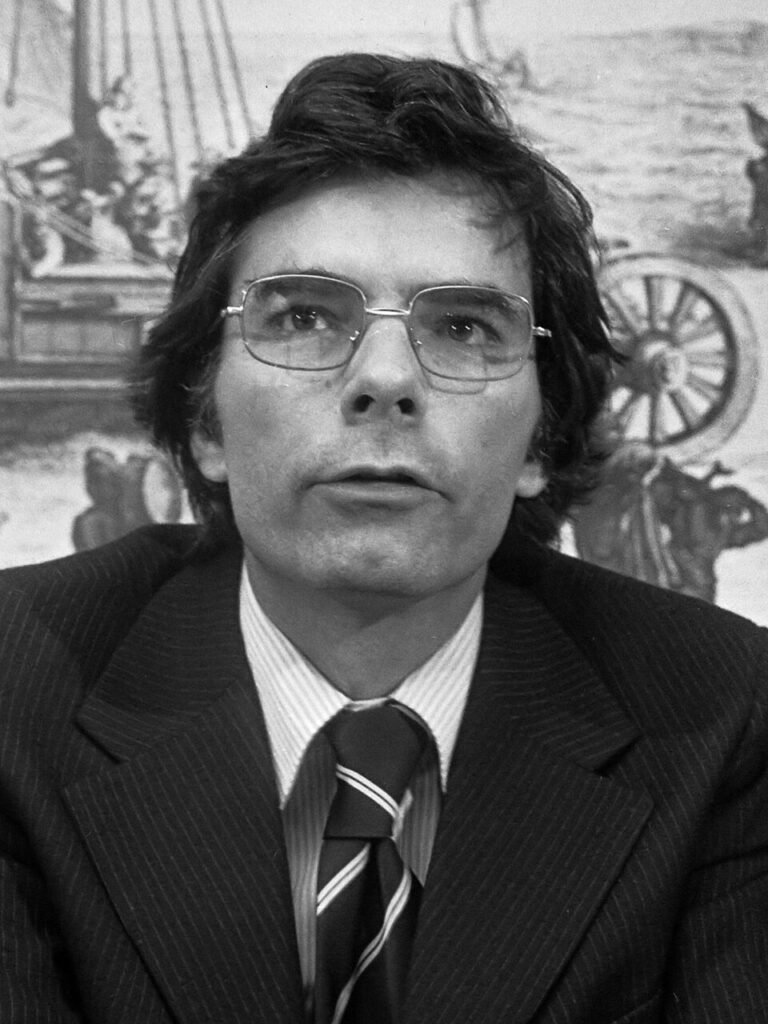
For twelve years, Philip Agee was a CIA case officer in Ecuador, Uruguay and Mexico. Disillusioned by covert operations in support of dictatorships, he resigned in 1968.
In 1975 he published Inside the Company: CIA Diary, which exposed covert operations and named around 250 CIA officers and agents. The book made him a hero to some and a traitor to others, who blamed him for endangering lives. The US revoked his passport in 1979, and he spent decades in exile. He died in Havana in 2008.
5. Frank Serpico
For New York police officer Frank Serpico, staying honest turned out to be life-threatening. In the 1960s, he refused to take part in the bribes that shop owners, gamblers and bar owners paid to officers every month. His attempts to report the corruption internally went nowhere.
In 1970, he and colleague David Durk went to The New York Times. The front-page story forced Mayor John Lindsay to set up the Knapp Commission, which exposed widespread police corruption. In February 1971, Serpico was shot in the face during a drug raid in Brooklyn, and his fellow officers were slow to call for help. He survived, testified before the commission and later lived quietly in Europe for about a decade, including on a farm in the Netherlands. Al Pacino played him in the 1973 film Serpico.
4. Chelsea Manning
As an intelligence analyst with the US Army in Iraq, Chelsea Manning had access to classified military databases. Troubled by what she saw, including civilian casualties hidden in military reports, she copied hundreds of thousands of files in early 2010 and passed them to WikiLeaks.
The leaks included war logs from Iraq and Afghanistan, around 250,000 diplomatic cables and the “Collateral Murder” video, which shows a US Apache helicopter crew in Baghdad opening fire on a group of men, including two Reuters journalists. Manning was arrested in May 2010 and sentenced to 35 years in 2013. In January 2017, President Barack Obama commuted her sentence, and she was released after about seven years.
3. Daniel Ellsberg
Daniel Ellsberg was a respected military analyst at the RAND Corporation who had worked on a secret 7,000-page Pentagon study of US decision-making in Vietnam. It showed that successive administrations, from Truman to Johnson, had misled Congress and the public about the war.
In 1969, Ellsberg began secretly photocopying the study, and in 1971 he leaked the “Pentagon Papers” to The New York Times, The Washington Post and other papers. The Nixon administration tried to stop publication, but the Supreme Court ruled in favor of the press. To discredit Ellsberg, a secret White House unit known as “the Plumbers” broke into his psychiatrist’s office. Because of this government misconduct, the charges against him were dismissed in 1973. He remained an activist until his death in June 2023.
2. Edward Snowden
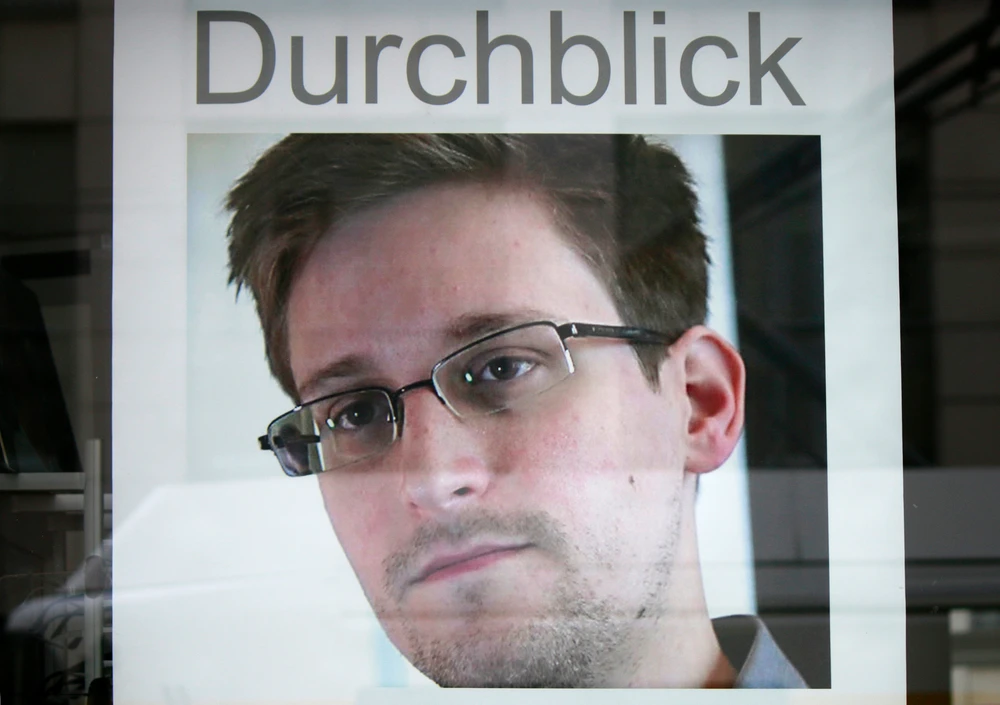
Edward Snowden was working as a contractor for the US National Security Agency when he discovered the true scale of government surveillance. Programs such as PRISM gave the NSA access to data from tech giants such as Google, Apple and Microsoft, and the agency was collecting the phone records of millions of Americans in bulk.
In May 2013, he flew to Hong Kong with thousands of documents and met journalists Glenn Greenwald and Laura Poitras. The revelations set off a worldwide debate about mass surveillance and privacy. When the US canceled his passport while he was traveling on to Latin America, Snowden got stuck at a Moscow airport. Russia granted him asylum, and in 2022 he became a Russian citizen.
1. Mark Felt (Deep Throat)
For more than 30 years, “Deep Throat” was the best-kept secret in American journalism. During the Watergate investigation in 1972, Washington Post reporter Bob Woodward met his anonymous source late at night in an underground parking garage. The insider guided Woodward and Carl Bernstein through the web of illegal spying and cover-ups that led to the White House, and in August 1974, President Richard Nixon resigned.
Only in 2005 did Mark Felt, then 91, reveal in Vanity Fair that he was Deep Throat. As deputy director of the FBI, he had access to all the investigation files and was angry about the Nixon administration’s attempts to obstruct the inquiry. One myth did not survive: the famous line “Follow the money” was never said by Felt. It was written for the 1976 film All the President’s Men.