Inventors take risks. They test machines nobody has built before, often on themselves, and sometimes the experiment goes terribly wrong.
These ten pioneers paid the ultimate price for their ideas. Some were reckless, others simply unlucky, and a few laid the groundwork for technology we still use today.
1. William Bullock and the rotary printing press
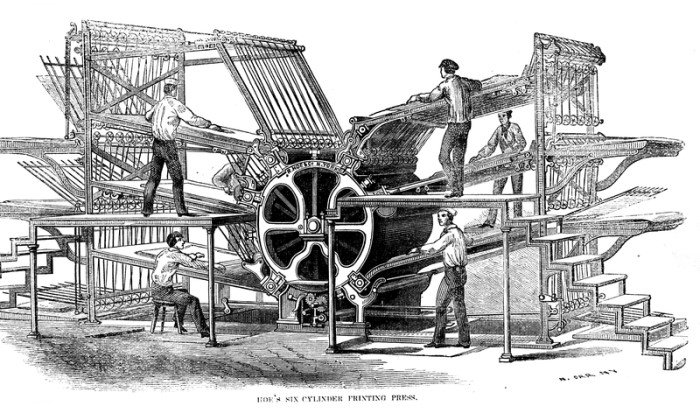
In the 1860s, American inventor William Bullock developed a revolutionary printing press that fed paper from a continuous roll, making it possible to print newspapers much faster.
In 1867, while he was adjusting one of his presses, he tried to kick a drive belt back into place. His leg got caught and was crushed. Gangrene set in, and he died during surgery to amputate the leg.
2. Otto Lilienthal and the glider
The German engineer Otto Lilienthal was the first person to make repeated, well-documented flights with gliders, earning him the nickname “the Glider King”. Photos of his flights inspired aviation pioneers around the world, including the Wright brothers.
In 1896, a gust of wind stalled his glider and he fell about 15 meters, breaking his spine. He died the next day. His last words are often quoted as “sacrifices must be made”.
3. Franz Reichelt and the parachute suit
Franz Reichelt was an Austrian-born tailor in Paris who designed a wearable parachute suit for pilots. Tests with dummies had not gone well, but he was convinced it would work with a real person.
In February 1912, he told the authorities he would test it with a dummy, then jumped from the first platform of the Eiffel Tower himself, in front of cameras. The suit did not open properly, and he fell to his death. The footage still exists.
4. Aurel Vlaicu and his airplane
Aurel Vlaicu was a Romanian engineer and aviation pioneer who designed and built his own airplanes, winning prizes at international air shows.
In 1913, he set out to become the first person to fly across the Carpathian Mountains. His plane crashed near the town of Câmpina, and he was killed. He is still a national hero in Romania, where he appears on the 50 lei banknote.
5. J.G. Parry-Thomas and the land speed record
Welsh engineer John Godfrey Parry-Thomas set the world land speed record in 1926 in his self-built car, nicknamed “Babs”, reaching more than 270 kilometers per hour on Pendine Sands in Wales.
In 1927 he tried to win back the record. At high speed, the car crashed and Parry-Thomas was killed, reportedly struck by the drive chain. Babs was buried in the sand dunes, and decades later dug up and restored.
6. Alexander Bogdanov and blood transfusions
The Russian physician and revolutionary Alexander Bogdanov believed that blood transfusions could rejuvenate people and even extend life. In 1926 he founded the world’s first institute dedicated to blood transfusion, in Moscow.
He experimented on himself, receiving many transfusions. In 1928, he received blood from a student who, it turned out, had malaria and tuberculosis. Bogdanov died soon after, while the student recovered.
7. Marie Curie and radioactivity
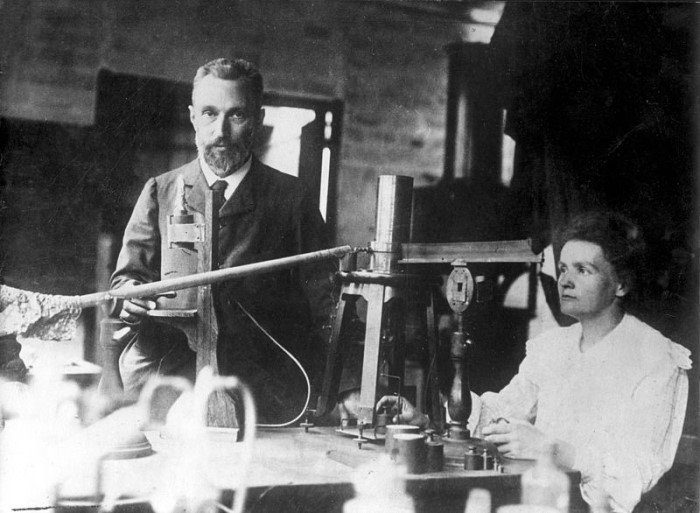
Strictly speaking, Marie Curie did not invent radioactivity, but she discovered radium and polonium and coined the term. She became the first woman to win a Nobel Prize and is still the only person to win Nobel Prizes in two different sciences.
Nobody understood the dangers at the time. Curie carried radioactive samples in her pockets and kept them in her desk. She died in 1934 of aplastic anemia, almost certainly caused by years of radiation exposure. Her notebooks are still so radioactive that they are kept in lead-lined boxes.
8. Thomas Midgley Jr. and his pulley bed
Thomas Midgley Jr. was one of the most influential chemists of the 20th century. He developed leaded gasoline and the CFCs used in refrigerators, two inventions that later turned out to be enormously harmful to people and the ozone layer.
After polio left him disabled, he designed a system of ropes and pulleys to help him get in and out of bed. In 1944, he was found entangled in the ropes, strangled by his own invention.
9. Henry Smolinski and the flying car
In the early 1970s, American engineer Henry Smolinski built the AVE Mizar, a flying car made by attaching the wings and tail of a small Cessna airplane to a Ford Pinto. On the ground, the car could be detached and driven like any other.
In 1973, during a test flight in California, a wing strut came loose and the vehicle broke apart in the air. Smolinski and his business partner were killed.
10. Michael Dacre and the jetpod
British aeronautical engineer Michael Dacre dreamed of a cheap air taxi. His jetpod was designed to take off and land on very short runways, making it possible to fly between city centers.
In 2009, while testing a prototype in Malaysia, the aircraft crashed during takeoff, and Dacre was killed. His dream of affordable air taxis is still being chased today, by companies building electric flying taxis.