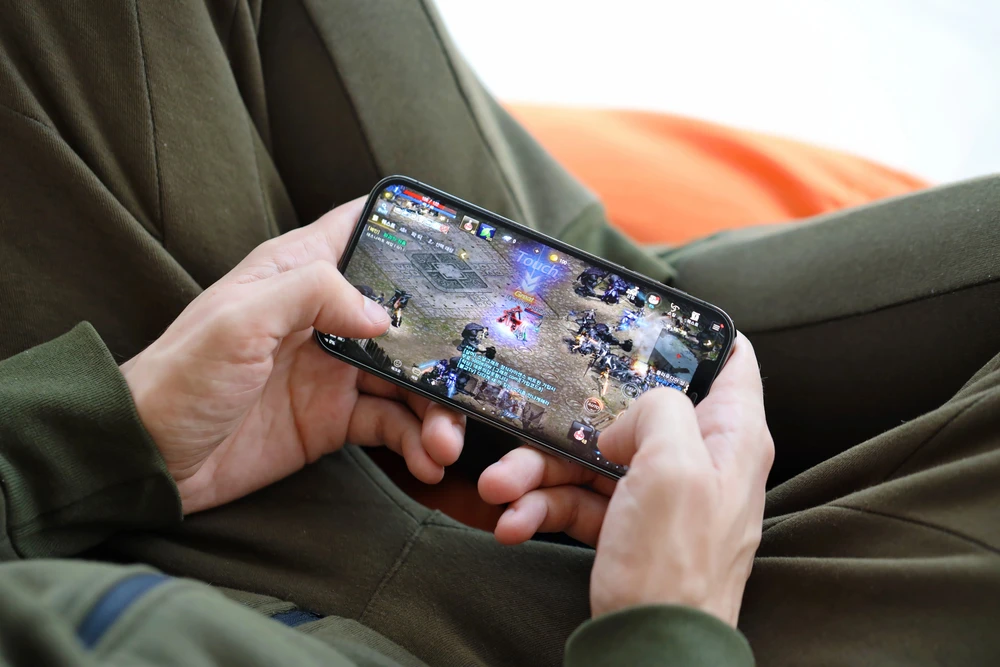
The oldest graphic MMORPG in the world that is still running commercially today is the South Korean Nexus: The Kingdom of the Winds from the spring of 1996, closely followed by Meridian 59 and the German Tibia. While most online multiplayer games close their doors after a few years as soon as the hype dies down, these pioneers have been defying all technological changes for almost three decades. These are the ten oldest active online games in the world, ranked by official year of launch.
Which one of these deserves the top spot? Cast your votes below and let us know your personal ranking in the comments!
Cast your vote - the ranking shifts live based on the votes.
Nexus: The Kingdom of the Winds (April 1996)
Nexon launched Baramue Nara in South Korea in April 1996, released internationally as “Nexus: The Kingdom of the Winds”. The game is officially listed in the Guinness Book of Records as the longest running commercial graphic MMORPG in the world. It laid the foundation for the booming South Korean gaming industry even before the Internet was commonplace in Western living rooms. Based on the Korean comic book series of the same name, the game combines 2D tile graphics with mythology and deep social structures. Players can join guilds, marry, and hold political positions within the player community. After three decades, the original game still attracts active subscribers through operator Kru Interactive.
Meridian 59 (December 1996)
While online multiplayer games in 1996 mainly consisted of text-based interfaces, publisher 3DO entered the world in a first-person 3D environment with Meridian 59. The game pioneered classic mechanics: players sought out each other in inns, formed groups to raid dungeons, and fought mutual vendettas through open-world PvP. Following the original studio's bankruptcy, original developers Andrew and Chris Kirmse released the source code as open source in 2012. Two official servers have since been selflessly maintained by programmers from the player community, and the classic can now even be installed free of charge via Steam.
Log in to post a comment.
Tibia (January 1997)
Four German students from the University of Regensburg developed an online role-playing game in their spare time that was launched in January 1997. Tibia belongs to the rare category of pioneers that have never changed hands or been taken offline. The company behind the game, CipSoft, still runs the platform successfully after almost thirty years. Tibia became infamous for its brutal difficulty: characters who succumb not only lose valuable experience points and skill levels, but also leave their backpacks and equipment on the ground for passersby.
Log in to post a comment.
Ultima Online (September 1997)
Led by game designer Richard Garriott, Ultima Online proved that large-scale virtual worlds were commercially viable. Britannia was the first online game to break the magical barrier of one hundred thousand paying subscribers. The game offered unprecedented sandbox freedom in which players could build their own houses on open terrain, extract resources and run a fully player-driven economy.
Log in to post a comment.
Lineage (September 1998)
South Korean studio NCSoft released Lineage in the fall of 1998, a medieval fantasy game with an isometric camera perspective. In Asian internet cafes, the game grew into a national phenomenon, with over three million active players at its peak: figures that were unheard of for online games in the late 1990s. The main focus of Lineage is the so-called “castle sieges” system, in which rival blood ties (blood guilds) fought massive battles to conquer fortresses and levy taxes on surrounding cities. The original servers of the first part are still running in South Korea alongside the more modern successors.
Log in to post a comment.
EverQuest (March 1999)
With the launch of EverQuest, the genre finally made the transition to an immersive, three-dimensional game world. The world of Norrath forced gamers to form tight alliances; the proven cooperation between protective tanks, healers and attackers was elevated here to the gold standard of the MMO genre. The game was known for its brutal punishment times: those who died had to run naked back to their own corpse to recover their belongings. Nevertheless, the game built up a legendary status, and the franchise still regularly releases new expansion packs.
Log in to post a comment.
Habbo (August 2000)
In the summer of 2000, the Finnish Sulake launched an interactive virtual meeting place: Hotelli Kultakala, which was internationally renamed Habbo Hotel. Without monsters or levels, the platform focused purely on social interaction. Visitors designed their own pixel avatar, furnished rooms with virtual furniture and traded in rare objects. The recognizable isometric pixel style managed to attract generations of teenagers. In 2024, Sulake even released Habbo Hotel Origins, an official historical re-release that harks back to the servers and rules of the classic 2005 platform.
Log in to post a comment.
RuneScape (January 2001)
British brothers Andrew and Paul Gower originally programmed RuneScape as a Java game that could run directly in a web browser. Accessible for free on basic school and home computers, the world of Gielinor became the virtual playground of millions of young people in the early 2000s. The game's legacy later split into the modern RuneScape 3 and the 2013 resurrected Old School RuneScape (OSRS). That classic variant still attracts hundreds of thousands of simultaneous players every day, and an extensive trade has developed around the game currency, on which platforms such as Eldorado OSRS gold capitalize.
Log in to post a comment.
Final Fantasy XI (May 2002)
When Square Enix announced that the eleventh installment in the famous Final Fantasy series would have online multiplayer, there was great surprise. However, Final Fantasy XI proved the critics wrong and set a technical milestone: it was the first major MMORPG to let PlayStation 2 owners and PC gamers play together on the same servers. The game placed heavy emphasis on cinematic cutscenes and a complex class system. Although the successor Final Fantasy XIV steals the spotlight these days, the original servers of Final Fantasy XI on PC are still actively maintained by Square Enix.
Log in to post a comment.
EVE Online (May 2003)
Icelandic developer CCP Games chose a revolutionary single-shard server architecture for EVE Online: instead of fragmented realms, all tens of thousands of players inhabit one colossal, interconnected galaxy (New Eden). Almost every ship, weapon system, and trading outpost is mined and manufactured by players themselves. The sandbox MMORPG is legendary for its elaborate spy networks, corporate betrayals, and massive fleet battles. When thousands of player-piloted spaceships clash for hours, the resulting devastation routinely generates hundreds of thousands of dollars in real-world damages and makes international headlines.
Log in to post a comment.
Missing an item in this list?
Log in or create a free account to add an item yourself.
Log in / create account
Log in to post a comment.