The Republic of Turkey occupies a unique transcontinental position at the crossroads of Europe and Asia, where ancient Anatolian civilizations, the Byzantine Empire, and the Ottoman Empire built enduring commercial metropolises. According to official municipal population statistics published by the Turkish Statistical Institute (TÜİK), roughly seventy-seven percent of Turkey’s population resides in urban areas, with that percentage expanding rapidly as industrial zones develop across the Aegean, Mediterranean, and central Anatolian plateaus.
In Turkish municipal governance, major metropolises are classified as metropolitan municipalities (büyükşehir belediyesi). Under this administrative framework, metropolitan municipalities govern entire provincial boundaries, encompassing dense central urban districts along with surrounding agricultural and industrial zones, providing comprehensive regional coordination.
From the sun-drenched agricultural plains of Cilicia to ancient caravan crossroads and the shores of the Bosporus, here are the top 10 largest cities in Turkey by metropolitan population.
10. Mersin (Mediterranean Region): ~1.12 Million Residents
Stretching along the Mediterranean coastline in southern Turkey, Mersin is one of the nation’s premier maritime gateways. Blessed with a vast natural bay, the city operates the Port of Mersin, the largest commercial seaport in Turkey by container throughput, handling maritime trade for the agricultural hinterland of Anatolia and neighboring Middle Eastern countries.
Mersin features a scenic seaside promenade lined with palm trees, parks, and marinas. The city is famous for its distinct culinary heritage, most notably tantuni, a beloved street food made of finely minced spiced meat rolled in thin lavash flatbread, and cezerye, a sweet confectionery made from caramelized carrots, nuts, and spices.
9. Kayseri (Central Anatolia): ~1.09 Million Residents
Located in the heart of the central Anatolian plateau in the shadow of Mount Erciyes, an extinct volcano that rises nearly four thousand meters, Kayseri has a merchant heritage stretching back to ancient Assyrian trading colonies. In Roman times, the city was known as Caesarea in Cappadocia, serving as a major military and administrative hub.
In modern Turkey, Kayseri is celebrated as one of the leading “Anatolian Tigers,” cities that achieved rapid private industrialization in the late twentieth century without direct state subsidization. The city is world-renowned for its traditional cured meats, especially pastırma (seasoned air-dried beef covered in fenugreek paste) and spicy sucuk sausages, alongside expanding furniture and textile manufacturing.
8. Antalya (Mediterranean Region): ~1.48 Million Residents
Situated on the Gulf of Antalya and encircled by the dramatic pine-covered slopes of the Taurus Mountains, Antalya is universally recognized as the tourism capital of the Turkish Riviera. Founded around 150 BC by King Attalus II of Pergamon as Attaleia, the city preserves Roman city walls, the marble triumphal Arch of Hadrian, and the picturesque cobblestone streets of the historic Kaleiçi district.
Beyond its turquoise waters and beach resorts that welcome millions of international travelers annually, Antalya is an essential agricultural and logistics hub. The surrounding coastal plains produce vast volumes of citrus fruits, vegetables, and greenhouse crops that supply both domestic markets and international exports across Europe.
7. Konya (Central Anatolia): ~1.51 Million Residents
Spread across an expansive, flat plain in southwestern Central Anatolia, Konya is one of the oldest continuously inhabited settlements in human history, situated near the Neolithic archaeological tell of Çatalhöyük. In the twelfth and thirteenth centuries, Konya reached the pinnacle of its historical glory as the capital of the Seljuk Sultanate of Rum, leaving behind magnificent Seljuk stone-carved mosques, madrasas, and caravanserais.
Konya is globally revered as the spiritual resting place of Mevlana Jalal al-Din Rumi, the celebrated thirteenth-century Sufi mystic and poet whose teachings inspired the Order of the Whirling Dervishes. Today, the Mevlana Museum attracts pilgrims from across the globe, while modern Konya serves as Turkey’s primary grain breadbasket and a major hub for agricultural machinery manufacturing.
6. Gaziantep (Southeastern Anatolia): ~1.92 Million Residents
Positioned in southeastern Turkey near the Syrian border, Gaziantep (historically Antep) is one of the oldest continuously inhabited cities in the world, having witnessed Hittite, Persian, Roman, Byzantine, and Ottoman rule. Crowned by the hilltop Gaziantep Castle, the city earned the title Gazi (Warrior) from the Turkish Grand National Assembly for its heroic defense during the Turkish War of Independence.
Gaziantep is internationally celebrated for two preeminent distinctions: mosaic art and culinary excellence. The Zeugma Mosaic Museum houses the world’s largest collection of ancient Roman mosaics, famous for the haunting gaze of the “Gypsy Girl” mosaic. Furthermore, Gaziantep was inscribed as a UNESCO Creative City of Gastronomy, revered across Turkey as the capital of authentic pistachio baklava, handcrafted copperware, and savory kebabs.
5. Adana (Mediterranean Region): ~1.95 Million Residents
Situated in southern Turkey on the banks of the Seyhan River, Adana anchors the fertile Çukurova plain, one of the most agriculturally productive regions in the Mediterranean basin. Founded in ancient antiquity, the city is spanned by the stone arches of the Roman Stone Bridge (Taşköprü), one of the oldest bridges in the world still open to pedestrian traffic.
Historically rising as a cotton growing and textile processing center, modern Adana is a major industrial and agricultural powerhouse. The city is famous throughout the Middle East for the Sabancı Central Mosque, one of the largest mosques in Turkey, and its fiery culinary trademark, Adana kebab, minced lamb skewered and grilled over charcoal with crushed red peppers.
4. Bursa (Marmara Region): ~2.22 Million Residents
Sprawling across the fertile southern plains beneath the snowy peaks of Mount Uludağ in the Marmara region, Bursa was the first major capital of the Ottoman Empire, captured in 1326. Known as Yeşil Bursa (Green Bursa) due to its lush parks, gardens, and thermal mineral springs, the city contains the historic Grand Mosque (Ulu Cami) and the Green Tomb of Sultan Mehmed I.
Historically the western terminus of the Silk Road where raw Chinese silk was woven into royal brocades, modern Bursa has evolved into the automotive capital of Turkey. The city hosts enormous automotive manufacturing plants for global automakers like Renault and FIAT, while remaining celebrated as the birthplace of the delicious Iskender kebab.
3. Izmir (Aegean Region): ~3.21 Million Residents
Known historically as Smyrna, Izmir curves around a deep natural gulf on the Aegean coast of western Turkey. With over eight millennia of human history, the city was celebrated throughout classical antiquity and the Ottoman period as a tolerant, cosmopolitan trading bridge where Greek, Turkish, Levantine, and Jewish merchant communities flourished together.
Izmir is celebrated throughout Turkey for its open, progressive lifestyle, centered around the iconic Ottoman-era Clock Tower in Konak Square and the sweeping Kordon coastal promenade. Operating the second-largest commercial container port in the country, Izmir is a major university, chemical, and manufacturing metropolis, hosting the annual Izmir International Fair.
2. Ankara (Central Anatolia): ~5.75 Million Residents
Ankara sits upon a high rocky hill in the center of the Anatolian plateau, chosen by national hero Mustafa Kemal Atatürk in 1923 to serve as the new capital of the newly founded Republic of Turkey. Atatürk deliberately relocated the government away from imperial Istanbul to symbolize a clean break with the Ottoman past and establish a modern, secular republican capital.
Designed on a modern European grid plan with wide boulevards and public ministries, Ankara is dominated by Anıtkabir, the monumental limestone mausoleum complex honoring Atatürk. Beyond governance and foreign embassies, Ankara houses prestigious universities, defense engineering firms, and the world-renowned Museum of Anatolian Civilizations, which displays unparalleled prehistoric and Hittite archaeological treasures.
1. Istanbul (Marmara Region): ~16.50 Million Residents
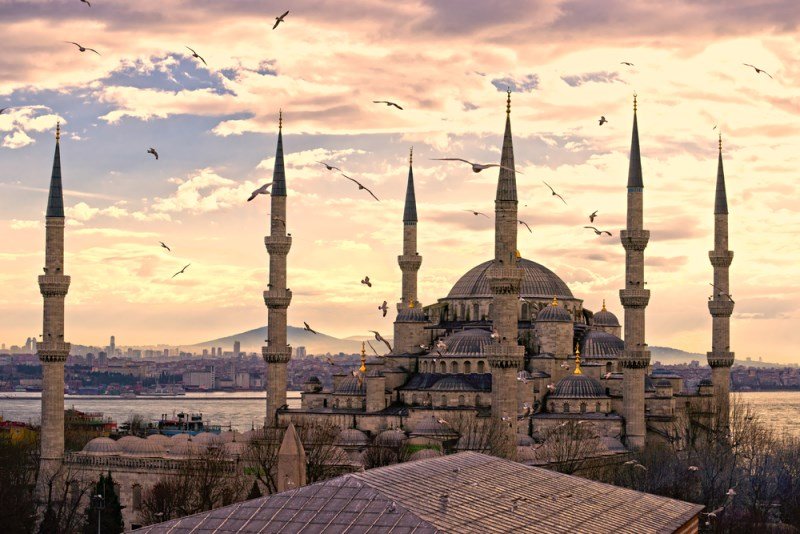
Istanbul stands as a colossal, transcontinental megalopolis bridging Europe and Asia across the historic Bosphorus Strait and the Golden Horn. Serving successively as the imperial throne for the Roman, Byzantine, Latin, and Ottoman empires under the names Byzantium and Constantinople, Istanbul has been the crossroads of human civilizations for over twenty-five centuries.
The city’s historic peninsula contains extraordinary architectural marvels of human history: the soaring domes of Hagia Sophia, the Blue Mosque, Topkapi Palace, and the sprawling covered corridors of the Grand Bazaar. Balancing ancient imperial mosques with soaring financial skyscrapers in Levent and Maslak, Istanbul generates nearly forty percent of Turkey’s national economic output and remains one of the most visited cultural capitals on Earth.
Conclusion
Turkey’s largest cities illustrate a rich journey from ancient trade outposts and Seljuk capitals to ultra-modern manufacturing hubs and a transcontinental global megacity. These ten urban centers will continue to serve as vital bridges connecting European markets with the Middle East, Caucasus, and Central Asia.