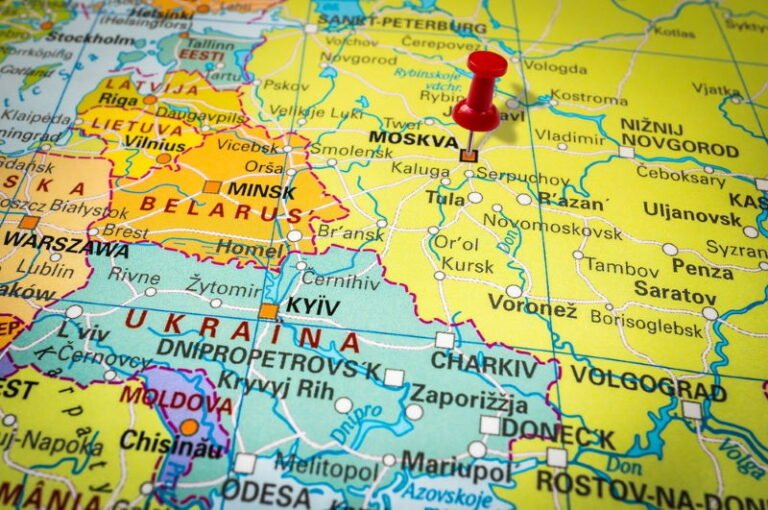
The Russian Federation spans eleven time zones across eastern Europe and northern Asia, featuring an urban network built around grand imperial capitals, strategic river ports, and colossal heavy industrial complexes developed during Soviet expansion. According to demographic registers published by the Federal State Statistics Service (Rosstat), roughly seventy-five percent of the Russian populace lives in urban areas, with sixteen individual metropolises boasting populations exceeding one million residents.
Russian urban development reflects a pronounced historical concentration of population and economic power in European Russia west of the Ural Mountains, anchored by Moscow and Saint Petersburg. However, vast resource-rich metropolises across the Urals and Siberia also anchor heavy metallurgy, mechanical engineering, and aerospace manufacturing, linked by the legendary Trans-Siberian Railway.
From historic Volga trading fortresses to major Siberian cultural and scientific centers, here are the top 10 largest cities in Russia by municipal population.
10. Omsk (Siberia): ~1.11 Million Residents
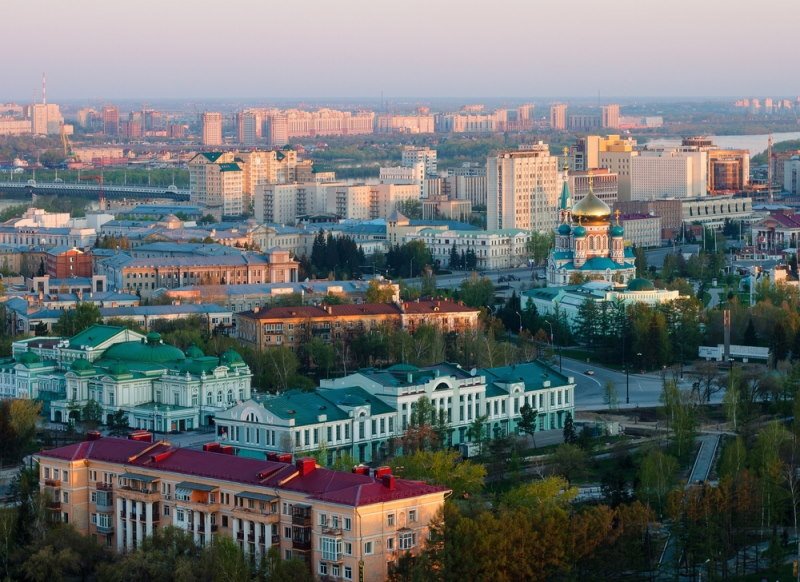
Positioned in southwestern Siberia at the junction of the Irtysh and Om rivers, Omsk was founded in 1716 as a wooden frontier fortress to secure the southern borders of the Russian Empire. During the nineteenth century, the city served as a primary administrative center for Western Siberia and a place of political exile, famously incarcerating writer Fyodor Dostoevsky for four years, an ordeal that inspired his masterpiece The House of the Dead.
During the Russian Civil War, Omsk briefly served as the anti-Bolshevik national capital under Admiral Alexander Kolchak. In the modern era, the city has evolved into an essential industrial hub along the Trans-Siberian Railway, operating one of Russia’s largest petroleum refineries, alongside major aerospace engineering and agricultural machinery plants.
9. Rostov-on-Don (Southern Russia): ~1.14 Million Residents

Rostov-on-Don sits along the lower Don River roughly thirty kilometers from the Sea of Azov, functioning as the administrative and commercial capital of southern Russia. Founded in 1749 as a customs post and military garrison named after Saint Demetrius of Rostov, the city is historically celebrated as the cultural capital of the Don Cossacks.
Nicknamed the “Gateway to the Caucasus,” Rostov is an essential logistical and agricultural nexus, surrounded by Russia’s fertile black-earth grain fields. The city is famous for its lively riverside embankment, leafy parks, and the iconic Rostselmash manufacturing plant, one of the world’s largest producers of agricultural combine harvesters.
8. Samara (Volga Region): ~1.14 Million Residents

Spread along a picturesque bend on the eastern bank of the Volga River, Samara was established in 1586 as a frontier fortress to guard the vital river trade route against nomadic raids. During World War II, when Nazi forces advanced toward Moscow, Samara (then named Kuybyshev) served as the wartime backup capital of the Soviet Union, housing evacuated government ministries, foreign embassies, and the Bolshoi Theatre.
In the post-war era, Samara emerged as the premier space and aerospace manufacturing center of the Soviet Union. The legendary Vostok rocket that carried Yuri Gagarin into orbit in 1961 was constructed here at the TsSKB-Progress plant, commemorated today by the monumental Cosmic Samara Museum featuring a real, upright Soyuz carrier rocket.
7. Chelyabinsk (Urals): ~1.18 Million Residents

Resting on the eastern slopes of the southern Ural Mountains along the Miass River, Chelyabinsk is a paramount industrial center of Russia. The city grew rapidly after the arrival of the Trans-Siberian Railway in 1892, earning the title “Gateway to Siberia,” before undergoing colossal industrial expansion in the 1930s with the construction of the Chelyabinsk Tractor Plant.
During World War II, the city was nicknamed Tankograd (Tank City) because its converted factories produced thousands of legendary T-34 tanks and Katyusha rocket launchers that drove the Soviet war effort. Chelyabinsk gained modern international fame in 2013 when a massive meteor exploded in the atmosphere above the city, producing a shockwave felt across hundreds of square kilometers.
6. Nizhny Novgorod (Volga Region): ~1.21 Million Residents
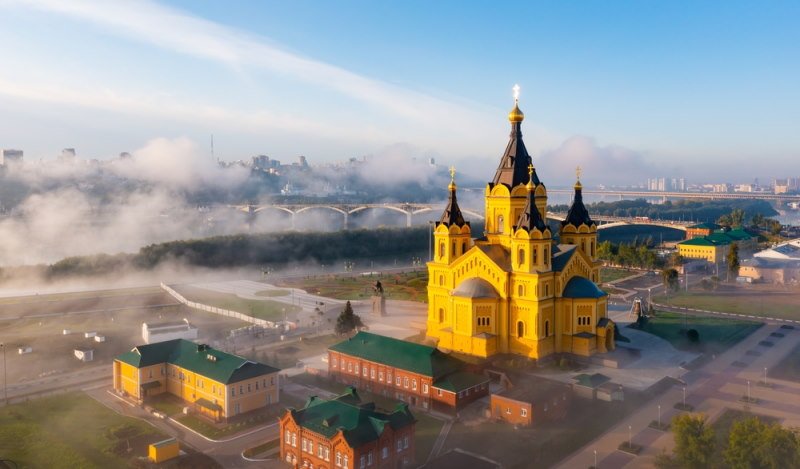
Dramatically perched on high bluffs at the strategic confluence of the Volga and Oka rivers, Nizhny Novgorod was founded in 1221 by Grand Prince Yuri II. The city is crowned by the magnificent red-brick Nizhny Novgorod Kremlin, a formidable sixteenth-century fortress with thirteen watchtowers that never fell to enemy siege.
During the nineteenth century, the city hosted the renowned Nizhny Novgorod Fair, the greatest commercial trade gathering in the Russian Empire, where Asian spices, Siberian furs, and European manufactured goods were exchanged. Renamed Gorky in Soviet times to honor native writer Maxim Gorky, the city was a closed defense center home to the GAZ automobile factory and nuclear research labs where Andrei Sakharov was exiled.
5. Kazan (Tatarstan): ~1.31 Million Residents
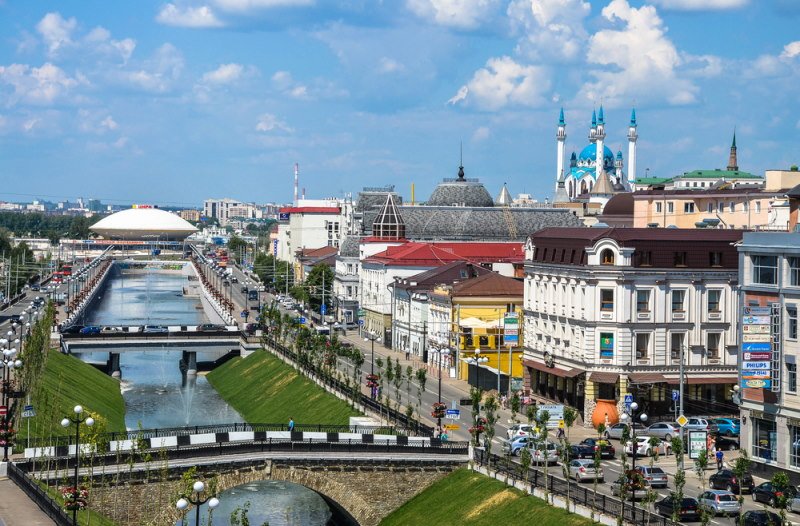
Kazan is the glorious capital of the Republic of Tatarstan, situated where the Kazanka River empties into the Volga. Celebrated as a global model of interfaith harmony, the city has harmoniously united Slavic Christian and Turkic Muslim cultures for centuries, officialized as the “Third Capital of Russia.”
The city’s architectural centerpiece is the Kazan Kremlin, a UNESCO World Heritage site where the turquoise minarets of the Kul Sharif Mosque rise directly alongside the blue onion domes of the Annunciation Orthodox Cathedral and the leaning Söyembikä Tower. Home to Kazan Federal University, where Leo Tolstoy and Vladimir Lenin studied, Kazan is a major economic center driven by petrochemicals, helicopter manufacturing, and international sports championships.
4. Yekaterinburg (Urals): ~1.54 Million Residents
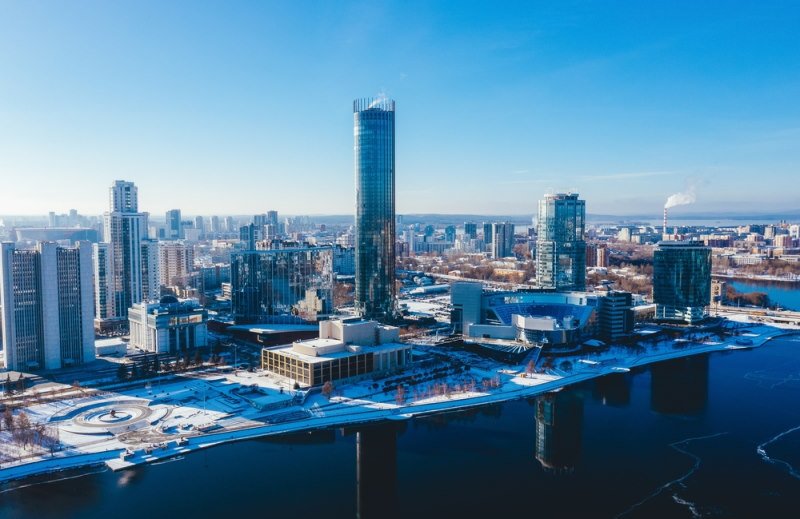
Positioned on the Iset River along the eastern slopes of the Ural Mountains, Yekaterinburg is the geographic and economic capital of the Urals. Founded in 1723 by Peter the Great and named after Empress Catherine I, the city was established to exploit the vast mineral and metal wealth of the mountains, becoming Russia’s iron and copper smelting center.
The city holds tragic historical resonance as the site of the Ipatiev House, where Tsar Nicholas II and the imperial Romanov family were executed in 1918, commemorated today by the monumental Church on Blood. Today, Yekaterinburg is an ultra-modern commercial metropolis, renowned for its cutting-edge skyscrapers, heavy industrial machinery manufacturing, and gem-cutting traditions.
3. Novosibirsk (Siberia): ~1.63 Million Residents
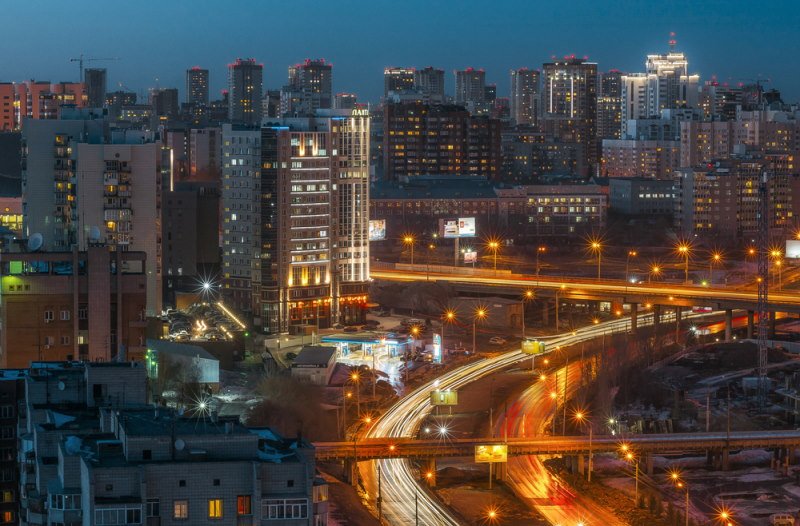
Novosibirsk is the undisputed capital of Siberia and the third-most populous city in Russia, situated on the banks of the Ob River. Founded in 1893 as a bridge-building settlement for the Trans-Siberian Railway, the city expanded with such astonishing velocity that it reached one million residents in barely seventy years, earning the nickname the “Chicago of Siberia.”
The city’s cultural symbol is the colossal Novosibirsk Opera and Ballet Theatre, the largest theater building in Russia, capped by a silver dome that could fit the Bolshoi Theatre inside. Just south of the city lies Akademgorodok (Academic City), an internationally renowned scientific enclave founded in 1957 surrounded by birch forests, housing dozens of premier research institutes of the Russian Academy of Sciences.
2. Saint Petersburg: ~5.60 Million Residents
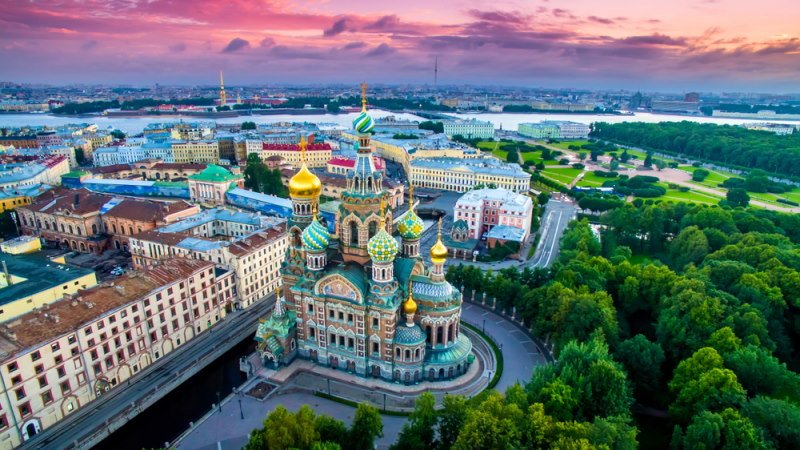
Founded in 1703 by Tsar Peter the Great upon the marshy delta of the Neva River on the Baltic Sea, Saint Petersburg was constructed as Russia’s “Window to Europe” and served as the imperial capital for two centuries. Sliced by dozens of rivers and canals crossed by ornate drawbridges, the city is globally celebrated as the Northern Venice.
The entire historic core is an expansive UNESCO World Heritage site, famous for grand neoclassical and baroque palaces, including the Winter Palace, which houses the State Hermitage Museum, the second-largest art museum on Earth. Having endured the catastrophic 872-day Siege of Leningrad during World War II, Saint Petersburg preserves a proud cultural spirit, celebrated worldwide for the Mariinsky Ballet, the imperial Peterhof fountains, and the magical White Nights of midsummer.
1. Moscow: ~13.10 Million Residents
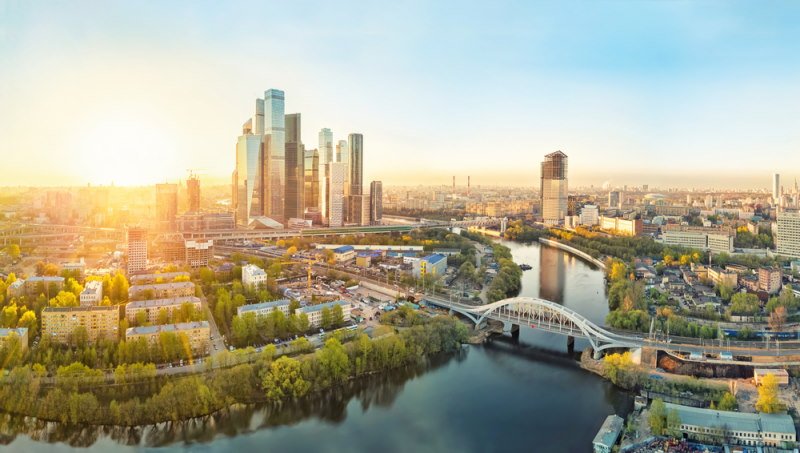
Moscow stands supreme as the colossal capital of Russia and the largest metropolis on the European continent, centered along the Moskva River. First mentioned in historical chronicles in 1147 by Prince Yuri Dolgorukiy, the city grew outward in concentric rings, centered upon the red-brick ramparts of the Moscow Kremlin and Red Square.
The city balances medieval Russian Orthodox masterworks like the colorful onion domes of Saint Basil’s Cathedral with the Stalinist Seven Sisters skyscrapers and the futuristic glass towers of Moscow City financial center. Moscow is the political, financial, and scientific engine of the country, home to the Russian government, the Bolshoi Theatre, and an extraordinary palace-like underground metro system that transports millions of commuters daily.
Conclusion
Russia’s ten largest cities encompass thousands of miles of geographic diversity, connecting European river ports with the resource-rich plains of Siberia and the Urals. These metropolitan giants continue to drive heavy manufacturing, scientific research, and cultural heritage across the Eurasian continent.