The Islamic Republic of Iran rests upon an expansive, elevated plateau at the historic crossroads of Central Asia, the Caucasus, and the Persian Gulf, surrounded by the towering alpine ridges of the Zagros and Alborz mountain chains. For more than two and a half millennia, the Achaemenid, Parthian, Sasanian, and Safavid empires constructed monument-rich capitals along ancient Silk Road trade routes. According to municipal demographic census figures compiled by the Statistical Center of Iran (SCI), over seventy-five percent of the Iranian population resides in urban localities, with massive demographic concentrations occupying the fertile northern foothills and central oasis corridors.
Iranian cities are globally celebrated for their distinctive Persian urban design, characterized by cooling windcatcher towers (badgirs), verdant walled paradisical gardens inscribed by UNESCO, and turquoise-domed mosques decorated with complex geometric arabesques. Beyond the political and academic avenues of Tehran, regional provincial capitals anchor ancient pilgrimage sanctuaries, copper smelting refineries, and world-renowned hand-knotted Persian carpet guilds. Examining the ten largest cities provides insight into how ancient Persian heritage and modern industrial development shape the Iranian plateau.
10. Urmia (approx. 736,200 residents)
Positioned on an emerald agricultural plain in northwestern Iran near the borders of Turkey and Azerbaijan, Urmia serves as the capital of West Azerbaijan Province. The city rests along the western shore of Lake Urmia, historically one of the largest hypersaline lakes on Earth. Known for centuries as a peaceful sanctuary for diverse linguistic and spiritual communities, Urmia preserves historic Persian mosques alongside ancient Assyrian Christian foundations, most notably the Church of Saint Mary, which Christian tradition holds was founded by one of the Three Biblical Magi.
The surrounding fertile plains benefit from mountain snowmelt, making Urmia an agricultural leader in the production of sweet apples, grapes, and aromatic rosewater. Modern Urmia is a prominent academic center, home to Urmia University and specialized medical research faculties.
9. Kermanshah (approx. 946,700 residents)
Resting in a verdant mountain valley among the rugged Zagros Mountains roughly five hundred kilometers west of Tehran, Kermanshah holds an honored place in ancient Persian history. Located along the historic Royal Road between Babylon and Ecbatana, the city is world-famous for Taq-e Bostan, a series of monumental rock reliefs carved into the cliff face depicting the investitures and royal boar hunts of Sasanian kings from the fourth century AD.
Nearby lies the UNESCO World Heritage site of Bisotun, featuring the celebrated multilingual cuneiform inscriptions of Darius the Great, which proved instrumental in deciphering ancient cuneiform script. Modern Kermanshah serves as the agricultural and petroleum refining hub of western Iran, renowned across the country for traditional sweets like Nan-e Berenji and fine Kurdish woven kilims.
8. Ahvaz (approx. 1,184,800 residents)
Situated in southwestern Iran across the sun-drenched plains of Khuzestan Province along the Karun River, Ahvaz is the industrial and energy heartland of the nation. In ancient times, the city functioned as a vital center of the Elamite and Sasanian civilizations, famous for innovative hydraulic river engineering. Modern Ahvaz experienced phenomenal industrial growth following the discovery of the first commercial oil fields in the Middle East in 1908 at nearby Masjed Soleyman, becoming the primary command center for the National Iranian South Oil Company.
The Karun River slices through the city core, spanned by eight prominent bridges, including the historic White Bridge (Pol-e Sefid), an elegant steel arch bridge constructed in 1936 that serves as the civic symbol of Ahvaz. The city is famous for its lively street food culture, particularly spicy seafood dishes like Ghalieh Mahi, alongside major steel smelting and heavy machinery plants.
7. Qom (approx. 1,201,200 residents)
Located on the desert plain roughly one hundred and forty kilometers south of Tehran, Qom holds sacred status as the spiritual capital of Shia scholarship in Iran and one of the holiest cities in the Islamic world. The city’s skyline is crowned by the magnificent golden dome and soaring minarets of the Fatima Masumeh Shrine, the sacred burial place of the sister of the eighth Shia Imam, which attracts millions of pilgrims and scholars from across the globe each year.
Qom is home to the Hawza Ilmiyya, an internationally revered consortium of traditional Islamic theological seminaries that has educated prominent Iranian spiritual leaders and philosophers for centuries. The city is also universally famous for sohan, a delicious, brittle saffron and pistachio confection made with wheat sprout and rosewater, alongside world-class pure-silk Persian carpet weaving.
6. Tabriz (approx. 1,558,700 residents)
Resting in a high-altitude mountain valley in northwestern Iran beneath the volcanic peak of Mount Sahand, Tabriz is the proud capital of East Azerbaijan Province and the historic cultural center of Iranian Azerbaijanis. Throughout history, Tabriz served as the imperial capital for multiple dynasties, including the Ilkhanate Mongols and the Safavid Empire. The city’s architectural centerpiece is the historic Bazaar of Tabriz, an expansive interconnected network of brick vaulted halls and caravanserai courtyards recognized as a UNESCO World Heritage site and the largest covered bazaar in the world.
Tabriz is globally celebrated as the capital of Persian hand-knotted carpet weaving, producing masterpieces known for fine knots, silk foundations, and botanical medallions. The city also hosts major heavy industrial enterprises, including tractor manufacturing, petrochemical plants, and the historic Blue Mosque, praised for cobalt ceramic tiles.
5. Shiraz (approx. 1,565,600 residents)
Cradled in a green fertile valley in the Zagros Mountains of southern Iran, Shiraz is celebrated worldwide as the cultural heart of Persian civilization, synonymous with poetry, nightingales, fine wine, and fragrant gardens. The city is the sacred resting place of two of Persia’s greatest classical poets, Hafez and Saadi, whose open-air marble mausoleums sit within tranquil cypress gardens that draw lovers of literature and philosophy from around the globe. Downtown lies the Nasir al-Mulk Mosque (Pink Mosque), famous for kaleidoscopic morning light streaming through stained-glass windows onto ornate Persian carpets.
Just sixty kilometers northeast of Shiraz lie the monumental stone ruins of Persepolis, the ceremonial capital of the ancient Achaemenid Empire founded by Darius the Great in 518 BC. Shiraz is an essential academic and commercial center, home to Shiraz University and traditional citrus and perfume orchards.
4. Karaj (approx. 1,592,500 residents)
Positioned along the southern slopes of the Alborz mountain range just thirty-five kilometers west of central Tehran, Karaj has transformed over the past few decades from a weekend mountain retreat into a bustling metropolitan city exceeding 1.5 million citizens. Connected directly to the capital by modern commuter highways and Line 5 of the Tehran Metro, Karaj accommodates thousands of engineering professionals, university students, and manufacturing specialists.
The city’s picturesque northern perimeter marks the origin of the dramatic Chalus mountain road, which winds through sheer alpine ravines past the Karaj Dam reservoir into the subtropical Caspian Sea provinces. Karaj preserves architectural heritage at the Pearl Palace (Morvarid Palace), a whimsical 1970s organic modernist complex designed by the Frank Lloyd Wright Foundation.
3. Isfahan (approx. 1,961,300 residents)
Spanning the banks of the Zayandeh River in central Iran, Isfahan holds legendary status as one of the most beautiful and culturally magnificent cities on Earth, celebrated in the classic proverb Esfahan nesf-e jahan (Isfahan is half the world). Under Safavid ruler Shah Abbas the Great in the late sixteenth century, the city was transformed into a masterpiece of urban architecture centered around Naqsh-e Jahan Square, an expansive UNESCO World Heritage plaza enclosed by the blue-mosaic Shah Mosque, the delicate Sheikh Lotfollah Mosque, and the royal palace of Ali Qapu.
The river is spanned by architectural masterpieces of stone bridge engineering, notably the multi-arched Si-o-se-pol and Khaju Bridge, where locals gather at sunset beneath stone arcades to sing traditional Persian folk songs. Isfahan is also a heavyweight industrial powerhouse, operating colossal steel foundries, textile mills, and aerospace technological centers.
2. Mashhad (approx. 3,001,200 residents)
Located in northeastern Iran near the borders of Turkmenistan and Afghanistan, Mashhad, meaning Place of Martyrdom, is the spiritual capital and second-most populous city in the country. The entire urban fabric revolves around the monumental Imam Reza Shrine complex, the sacred burial sanctuary of the eighth Shia Imam, which constitutes the largest religious mosque complex in the world by physical surface area. Millions of pilgrims visit annually to pray beneath its gleaming golden dome and ornate mirrored halls.
Beyond religious pilgrimage, Mashhad functions as the economic hub of eastern Iran, anchoring regional trade in agricultural goods, precious gemstones like Nishapur turquoise, and saffron, of which the surrounding Khorasan region produces roughly eighty percent of the global supply. Just north of the city lies Tus, preserving the grand stone mausoleum of epic poet Ferdowsi, author of the Persian national epic Shahnameh.
1. Tehran (approx. 8,693,700 residents)
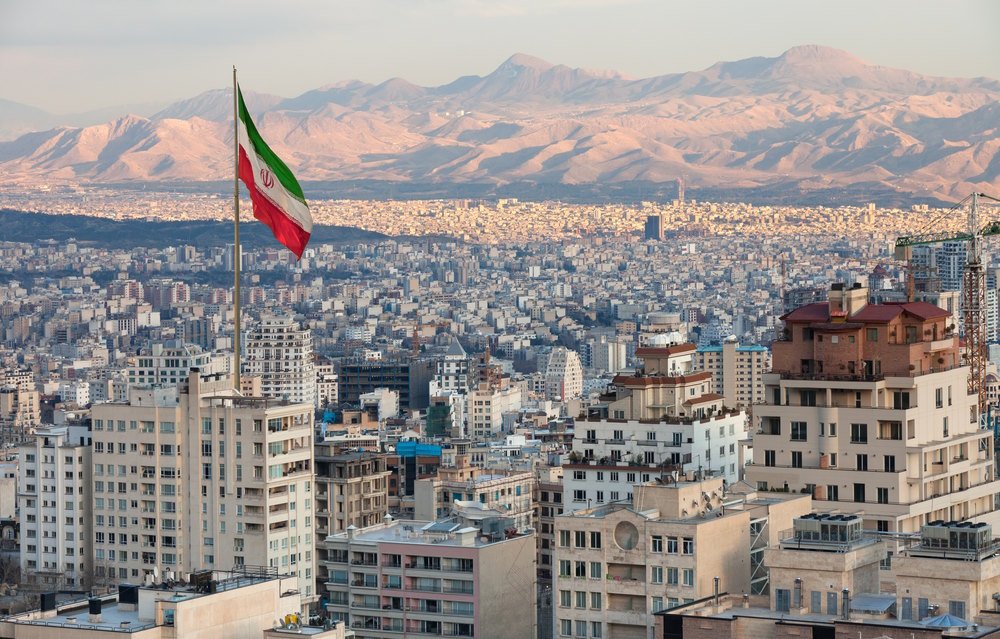
Tehran stands supreme as the colossal capital, political center, and economic powerhouse of Iran, resting against the dramatic granite wall of the Alborz mountain range. Established as the royal seat in 1796 by Agha Mohammad Khan Qajar, the metropolis accommodates nearly nine million residents within its central municipal boundary, while the broader Greater Tehran urban agglomeration exceeds fifteen million citizens. The iconic Azadi Tower, constructed in 1971 to commemorate the 2,500th anniversary of the Persian Empire, guards the western gateway, while the 435-meter Milad Tower pierces the northern skyline.
Tehran is a city of extraordinary contrasts, where the opulent Golestan Palace preserves jewel-encrusted Qajar thrones beside futuristic art galleries and bustling tech software startups in the northern districts. With the extensive Tehran Metro carrying millions of commuters daily beneath avenues shaded by plane trees and water channels, Tehran drives national finance, diplomacy, higher education, and cinema across the Middle East.
Conclusion
Iran’s largest cities capture an exceptional continuity spanning ancient Achaemenid citadels, Safavid royal squares, and modern high-tech research centers. From the turquoise domes and stone bridges of Isfahan and the poetic garden sanctuaries of Shiraz to the sacred shrines of Mashhad and the towering skyline of Tehran, these ten urban centers represent the rich cultural heritage and resilience of the Iranian nation.