The urban landscape of the United Kingdom presents a compelling contrast between the colossal gravitational pull of Greater London and a proud constellation of regional capitals across England, Scotland, Wales, and Northern Ireland. According to demographic publications compiled by the Office for National Statistics (ONS), the UK ranks among the most thoroughly urbanized nations on Earth, with roughly eighty-four percent of its populace living within major towns and contiguous metropolitan regions.
Assessing the largest British cities requires navigating distinct local government definitions. While historical city status in Britain is officially granted by royal charter, administrative municipal boundaries often designate relatively compact local authority council areas. In several instances, regional urban agglomerations extend far beyond these civic borders, creating dense multi-district conurbations that shape regional identity and commerce.
From historic Roman river crossings and Celtic strongholds to pioneering hubs of the Industrial Revolution, here are the top 10 largest cities in the United Kingdom by primary urban and municipal population.
10. Leicester: ~375,000 Residents
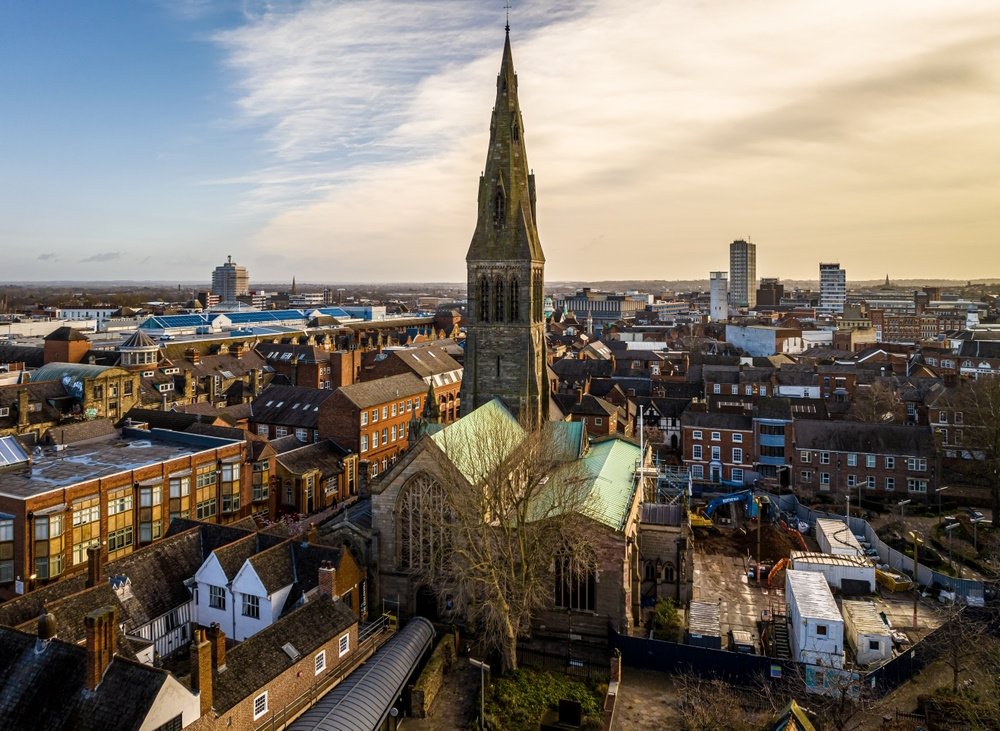
Positioned along the River Soar in the East Midlands, Leicester is one of the oldest recorded communities in the British Isles. Archaeological findings indicate continuous habitation from Iron Age Celtic settlements through the Roman fortified town of Ratae Corieltauvorum, where ancient paved roads and bathhouse complexes formed a key regional outpost.
In modern times, Leicester is globally celebrated as a shining example of multicultural civic life, boasting dynamic South Asian heritage communities that host the largest Diwali celebrations outside the Indian subcontinent along Belgrave Road. The city captured international headlines in 2012 when archaeologists discovered the lost skeletal remains of King Richard III beneath a municipal council car park, leading to a state reburial at Leicester Cathedral and establishing the city as an essential destination for medieval British history enthusiasts.
9. Bristol: ~485,000 Residents
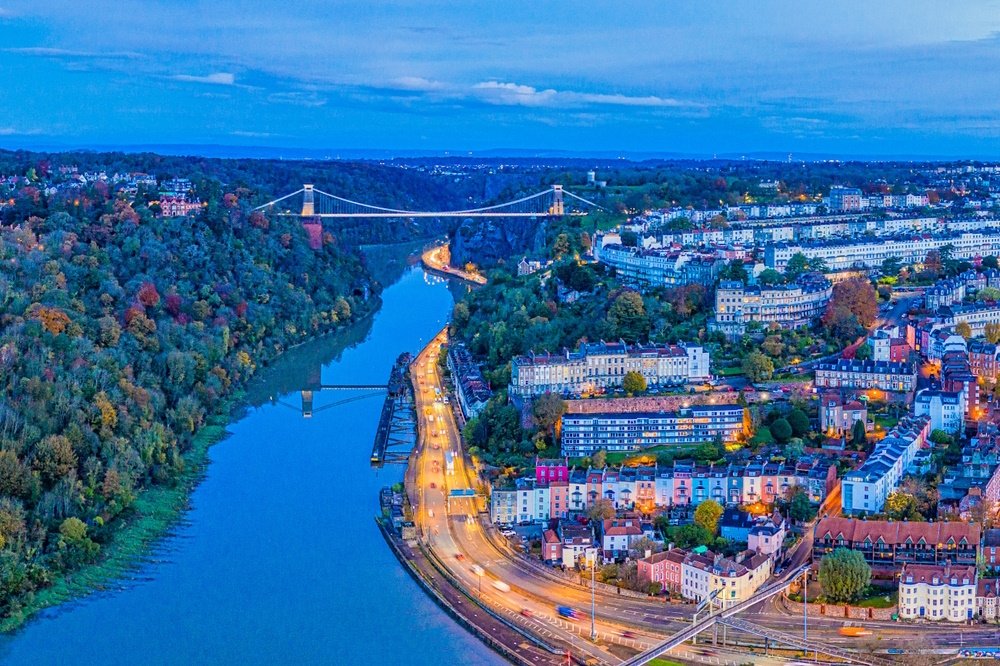
Bristol anchors southwest England as a fiercely independent commercial port and artistic center, developed around the tidal gorge of the River Avon. Over centuries, maritime commerce enriched the city, transforming its harbor into a bustling departure point for transatlantic exploration, trading voyages, and pioneering naval design.
The city’s engineering legacy is indelibly shaped by nineteenth-century innovator Isambard Kingdom Brunel, whose monumental Clifton Suspension Bridge spans the Avon Gorge and whose pioneering iron-hulled steamship SS Great Britain rests permanently preserved in dry dock. Today, Bristol functions as a leading European hub for aerospace manufacturing, creative media, and environmental sustainability, alongside a globally influential street art culture that provided the early canvas for anonymous graffiti icon Banksy.
8. Edinburgh: ~535,000 Residents
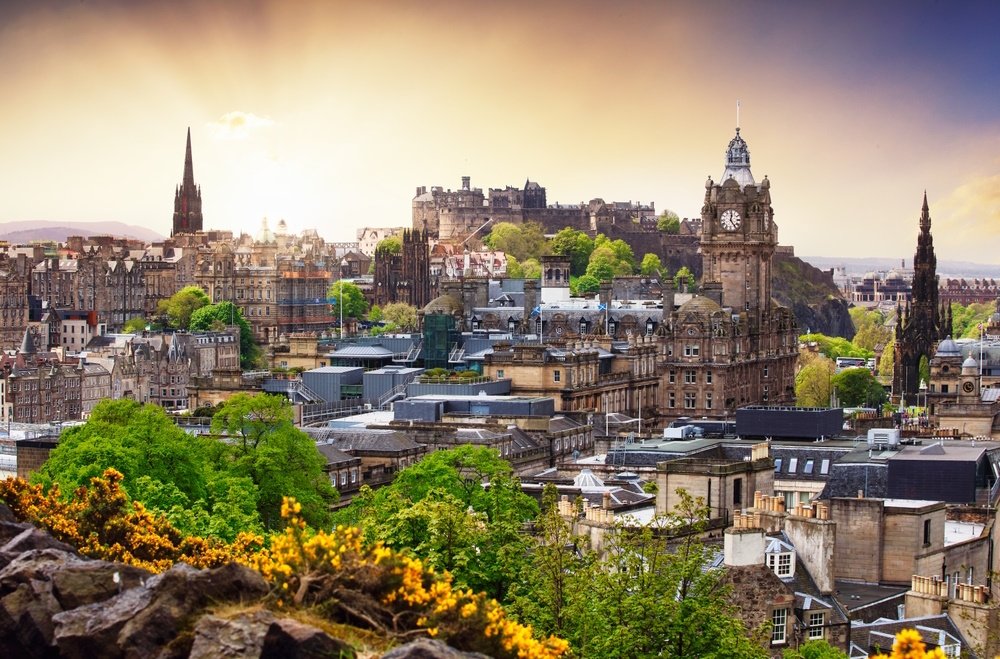
Scotland’s historic capital offers one of the most dramatically scenic urban panoramas in Europe, defined by ancient volcanic crags, deep green valleys, and sweeping views of the Firth of Forth. The city is split cleanly between two distinct historical quarters: the dense medieval closes and towering stone tenements of the Old Town, and the symmetrical neoclassical Georgian avenues of the eighteenth-century New Town.
Perched high above the metropolis upon an extinct volcanic plug sits Edinburgh Castle, which houses the Honours of Scotland and the ancient Stone of Destiny. Beyond its architectural pedigree, Edinburgh is universally recognized as the world’s premier festival capital, attracting hundreds of thousands of international performers, playwrights, and spectators every August for the Edinburgh Festival Fringe.
7. Sheffield: ~600,000 Residents
Spread across seven rolling hills at the eastern edge of the Pennines in South Yorkshire, Sheffield owes its historic rise to an abundant natural confluence of fast-flowing rivers, iron ore deposits, and carboniferous coal seams. During the height of the Industrial Revolution, local inventors like Benjamin Huntsman and Harry Brearley pioneered crucible steel and stainless steel production, turning Sheffield into the world’s unchallenged cutlery and metallurgy capital.
Modern Sheffield has successfully transformed its industrial identity into an environmentally focused economy. More than a third of the city’s geographical boundary lies directly inside the Peak District National Park, making it the only major English city to incorporate an official national park within its borders. With over four million trees and dozens of public parks, it is frequently cited as one of the greenest urban centers in Europe.
6. Liverpool: ~510,000 Residents
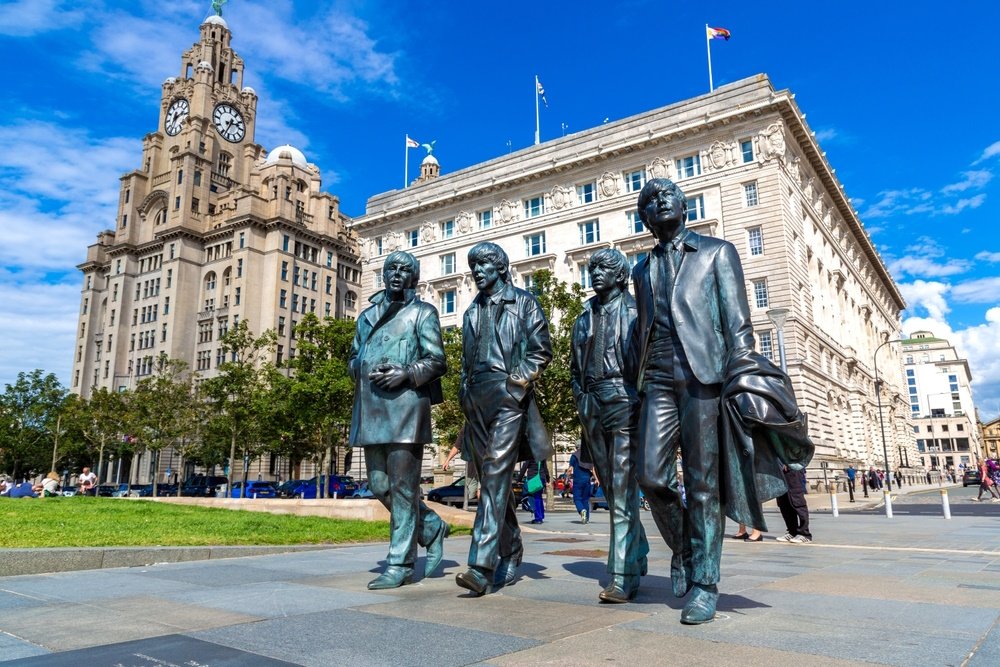
Overlooking the Irish Sea at the mouth of the River Mersey, Liverpool grew from a quiet fishing village into one of the most vital transatlantic shipping gateways of the British Empire. During the eighteenth and nineteenth centuries, vast dock systems like the Albert Dock handled a significant fraction of international trade, bringing wealth that funded monumental architecture along Pier Head, famously anchored by the Royal Liver, Cunard, and Port of Liverpool buildings.
Liverpool is equally celebrated across the globe as a cultural powerhouse. Designating it as a UNESCO City of Music, the United Nations recognized its peerless contribution to popular entertainment, forever crystallized as the birthplace of The Beatles. Combined with ferocious sporting passions divided between Liverpool FC and Everton FC, the city maintains an unmistakable civic identity marked by warmth, humor, and creative energy.
5. Glasgow: ~640,000 Residents
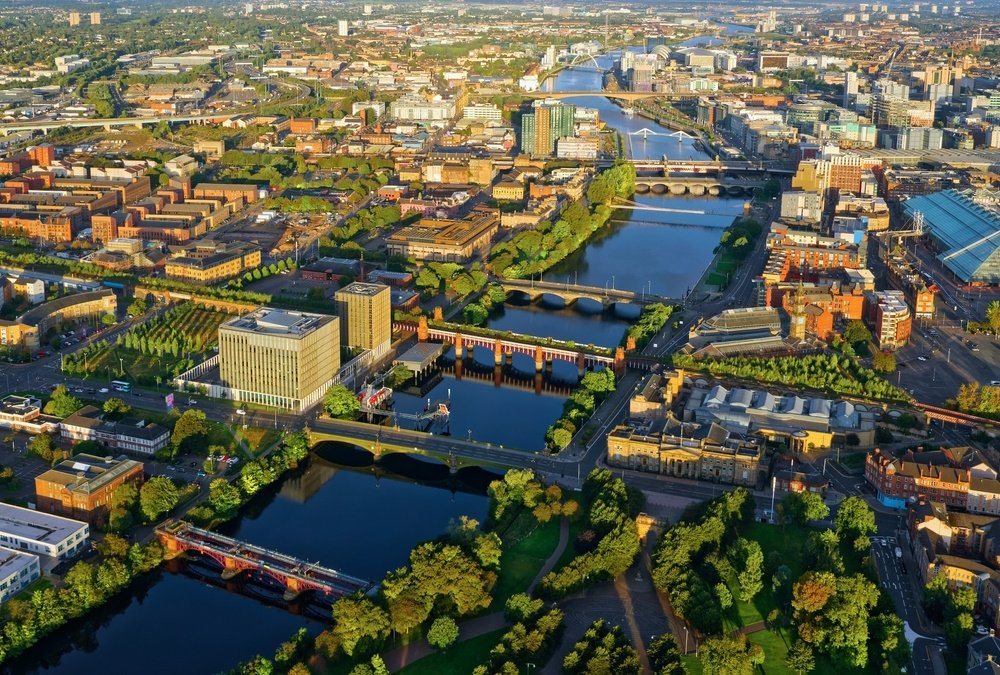
Glasgow is the undisputed economic locomotive and largest population center of Scotland, positioned along the River Clyde in the western Lowlands. Historically expanding from a venerable medieval bishopric and university hub, the nineteenth century transformed Glasgow into an engineering titan, constructing legendary ocean liners, locomotives, and industrial machinery that earned it the title of the Second City of the British Empire.
While heavy shipbuilding has largely ceded to finance, higher education, and biomedical sciences, Glasgow’s architectural grandeur remains intact. The city boasts some of the finest Victorian streetscapes in Britain, beautifully counterbalanced by the distinctive Art Nouveau masterpieces of Charles Rennie Mackintosh, including the Glasgow School of Art and the Willow Tearooms.
4. Leeds: ~830,000 Residents
Leeds serves as the commercial, financial, and legal engine of West Yorkshire, developed along the banks of the River Aire. During the Industrial Revolution, the city specialized in woolen textile production, flax spinning, and ready-made tailoring, supported by the engineering prowess of figures like Matthew Murray and the opening of the landmark Leeds and Liverpool Canal.
In modern Britain, Leeds commands the largest financial and legal services sector outside Central London, with major institutions like the Bank of England maintaining administrative headquarters here. The city’s thriving student populace across multiple universities fuels an active culinary and cultural scene, centered around Victorian shopping arcades such as the Victoria Quarter and converted industrial warehouse districts along the waterfront.
3. Manchester: ~565,000 Residents

Manchester is widely acknowledged as the birthplace of modern industrial capitalism. During the nineteenth century, the city expanded with such ferocious velocity that observers christened it Cottonopolis, reflecting its absolute global dominion over cotton spinning and wholesale textile markets.
While the City of Manchester council district accommodates roughly 565,000 residents, the broader Greater Manchester conurbation encompasses nearly three million people across ten unified boroughs. Manchester has contributed monumental breakthroughs to human knowledge, including the development of atomic theory by John Dalton, the splitting of the atom by Ernest Rutherford, and the construction of the world’s first stored-program electronic computer. Its musical heritage, spanning bands like The Smiths, Joy Division, and Oasis, pairs with the global sporting dominance of Manchester United and Manchester City.
2. Birmingham: ~1.16 Million Residents
Occupying the heart of the West Midlands plateau, Birmingham ranks as the second-most populous individual local authority in the United Kingdom. During the eighteenth century, the city became the crucible of the English Enlightenment through the Lunar Society, which united luminaries like Matthew Boulton, James Watt, and Josiah Wedgwood to invent steam power systems and launch modern manufacturing.
Nicknamed the City of a Thousand Trades, Birmingham produced everything from fine jewelry and firearms to buttons and heavy transport vehicles, supported by an elaborate canal system that contains more navigable waterway miles than Venice. Today, Birmingham has reinvented its center with daring modern architecture, including the gleaming Library of Birmingham and the Grand Central redevelopment, while serving as a premier education and logistics crossroads.
1. London: ~9.70 Million Residents
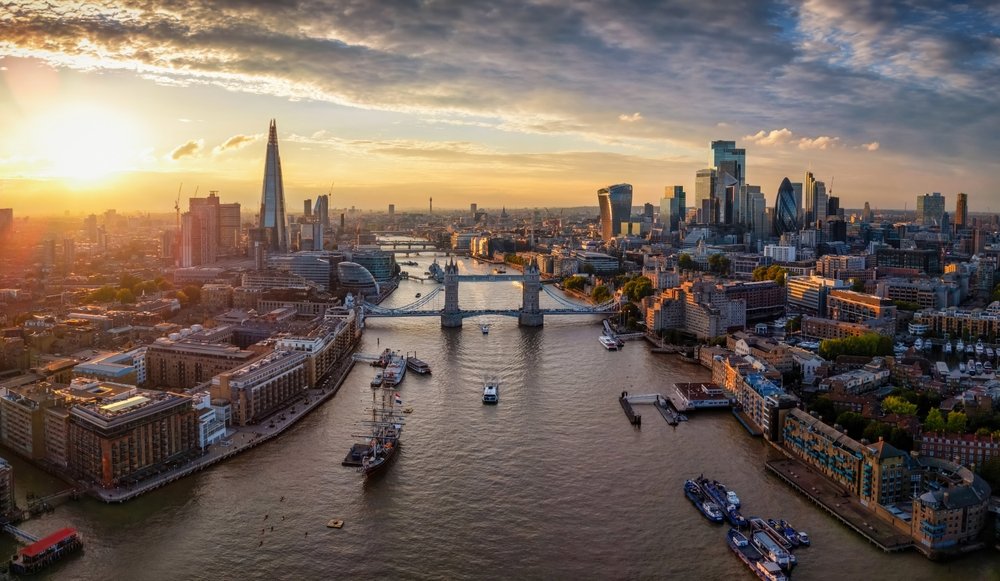
London exists on an entirely different scale from every other British municipality, anchoring global commerce, international finance, diplomacy, and media from the banks of the River Thames. Originally established by Roman legions as Londinium around 47 AD, the metropolis has withstood medieval plagues, the Great Fire of 1666, and wartime bombardment, consistently emerging larger and more economically formidable.
Modern Greater London spans thirty-two autonomous boroughs surrounding the historic City of London financial core. With world-renowned cultural institutions like the British Museum, theatrical stages in the West End, and iconic monarchical monuments including Buckingham Palace and the Tower of London, the capital generates nearly a quarter of the United Kingdom’s economic output while welcoming residents from every nation on Earth.
Conclusion
From the industrial valleys of the Midlands to the coastal ports of the north and west, the United Kingdom’s major cities demonstrate a remarkable capacity for reinvention. As regional infrastructure investments like high-speed rail and devolution initiatives continue to develop, these urban centers will remain vital drivers of British economic prosperity and cultural innovation.