Spain possesses a deeply regionalized urban landscape, where autonomous communities preserve distinct languages, historical charters, and economic specializations. According to official municipal population registers compiled by the National Statistics Institute of Spain (INE), over eighty percent of Spanish citizens inhabit urban settlements, with substantial demographic concentrations hugging the Mediterranean and Atlantic coastlines alongside the massive central gravitational center of Madrid.
Spanish municipal governance is based on the municipio, which governs a legally defined city boundary. While metropolitan areas like Greater Barcelona and Greater Bilbao include dozens of contiguous suburban towns, municipal rankings strictly count registered residents within the central city boundaries, providing clear comparisons of municipal administrative weight.
From the rugged green mountains of the Basque Country to the sun-drenched plains of Andalusia and the island capitals of the Canaries and Balearics, here are the top 10 largest cities in Spain by municipal population.
10. Bilbao (Basque Country): ~349,000 Residents
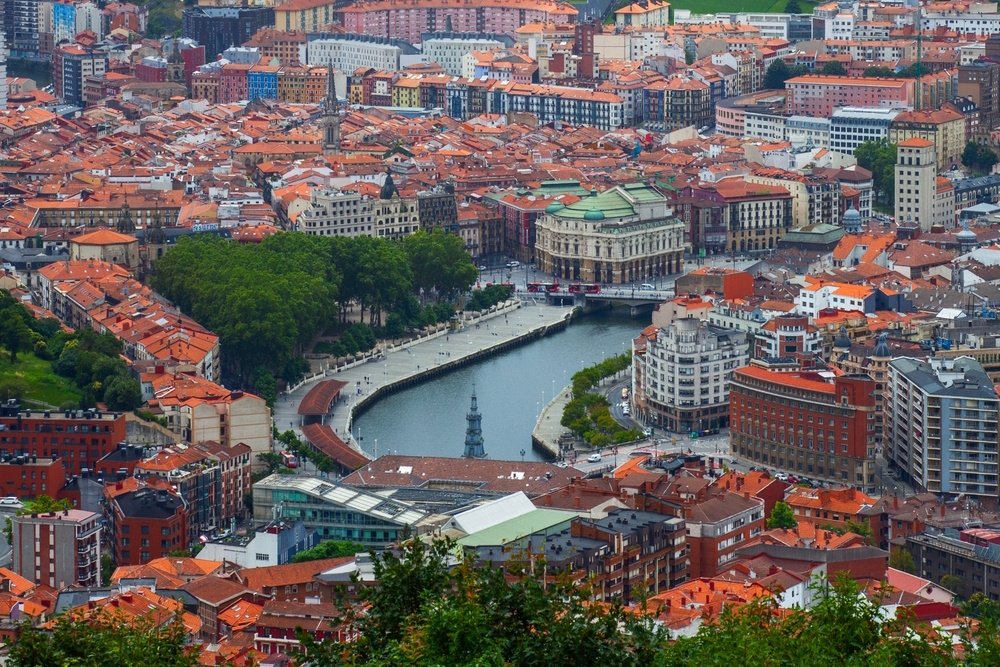
Bilbao is the financial and industrial engine of the Basque Country, situated along the tidal estuary of the Nervión River in northern Spain. For generations, the city’s fortune was built upon iron ore mining, heavy blast furnaces, and commercial shipbuilding that supplied industrial markets worldwide.
In the late twentieth century, Bilbao pulled off one of the most successful urban transformations in modern architectural history, popularly termed the “Guggenheim Effect.” The opening of the titanium-clad Guggenheim Museum Bilbao, designed by Frank Gehry, catalyzed the reclamation of industrial riverbanks into pedestrian parks, cutting-edge transit lines, and a world-class culinary capital famous for pintxos bars.
9. Las Palmas de Gran Canaria (Canary Islands): ~382,000 Residents
Located on the island of Gran Canaria off the northwestern coast of Africa, Las Palmas is the most populous city in the Canary Islands, sharing capital duties of the autonomous community with Santa Cruz de Tenerife. Founded in 1478 by Castilian forces, the city served as an essential stopover point for Christopher Columbus before crossing the Atlantic in 1492.
The city’s historic Vegueta neighborhood preserves colonial stone courtyards, wooden balconies, and the impressive Santa Ana Cathedral. Las Palmas operates one of the busiest maritime transshipment container ports in the Atlantic (Puerto de la Luz), enjoying a year-round subtropical climate that attracts millions of international travelers to beaches like Las Canteras.
8. Palma de Mallorca (Balearic Islands): ~425,000 Residents
Palma de Mallorca curves around a scenic southern bay on the island of Mallorca, serving as the political and economic capital of the Balearic Islands. The city is famously dominated by the monumental Gothic Cathedral of Santa Maria (popularly called La Seu), constructed right on the historic seawall overlooking the Mediterranean.
Palma was influenced by Roman, Byzantine, and Islamic periods before King James I of Aragon conquered the island in 1229. Today, Palma functions as one of Europe’s primary tourism capitals, supported by a busy international airport, a bustling luxury yacht marina, and an impeccably preserved historic quarter featuring secluded aristocratic courtyards.
7. Murcia: ~465,000 Residents
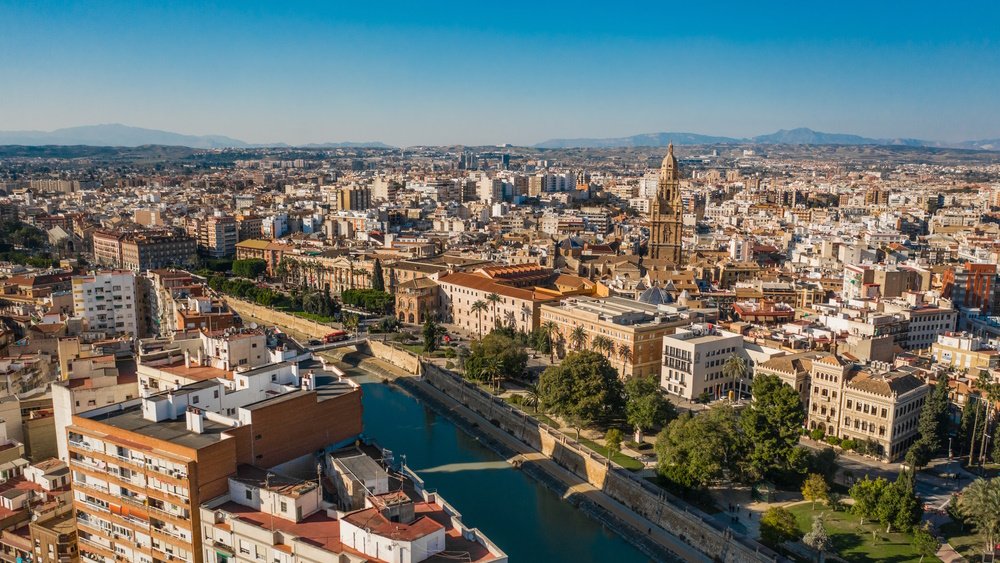
Murcia lies in southeastern Spain along the Segura River, serving as the capital of its autonomous region. Founded in 825 AD by the Emir of Cordoba Abd ar-Rahman II as Madinat Mursiya, the city developed sophisticated irrigation systems that converted the surrounding arid valley into one of Europe’s most fertile agricultural zones, known historically as the Orchard of Europe (La Huerta de Murcia).
The city is famous for the Cathedral of Saint Mary, which showcases an exceptional baroque facade and a ninety-meter tower that took over two centuries to complete. Murcia maintains deep religious and artistic traditions, celebrated especially through the famous baroque polychrome wood sculptures of Francisco Salzillo carried during Holy Week processions.
6. Málaga (Andalusia): ~582,000 Residents
Anchoring the Costa del Sol on the southern Mediterranean coast of Andalusia, Málaga is one of the oldest continuously inhabited cities in Europe, founded by Phoenician traders as Malaka around 770 BC. The city’s skyline is crowned by the medieval Alcazaba fortress and the Gibralfaro Castle, offering panoramic views of the coastal port.
Historically known as a gateway for beach tourism, Málaga has undergone an extraordinary cultural revival over the past two decades. As the birthplace of Pablo Picasso, the city opened the Museo Picasso Málaga and a branch of the Centre Pompidou, transforming itself into an artistic destination and southern Spain’s leading technology and startup incubator.
5. Zaragoza (Aragon): ~685,000 Residents
Zaragoza serves as the proud capital of Aragon, positioned strategically along the Ebro River roughly midway between Madrid, Barcelona, Valencia, and Bilbao. Originally founded by Emperor Augustus as the Roman colony Caesaraugusta, the city preserves Roman walls, theater ruins, and the Moorish Aljafería Palace, an extraordinary example of Islamic architecture outside Andalusia.
The city’s spiritual and visual anchor is the monumental Basilica del Pilar, an expansive baroque sanctuary standing directly on the riverbank that honors the Virgin Mary. Zaragoza functions as a major logistics hub for southern Europe, hosting large automotive manufacturing plants and modern distribution centers.
4. Seville (Andalusia): ~692,000 Residents

Seville is the passionate capital of Andalusia and the cultural heart of southern Spain, situated along the navigable Guadalquivir River. During the sixteenth and seventeenth centuries, Seville held a royal monopoly on trade with the New World, through which American gold and silver flowed into Europe, funding monumental palaces and baroque churches.
The city contains three UNESCO World Heritage monuments: the colossal Gothic Seville Cathedral (the largest Gothic cathedral in the world, containing the tomb of Christopher Columbus), the Moorish Royal Alcázar palace, and the General Archive of the Indies. Globally celebrated as the birthplace of flamenco and famous for the grand Plaza de España, Seville embodies the romantic soul of Andalusian culture.
3. Valencia: ~807,000 Residents
Valencia sits along the eastern Mediterranean coast where the Turia River formerly met the sea. Following a devastating flood in 1957, the city rerouted the riverbed and transformed the dried channel into the Turia Gardens, a magnificent nine-kilometer green park traversing the entire city center.
At the eastern terminus of the park rises the futuristic City of Arts and Sciences, a world-famous architectural complex designed by native architect Santiago Calatrava. As the historic birthplace of paella and home to the wild pyrotechnic festivities of the annual Las Fallas festival, Valencia operates the busiest maritime container seaport in Spain.
2. Barcelona (Catalonia): ~1.64 Million Residents

Barcelona is the bustling capital of Catalonia and Spain’s second-largest city, positioned between the Mediterranean Sea and the Collserola mountain ridge. With an ancient origin as the Roman colony of Barcino, the city flourished into a major medieval maritime empire throughout the western Mediterranean, preserved today in the winding Gothic Quarter.
The city’s global identity is forever intertwined with the visionary modernisme architecture of Antoni Gaudí, most prominently the unfinished basilica of the Sagrada Família, Park Güell, and Casa Batlló. Operating one of Europe’s leading international cruise and cargo ports, Barcelona is an economic giant driven by pharmaceuticals, automotive manufacturing, technology summits like the Mobile World Congress, and world-class football culture.
1. Madrid: ~3.32 Million Residents
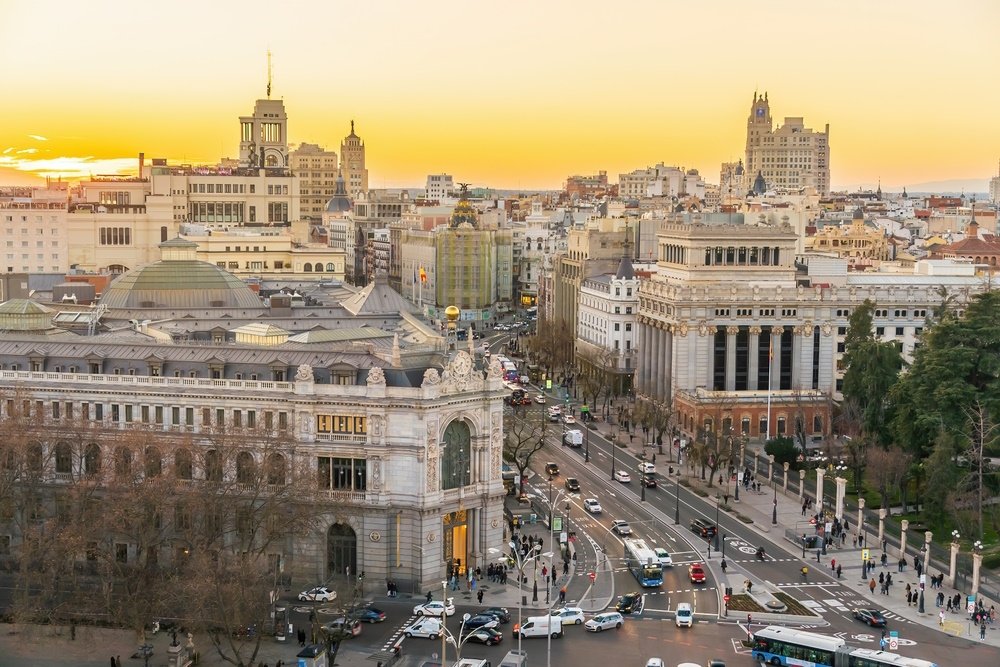
Madrid sits upon a high plateau in the geographic center of the Iberian Peninsula at an elevation of 650 meters, making it the second-highest capital city in Europe. Chosen as the imperial capital by King Philip II in 1561, the city expanded rapidly around the Royal Palace, the grand Plaza Mayor, and the tree-lined avenues of the Bourbon kings.
Today, Madrid functions as the political, financial, and cultural locomotive of Spain, home to the national government, the royal monarchy, and leading corporate banks. Its cultural pedigree is anchored by the Golden Triangle of Art, featuring the Prado Museum, the Reina Sofía, and the Thyssen-Bornemisza, while its bustling street life along the Gran Vía and historic tapas quarters reflects an energetic, hospitable metropolis.
Conclusion
Spain’s ten largest cities showcase an extraordinary mosaic of cultures, languages, and geographical diversity. From northern industrial ports to sunny Mediterranean commercial capitals and the royal plazas of the central plateau, these urban centers represent the economic backbone and cultural soul of the Spanish nation.