The Federal Republic of Nigeria stands as the most populous country in Africa and the seventh-most populous on Earth, home to over two hundred and twenty million citizens belonging to more than two hundred and fifty distinct ethnic groups. Spanning coastal Atlantic mangrove swamps, tropical rainforests, central savannahs, and arid northern borders near the Sahara, Nigeria’s urban geography reflects centuries of pre-colonial empires, transatlantic trading ports, and rapid petroleum-driven industrialization. According to official municipal population estimates published by the National Bureau of Statistics of Nigeria (NBS), over fifty-three percent of Nigerians live in urban centers, with urbanization accelerating rapidly across every geopolitical zone.
Nigerian cities are characterized by boundless commercial energy, rich cultural diversity, and dynamic transport corridors where informal markets operate alongside modern logistics centers. From ancient walled kingdoms of the Hausa north and Yoruba forest capitals to modern oil refineries in the Niger Delta and master-planned federal districts, Nigerian metropolises drive the economic locomotive of West Africa. Examining the ten largest cities provides insight into how trade, resources, and civic spirit shape the giant of Africa.
10. Nnewi (approx. 1,421,800 residents)
Situated in Anambra State in southeastern Nigeria, Nnewi is celebrated across West Africa as the Japan of Africa. Originating as a traditional Igbo market settlement, the town transformed into an industrial miracle during the late twentieth century, establishing the first indigenous manufacturing hub for automotive spare parts, motorcycles, and commercial vehicles in Nigeria. The city is home to Innoson Vehicle Manufacturing (IVM), Nigeria’s pioneering indigenous automobile brand.
Nnewi possesses an astonishing concentration of homegrown billionaires and private industrial empires, driven by centuries of Igbo apprentice trading systems (Igba-Boi). Extensive factory districts produce industrial cables, motor vehicle tires, and household plastics, shipping products throughout Central and West Africa.
9. Aba (approx. 1,428,100 residents)
Located in Abia State along the Aba River in southeastern Nigeria, Aba is universally recognized as the commercial and artisanal manufacturing heart of Igboland. Established as a colonial administrative post in 1901, the city earned an honored place in anti-colonial history as the site of the historic 1929 Aba Women’s War, where thousands of market women mobilized against British colonial taxation and patriarchal oppression.
Aba is world-famous for the sprawling Ariaria International Market, often called the China of Africa, home to tens of thousands of master tailors, leather craftsmen, and cobblers who produce millions of handmade shoes, bags, and fashion garments distributed across the continent. The city is also a center for heavy steel fabrication, beer brewing, and palm oil processing.
8. Uyo (approx. 1,520,000 residents)
Serving as the capital of oil-rich Akwa Ibom State in southern Nigeria, Uyo has emerged over the last two decades as one of the cleanest, safest, and most modern urban centers in the country. The city features wide paved highways, beautifully landscaped boulevards, and the Godswill Akpabio International Stadium, affectionately called the Nest of Champions, constructed to international Olympic and FIFA standards.
Uyo is celebrated for its rich culinary heritage, famous across Nigeria for traditional soups like Afang and Edikang Ikong, prepared with fresh leafy greens, smoked seafood, and aromatic periwinkles. The city’s modern economy is anchored by expanding university research faculties, luxury hotel resorts, and petroleum logistics.
7. Onitsha (approx. 1,839,900 residents)
Positioned on the eastern bank of the mighty River Niger in Anambra State, Onitsha is the undisputed commercial gateway to eastern Nigeria. The city developed around the historic Onitsha Main Market, widely considered the largest single open-air commodity market by volume and geographical size in West Africa, where traders buy and sell consumer electronics, textiles, and imported goods from around the globe.
The iconic Niger Bridge connects the city directly to Asaba and western Nigeria, carrying tens of thousands of vehicles daily. Onitsha is also famous in African literary history for the Onitsha Market Literature, an innovative mid-twentieth-century genre of self-published romantic and moralist novellas sold by local print shops.
6. Benin City (approx. 2,120,500 residents)
Located in southern Nigeria as the capital of Edo State, Benin City is the historic seat of the ancient Kingdom of Benin, one of the oldest and most sophisticated civilizations in pre-colonial West Africa. For centuries, the city was guarded by the ancient Earthworks of Benin, a colossal network of defensive moats and walls recognized by the Guinness World Records as the largest earthwork structure created in the pre-industrial world. The Royal Palace of the Oba of Benin remains the spiritual and political heart of the Edo kingdom.
Benin City is universally famous for the Benin Bronzes, exquisite cast-bronze, brass, and ivory sculptures created by royal guild craftsmen since the thirteenth century, celebrated today in major international museums. Modern Benin City is a prominent hub for rubber manufacturing, petroleum transport, and traditional bronze casting along Igun Street.
5. Port Harcourt (approx. 3,951,700 residents)
Situated in the coastal Niger Delta along the Bonny River, Port Harcourt is universally known as the Oil City and the Garden City of Nigeria. Founded in 1912 by British colonial authorities to export coal discovered in Enugu, the city underwent phenomenal economic expansion following the discovery of commercial crude oil in 1956, becoming the operational headquarters for international energy corporations like Shell, Total, and Agip.
The city’s deep-water seaports and petroleum refining complexes drive the national export economy. Port Harcourt features expansive golf clubs, cultural arts institutes, and the prestigious University of Port Harcourt, alongside rich culinary traditions featuring roasted plantain with peppered fish (bole and fish).
4. Ibadan (approx. 4,293,200 residents)
Resting on seven rolling hills in southwestern Nigeria roughly one hundred and twenty kilometers northeast of Lagos, Ibadan is the historic capital of Oyo State and the cultural bastion of the Yoruba people. During the nineteenth century, the city grew into a formidable military city-state that defended Yoruba territories, later becoming the largest indigenous metropolis in tropical Africa under British rule. The historic skyline is marked by Bower’s Tower atop Oke-Are hill and Cocoa House, which was the tallest building in tropical Africa when opened in 1965, built entirely with cocoa farming revenues.
Ibadan holds a distinguished place in African intellectual history as home to the University of Ibadan, founded in 1948 as Nigeria’s premier university, which educated literary giants including Chinua Achebe and Wole Soyinka. The city preserves ancient family compounds surrounded by red-corrugated roofs, coexisting with modern automotive plants and agricultural research institutes.
3. Abuja (approx. 4,392,400 residents)
Situated in the geographic center of the country beneath the colossal monolithic granite bulk of Zuma Rock and Aso Rock, Abuja was purposefully built from the late 1970s onwards to serve as the new federal capital of Nigeria, officially replacing Lagos in 1991. The location was chosen deliberately for its neutral ethnic territory and central position, designed on a master plan created by renowned Japanese architect Kenzo Tange to symbolize national unity.
Abuja is an immaculate, planned metropolis featuring grand three-lane highways, manicured public parks like Millennium Park, and monumental national landmarks including the golden-domed Nigerian National Mosque and the National Christian Centre. As the seat of the Presidency, the National Assembly, and foreign embassies, Abuja is one of the fastest-growing capital cities in the world.
2. Kano (approx. 4,810,800 residents)
Rising on the dry savannah plains of northern Nigeria, Kano stands as an ancient crossroads of trans-Saharan trade, boasting over a thousand years of continuous recorded history. For centuries, the city served as the wealthiest Hausa city-state, surrounded by the ancient Kano City Walls, a fourteen-kilometer earthen rampart that defended royal palaces and markets. The Gidan Rumfa, the palatial residence of the Emir of Kano, has served as the royal seat since the fifteenth century, famous for the colorful Durbar equestrian festival celebrated every Eid.
Kano is internationally famous for the ancient Kofar Mata Dye Pits, operating since 1498, where local artisans dye cotton cloth using natural indigo pots in centuries-old traditions. As the commercial locomotive of northern Nigeria, the city trades grain, leather, and textiles with Niger, Chad, and Cameroon, anchored by the vast Kurmi Market.
1. Lagos (approx. 17,803,700 residents)
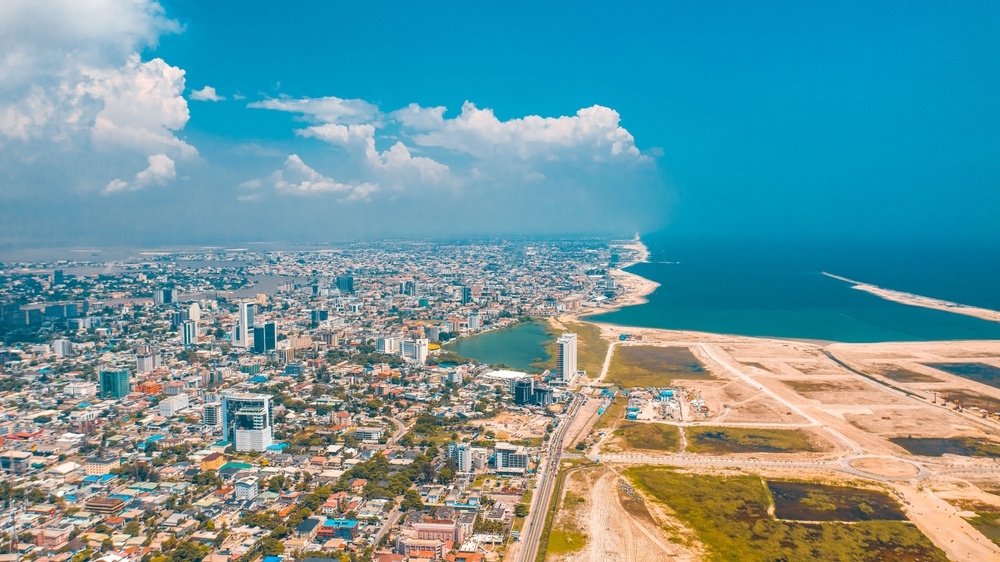
Lagos stands supreme as the colossal economic powerhouse, financial capital, and most populous megalopolis in Nigeria and Sub-Saharan Africa. Squeezed between the waters of the Gulf of Guinea and the sprawling Lagos Lagoon, the metropolis accommodates nearly eighteen million residents within an intensely energetic urban environment. While the city surrendered its political capital status to Abuja in 1991, Lagos remains the undisputed commercial titan of the nation, generating nearly a third of Nigeria’s gross domestic product.
From the affluent residential high-rises and private beaches of Victoria Island and Ikoyi to the bustling commercial wharves of Lagos Island and the mainland industrial zones of Ikeja, Lagos embodies the unstoppable ambition of modern Africa. The city is the epicentre of Nollywood and the global Afrobeats phenomenon, housing innovative tech startup ecosystems in Yaba and massive international deep-water seaports in Apapa and the newly constructed Lekki Deep Sea Port.
Conclusion
Nigeria’s largest cities capture a magnificent spectrum of pre-colonial empires, ancient trans-Saharan trading outposts, and visionary twenty-first-century industrial centers. From the historic indigo pits of Kano and the ancient royal palaces of Benin City to the political boulevards of Abuja and the unstoppable commercial drive of Lagos, these ten urban centers define the strength, diversity, and future of the giant of Africa.