The island of Ireland features a distinctive urban network shaped by coastal Viking harbor settlements, medieval Anglo-Norman castles, and twenty-first-century foreign direct investment. According to demographic census data released by the Central Statistics Office of Ireland (CSO) and the Northern Ireland Statistics and Research Agency (NISRA), roughly sixty-four percent of the Irish population lives in urban communities, with Dublin and Belfast functioning as the primary demographic locomotives of their respective jurisdictions.
Evaluating city sizes across the island of Ireland involves examining two distinct administrative frameworks: the Republic of Ireland and Northern Ireland (part of the United Kingdom). In the Republic, cities like Dublin, Cork, and Galway hold autonomous municipal council status, while in Northern Ireland, modern local government districts unify historic city centers with surrounding towns.
From historic Viking ports in the south to the industrial shipyards of the north and cultural university towns in the west, here are the top 10 largest cities on the island of Ireland by urban population.
10. Lisburn (Northern Ireland): ~72,000 Residents
Positioned on the River Lagan southwest of Belfast, Lisburn spans the historical boundary between County Antrim and County Down. The settlement grew rapidly in the late seventeenth century after French Huguenot refugees fleeing religious persecution settled here, introducing advanced loom techniques that established Lisburn as the premier center of the Irish linen manufacturing trade.
Granted official city status by Queen Elizabeth II in 2002 during her Golden Jubilee celebrations, Lisburn preserves its industrial heritage at the Irish Linen Centre and Lisburn Museum in Market Square. Today, the city combines pleasant suburban parklands like Wallace Park with expanding logistics and retail commercial sectors.
9. Waterford (Munster): ~54,000 Residents
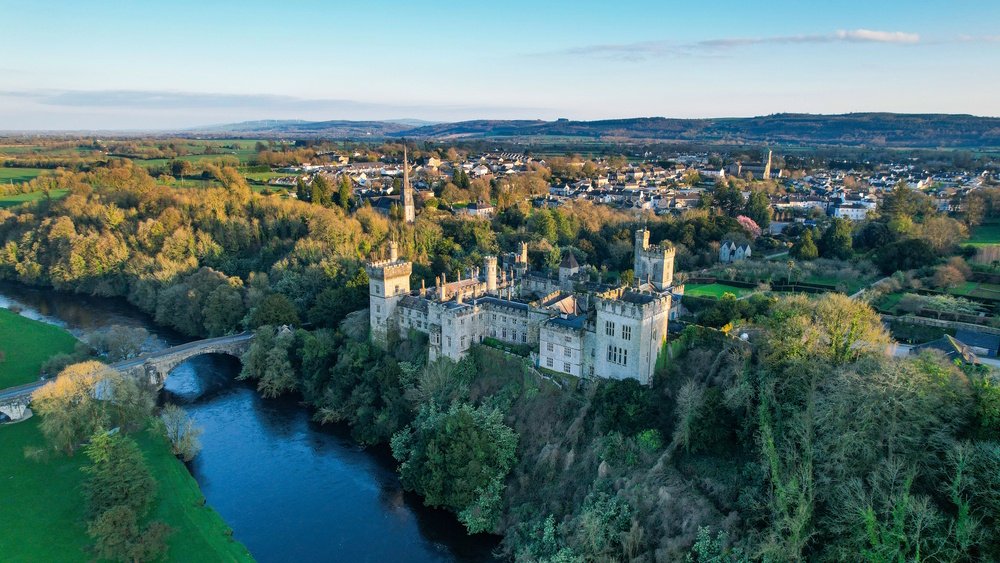
Resting along the tidal River Suir in southeastern Ireland, Waterford holds the undisputed title of the oldest city in Ireland. Founded in 914 AD by Viking leader Regnall, the city retains ancient stone fortifications, most famously Reginald’s Tower, a thick cylindrical stone watchtower that has stood on the quay for over eight centuries.
Waterford is internationally celebrated for its luxury crystal glassmaking tradition, centered around the House of Waterford Crystal where master craftsmen have blown and cut fine lead crystal since 1783. The city’s historic Viking Triangle quarter has been beautifully preserved, housing award-winning civic museums that display medieval royal charters, tapestries, and silver treasures.
8. Bangor (Northern Ireland): ~61,000 Residents
Situated on the southern shore of Belfast Lough in County Down, Bangor was founded in 558 AD by Saint Comgall as a renowned Celtic monastery and missionary school that sent scholar-monks across post-Roman Europe. During the nineteenth century, the arrival of the railway transformed Bangor into Northern Ireland’s premier Victorian seaside holiday resort.
Awarded official city status in 2022 as part of the Platinum Jubilee civic honors, Bangor is home to Bangor Marina, one of the largest recreational boat harbors in Ireland. The city features the restored nineteenth-century Bangor Castle and scenic coastal walking trails along Brompton Path and Pickie Funpark.
7. Newtownabbey (Northern Ireland): ~66,000 Residents
Stretching along the northern coastline of Belfast Lough in County Antrim, Newtownabbey is a modern urban conurbation formed in 1958 through the formal amalgamation of seven historic agricultural and industrial villages. Squeezed between the waters of the lough and the green volcanic slopes of Cavehill, the city forms an integral part of the Greater Belfast metropolitan economy.
Newtownabbey is a major educational and commercial center, home to the Jordanstown campus of Ulster University. The city preserves ancient heritage at Sentry Hill, a nineteenth-century farmhouse museum, while serving as a key industrial corridor for engineering, manufacturing, and shipping access to nearby coastal ports.
6. Derry / Londonderry (Northern Ireland): ~85,000 Residents
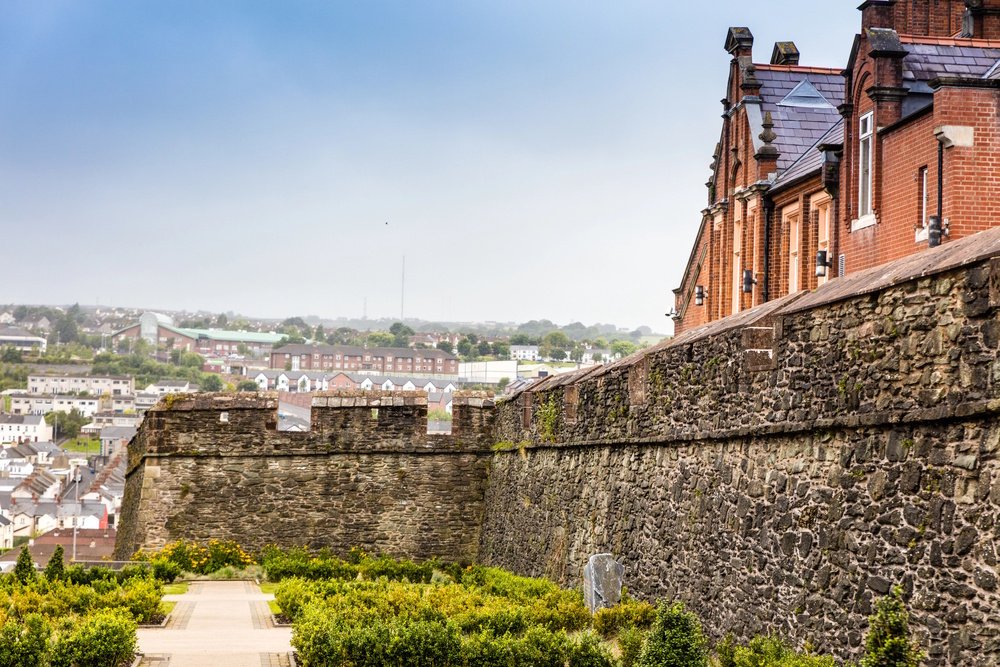
Straddling the River Foyle near the border with County Donegal, Derry is the second-largest city in Northern Ireland. Founded in the sixth century by Saint Colmcille as an oak-grove monastery, the city is world-famous for its historic seventeenth-century stone ramparts, making it the only completely intact walled city surviving in Ireland and one of the finest in Europe.
The city’s twentieth-century history was deeply marked by the Northern Ireland Troubles, commemorated today by powerful political murals in the Bogside neighborhood and the Museum of Free Derry. A triumphant symbol of reconciliation, the curved pedestrian Peace Bridge across the Foyle links diverse communities, while the city’s Halloween carnival ranks among the most celebrated street festivals in Europe.
5. Galway (Connacht): ~84,000 Residents
Galway curves around the scenic shores of Galway Bay on Ireland’s wild western Atlantic seaboard, where the River Corrib flows into the ocean. Known historically as the “City of the Tribes” after fourteen merchant dynasties that governed civic trade during the Middle Ages, the city retains its medieval stone Lynchs Castle and Spanish Arch along the quays.
Designated as a UNESCO City of Film and a former European Capital of Culture, Galway is widely acclaimed as the cultural and musical heart of Ireland. Its colorful pedestrianized Latin Quarter is filled with traditional pubs echoing with live fiddle and tin whistle sessions, while the city anchors a flourishing global medical device manufacturing sector.
4. Limerick (Munster): ~95,000 Residents
Situated along the estuary of the River Shannon in western Ireland, Limerick was founded by ninth-century Viking raiders before developing into a major Anglo-Norman military fortress. The city’s skyline is commanded by King John’s Castle, a formidable thirteenth-century fortress standing on King’s Island whose drum towers overlook the river.
Nicknamed the “Treaty City” after the historic 1691 Treaty of Limerick that concluded the Williamite War, the city preserves fine Georgian red-brick architecture in Newtown Pery. Limerick is fiercely passionate about sport, universally recognized as the spiritual home of Irish rugby at Thomond Park, alongside expanding technological and software engineering sectors centered around the University of Limerick.
3. Cork (Munster): ~222,000 Residents
Cork is the proud, fiercely independent capital of Munster in southern Ireland, resting on the River Lee just before it empties into Cork Harbour, one of the largest natural harbors in the world. Originally built upon marshy islands where the river divides into two main channels, the city earned the title Corcach Mór Mumhan (The Great Marsh of Munster) before evolving into a prosperous butter and provisions exporting port.
Affectionately nicknamed the “Rebel County” and the “Real Capital” by its residents, Cork possesses a rich culinary heritage anchored by the historic English Market, an ornate covered food hall operating since 1788. Today, Cork is an economic titan, hosting massive European manufacturing campuses for global technology and pharmaceutical giants like Apple, Pfizer, and Johnson and Johnson.
2. Belfast (Northern Ireland): ~345,000 Residents
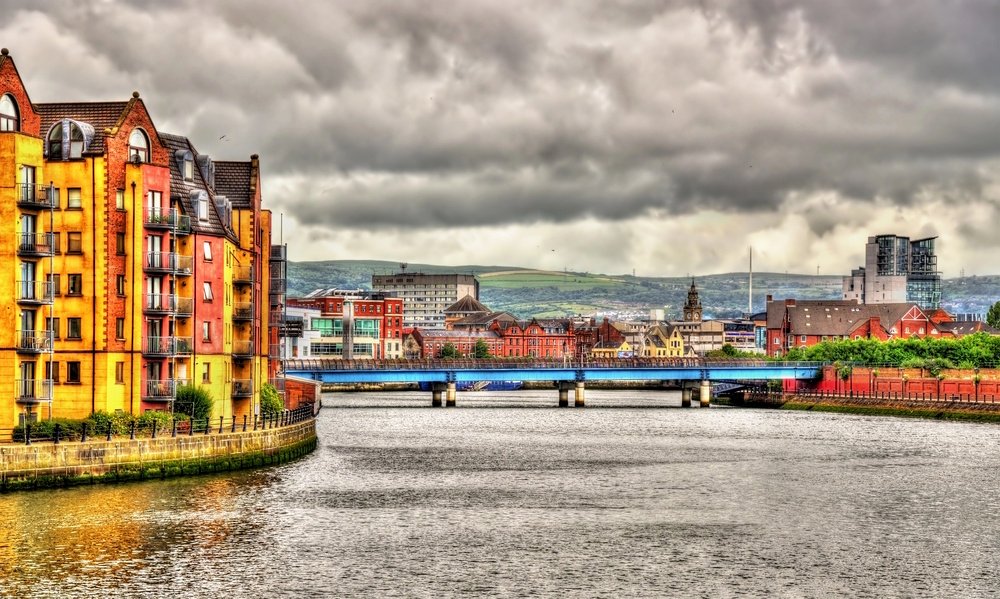
Belfast is the capital and largest city in Northern Ireland, dramatically situated at the head of Belfast Lough where the River Lagan meets the sea. Squeezed beneath the basalt cliffs of Cavehill, the city exploded during the Victorian era into an industrial titan, famous across the globe for linen spinning, rope making, and shipbuilding at Harland and Wolff, which constructed the RMS Titanic.
Dominated by the grand baroque dome of Belfast City Hall, the city has undergone an extraordinary post-conflict revival following the 1998 Good Friday Agreement. Today, the Titanic Quarter has transformed the historic shipyards into a world-class tourist destination and film production hub, while the city’s universities drive cutting-edge cybersecurity and financial technology research.
1. Dublin (Leinster): ~590,000 Residents
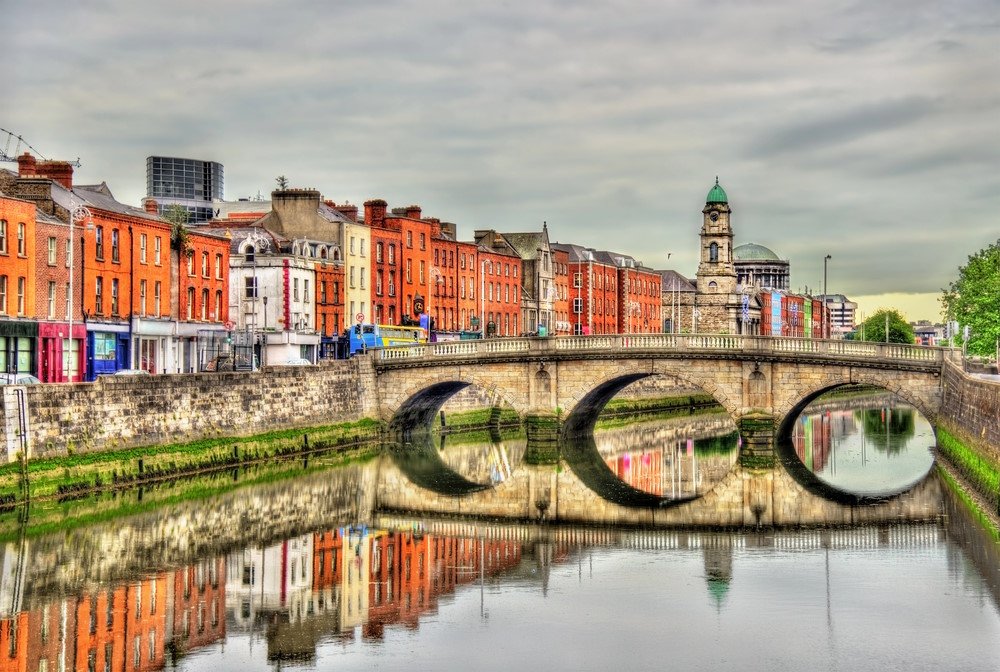
Dublin stands supreme as the historic capital and economic locomotive of the Republic of Ireland, situated on Dublin Bay where the River Liffey flows into the Irish Sea. Founded in the ninth century by Norse Vikings as Dubh Linn (Black Pool), the city expanded during the Georgian era into the second city of the British Empire, leaving behind elegant brick townhouses and garden squares like Merrion Square and St Stephen’s Green.
While Dublin City Council boundaries record around 590,000 residents, the broader Greater Dublin Area accommodates over 1.5 million people, housing more than a quarter of the national population. A designated UNESCO City of Literature that produced literary giants like James Joyce, Oscar Wilde, and W.B. Yeats, modern Dublin is the tech capital of Europe, nicknamed the Silicon Docks for hosting the European headquarters of Google, Meta, and Microsoft.
Conclusion
The largest cities across the island of Ireland showcase a rich synthesis of monastic scholarship, Viking trading roots, industrial innovation, and modern tech investment. From Atlantic coastal outposts to the bustling quays of the Liffey and the Lagan, these ten urban centers will continue to drive Irish culture, commerce, and international engagement.