The Arab Republic of Egypt possesses one of the oldest and most continuous urban civilizations on earth, shaped by the life-giving waters of the Nile River as it courses through arid North African desert plateaus. For more than five thousand years, ancient pharaonic dynasties, Greek Ptolemaic kings, Roman emperors, and Islamic caliphates built monument-rich administrative seats along the riverbanks and the Mediterranean coast. According to demographic survey figures published by the Central Agency for Public Mobilization and Statistics (CAPMAS), nearly forty-four percent of Egypt’s population lives in urban centers, with massive demographic concentrations occupying the fan-shaped Nile Delta and Greater Cairo.
Egyptian urban life balances ancient pharaonic pyramids and medieval Islamic minarets with bustling modern commercial river ports and industrial manufacturing zones. Squeezed into the narrow fertile green corridor flanking the river, Egyptian cities boast extraordinary population densities and lively street markets that stay open until early morning hours. Examining the ten most populous cities reveals how strategic geography and millennia of commercial trade define modern Egyptian society.
10. Asyut (approx. 562,000 residents)
Situated on the western bank of the Nile roughly three hundred and seventy-five kilometers south of Cairo, Asyut reigns as the commercial, agricultural, and educational capital of Upper Egypt. In pharaonic antiquity, the city was known as Zawty (Lycopolis to the Greeks), venerated as the cult center of the jackal god Wepwawet, the opener of the ways. Ancient rock-cut tombs carved into the limestone cliffs overlooking the city date back to the First Intermediate Period and the Middle Kingdom.
Asyut is historically celebrated for holding the large Christian population of Upper Egypt, home to the revered Monastery of the Virgin Mary at Mount Dronka, which marks the southernmost sanctuary visited by the Holy Family during their flight into Egypt. Today, the city is a major academic center anchored by Assiut University, supported by textile mills, petroleum refining, and fertilizer manufacturing.
9. Tanta (approx. 597,000 residents)
Located in the dead center of the fertile Nile Delta between the Rosetta and Damietta branches of the river, Tanta serves as the bustling capital of Gharbia Governorate. The city is the premier spiritual crossroads of Islamic Sufism in Egypt, home to the grand Mosque and Shrine of Sheikh Ahmad al-Badawi, the venerated thirteenth-century founder of the Badawiyya Sufi order. Every autumn, the annual Moulid of Sayid al-Badawi festival attracts over two million pilgrims from across Egypt and the Arab world for days of religious recitations, chanting, and festive gatherings.
Tanta is famous throughout the Middle East for producing traditional oriental sweets, especially roasted sugar-coated chickpeas (hubb el-aziz) and halwa tahiniya. The city also operates modern cotton ginning mills and university research campuses.
8. El Mahalla El Kubra (approx. 614,000 residents)
Positioned in the central delta just twenty-five kilometers northeast of Tanta, El Mahalla El Kubra is universally recognized as the industrial heart of Egypt’s cotton and textile industry. The city’s modern economy developed around the colossal Misr Spinning and Weaving Company, established in 1927 by pioneer industrialist Talaat Harb, which grew into one of the largest textile manufacturing enterprises in Africa and the Middle East, employing tens of thousands of skilled weavers and technicians.
The city boasts a fiercely proud working-class identity, having served as a historic cradle for Egyptian labor movements and social advocacy throughout the twentieth century. The local market avenues are filled with textile merchants selling famous Egyptian long-staple cotton bed linens, garments, and woven goods.
7. Mansoura (approx. 632,000 residents)
Resting on the eastern bank of the Damietta branch of the Nile, Mansoura serves as the commercial and administrative capital of Dakahlia Governorate. Founded in 1219 by Sultan al-Kamil during the Fifth Crusade, the town earned the name Mansoura (The Victorious) after Ayyubid forces achieved a decisive victory over the Seventh Crusade in 1250, capturing French King Louis IX and imprisoning him in the historic House of Ibrahim Ibn Luqman, now preserved as a national museum.
Mansoura is widely celebrated as the medical capital of Egypt, internationally renowned for the Mansoura Urology and Nephrology Center, which performs advanced kidney transplants and attracts patients from across the Middle East and Africa. Mansoura University anchors an energetic student population that animates riverside cafes and pedestrian promenades.
6. Suez (approx. 716,000 residents)

Positioned at the northern tip of the Gulf of Suez, this historic port city forms the southern maritime terminus of the world-famous Suez Canal where maritime vessels enter from the Red Sea. In ancient times, a pharaonic canal constructed by Pharaoh Senusret III connected the Nile River to the Red Sea near this location, establishing Suez as a vital trading post between the Mediterranean and the Indian Ocean.
The opening of the modern Suez Canal in 1869 transformed the town into an international shipping hub, surrounded by extensive oil refineries, petrochemical processing plants, and commercial ship repair docks. The city played a heroic role during the 1973 Arab-Israeli War, when local resistance fighters successfully defended the city during the Battle of Suez, commemorated as national Resistance Day.
5. Port Said (approx. 791,000 residents)
Rising on the Mediterranean coast at the northern entrance to the Suez Canal, Port Said was founded in 1859 by international engineers specifically to accommodate the workforce constructing the maritime canal. Named in honor of Said Pasha, the Viceroy of Egypt who granted the canal concession, the city was laid out on a progressive European grid plan with grand nineteenth-century timber verandas, neoclassical colonial facades, and the iconic Port Said Lighthouse, one of the first structures in the world built using reinforced concrete.
Port Said functions as a vital international bunkering and transit container terminal, where massive container ships from around the globe line up to transit the canal. Across the waterway lies the twin city of Port Fouad, connected by continuous passenger ferry services that offer panoramic views of international maritime shipping.
4. Shubra El Kheima (approx. 1,200,000 residents)
Located in Qalyubia Governorate immediately north of Cairo, Shubra El Kheima forms the dense northern industrial anchor of the Greater Cairo metropolitan territory. The city began in the early nineteenth century as a peaceful agricultural estate where modernizer Muhammad Ali Pasha constructed an ornate palace complex, known today as the Palace of Muhammad Ali, featuring a magnificent marble-columned fountain hall and subterranean pleasure pavilions.
Throughout the mid-twentieth century, the community underwent rapid industrialization, developing into Egypt’s heavy manufacturing capital for textile spinning, glass smelting, plastic extrusion, and electrical cable manufacturing. Connected seamlessly to central Cairo via Line 2 of the Cairo Metro, the city houses over a million citizens within a compact urban footprint.
3. Giza (approx. 4,400,000 residents)
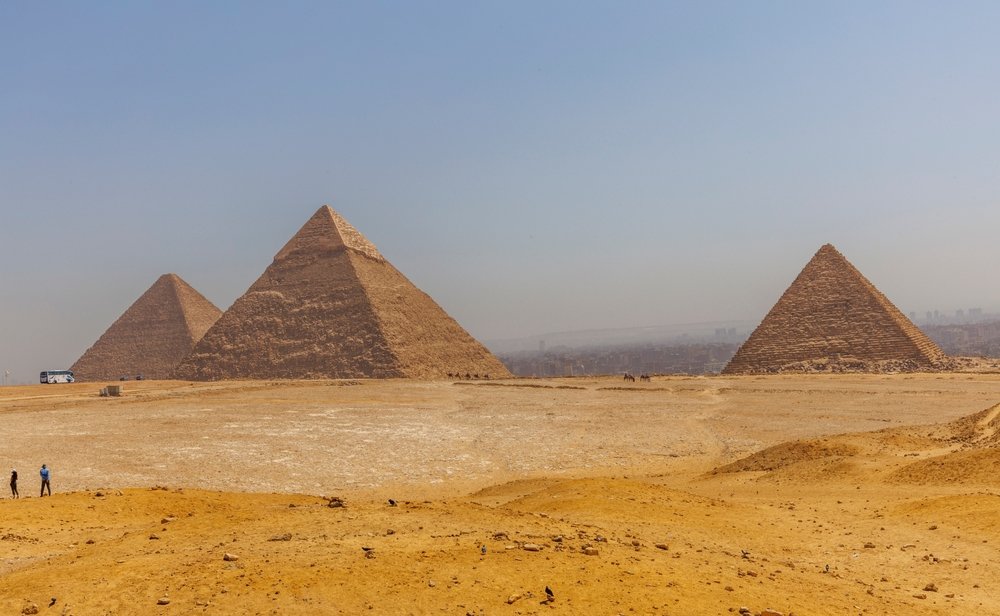
Sprawling along the western bank of the Nile directly opposite Cairo, Giza is globally renowned as the home of mankind’s most iconic archaeological wonders. The Giza Plateau features the Great Pyramids of Khufu, Khafre, and Menkaure, the only surviving wonder of the ancient world, guarded for forty-five centuries by the enigmatic limestone Great Sphinx. Nearby stands the newly constructed Grand Egyptian Museum (GEM), the largest archaeological museum complex in the world dedicated to a single civilization, housing the complete treasure hoard of Pharaoh Tutankhamun.
Beyond its ancient monuments, Giza is a massive, thriving metropolis that accommodates over four million residents. The city houses Cairo University, Egypt’s premier modern secular university established in 1908, the historic Giza Zoo, and major film production studios along Al-Ahram Street that earned Egypt the title of Hollywood of the East.
2. Alexandria (approx. 5,300,000 residents)

Founded in 331 BC by Alexander the Great on the Mediterranean shore, Alexandria was the intellectual and cultural capital of the ancient Hellenistic and Roman worlds. For centuries, the city was dominated by the legendary Pharos Lighthouse, one of the Seven Wonders of the Ancient World, whose stone ruins were incorporated into the fifteenth-century Citadel of Qaitbay that still guards the eastern harbor. The modern Bibliotheca Alexandrina, a monumental granite disc tilting toward the sea, revives the spirit of the lost ancient Library of Alexandria with millions of books and digital research galleries.
Known affectionately as the Bride of the Mediterranean, Alexandria curves along the sweeping Corniche seaside promenade, where historic Belle Epoque cafes and traditional fish restaurants face the blue sea. The city operates the Port of Alexandria, which handles roughly three-quarters of Egypt’s total international maritime trade.
1. Cairo (approx. 10,000,000 residents)
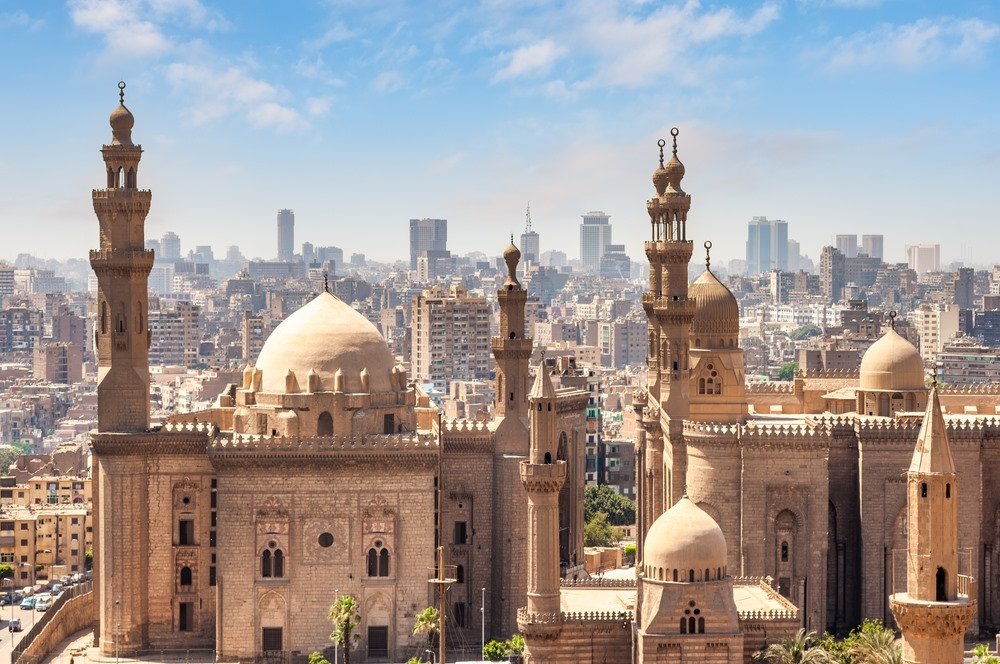
Cairo, known in Arabic as Al-Qahira (The Victorious), stands as the supreme capital of Egypt and the largest metropolis in the Arab world and Africa. Founded in 969 AD by the Fatimid dynasty, the city is famously dubbed the City of a Thousand Minarets due to an extraordinary concentration of medieval Islamic architecture, best seen within historic Islamic Cairo, a UNESCO World Heritage site centered around the ancient Al-Azhar Mosque, the Citadel of Saladin, and the labyrinthine bazaar of Khan el-Khalili. While the municipal boundary houses roughly ten million residents, the Greater Cairo conurbation encompasses over twenty-two million inhabitants.
Tahrir Square represents the modern civic and political heart of the nation, flanked by the historic pink-clad Egyptian Museum. Modern Cairo combines ancient heritage with a thriving arts and publishing scene, dynamic business skyscrapers along the Nile Corniche, and the newly developed New Administrative Capital rising on the desert periphery.
Conclusion
Egypt’s largest cities capture an extraordinary timeline spanning ancient pharaonic monuments, medieval Islamic citadels, and modern industrial hubs along the Nile and the Suez Canal. From the boundless megalopolis of Cairo and the Mediterranean quays of Alexandria to the industrial delta towns of Mansoura and Tanta, these ten urban centers remain the lifeblood of Egyptian civilization.